“Die you brute!”

furstore.jpg

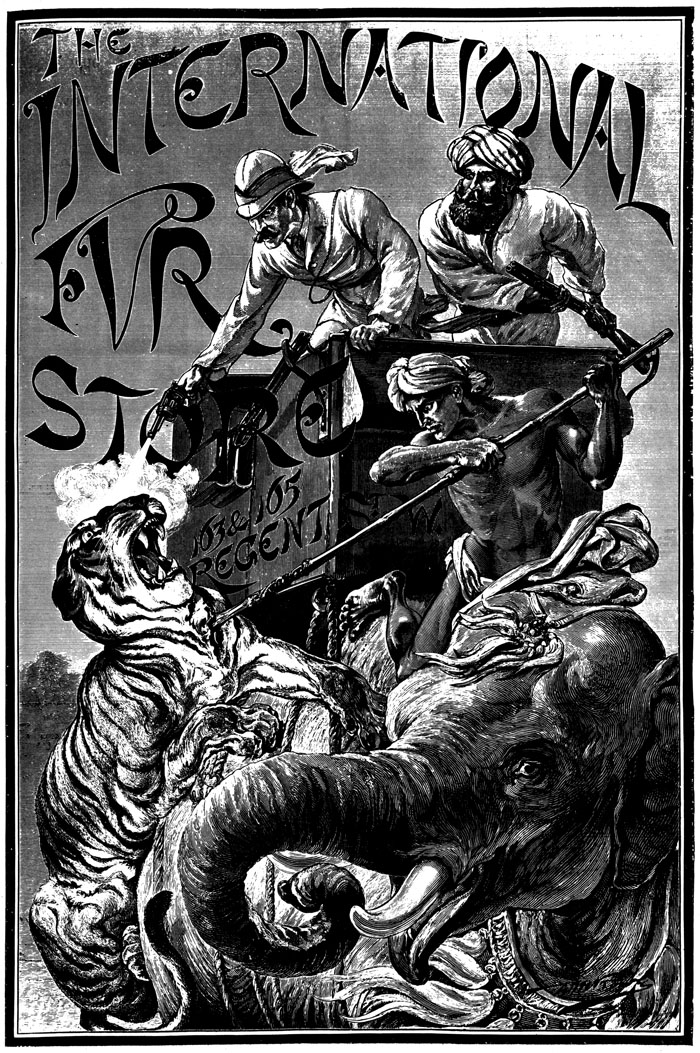
Since mention was made yesterday of the “Die you brute!” school of period illustration it seemed pertinent to post the picture that gave rise to the expression. This is another 19th-century ad from Victorian Advertisements (1968) by Leonard de Vries, the picture having appeared originally in The Illustrated Sporting and Dramatic News for November 1887. The Victorians may have been fond of their furs but they can’t be accused of downplaying the brutality behind the trade; in advertising terms this is like promoting a steak house with scenes from an abattoir. (And in that vein, see this Bovril ad from De Vries’ book.)
ratbite.jpg

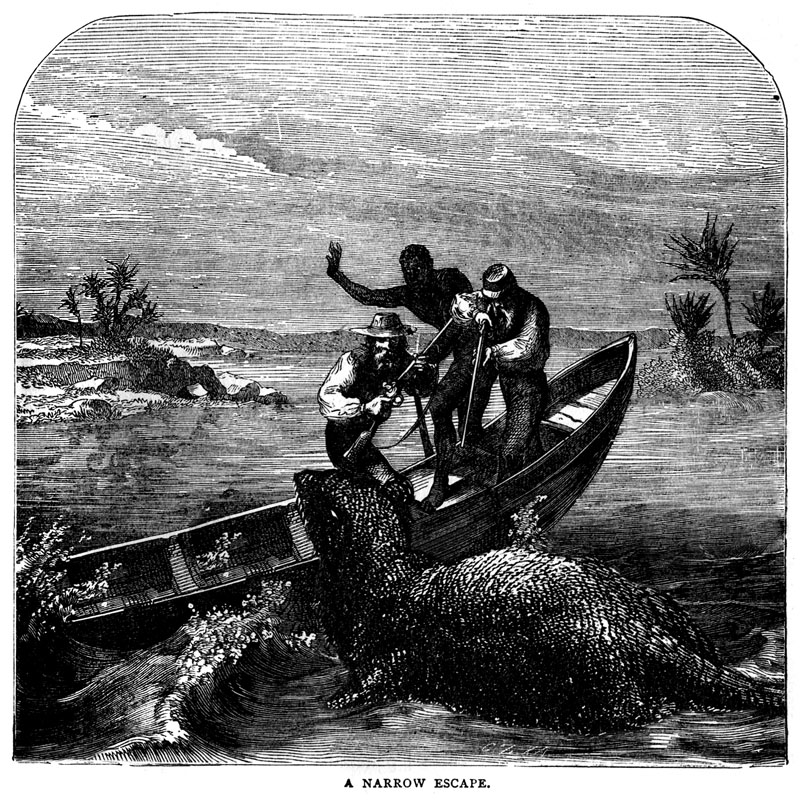
I produced my own variation on the theme in 2003 with this illustration for Michael Moorcock’s Samoan Giant Rat Bite Fever, his entry in the Thackery T. Lambshead Pocket Guide to Eccentric and Discredited Diseases . The Giant Rat is described as seven feet in length but I followed the usual form with these kinds of depictions and exaggerated the size.

Previously on { feuilleton }
Gilliam’s shaver and Bovril by electrocution
Sea and Land: An Illustrated History

sealand1.jpg

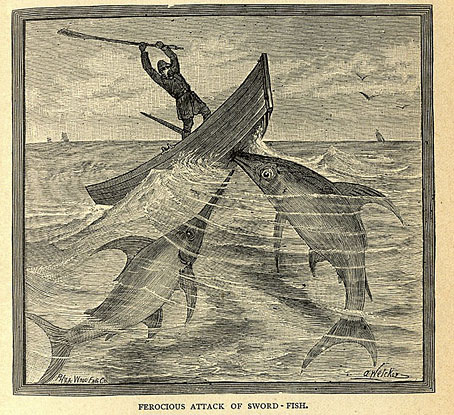
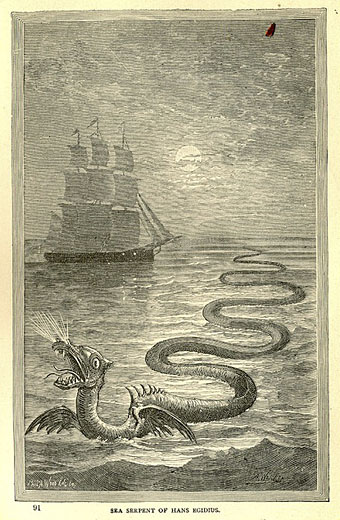
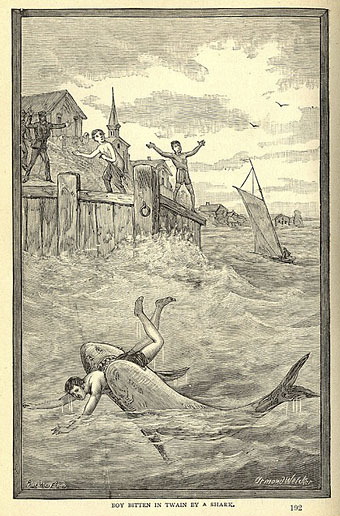
It’s all fun and games until someone gets bitten in twain by a shark. Illustrations from a Flickr selection of plates from Sea and Land: An Illustrated History (1887) by JW Buel, a compendium of stories about the natural world which tend towards the sensational. Many of these pictures are from what I call the “Die you brute!” school of illustration, in which exotic fauna is always on the rampage and needs to be violently subdued before someone is eaten alive (or bitten in twain). Buel’s book reprints pictures from other volumes including Gustave Doré’s Rime of the Ancient Mariner while one of the tentacled fiends below is an oft-reprinted item by Alphonse de Neuville & Edouard Riou from Twenty Thousand Leagues Under the Sea. The only copy of Sea and Land at the Internet Archive is poor quality, unfortunately; being partial to Victorian sensation I wouldn’t mind seeing the whole thing.

sealand2.jpg

sealand3.jpg

Continue reading “Sea and Land: An Illustrated History”

David Chestnutt’s psychedelic fairy tales

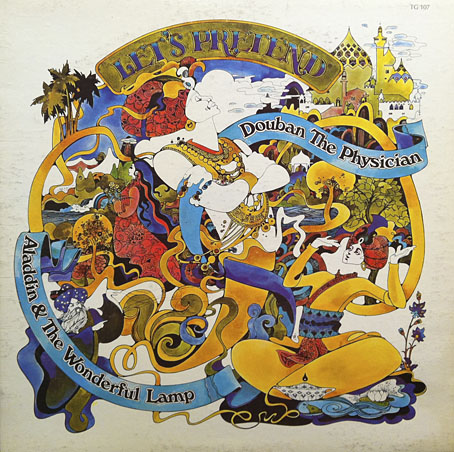
pretend10.jpg

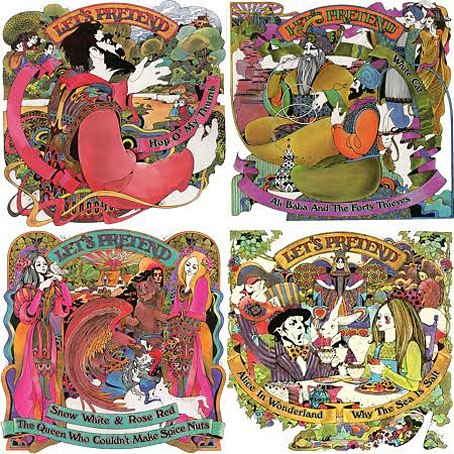
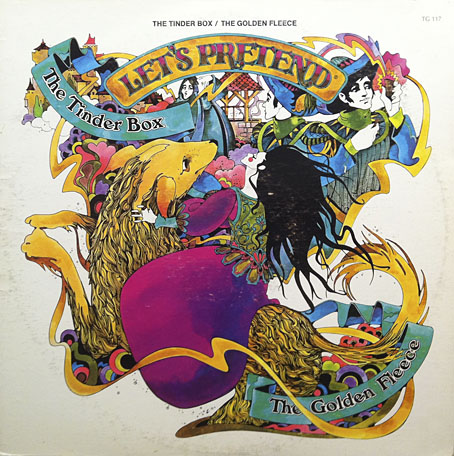
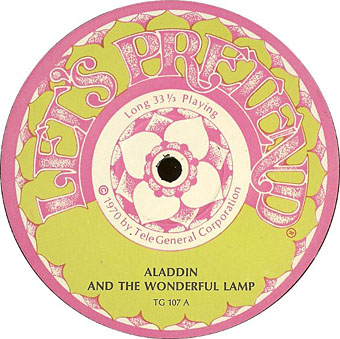
A post for Record Store Day. “Psychedelic” is stretching things here but it’s a word that always grabs the attention. Let’s Pretend was a series of fairy tale recordings released in the US in 1970 on the Stereo Dimension Records label. Each of the 25 recordings employs a radio show format, possibly because these were all radio recordings originally (there’s an older series of Let’s Pretend radio shows at the Internet Archive). Anyone desperate to experience one of them can listen to The Little Mermaid here. The sleeves are all illustrated by David Chestnutt in that post-Heinz Edelmann style that really ought to have a name of its own. Nice to see The Tinderbox turn up again, Chestnutt’s magical hound is a distinctly benevolent creature.

These sleeves were hoovered up from Discogs.com where some of them are only available in small images. If anyone finds a gallery of all 25 designs in decent quality then please leave a comment.

pretend09.jpg

pretend01.jpg

pretend02.jpg

Continue reading “David Chestnutt’s psychedelic fairy tales”

Virgil Finlay’s Tarzan

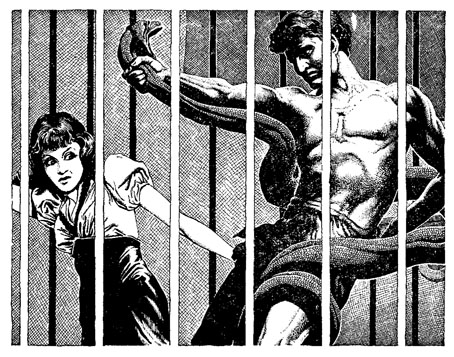
finlay.jpg

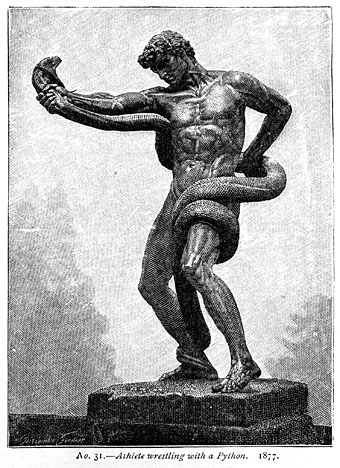
Thanks are due to Ty Reutel for alerting my attention to this one. I’d no idea that the great Virgil Finlay had illustrated Tarzan but here’s the proof, one half of an interior drawing for The Quest of Tarzan in Argosy Weekly for 1941. That’s the first surprise, the second, of course, was that Finlay had copied Frederic Leighton’s Athlete Wrestling with a Python (1877) ( below), a sculpture which has been a subject of discussion here recently. I’ve mentioned before my including Leighton’s work in one of my Lovecraft adaptations; I referred to many other artworks in those stories but never made any direct reference to Virgil Finlay even though he was the original illustrator of Lovecraft’s The Haunter of the Dark when it was first published in Weird Tales in 1936. Finlay’s illustrations for that story later appeared with some of my own in the enormous Centipede Press collection of Lovecraft art so it’s strange to find that we were also led to the same Leighton sculpture.

Tarzan illustration has been in my thoughts for the past few weeks while I’ve been at work (again!) on the collected Reverbstorm, many pages of which played variations on Burne Hogarth’s comic adaptations of the Tarzan stories. Reverbstorm is at long last very close to being finally, absolutely finished, and ready for printing in a single definitive volume. No production schedule just yet but any news will be announced here.

leighton4.jpg

Previously on { feuilleton }
Frederic Leighton’s sculptures
Virgil Finlay’s Salomé
Die Farbe and The Colour Out of Space
Lovecraft’s favourite artists revisited
Angelo Colarossi and son
The monstrous tome
Men with snakes

Maxwell Armfield’s Faery Tales

armfield01.jpg

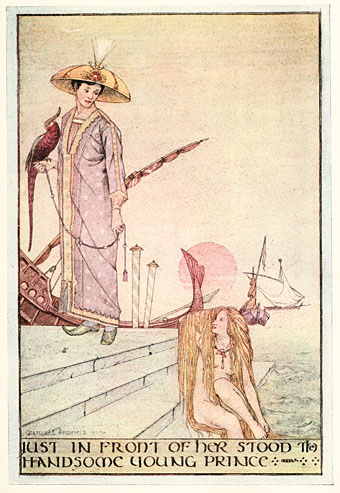
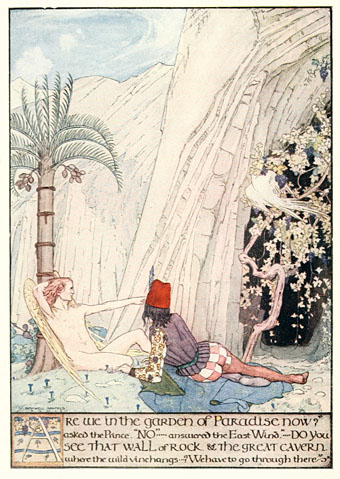
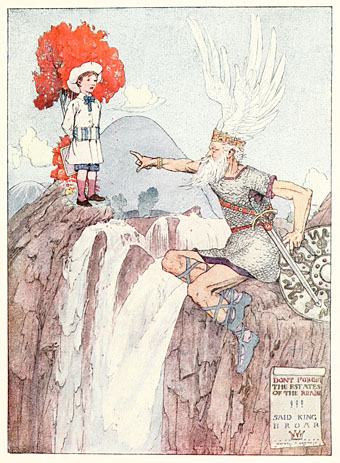
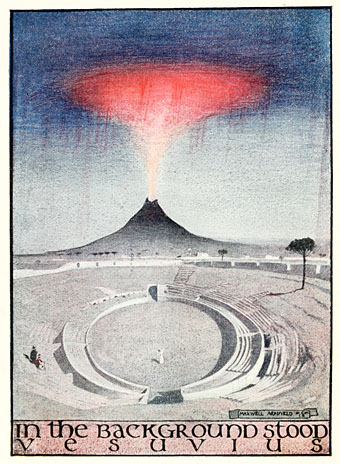
A selection of colour plates from Faery Tales from Hans Christian Andersen (1910) illustrated by British artist Maxwell Armfield. I hadn’t seen this collection before which turned up whilst searching for Tinderbox illustrations. Armfield does illustrate that particular story (here titled The Tinder Box—the title varies) but we don’t get to see the monstrous hounds. I was especially struck by the picture of Mount Vesuvius from What the Moon Saw which looks more like something by Hokusai than the usual fairy tale painting of the period.

armfield02.jpg

armfield03.jpg

armfield04.jpg

Continue reading “Maxwell Armfield’s Faery Tales”