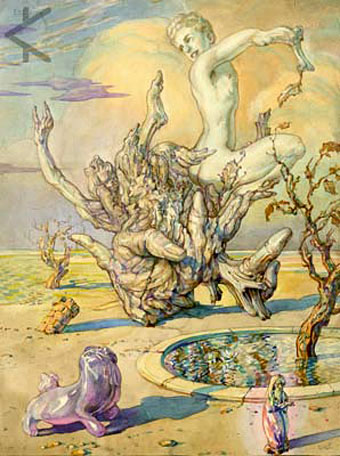
The art of Andrey Avinoff, 1884–1949

avinoff1.jpg

Man Emerging from a Tree Stump (no date).

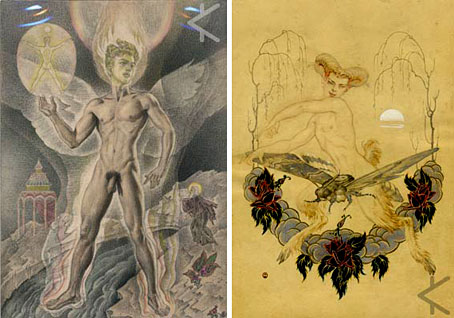
Yet another artist I’d be unlikely to have come across had it not been for the web. Andrey Avinoff’s art manages to be both mystical and homoerotic in equal measure and there’s a good selection of his paintings and drawings to be found in a collection at the Kinsey Institute. Avinoff was an entomologist and worked as director of the Carnegie Museum along with that other famous butterfly enthusiast, Vladimir Nabokov. He was also a friend of Alfred Kinsey’s for many years and the art which Kinsey collected seems (perhaps inevitably) more sexual than the artist’s mystical work or his butterfly pictures. As with other artists discussed here, we learn that “he may have been homosexual”, an equivocation which seems particularly silly when looking at his study of a (naked) young man entitled My Special Longing. He was also a Nijinsky enthusiast and one of his portraits has the dancer as a naked faun bestride an overgrown butterfly.
avinoff2.jpg

left: Standing Nude Man with Figure of Saint (no date); right: Nijinsky (1918).
Continue reading “The art of Andrey Avinoff, 1884–1949”

The art of John Austen, 1886–1948

austen1.jpg

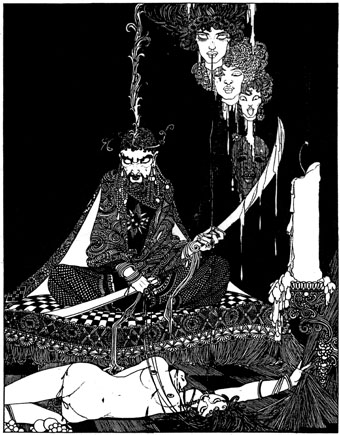
A few drawings by British illustrator John Austen (1886–1948), like Patten Wilson another artist whose work is hard to come by today. Austen was one of the many young illustrators over whom Aubrey Beardsley’s etiolated shadow fell from 1900 onwards and it’s the first ten years of Austen’s work I find most interesting, mainly because of the Beardsley stylings. He’s not as original or as elegant as Harry Clarke but he’s a lot better than the frequently overrated (yet interesting for other reasons) Hans Henning Voigt, or Alastair as he preferred to be known.

Continue reading “The art of John Austen, 1886–1948”

My pastiches

rev3cov.jpg

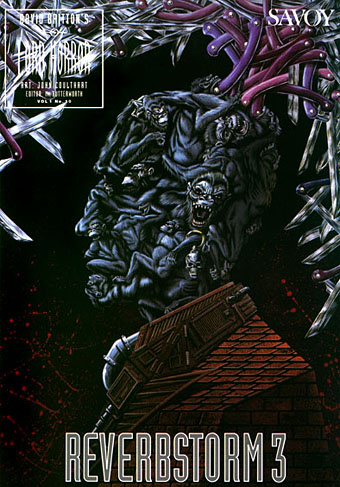
Lord Horror: Reverbstorm #3 (1992).

Following from the post about an art forgery exhibition (and Eddie Campbell discussing his American Gothic cover for Bacchus), I thought I’d post some of my own forgeries, or pastiches as we call them when no deception is intended.

Reverbstorm was the Lord Horror comic series I was creating with David Britton for Savoy in the 1990s. The Modernist techniques of collage (as in the work of Picasso and others) and quotation (as in TS Eliot’s The Waste Land) became themes in themselves as the series developed, so it seemed natural to imitate the styles of various artists as we went along. Pastiche is also a chance to flagrantly show off, of course, and I can’t deny that this was also one of my impulses here.

Issue #3 of Reverbstorm had marauding apes as its theme, from the Rue Morgue to Tarzan and King Kong, so I had the idea of doing an ape cover in the style of the celebrated paintings by Giuseppe Arcimboldo (1527–1593) which make human heads out of fruit, flowers or animals. Easy enough to have the idea but making it work took a lot of effort and required careful sketching beforehand, something I rarely do. The painting was gouache on board, a medium I’d been using for years and this was about the last gouache work I did before switching to acrylics.

Continue reading “My pastiches”

The art of Patten Wilson, 1868–1928

wilson3.jpg

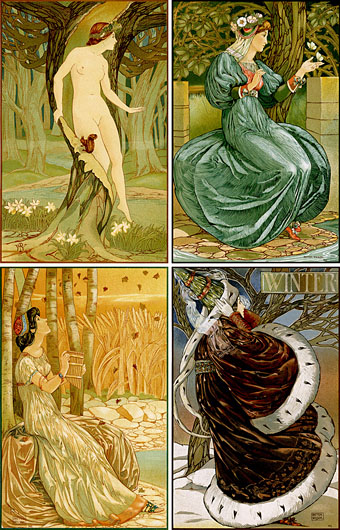
The Four Seasons (1897).

Typically gorgeous work from the unjustly neglected Victorian illustrator. There’s more scans of the Coleridge illustrations (shown below) at Dr Chris Mullen’s excellent Visual Telling of Stories site.

Continue reading “The art of Patten Wilson, 1868–1928”

T&H: At the Sign of the Dolphin

joyce.jpg

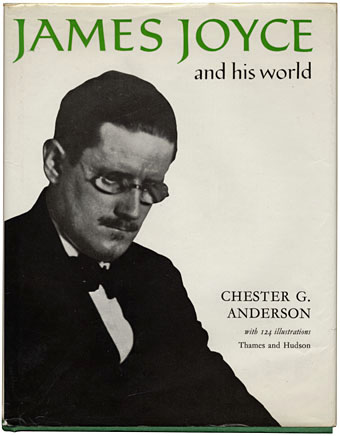
James Joyce and his World (1978).

dolphins.jpgDespite my earlier statement about not being much of a collector, today’s book purchase (above) was enough to confirm some well-established patterns (obsessions, even) that should make me reconsider any hasty pronouncements. Not so much for the subject in this case—I already have enough books by and about James Joyce—the significant thing here is the three magic words on the cover: Thames and Hudson. The sight of Joyce’s name on the spine above the old T&H dolphin logo (signifying the two rivers that comprise the company’s name; or maybe a discourse between London and New York via the Atlantic) was enough to demand further investigation. I realised I’d been hoping to eventually find this book after seeing it listed in the back of its companion title, Beardsley and his World by Brigid Brophy. Both books form part of a series that T&H produced in the Seventies, a collection of heavily illustrated mini-biographies of writers, with the odd artist among them. Very worthwhile they are too, with lots of photographs, paintings or drawings of the people and places relevant to their subjects’ lives.

Continue reading “T&H: At the Sign of the Dolphin”