The art of Sidney Hunt, 1896–1940

hunt01.jpg

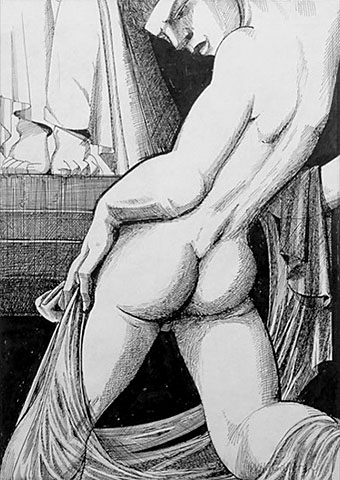
Ganymede Before Zeus (1921).

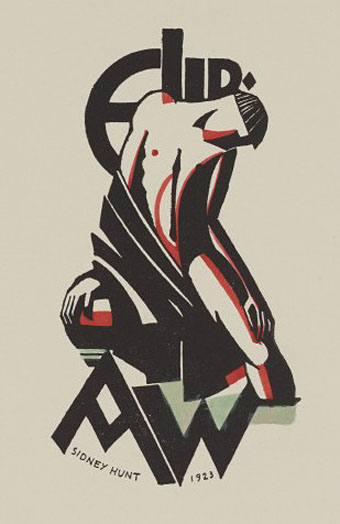
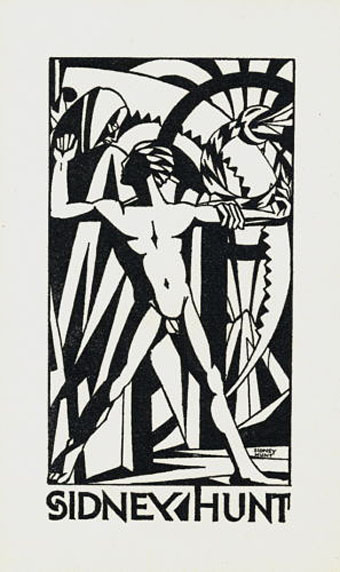
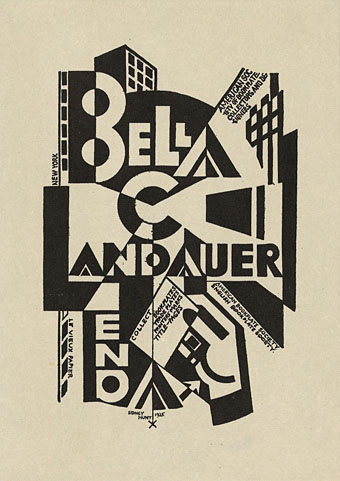
Another of those artists about whom detail remains tantalisingly remote if the web is your primary research tool. Hunt was a British Modernist who also edited an avant-garde magazine, Ray, from 1926–27. Most of the works here are bookplates from around 1923, many of them distinctly homoerotic which adds to their interest. The note at Wikipedia is unsourced but tells us that his output included “experimental prose-poem fantasies of 18-year-old hermaphrodites”. Maybe these, and more of his work, will turn up eventually.

hunt02.jpg

hunt03.jpg

hunt04.jpg

Continue reading “The art of Sidney Hunt, 1896–1940”

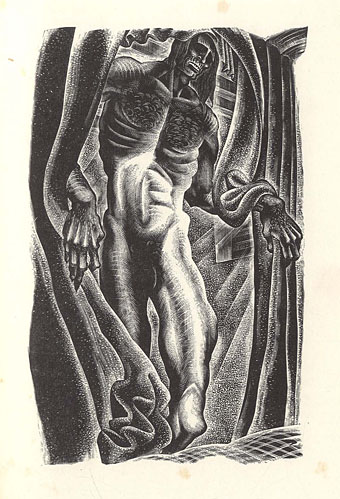
Lynd Ward’s Frankenstein

ward1.jpg

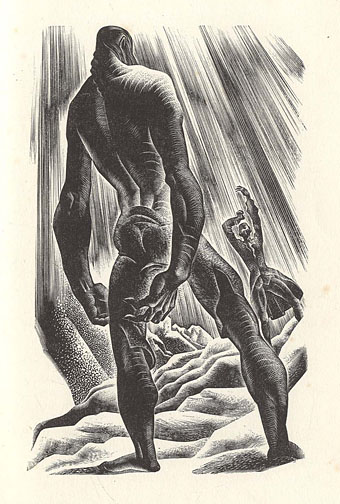
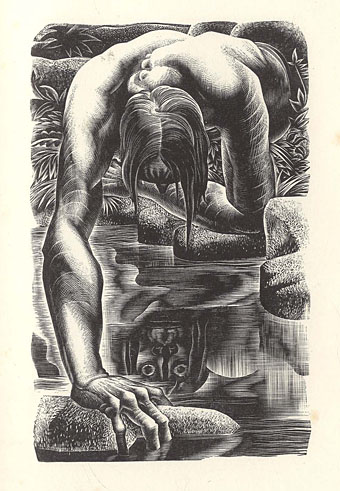
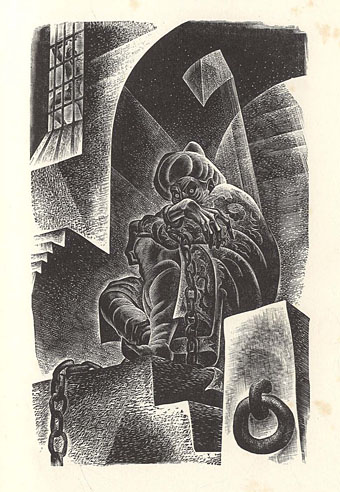
Mary Shelley’s novel illustrated in woodcuts by the great Lynd Ward (1905–1985). This edition appeared in 1934, a couple of years after the release of James Whale’s first Frankenstein film whose popularity may have led to its commission. It’s good to see Dover Publications keeping this one in print when first editions go for hundreds of pounds. VTS has more of the illustrations (there’s also this site), and many more examples of Ward’s work.

ward2.jpg

ward3.jpg

ward4.jpg

Elsewhere on { feuilleton }
The illustrators archive

Previously on { feuilleton }
Two Brides
Berni Wrightson’s Frankenstein
Cain’s son: the incarnations of Grendel
Gods’ Man by Lynd Ward

Robert Louis Stevenson’s Moral Emblems

rls01.jpg

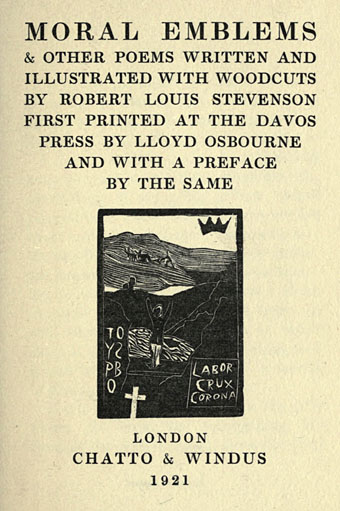
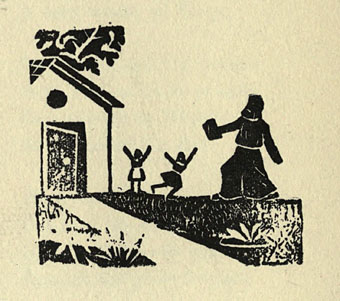
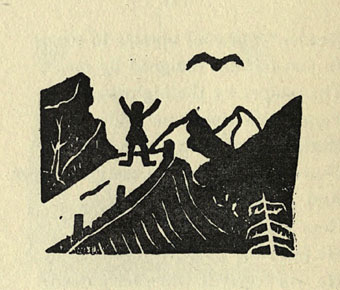
Being the owner of half the volumes in the Tusitala Edition of Robert Louis Stevenson’s collected works I’m not exactly unacquainted with the author’s books but this is one I hadn’t seen before. It is included in the Tusitala set (vol. 22) but this is one of the books I don’t own. The Moral Emblems & Other Poems Written and Illustrated with Woodcuts were published originally in Edinburgh Edition in 1898. The copies here are from a book edition prepared by Stevenson’s stepson, Lloyd Osbourne, in 1921. The 35 Tusitala volumes followed in 1924. Stevenson enjoyed sketching while on his travels so these crude woodcuts aren’t without precedent even if he didn’t make a habit of adding illustrations to his writing.

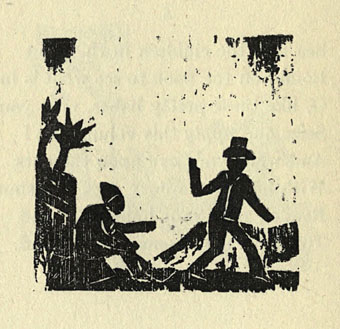
Emblem books were a popular form of moral instruction from the 16th century on. This particular example shares some of the pious qualities of its ancestors albeit with a wry attitude typical of its author. Regarding a man (“who might be you or me”) who pushes another into the sea, we’re told “And he will spoil his evening toddy / By dwelling on that mangled body.” The verses being written some years after Treasure Island, pirates appear in a couple of places, especially in the last sequence: Robin and Ben: Or, The Pirate and The Apothecary. The final illustrations aren’t as successful as his rough little vignettes but for someone with no reputation as a draughtsman they’re better than you’d expect. See the rest of the book here or download it here.

rls02.jpg

rls03.jpg

rls04.jpg

Continue reading “Robert Louis Stevenson’s Moral Emblems”

The weekend artists, 2013

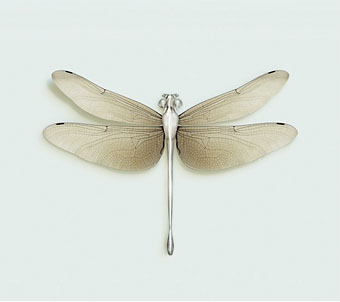
fournier.jpg

“Chloromgonfus detectis, a dragonfly that can detect volatile pollutants.” A speculative insect by artist Vincent Fournier.

The annual review of artists/designers/photographers featured in the weekend posts should have run at the end of December but MR James got in the way. Big thanks, and happy new year to Form is Void and Beautiful Century for pointing the way to many of these people.

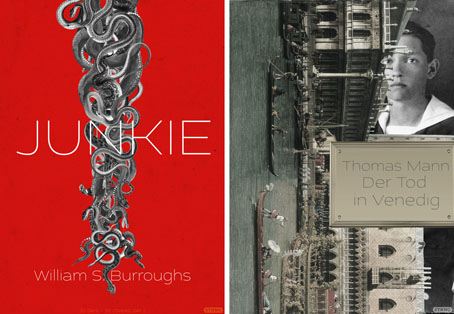
strongowski.jpg

Two cover designs from Eliash Strongowski’s 30 Days—30 Covers project.

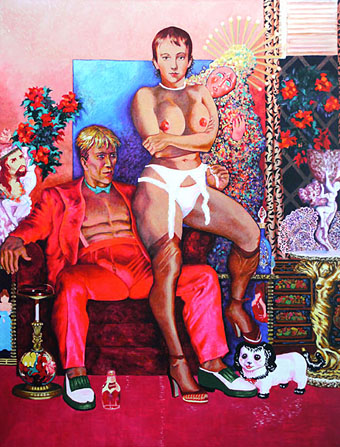
gebbie.jpg

Pink Boy by Melinda Gebbie.

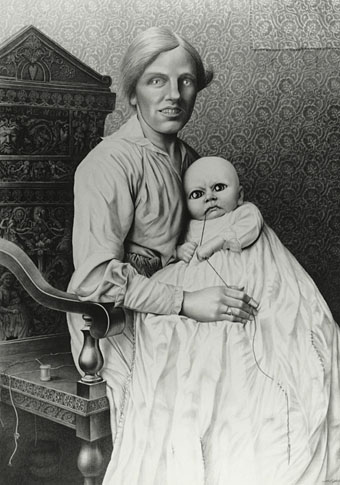
lipton.jpg

Seam Stress (1987) by Laurie Lipton. The Drawings of Laurie Lipton is out now from Last Gasp.

blackwell.jpg

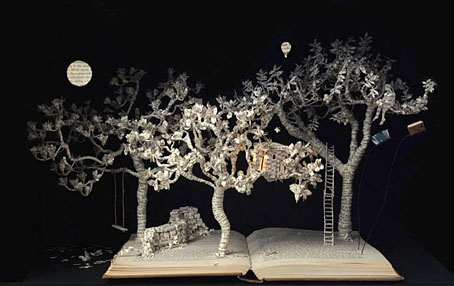
The Baron in the Trees (2011), a book-cut sculpture by Su Blackwell.

Continue reading “The weekend artists, 2013”

Lovecraft’s Monsters

Lovecraft's Monsters

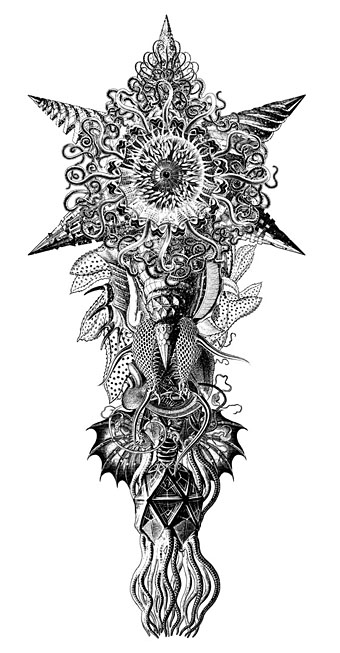
Graphic for the title page and ends of chapters.

I don’t usually post things so far away from publication, but editor Ellen Datlow put these pictures on her Facebook page a few hours ago so I may as well do the same here.

Back in February I bought a Wacom Intuos drawing tablet, something I’ve been using with regularity for the past few months. The Alas Vegas Tarot cards I designed in the summer were the first major attempt at getting used to working with it; Lovecraft’s Monsters, a forthcoming fiction anthology for Tachyon is the second, and I now feel very comfortable working with it. More than that, I’m increasingly pleased with the way it’s possible to combine the drawing techniques I’ve been using for years with the additional possibilities provided by working in Photoshop. As always, it’s the end result that counts but arriving at an end result can be easy or difficult. Some of these illustrations look no different than they would have done had I used ink on paper but they took half the time to create, a considerable benefit when a deadline is looming.

The stories Ellen Datlow has chosen for this collection all present different aspects of monstrosity seen through the lens of Lovecraft’s fiction and his cosmic menagerie. Some are full-on extensions of the Mythos, others are more allusive; all the pieces bar one have been published before but I’d not read any of them so for me this was fresh material. Having spent the past few years saying I was finished with Lovecraft’s fiction I was excited to be working on this book. The stories are good, and I welcomed the challenge of having to illustrate such a variety of material.

Larger copies of all the pictures can be seen here.

The star-headed thing at the top of this page is another amalgam of elements plundered from Haeckel’s Kunstformen der Natur and other sources. I’ve leaned rather heavily on Haeckel in the past, something I wanted to avoid here; this serves as a kind of visual punctuation separating the stories.
Lovecraft's Monsters

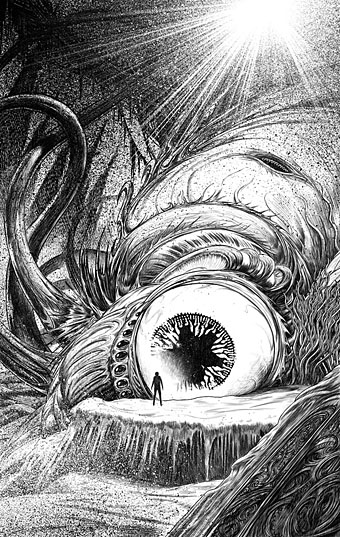
Cthulhu.

The drawing I’ve called Cthulhu is a piece for the introductory pages. Having already produced a lot of Cthulhoid art I didn’t want to repeat myself. The initial idea was of a tiny human figure faced with something enormous and nightmarish; that could be a vast eyeball or it could be a mouth or some other organ/aperture, the vagueness was intentional. Lovecraft continually impresses upon his readers how difficult things are to describe or apprehend but you seldom find this quality in art based upon his stories. Cthulhu especially has devolved into little more than an outsize man-in-a-rubber-suit à la the Creature from the Black Lagoon. In The Call of Cthulhu the figure on the mysterious statuette is described as having a humanoid shape but Lovecraft doesn’t describe the appalling reality in any detail at all. When Cthulhu is struck by a ship at the end of the story it breaks apart and is then seen recombining, the implication being that the creature is corporeally amorphous.
Lovecraft's Monsters

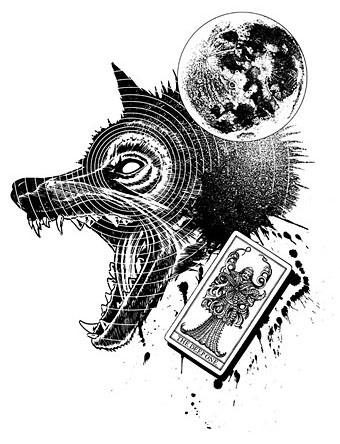
Only the End of the World Again by Neil Gaiman.

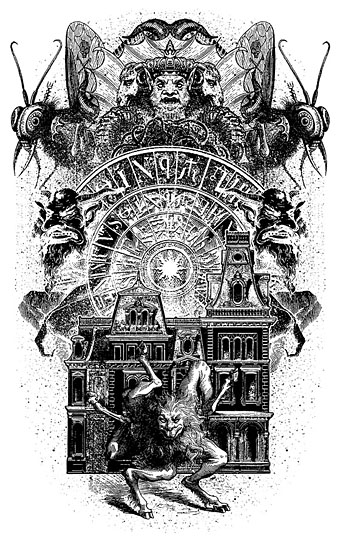
Neil Gaiman’s entry concerns a werewolf private detective in Innsmouth. Lovecraft’s decaying fishing village and its inhabitants turn up in several of the stories so care was taken to avoid repetition.
Lovecraft's Monsters

Bulldozer by Laird Barron.

A great story about another detective, a Pinkerton agent this time, hunting his quarry through the Old West. Collin de Plancy’s Dictionnaire Infernal is mentioned so I used some of Louis Breton’s illustrations from the third edition.

Continue reading “Lovecraft’s Monsters”