Weekend links 71

orazi.jpg

Manuel Orazi (1860–1934) was one of the best of the many Mucha imitators. An untitled & undated posting at Indigo Asmodel.

The mob now appeared to consider themselves as superior to all authority; they declared their resolution to burn all the remaining public prisons, and demolish the Bank, the Temple, Gray’s Inn, Lincoln’s Inn, the Mansion House, the Royal palaces, and the arsenal at Woolwich. The attempt upon the Bank of England was actually made twice in the course of one day; but both attacks were but feebly conducted and the rioters easily repulsed, several of them falling by the fire of the military, and many others being severely wounded.

To form an adequate idea of the distress of the inhabitants in every part of the City would be impossible. Six-and-thirty fires were to be seen blazing in the metropolis during the night.

An Account of the Riots in London in 1780, from The Newgate Calendar.

In a week of apparently limitless bloviation, a few comments stood out. Hari Kunzru: “Once, a powerful woman told us there was no such thing as society and set about engineering our country to fit her theory. Well, she got her way. This is where we live now, and if we don’t like it, we ought to make a change.” Howard Jacobson: “One medium-sized banker’s bonus would probably pay for all the trash that’s been looted this past week.” Meanwhile Boff Whalley complained about the predictable misuse of the word “anarchy” by lazy journalists.

• For further historical perspective, a list of rioters and arsonists from The Newgate Calendar (1824), and an account of the looting in London during the Blitz.
svanberg.jpg

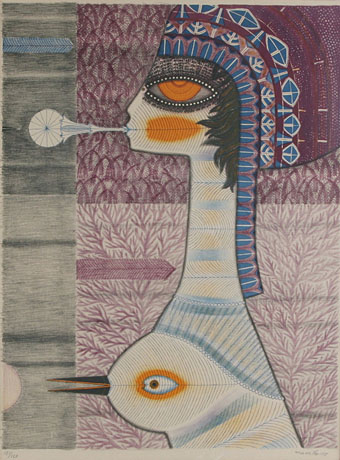
From a selection of works by Max Walter Svanberg (1912–1994) at But Does It Float. There’s more at Cardboard Cutout Sundown.

• NASA posted a gorgeous photo from the surface of the planet Mars. Related: Astronomers have discovered the darkest known exoplanet. Obliquely related: Julio Cortázar’s From the Observatory, a prose poem inspired by the astronomical observatories at Jaipur and New Delhi, India, receives its first English translation.

• The Advisory Circle is still in a Kosmische groove. Not Kosmische at all, Haxan Cloak’s mix for FACT has Wolf Eyes, Sunn O))) and Krzysztof Penderecki competing to shatter your nerves.

• The wonderful women (and friends) at Coilhouse magazine are having a Black, White and Red fundraising party in Brooklyn, NYC, on August 21st. Details here.

• Sodom’s ambassador to Paris: the flamboyant Jean Lorrain is profiled at Strange Flowers.

• Empire de la Mort: Photographs of charnel houses and ossuaries by Paul Koudounaris.

• The Craft of Verse by Jorge Luis Borges: The Norton Lectures, 1967–68.

• Jesse Bering examines The Contorted History of Autofellatio.

• Robert Crumb explains why he won’t be visiting Australia.

• The Crackdown (1983) by Cabaret Voltaire.
Darmstadt documents

darmstadt1.jpg

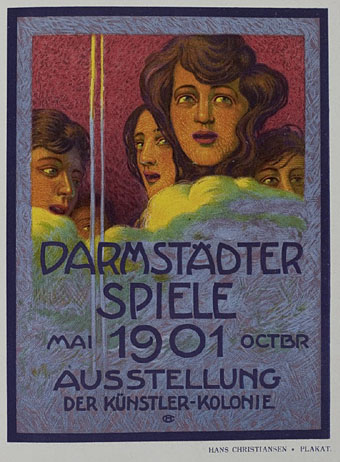
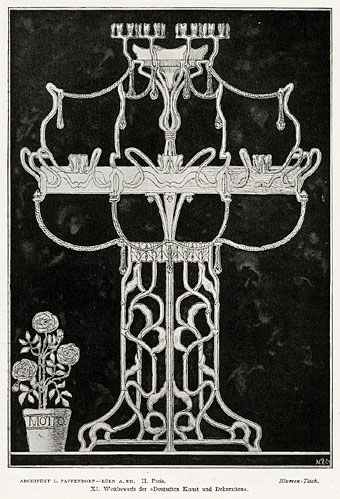
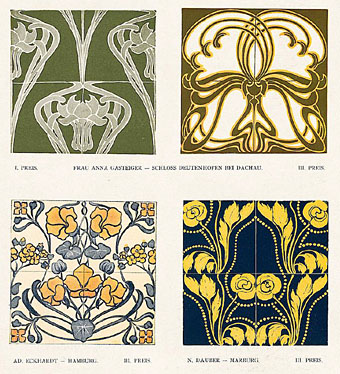
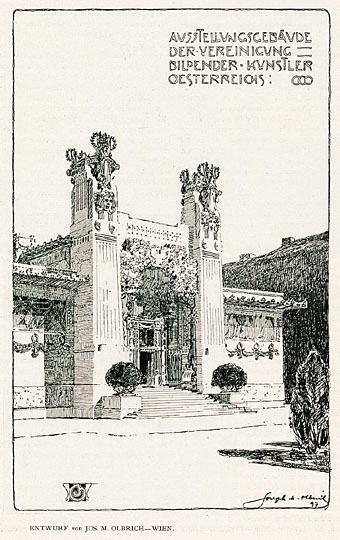
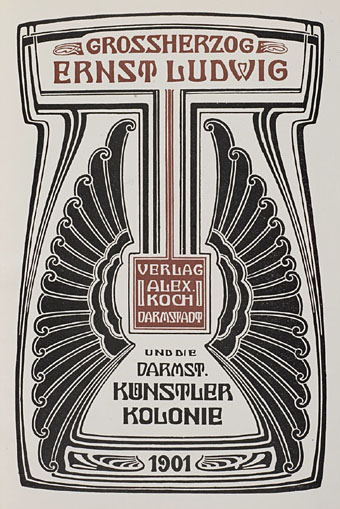
More from the University of Heidelberg’s treasure trove of digitised books, Die Ausstellung der Darmstädter Künstler-Kolonie (1901) is also related to Deustche Kunst und Dekoration by being a product of that journal’s publisher, Alexander Koch. The book showcases the work and philosophy of the Darmstadt art and design colony, many of whose artworks and architecture designs were featured in DK&D. Since having gone through the back issues of Koch’s journal I’ve become increasingly fascinated by the Darmstadt group and their contemporaries in the Wiener Werkstätte so finding a handful of new documents is very welcome, even if much of the work is now familiar. The continual use of the square at this period of German and Austrian design is particularly notable (Ver Sacrum, lest we forget, was a square-format magazine) and square motifs have been feeding into my own work in various ways recently, some of which will be revealed here soon.

Also in the Heidelberg archive are some related publications, Ein Dokument deutscher Kunst: die Ausstellung der Künstler-Kolonie in Darmstadt (1901) by Peter Behrens, and Die Ausstellung der Künstler-Kolonie Darmstadt (1902) by Joseph Maria Olbrich, several pages of German text but it does include a plan of the colony grounds.

darmstadt2.jpg

Previously on { feuilleton }
• Ver Sacrum, 1898

Deutsche Kunst und Dekoration #3

dkd03-01.jpg

A slight return to Deutsche Kunst und Dekoration, the German periodical of art and decoration. Volume 3, which covers the period from October 1898 to March 1899, was missing from the copies stored at the Internet Archive but has recently been added to the burgeoning collection of books and journals being digitised at the University of Heidelberg. What might have been a frustrating omission turns out to be less interesting than some of the editions which followed but it still features plenty of examples of the German Art Nouveau style.

dkd03-02.jpg

dkd03-03.jpg

dkd03-04.jpg

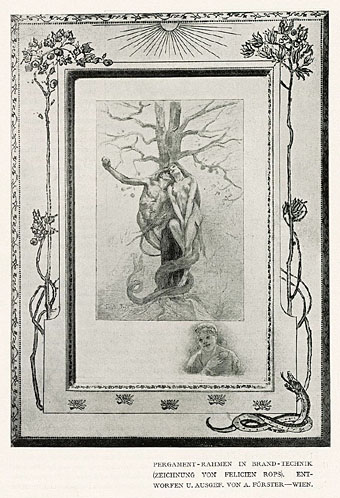
Eritis Similis Deo (They were like God) (1896) by Félicien Rops.

Previously on { feuilleton }
• Deutsche Kunst und Dekoration #25
• Deutsche Kunst und Dekoration #24
• Deutsche Kunst und Dekoration #23
• Deutsche Kunst und Dekoration #22
• Deutsche Kunst und Dekoration #21
• Deutsche Kunst und Dekoration #20
• Deutsche Kunst und Dekoration #19
• Deutsche Kunst und Dekoration #18
• Deutsche Kunst und Dekoration #16
• Deutsche Kunst und Dekoration #15
• Deutsche Kunst und Dekoration #12
• Deutsche Kunst und Dekoration #11
• Deutsche Kunst und Dekoration #10: Turin and Vienna
• Deutsche Kunst und Dekoration #10: Heinrich Vogeler
• Deutsche Kunst und Dekoration #9
• Deutsche Kunst und Dekoration #8
• Deutsche Kunst und Dekoration #7
• Deutsche Kunst und Dekoration #6
• Deutsche Kunst und Dekoration #5
• Deutsche Kunst und Dekoration #4
• Deutsche Kunst und Dekoration #2
• Deutsche Kunst und Dekoration #1
• Deutsche Kunst und Dekoration
• Jugend Magazine revisited

Weekend links 69

evans.jpg

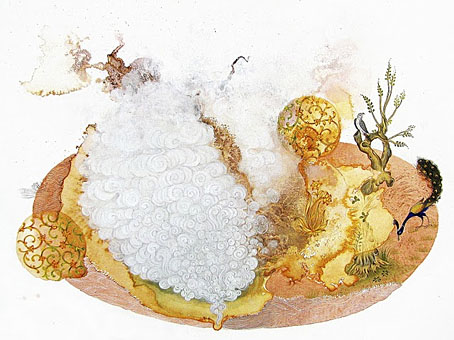
Peacock Apocalypse (detail) by Julie Evans in collaboration with Ajay Sharma.

Here at { feuilleton }, home of the curly bracket affectation, your correspondent is still surprised to find his postings the subject of a critique by Rick Poynor in the latest edition of Eye magazine, the international review of graphic design. I haven’t seen a print copy yet but you can read Mr Poynor’s appraisal here. Meanwhile, over at Design Observer this week there’s another Poynor piece about the collage illustrations of Andrzej Klimowski.

• Alan Moore (yes, him again) discusses the moment when the League of Extraordinary Gentlemen gets all swinging and psychedelic. And Iain Sinclair (yes, him again) is still doing the interview rounds promoting his current book, Ghost Milk.

• Ayin Acla, a short film by Anna Thew with a soundtrack by Cyclobe. The most recent Cyclobe album, Wounded Galaxies Tap at the Window, was previously vinyl-only but is now available on CD.

• Bones and beads and other things in Wren Britton’s Pure Vile clothing and accessories. Related: Patrick Veillet’s wearable bone sculptures.

• Lambshead Cabinet of Curiosities Q&A: Ann & Jeff VanderMeer answer questions about their latest anthology at Fangoria.

• Being a lifelong introvert, I’m sympathetic to Four Ways Technology Can Enable Your Inner Introvert by Philip Bump.

• In an all-too-rare meeting of minds and talents, Roy Harper talks to Joanna Newsom.

• Jon Macy’s Teleny and Camille is reviewed at Lambda Literary.

• Author Carol Birch tells us how best to read Finnegans Wake.

• Joel Pirela’s Design Classics posters.

• Each And Every Word Must Die (1999) by Cyclobe | Brightness Falls From The Air (2001) by Cyclobe | Indulge Yourselves With Our Delicious Monster (2006) by Cyclobe

Tony Grubhofer’s Exposition Universelle sketches

grubhofer01.jpg

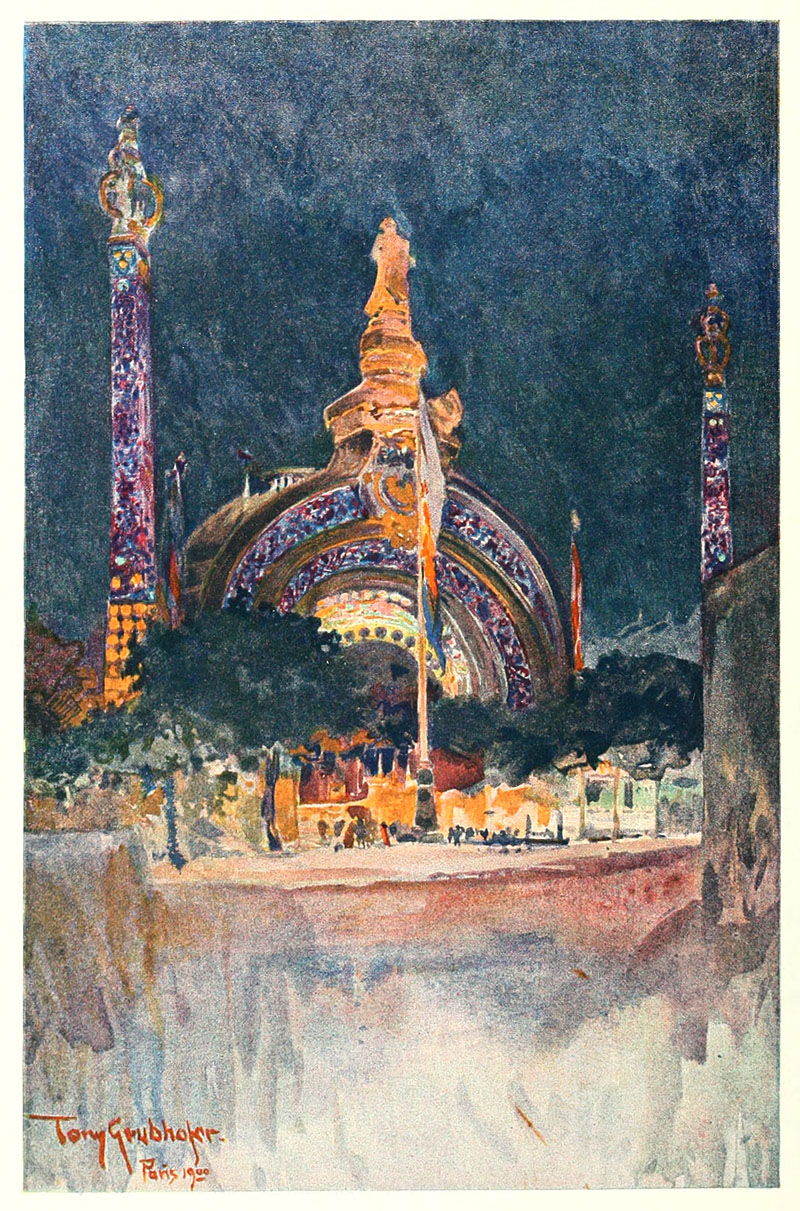
The Exposition gateway.

In a blizzard of work this month I finished another project with a Victorian theme (not more Steampunk!) which I won’t reveal just yet as I dislike spoiling the surprise for publishers. Part of the preparation involved yet more trawling through scanned volumes at the Internet Archive, looking this time at British art magazines from the 1890s. As with the German magazines of the period, some of these are more interesting than others: The Magazine of Art, for example, has its moments but for the most part it’s a champion of the stodgily dull, conservative fare which no one would ever want to revive today. Their columnists also hated the Decadents; I found a wonderful rant against Aubrey Beardsley’s art from 1897 which suggested that the artist and others like him ought to stop poisoning the soul of the nation and emigrate to France. Poor Aubrey only had a year to live, and, as things turned out, ending up dying in that iniquitous nation. I think it’s fair to say he’s had the last laugh.

grubhofer02.jpg

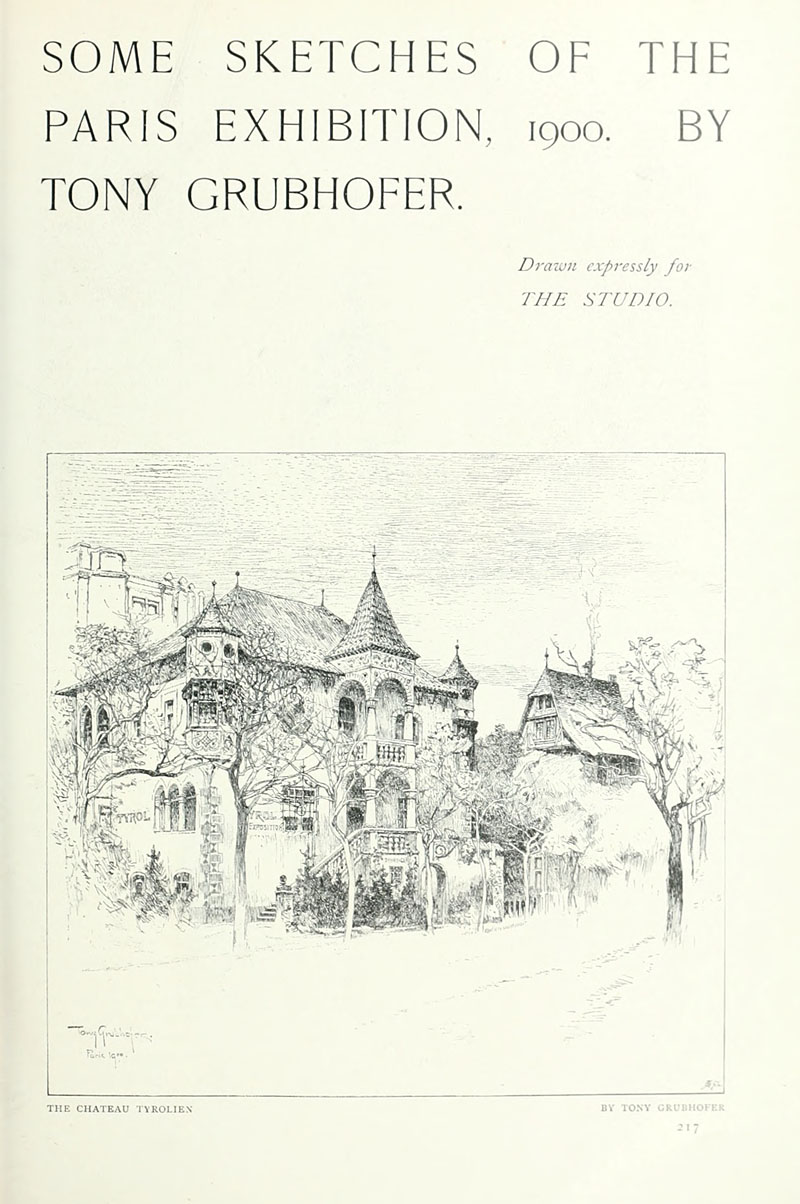
The Chateau Tyrolien.

The Studio magazine, on the other hand, was very sympathetic to the Decadents and Symbolists in general, and to Beardsley in particular, who had his work featured in the first number of the magazine in 1893. The drawings in this post are a surprise find in one of the numbers for 1900, and concern that locus of everything The Magazine of Art loathed: Paris! We’re back again at the Exposition Universelle, a subject which has been explored here on so many occasions I’m surprised I keep finding anything new that’s worthy of mention.

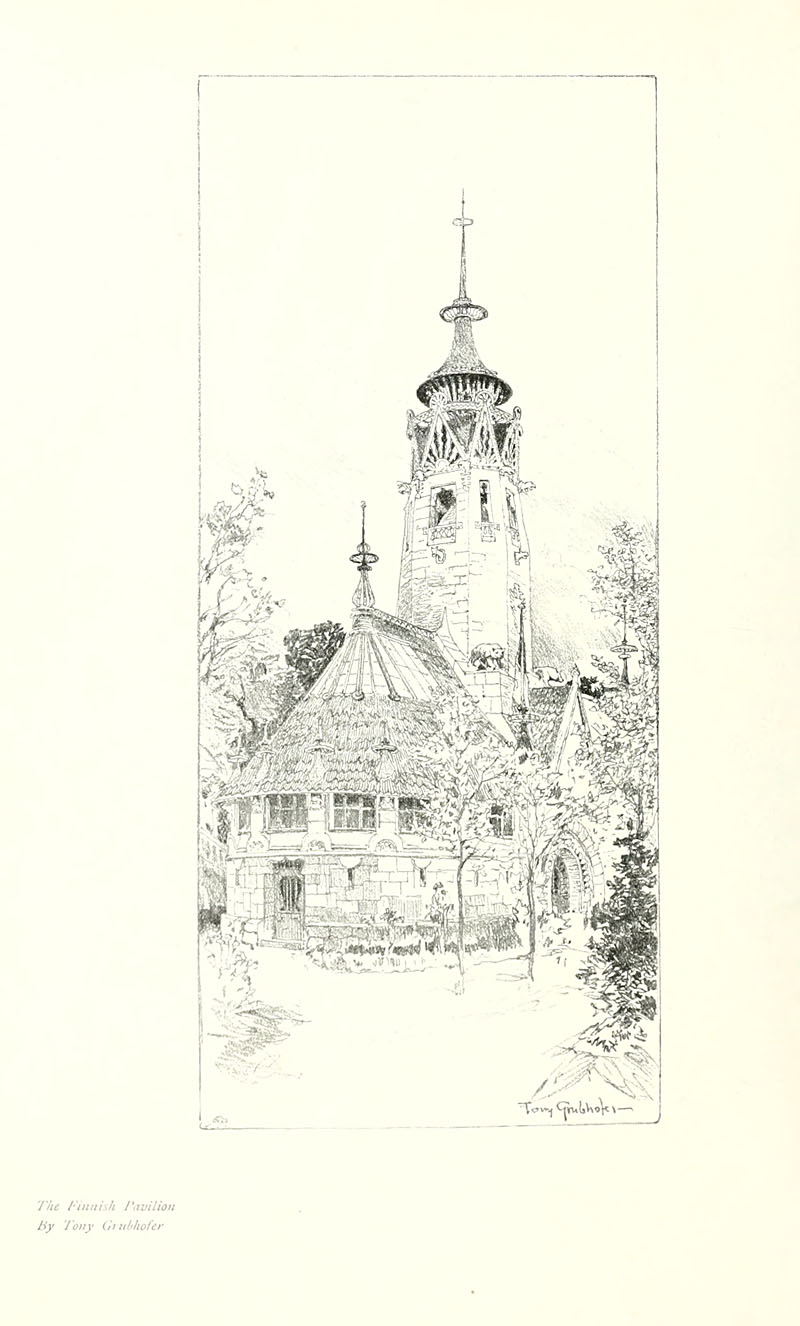
Tony Grubhofer (1854–1935) was apparently an Austrian artist who in these drawings manages to crop his views so selectively that many of them don’t look like they’re part of an exposition in one of the world’s capital cities. Of interest for me are his watercolour of René Binet’s monumental gate, which gives an idea of how the structure would have looked at night illuminated by the novelty of electric light, and his view of Eliel Saarinen’s Finnish pavilion which he renders as though it was a provincial church. This was Saarinen’s first major commission (he was 27 at the time), and Philippe Jullian in his book about the exposition declares this design to have been the most interesting and successful of all the national pavilions that year. It’s certainly better than Edwin Lutyens’ pastiche of an Elizabethan manor for the British pavilion. Eliel Saarinen had a very successful career, as did his more well-known son, Eero Saarinen, one of the major architects of the 20th century.

Volumes 20 to 22 of The Studio can be downloaded here.

grubhofer03.jpg

The Finnish Pavilion.

Continue reading “Tony Grubhofer’s Exposition Universelle sketches”