Digital Grotesque

3d1.jpg

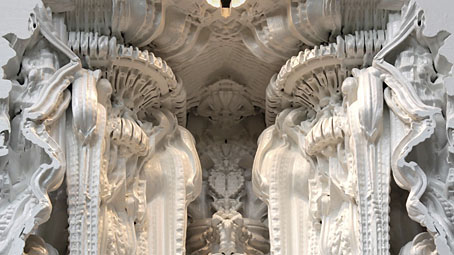
These organic forms are details of an architectural environment produced in sandstone using a 3D printer. The project is a collaboration between Michael Hansmeyer and Benjamin Dillenburger who use a series of algorithms to create the shapes the printer produces:

In the Digital Grotesque project, we use these algorithms to create a form that appears at once synthetic and organic. The design process thus strikes a delicate balance between the expected and the unexpected, between control and relinquishment. The algorithms are deterministic as they do not incorporate randomness, but the results are not necessarily entirely foreseeable. Instead, they have the power to surprise.

The resulting architecture does not lend itself to a visual reductionism. Rather, the processes can devise truly surprising topographies and topologies that go far beyond what one could have traditionally conceived.
3d2.jpg

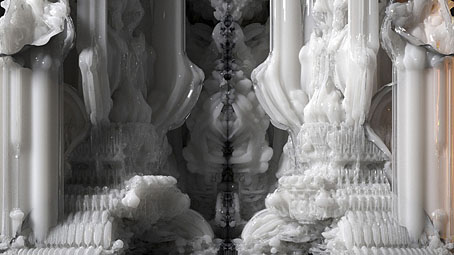
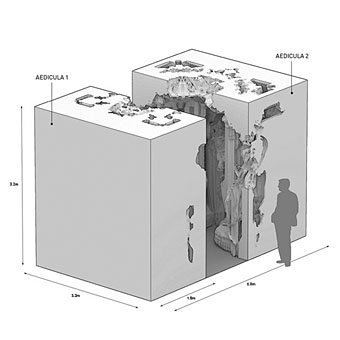
The diagram below shows the scale of the completed structure. Regular readers won’t be surprised to hear that the first thing that came to my mind when looking at these photos was “Lovecraft!” This unpredictable rendering process immediately solves the problem of how to depict or construct a non-human architecture without resort to anything Earth-bound. Those ridged and fluted columns could be R’lyeh or they could equally be the vast and ancient buildings that Dyer and Danforth discover in At the Mountains of Madness. I’ve been waiting for a while for 3D printing to start moving beyond the mere replication of existing objects; this is a very promising development. There’s more detail about the process and construction at the Digital Grotesque site.
3d3.jpg

Previously on { feuilleton }
• At the Mountains of Madness
Tentacles #4: Cthulhu in Poland

vesper1.jpg

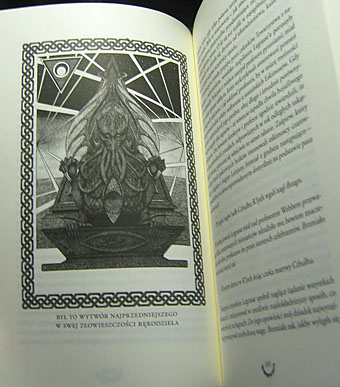
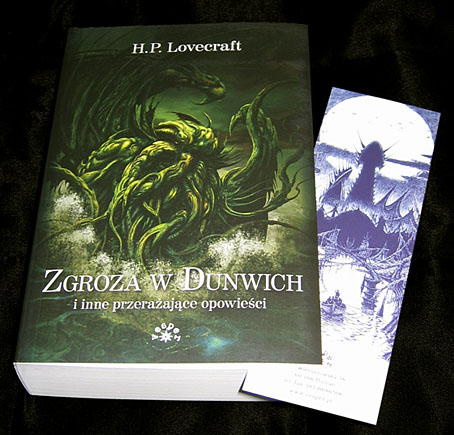
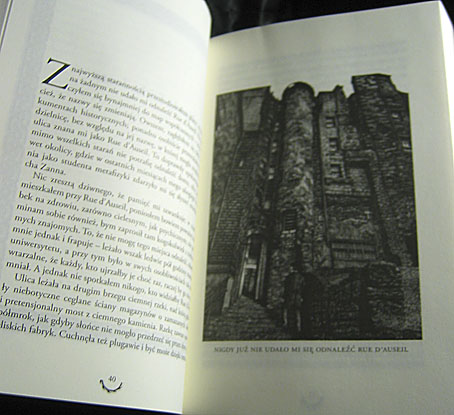
Several months ago Polish publisher Vesper asked to use some of my Lovecraft art for a Polish collection of the author’s work. Their weighty paperback just happened to arrive during this tentacle-themed week, an event which also gives me an opportunity to mention again (how could I not?) that two of these pieces can be found in the new Cthulhu Calendar. An ideal Halloween gift! Breaks the ice at eldritch parties! Etc. By coincidence I also received a book this week about vampire squid but I’ll say more about that after I’ve had a chance to read it.

vesper4.jpg

Despite Cthulhu being on the cover, the title of the book is (according to Google) The Dunwich Horror and Other Scary Stories which is no doubt a better sell with “horror” being up front. There are only fifteen stories but the page count runs to 792 since most of them are the later, longer works, including the entirety of At the Mountains of Madness and The Case of Charles Dexter Ward. A number of my illustrations are used within, one of which—the drawing of Advocates’ Close in Edinburgh which first appeared in The Haunter of the Dark—gets repurposed as an illustration for The Music of Erich Zann (above). Quite a fitting use, I think.

vesper2.jpg

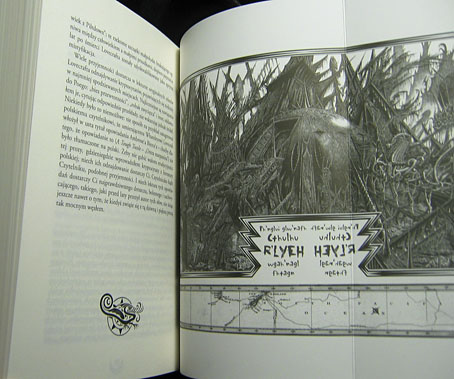
In addition you also get my widescreen view of R’lyeh as a spread on the inside of the French flaps. And my copy came with a nice R’lyeh bookmark. Those interested can order the book here.

vesper3.jpg

Elsewhere on { feuilleton }
• The Lovecraft archive

Salon Futura #1

salon-futura.jpg

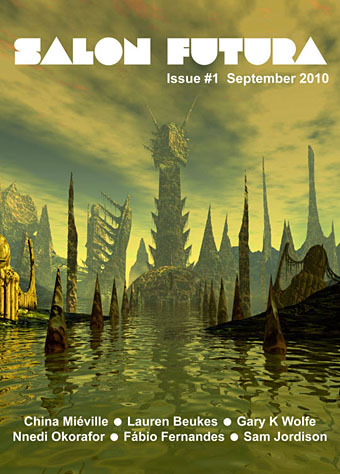
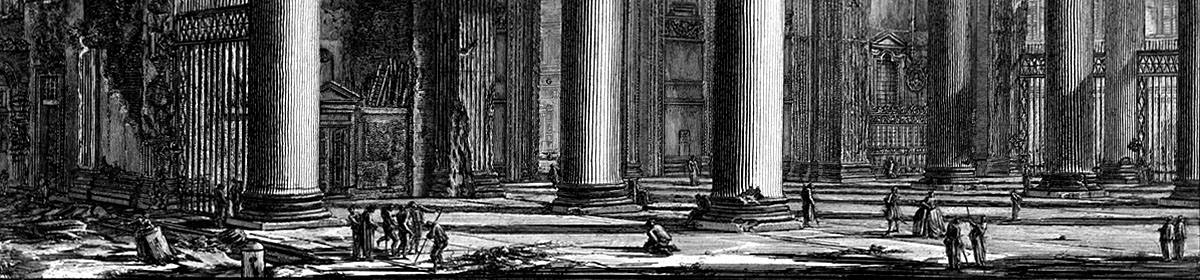
It’s been a pleasure this week seeing my 1999 portrait of Cthulhu’s rotting domicile, R’lyeh, used as the cover image for Salon Futura, a new online magazine edited by Cheryl Morgan. Cheryl describes SF as “a new and hopefully somewhat different magazine devoted to the discussion of science fiction, fantasy and other forms of speculative literature.” Among the contents there’s a podcast interview with Gary K Wolfe, Nnedi Okorafor and Fábio Fernandes (the latter is a contributor to the steampunk book I’m currently designing for Tachyon); there are video interviews with writers Lauren Beukes and China Miéville, and the Guardian‘s Sam Jordison writes an appraisal of EL Doctorow’s 1994 novel The Waterworks (about New York City’s minatory Croton Reservoir) which stimulated my interest enough to make me want to search out the book. And speaking of minatory architecture, {feuilleton} approves of the presence of Taschen’s fat volume of Piranesi works spied on China Miéville’s bookshelf. China always has interesting things to say; go and see for yourself.

Previously on { feuilleton }
• Le horreur cosmique

The specimens of Alex CF

alexcf1.jpg

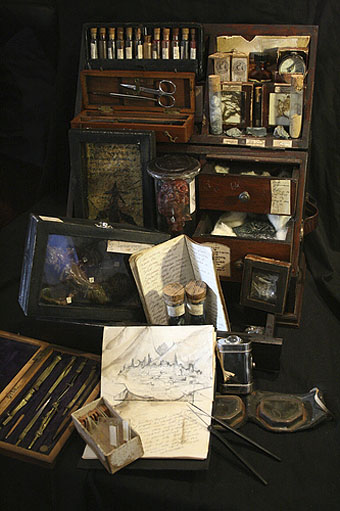
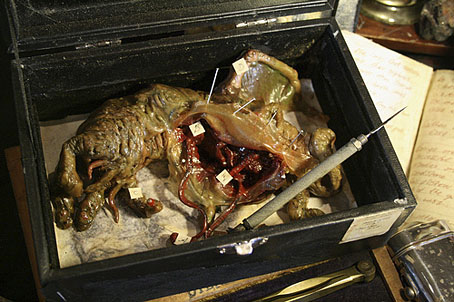
Artist Alex CF makes beautifully detailed—and very authentic—cases for cryptozoological specimens. I think I’d seen examples of these before but not the Lovecraft exhibits like this collection which presents samples and studies retrieved from the Mountains of Madness. Among other Lovecraftiana there’s also a case devoted to artefacts from R’lyeh. These would have been ideal additions to the Lovecraft show at Observatory which (as a reminder) opens this Friday.

Via ~Wunderkammer~. (I think. If it wasn’t, it should be…)

alexcf2.jpg

Previously on { feuilleton }
• At the Mountains of Madness
• Walmor Corrêa’s Memento Mori
• The art of Ron Pippin
• Custom creatures
• Cryptozoology
• The Museum of Fantastic Specimens

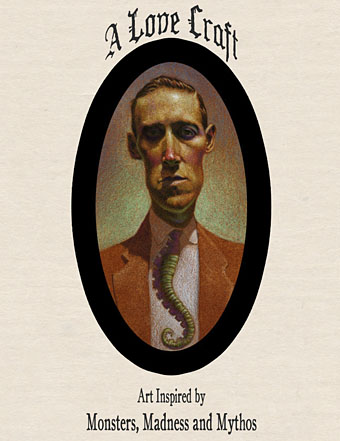
A Love Craft: Art Inspired by Monsters, Madness and Mythos

alovecraft.jpg

Painting by Matthew Buck.

I’ve linked in the past to previous shows at Observatory, an arts and events space in Brooklyn, NY, so I’m very pleased to be contributing to their forthcoming exhibition, A Love Craft: Art Inspired by Monsters, Madness and Mythos, which takes HP Lovecraft’s work as its theme. Other participants will include Aeron Alfrey, Esao Andrews, Matt Buck, Paul Carrick, Melita Curphy, Mike Dubisch, Bob Eggleton, FuFu Frauenwahl, Cyril van der Haegen, Dan Harding, Stephen Hickman, Joshua Hoffine, Kurt Komoda, Dieter Van der Ougstraete, Greg Ruth, Johnny Ryan, Andrew Scott, Allison Sommers, and AJ Wagar.

whateley.jpg

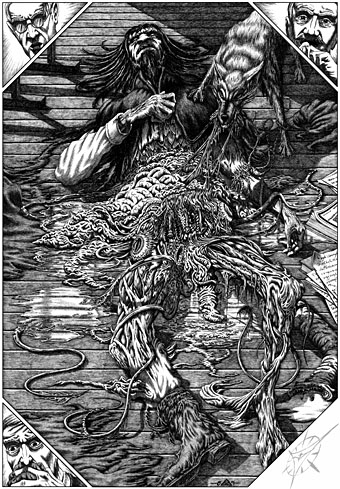
Wilbur Whateley from The Dunwich Horror (1989).

Prints of four of my Lovecraft-related works will be on display including everyone’s favourite rendering of Wilbur Whateley’s terminal moment from The Dunwich Horror. Visitors will have a rare opportunity to see my ink drawing of R’lyeh at a large size. I’m also told that prints of various works will be available for purchase but you’ll have to either visit the exhibition or contact Observatory for further details.

A Love Craft opens on Friday, June 11th at 7:00pm and runs to July 23rd, 2010.

Previously on { feuilleton }
• The monstrous tome
• Lovecraftian horror at Maison d’Ailleurs