Charles Ricketts’ Salomé

ricketts1.jpg

Here is my scheme. I proposed a black floor – upon which Salomé’s white feet would show; this statement was meant to capture Wilde. The sky was to be a rich turquoise blue, and across by the perpendicular fall of strips of gilt matting, which should not touch the ground, and so form a sort of aerial tent above the terrace. Did Wilde actually suggest the division of the actors into separate masses of colour, today the idea seems mine! His was the scheme, however, that the Jews should be in yellow, the Romans were to be in purple, the soldiers in bronze green, and John in white. Over the dresses of Salomé, the discussions were endless: should she be black “like the night”? Silver, “like the moon”? Or – here the suggestion is Wilde’s – “green like a curious poisonous lizard”? I desired that the moonlight should fall upon the ground, the source not being seen; Wilde himself hugged the idea of some “strange dim pattern in the sky”.

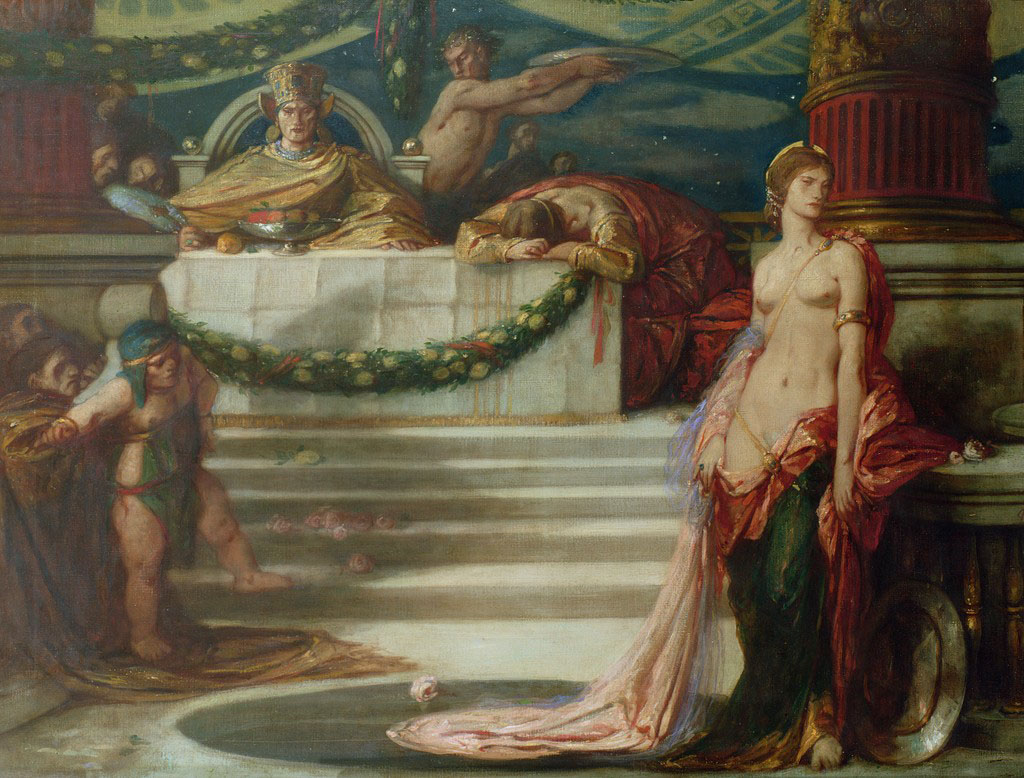
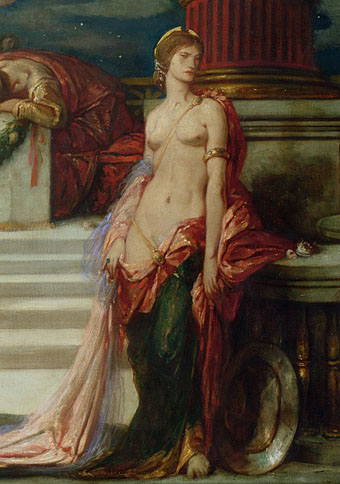
Thus artist, designer, publisher and writer Charles Ricketts (1866–1931), describing in later years his proposal for what would have been the first staging of Oscar Wilde’s Salomé in London. The scheme never materialised since the play was banned but Ricketts did create costume and stage designs for subsequent productions elsewhere, including performances in Japan in 1920. The V&A has Ricketts’ sketch of the stage for a private production in 1906 by the Literary Theatre Society, London. (The ban on Biblical themes in theatre kept the play from public performance in London until 1931.) In the Tate archives there’s what may be one of Ricketts’ costume designs from the Japanese production. Ricketts’ painting of Salomé dates from 1925, and for such a lurid and passionate subject seems rather passionless and inert. This isn’t so surprising, he was always a better designer and graphic artist than a painter; his lifelong partner, Charles Shannon, was the one who excelled with oils.

And speaking of Ricketts and Shannon, searching around turned up this recent blog devoted to the pair which contains much detail about their celebrated book designs.
ricketts2.jpg

Elsewhere on { feuilleton }
The Salomé archive

Previously on { feuilleton }
Charles Ricketts’ Hero and Leander
Rex Ingram’s The Magician

magician1.jpg

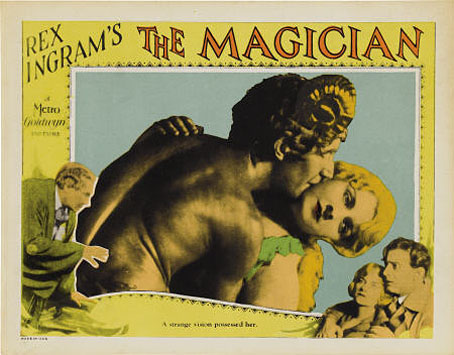
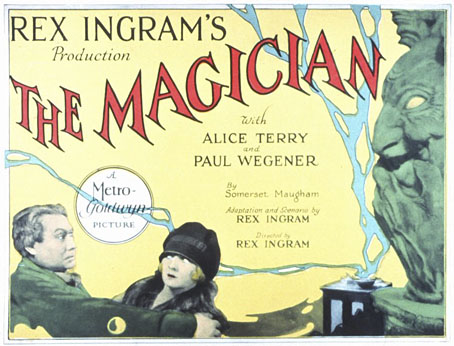
The Magician (1926), Rex Ingram’s curious occult horror film, receives a rare screening with live music accompaniment at the Brighton Fringe Festival on Tuesday, 22nd May. The film is notable for being based on the 1908 Somerset Maugham novel of the same name whose modern-day magus character, Oliver Haddo, was modelled on Aleister Crowley. The screening will feature an introduction by Gary Lachman, and a live soundtrack by the fabulous Ragged Ragtime Band, featuring members of Blondie, Indigo Octagon, Raagnagrok and Time. Booking details and other information here.

magician2.jpg

Maugham’s book has always been easier to find than Ingram’s film, more’s the pity when the film—despite some flaws—is the superior article. Read today, the novel comes across as a template for the standard Dennis Wheatley tale of middle-class innocents imperilled by grandiloquent villainy. A young couple, Arthur Burdon and his fiancée, Margaret, are pitted against Haddo’s extravagant diabolisms; for assistance they have a friend, Dr Porhoët, a Van Helsing type, older than the couple and with a convenient (but purely intellectual) interest in the occult. Haddo kidnaps Margaret and forces her with hypnosis into an unconsummated marriage. Haddo’s goal is to create artificial life—homunculi—and for that he requires a virgin’s blood. Maugham later described his novel as “lush and turgid”, an honest and accurate appraisal. Aleister Crowley was amused at being portrayed as a “Brother of the Shadows” but pretended to be scandalised by Maugham’s alleged plagiarism which he condemned in a Vanity Fair review that he signed “Oliver Haddo”. The best parts of the novel certainly owe something to other authors, usually the scenes concerning the sinister magus and his occult activities; the rest of the characters are lifeless by comparison. Some of the better passages read like HP Lovecraft writing Dorian Gray, and Maugham not only quotes from Walter Pater but also (uncredited) from Wilde’s Salomé.

magician4.jpg

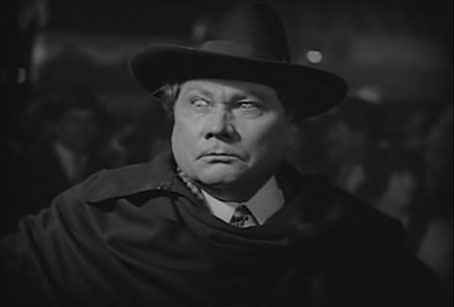
Paul Wegener as Oliver Haddo.

Continue reading “Rex Ingram’s The Magician”

Lindsay Kemp’s Salomé

kemp1.jpg

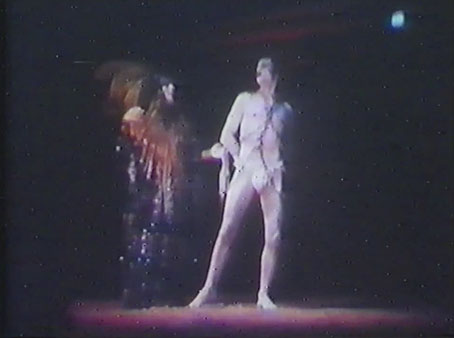
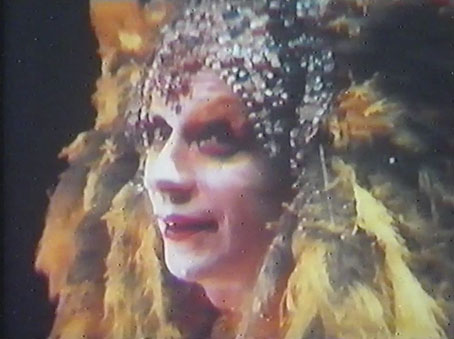
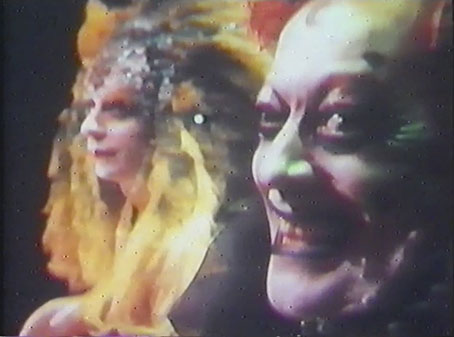
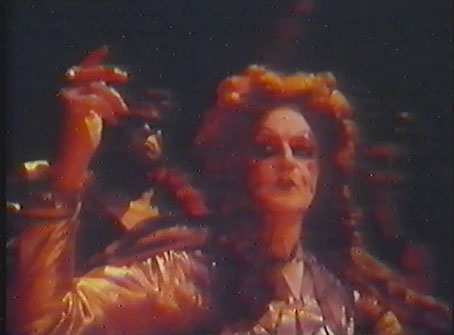
Fragments are all you get with this one, unfortunately, but how tantalising they are. Lindsay Kemp’s 1975 stage production of Oscar Wilde’s play was probably the queerest there’s been to date, with Kemp himself playing Herod’s doomed daughter under a heap of silks and feathers. These stills from a sequence of Super-8 shots of the performance arrive courtesy of Nendie Pinto-Duchinsky, director of the forthcoming Kemp documentary Lindsay Kemp’s Last Dance, a film whose title echoes Ken Russell’s film of the Wilde play. The connections circulate wildly (so to speak) around Kemp’s production: prior to this performance Kemp had acted for Ken Russell, while two of the other actors went on to work with Derek Jarman (as did Kemp). John the Baptist (above) was played by David Haughton who appeared as Ariel in Jarman’s Jubilee; Jack Birkett’s grinning features (bottom, right) appear in many of Jarman’s films. All the more reason to wish these clips were longer.

The Kemp documentary YouTube channel has a few more items related to Kemp’s stage work, notably another tantalising sequence of stills from Flowers (1974), an adaptation of Genet’s Our Lady of the Flowers that also featured Haughton and Birkett.

Update: Thanks to Suzanne in the comments for pointing to her video which includes further film moments including Salomé performing with a live snake à la Salammbô.

kemp2.jpg

kemp3.jpg

kemp4.jpg

Elsewhere on { feuilleton }
The Salomé archive

Previously on { feuilleton }
Mister Jarman, Mister Moore and Doctor Dee
Saint Genet

The Lumière Brothers at the Exposition Universelle

paris1900-1.jpg

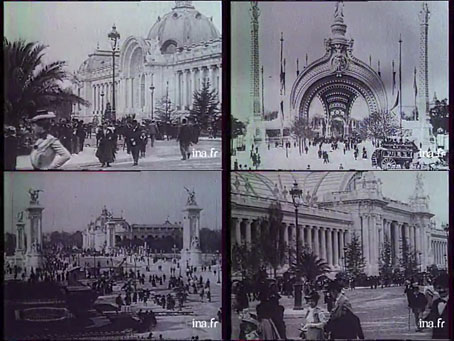
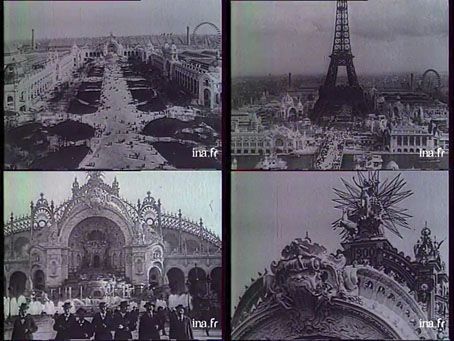
The films shot by the Edison company at the Paris Exposition Universelle of 1900 were featured here a couple of years ago. These screen grabs are from better quality footage made by Edison’s French rivals, Auguste and Louis Lumière, who had the advantage over the Americans in also having their films screened as one of the exposition attractions. The footage is nine minutes from Lumière, a French documentary compiled in 1966 by Marc Allégret, which is hosted here. The clip is still rough but not at all bad compared to the poor quality of online copies of the Edison footage, and it’s mostly projected at a speed so people don’t rush around like Keystone Cops. (On the downside, the audio track has the French speaking clock droning away in the left channel.) Great shots of the pavilions along the Seine, and the escalator. Whatever the quality, these views still strike me as miraculous for the brief impression they give of the exposition as a living event. Oscar Wilde enjoyed his last summer with these teeming crowds. He may be there somewhere among the top hats and parasols.

paris1900-2.jpg

Previously on { feuilleton }
Le Grand Globe Céleste, 1900
Tony Grubhofer’s Exposition Universelle sketches
The Cambodian Pavilion, Paris, 1900
Le Manoir a l’Envers
Suchard at the Exposition Universelle
Esquisses Décoratives by René Binet
Le Palais de l’Optique, 1900
Exposition Universelle films
Exposition jewellery
Exposition Universelle catalogue
Exposition Universelle publications
Exposition cornucopia
Return to the Exposition Universelle
The Palais Lumineux
Louis Bonnier’s exposition dreams
Exposition Universelle, 1900