Weekend links 264

dakin.jpg

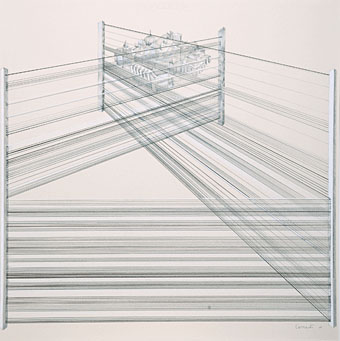
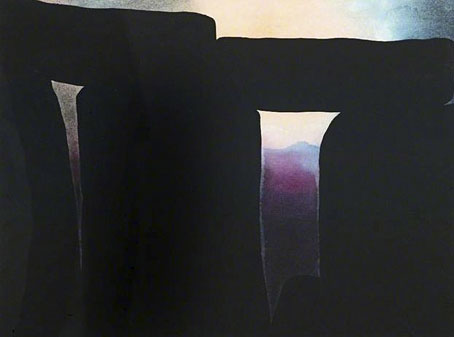
Stonehenge Suite, No.10 (1977) by Malcolm Dakin.

• “Part of me always wanted to write a teatime drama. That’s something that I wanted to get out of my system,” says director Peter Strickland. The results may be heard here. In the same interview there’s news that Strickland will be adapting Nigel Kneale’s The Stone Tape for radio later this year.

• “He was, as one obituary stated in terms unusually blunt for the time, ‘not as other men’.” Strange Flowers on the eccentric and profligate Henry Cyril Paget (1875–1905) aka The Dancing Marquess.

• “Please tell Mr Jagger I am not Maurits to him.” MC Escher rebuking The Rolling Stones. The artist is the subject of a major exhibition at the National Galleries of Scotland from June 27th.

Often mentioned in the same breath as works of James Joyce and Samuel Beckett, Ó Cadhain’s novel is, in some ways, even more radically experimental. For starters, all the characters are dead and speaking from inside their coffins, which are interred in a graveyard in Connemara, on Ireland’s west coast. The novel has no physical action or plot, but rather some 300 pages of cascading dialogue without narration, description, stage direction, or any indication of who’s speaking when.

Niamh Ní Mhaoileoin on the newly-translated Cré na Cille (The Dirty Dust) by Máirtín Ó Cadhain

Paul Woods examines “10 Edgy Properties No Film Producer Dared To Touch
(Yet)”. No. 2 is David Britton’s Lord Horror.

Mallory Ortberg ranks paintings of Saint Sebastian “in ascending order of sexiness and descending order of actual martyring”.

The Sign of Satan (1964): Christopher Lee in a story by Robert Bloch for The Alfred Hitchcock Hour.

Sympathy For The Devil – The True Story of The Process Church of the Final Judgment.

• At Dangerous Minds: Paul Gallagher on the seedy malevolence of Get Carter (1971).

• Mix of the week: Sonic Attack Special – Earth by Bob’s Podcasts.

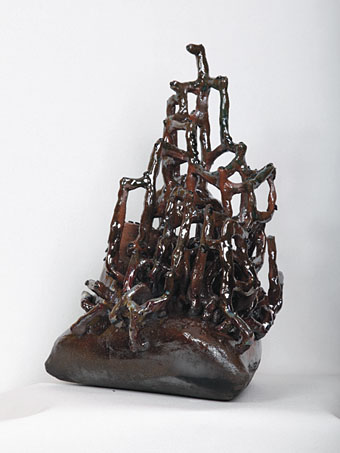
Sanctuary Stone (1973) by Midwinter | The Litanies Of Satan (1982) by Diamanda Galás | Sola Stone (2006) by Boris

Crystal balls

crystal04.jpg

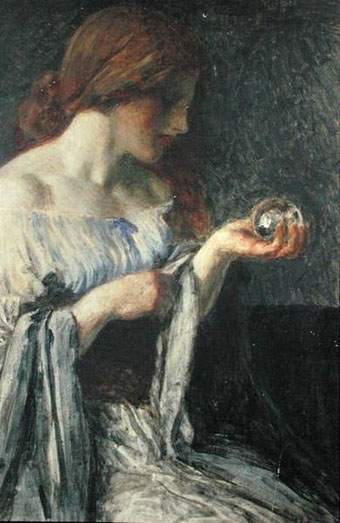
The Crystal Ball (c. 1900) by Robert Anning Bell.

Crystal balls in art, film and the pulp magazines.

crystal05.jpg

The Crystal Ball (1902) by John William Waterhouse.

crystal02.jpg

Alexander, Crystal Seer (1910).

Continue reading “Crystal balls”

The Fantastic World of MC Escher

escher1.jpg

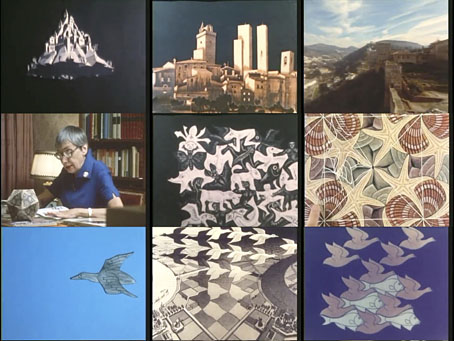
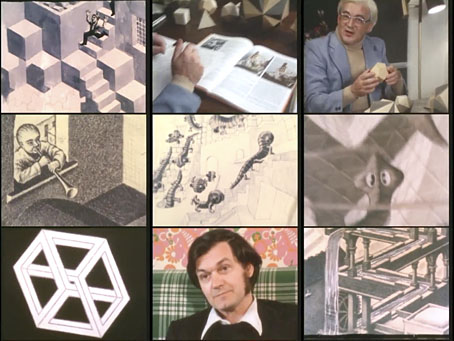
An Italian documentary about the Dutch artist made in 1980 and directed by Michele Emmer. I don’t recall ever seeing a British TV documentary about Escher (although I’d be surprised if there were none) but this resembles the type of thing the BBC used to do so well. Shots of the Italian towns where Escher lived for many years show the influence of the vernacular architecture on Escher’s prints. Elsewhere, animated sequences bring to life his tessellations, while various mathematicians examine some of the structural principles at work in these very familiar images. Of greatest interest for me is mathematician and physicist Roger Penrose discussing his first encounter with Escher’s work, and the development with his father of the Penrose Triangle, an impossible object similar to those that appear in some of Escher’s prints. (I used a Penrose Triangle in my cover art for Zones by Hawkwind.) The Fantastic World of MC Escher runs for 50 minutes, and may be watched here.

escher2.jpg

Previously on { feuilleton }
MC Escher album covers
Escher and Schrofer

Stairs, a film by Stefan Schabenbeck

stairs.jpg

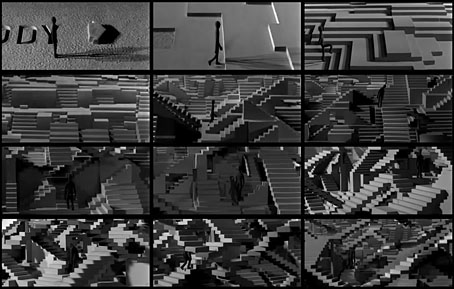
YouTube in recent years has become an increasingly worthwhile repository for short animations or experimental films, many of which you might otherwise never get to see. Stairs (1969) is another great piece of Polish animation, a brief scenario concerning a Plasticine figure who wanders into a terrain of random steps which soon turns mountainous. The obvious precursor is MC Escher’s stairways, but Escher’s worlds are always very formal despite their paradoxes. Schabenbeck’s film, like many Eastern European animations, can be read as allegory although this only becomes apparent at the very end. Watch it here.

Previously on { feuilleton }
Walls, a film by Piotr Dumala

Morning of the Magicians book covers

motm01.jpg

Éditions Gallimard, France, 1960.

Yesterday’s post proved popular so it seemed worthwhile taking another look at the book that birthed Planète magazine. The main problem The Morning of the Magicians presents for an art director is how to encapsulate such wildly diverse contents in a cover design. To judge from the examples here, most people seem to have either given up or gone for vaguely symbolic designs which at the most correspond to the contents in a minor way. The biggest surprise for me was seeing the cover of the first edition above, one of those typically sober French titles which gives away nothing of the intellectual fireworks within. Few of these designs have any credits, and this is nothing like a complete list (more editions may be seen at Goodreads). More recent editions have been avoided altogether since they’re pretty terrible.

motm10.jpg

Arnoldo Mondadori Editore, Italy, 1963. This edition, which runs to 476 pages, includes three translated stories inserted into the text: The Nine Billions Name of God by Arthur C. Clarke, A Canticle for Leibowitz by Walter M. Miller Jr, and The White People by Arthur Machen.

A hardback edition showing an alchemist at work.

motm03.jpg

Stein and Day, USA, 1964.

You know a cover is failing when it could easily be applied to any number of other titles.

Continue reading “Morning of the Magicians book covers”