Metronomes

metronomes.jpg

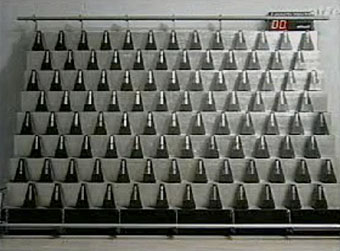
An automated performance of György Ligeti’s Poème symphonique for 100 metronomes at Ubuweb.

Since its world premiere in the Netherlands in 1963, Poème symphonique for 100 metronomes has been very rarely performed in public. The complicated scenographic staging, the detailed preparation by hand, the need for around ten technicians to activate more or less simultaneously the 100 metronomes, makes the demand for performances limited. Thirty-two years after the premiere, the sculptor and installation artist Gilles Lacombe heard a recording of the work. Impressed, he decided to invent a machine able to perform the piece automatically. After six months, he set up this ingenious device. Ever since, Poème symphonique can be performed accurately, at any time, and in public. Please understand that at its world premiere in 1963, the concert was filmed by Dutch television. On that night, after the final tick-tock of the metronome, there was a heavy silence, followed by booing, screaming, and threats. The concert was never broadcast.

manray.jpg

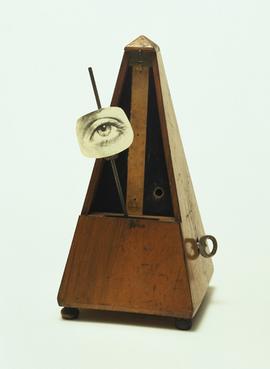
And while we’re on the subject, let’s not forget Man Ray’s Object to be Destroyed (1923) (aka Indestructible Object). Richard Cork looked at its origin and meaning for the Tate magazine.

Previously on { feuilleton }
The Avant Garde Project

Mark Beard’s artistic circle

beard1.jpg

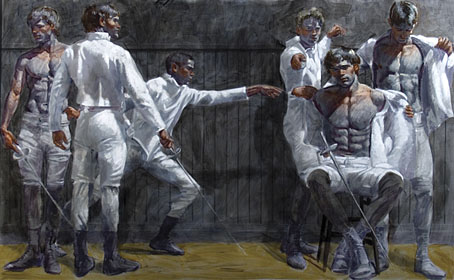
The Fencing Team by Bruce Sargeant.

Artists in the 20th century used to be multifarious in their activities, often taking their work through different stages or periods of evolution; Picasso and Max Ernst are two good examples of this. In today’s inflated art market this is no longer a wise move. As Brian Eno has noted in the case of the polymathic Tom Phillips, the pressure is there to establish yourself as a person who does one thing only, to turn yourself into a brand.

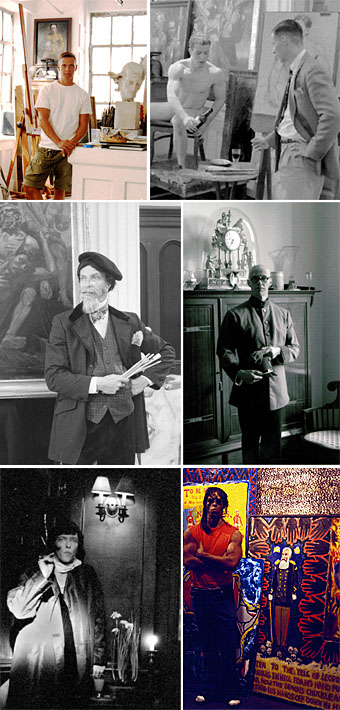
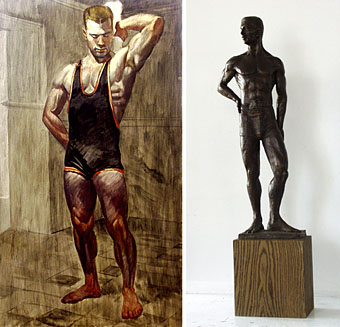
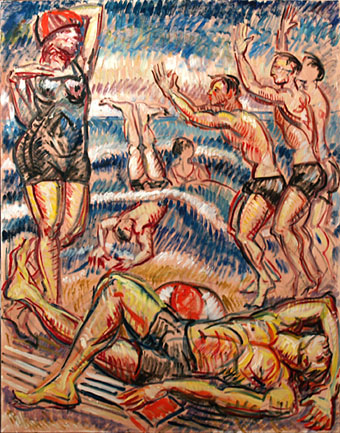
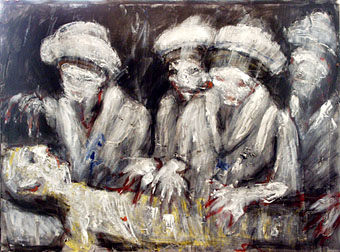
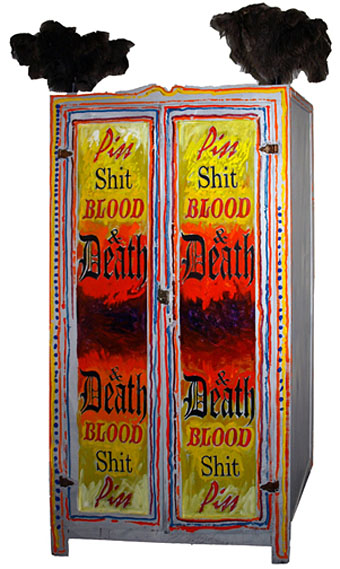
American artist Mark Beard isn’t happy with that situation. In order to satisfy a desire to create in whatever styles he chooses, he’s developed a number of distinct artist personalities, each with their own detailed biographies and even photographs (below). This isn’t entirely unprecedented, Marcel Duchamp famously had a female alter-ego named Rrose Sélavy, and was photographed by Man Ray in feminine attire, but offhand I can’t think of another artist going as far as creating six distinct personas. The painting above is one of a homoerotic sports-themed series by artist Bruce Sargeant who died, we’re told, in 1938 as a result of a wrestling accident. Examples of Beard’s other influences follow. For the complete artist biographies, see the Mark Beard pages at the Carrie Haddad gallery.

The artists

beard2.jpg

top left: Mark Beard (b. 1956); right: Bruce Sargeant and model (1898-1938)
middle left: Hippolyte-Alexandre Michallon (1849-1930); right: Brechtolt Steeruwitz (1890-1973)
bottom left: Edith Thayer Cromwell (1993-1962); right: Peter Coulter (b. 1948)

Their works

beard3.jpg

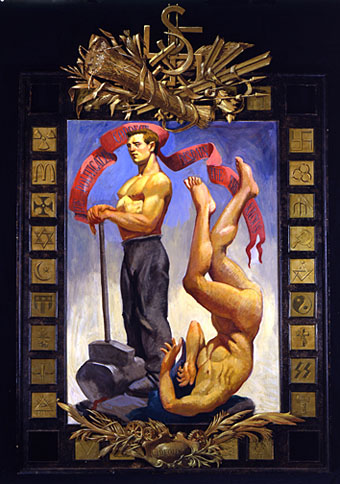
Ideology: The Politically Correct Disdain the Frivolous by Mark Beard (1989).

beard4.jpg

Avant la Fuite by Hippolyte-Alexandre Michallon (1894).

beard5.jpg

Swimmer Drying Himself, Berlin Olympics (1936), Young Athlete by Bruce Sargeant.

beard6.jpg

On the Strand by Edith Thayer Cromwell.

beard7.jpg

Das Krakenhaus by Brechtolt Steeruwitz (At the Hospital) (1923).

beard8.jpg

Cabinet by Peter Coulter.

Elsewhere on { feuilleton }
The gay artists archive

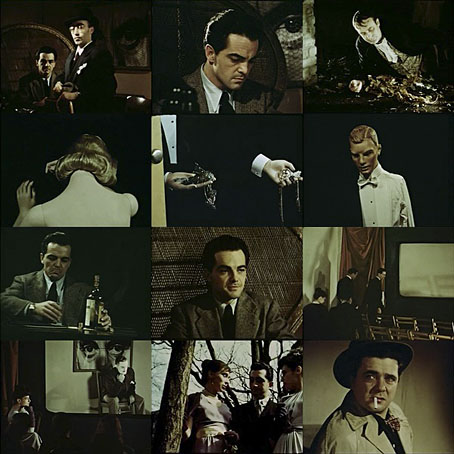
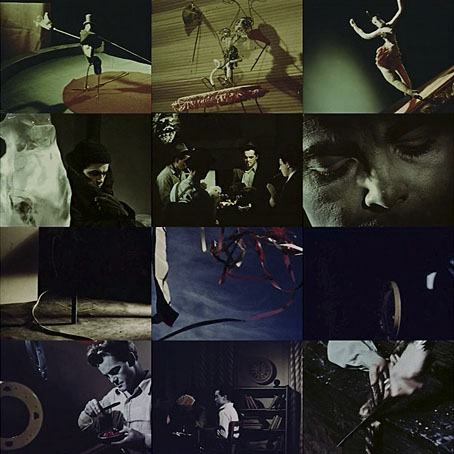
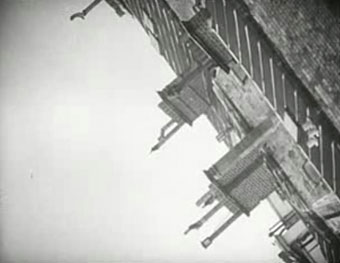
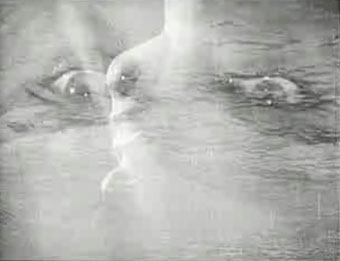
Entr’acte by René Clair

entracte.jpg

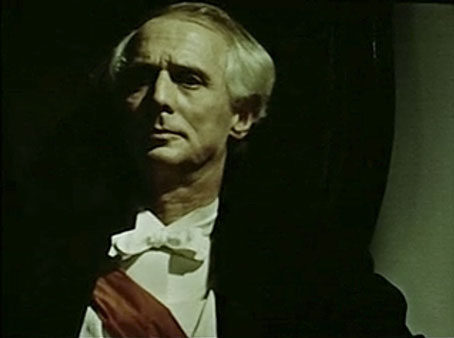
One of the best—and most entertaining—films to come out of the Dada/Surrealist period, Entr’acte (1924) is also worth watching for the appearance of notable figures such as Francis Picabia (who initiated the project), Marcel Duchamp, Man Ray and Erik Satie.

This extraordinary early film from director René Clair was originally made to fill an interval between two acts of Francis Picabia’s new ballet, Relâche, at the Théâtre des Champs-Elysées in Paris in 1924. Picabia famously wrote a synopsis for the film on one sheet of note paper, headed Maxim’s (the famous Parisian restaurant), which he sent to René Clair. This formed the basis for what ultimately appeared on screen, with some additional improvisations. Music for the film was composed by the famous avant-garde composer Erik Satie, who appears in the film, along side its originator, Francis Picabia. The surrealist photographer Man Ray also puts in an appearance, in a film which curiously resembles his own experimental films of this era.

entracte2.jpg

Entr’acte is a surrealistic concoction of unrelated images, reflecting Clair’s interest in Dada, a fashionable radical approach to visual art which relied on experimentation and surreal expressionism. Clair’s imagery is both captivating and disturbing, giving life to inanimate objects (most notably the rifle range dummies), whilst attacking conventions, even the sobriety of a funeral march.

Entr’acte can be watched and downloaded at Ubuweb. Tate Modern is running a major exhibition of the works of three of the participants, Duchamp, Man Ray, Picabia, until 26 May, 2008.

Previously on { feuilleton }
Alexander Hammid
Impressions de la Haute Mongolie revisited
Short films by Walerian Borowczyk
The South Bank Show: Francis Bacon
Rose Hobart by Joseph Cornell
Some YoYo Stuff
Beckett directs Beckett
Meshes of the Afternoon by Maya Deren
Not I by Samuel Beckett
La Villa Santo Sospir by Jean Cocteau
Un Chant D’Amour by Jean Genet
Borges documentary
Film by Samuel Beckett
Towers Open Fire

L’Amour Fou: Surrealism and Design

manray2.jpg

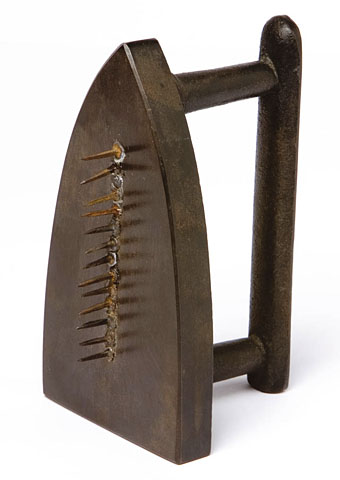
Cadeau Audace by Man Ray (1921).

L’amour fou by Robert Hughes
Fur teacups, wheelbarrow chairs, lip-shaped sofas … the fashion, furniture and jewellery created by the Surrealists were useless, unique, decadent and, above all, very sexy.

The Guardian, Saturday March 24th, 2007

THE VICTORIA AND Albert’s big show for this year, Surreal Things: Surrealism and Design, is—well, maybe we don’t much like the word “definitive”. But it’s certainly the first of its kind.

Everyone knows something about surrealism, the most popular art movement of the 20th century. The word has spread so far that people now say “surreal” when all they mean is “odd”, “totally weird” or “unexpected”. No doubt this would give heartburn to André Breton, the pope of the movement nearly a century ago, who took the title from his friend, the poet Guillaume Apollinaire, who had called his play The Breasts of Tiresias, “a surrealist drama”. But too late now. The term is many years out of its box and, through imprecision, has achieved something akin to eternal life. Surrealist painting and film, that is. In fact, some surrealist images have imprinted themselves so deeply and brightly on our ideas of visual imagery that we can’t imagine modern art (or, in fact, the idea of modernity itself) without them.

Think Salvador Dalí and his soft watches in The Persistence of Memory. Think Dalí again, in cahoots with Luis Buñuel, and the cut-throat razor slicing through the girl’s eye, as a sliver of cloud crosses the moon (actually, the eye belongs to a dead cow, but you never think this when you see their now venerable but forever fresh movie An Andalusian Dog, 1929). Think of photographer Man Ray’s fabulous Cadeau Audace (‘Risky Present’, 1921), the flatiron to whose sole a row of tacks was soldered, guaranteeing the destruction of any dress it would be used on. Think of Rene Magritte’s The Rape, that hauntingly concise pubic face, with nipples for eyes and the hairy triangle where the mouth should be. Think of the shock, the horniness, the rebellion, the unwavering focus on creative freedom, the obsessive efforts to discover the new in the old by disclosure of the hidden…

Continues here

Previously on { feuilleton }
The Surrealist Revolution
Surrealist Women
Las Pozas and Edward James
Surrealist cartomancy

The Surrealist Revolution

bunuel.jpg

The riddle of the rocks by Jonathan Jones
It was the art movement that shocked the world. It was sexy, weird and dangerous—and it’s still hugely influential today. Jonathan Jones travels to the coast of Spain to explore the landscape that inspired Salvador Dalí, the greatest surrealist of them all.

The Guardian, Monday March 5, 2007

I AM SCRAMBLING over the rocks that dominate the coastline of Cadaqués in north-east Spain. They look like crumbling chunks of bread floating on a soup of seawater. Surreal is a word we throw about easily today, almost a century after it was coined by the poet Guillaume Apollinaire. Yet if there is anywhere on earth you can still hope to put a precise and historical meaning on the “surreal” and “surrealism”, it is among these rocks. To scramble over them is to enter a world of distorted scale inhabited by tiny monsters. Armoured invertebrates crawl about on barely submerged formations. I reach into the water for a shell and the orange pincers of a hermit crab flick my fingers away.

The entire history of surrealism—from the collages of Max Ernst to Salvador Dalí’s Lobster Telephone—can be read in these igneous formations, just as surely as they unfold the geological history of Catalonia.

I sit down on a jagged ridge. What if I fell? Would they find a skeleton looking just like the bones of the four dead bishops in L’Age d’Or, the surrealist film Luis Buñuel shot here in 1930?

Buñuel had been shown these rocks by his college friend Dalí years earlier. It was here they had scripted their infamous film Un Chien Andalou. Dalí came from Figueras, on the Ampurdán plain beyond the mountains that enclose Cadaqués, and spent his childhood summers here, exploring the rock pools and being cruel to the sea creatures. In most people’s eyes, this is a beautiful Mediterranean setting. It certainly looked lovely to Dalí’s close friend, the poet Federico García Lorca, when Dalí brought him here in the 1920s: in his Ode to Salvador Dalí, Lorca lyrically praises the moon reflected in the calm, wide bay…

Continues here.

Previously on { feuilleton }
The persistence of DNA
Salvador Dalí’s apocalyptic happening
The music of Igor Wakhévitch
Dalí Atomicus
Las Pozas and Edward James
Impressions de la Haute Mongolie