Eco Del Universo

edu1.jpg

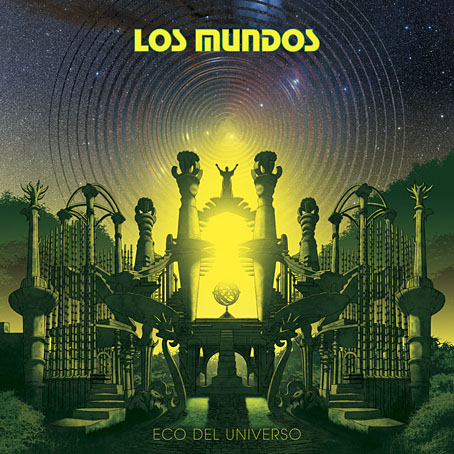
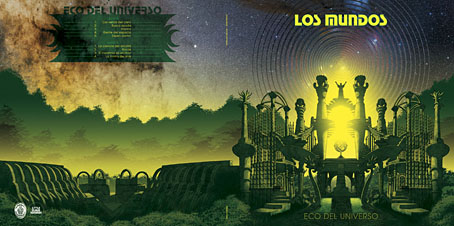
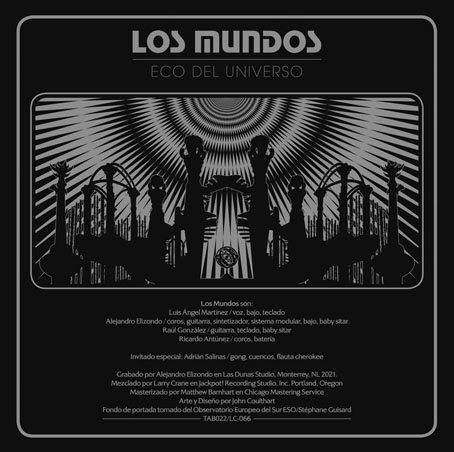
Eco Del Universo, the ninth album by Mexican band Los Mundos, was released last month on Acid Test Recordings. I designed and illustrated the outer and inner sleeves for an album whose music is described on the group’s Bandcamp page as psychedelic rock. I’ve not seen a physical copy yet but the vinyl disc is available in two pressings that complement the colours of the cover.
edu2.jpg

The brief for this one was for something based on the concrete fantasia known as Las Pozas, an overgrown park with accompanying hotel that Edward James spent many years and a great deal of money building in the Mexican jungle. James was a British aristocrat who fell for Surrealism in a big way in the 1930s, using his inherited wealth to support artists such as Salvador Dalí, René Magritte and Leonora Carrington, while creating Surrealist-styled homes for himself, first at Monkton House in West Sussex then at Xilitla in Mexico. James and his jungle resort have been recurrent subjects here so I didn’t need much encouragement to create something based on his constructions. In the past I’ve described Las Pozas as unfinished but this suggests a scheme with a final goal in mind. I don’t think this was ever James’s intention. His creations are more like very large concrete sculptures rather than architecture, even though some of them have a recognisable architectural form. Finished or not, the structures are a unique hybrid of the purposeless architectural folly—a popular indulgence for British landowners of the 18th and 19th centuries—and caprices like the Palais Idéal of Ferdinand Cheval.
edu3.jpg

My cover art is a fantasy on the fantasy which makes James’s improvisations look a little more planned than they are by mirroring their disposition. I also crowded together several of the constructions which at Las Pozas are in separate areas of the complex. Looking at the artwork again I’m reminded of some of Roger Dean’s views which wasn’t my intention originally. I think it’s the combination of unusual architecture, layered foliage and the treatment of light and shade. If the structures weren’t outlined and the sky was a Dean-like gradient there’d be even more of a similarity. The beautiful stellar photo is from the European Southern Observatory (ESO) whose images of the cosmos are free to use so long as you give them credit. This one was by Stéphane Guisard.

Previously on { feuilleton }
The Secret Life of Edward James
Palais Idéal panoramas
Las Pozas panoramas
Return to Las Pozas
Las Pozas and Edward James
Echoes of de Chirico

dechirico01.jpg

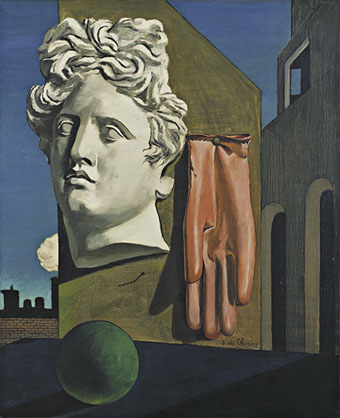
The Song of Love (1914) by Giorgio de Chirico.

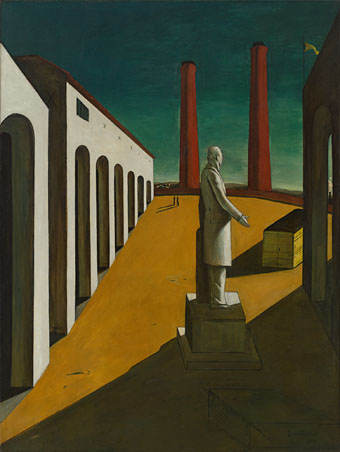
His art studies, begun in Athens, were continued in Munich where he discovered the work of Max Klinger and Arnold Böcklin, not to mention the writings of Friedrich Nietzsche and Arthur Schopenhauer, whose influence is perceptible in the paintings he went on to produce in Florence and Turin. In addition, his melancholy temperament lay behind the works that Guillaume Apollinaire labelled “metaphysical,” works in which elements from the real world (deserted squares and arcades, factory chimneys, trains, clocks, gloves, artichokes) were imbued with a sense of strangeness.

Keith Aspley, Historical Dictionary of Surrealism


dechirico02.jpg

The Enigma of a Day (1914) by Giorgio de Chirico.


ernst.jpg

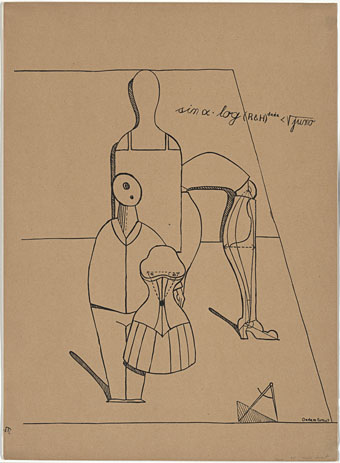
Plate II from Let There Be Fashion, Down With Art (Fiat modes pereat ars) (1920) by “Dadamax Ernst”.


magritte.jpg

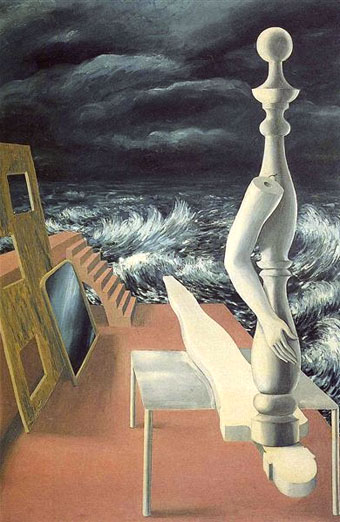
The Birth of an Idol (1926) by René Magritte.

Some time during the latter part of 1923 [Magritte] came face-to-face with his destiny, in the form of a painting by Giorgio de Chirico, who was one of the painters most admired by the Paris Surrealists: Le Chant d’amour (The Song of Love, 1914); to be more precise, a black-and-white reproduction of that painting in the review Les Feuilles libres, a very contrasty reproduction, as Sylvester has it, which only heightened the drama of the outsize objects suspended in the foreground of one of de Chirico’s “metaphysical landscapes”… He was shown it by Lecomte, or Mesens, or both. He was overwhelmed. […] Magritte always spoke of de Chirico as his one and only master. As a rule, he was exceedingly parsimonious in his assessment of other artists, past and present. In his own time, de Chirico (1888–1978) and Ernst (1891–1976) appear as the only two he admired, more or less unconditionally.

Magritte: A Life by Alex Danchev


dali4.jpg

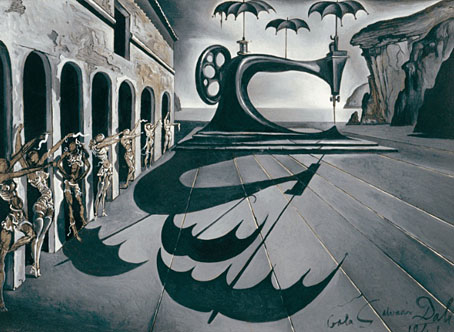
Sewing Machine with Umbrellas in a Surrealist Landscape (1941) by Salvador Dalí.

Continue reading “Echoes of de Chirico”

René Magritte, Cinéaste

magritte1.jpg

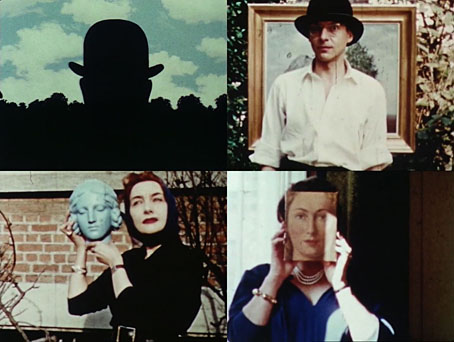
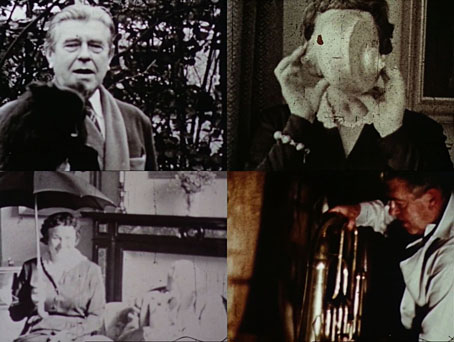
The title at the Internet Archive has this one as “Magritte Home Movies” which is a more accurate description than the title of the film itself. René Magritte, Cinéaste was apparently made in 1975 (although the print bears a copyright date for 1989), being a compilation of films from the late 1950s made in and around the Magritte household by René and wife Georgette (plus LouLou the Pomeranian) with contributions from friends in the Brussels art world: ELT Mesens (an artist who was later a member of the British Surrealist Group), Paul Colinet (artist), Louis Scutenaire (poet), Irène Hamoir (writer), Marcel Lecomte (writer), and others.

magritte2.jpg

The film opens with some contextual narration in French but the rest of the footage is soundless with a simple musical accompaniment. As with many home movies there’s a lot of mugging and dressing-up for the camera. What you don’t get in similar films is the setups that involve either quotes of Magritte’s paintings or the paintings themselves. If you’re familiar with the art then some of the props are also familiar, such as the plaster head (or heads) from the various versions of La Mèmoire, and the euphonium which in its painted form Magritte often showed in flames. The most Surrealist sequence is Le Dessert des Antilles, a Cocteau-like experiment with reverse-motion. Where Cocteau preferred to show a flower being pieced together from its constituent parts, Magritte has Irène Hamoir regurgitating a banana, bite by bite, which is then presented unpeeled to her husband, Louis Scutenaire. (This sequence has been flipped horizontally. A duplicate copy here shows the original title card.)

Elsewhere on { feuilleton }
The Surrealism archive

Previously on { feuilleton }
Magritte: The False Mirror
Magritte, ou la lecon de chose
René Magritte album covers
Monsieur René Magritte, a film by Adrian Maben
George Melly’s Memoirs of a Self-Confessed Surrealist
The Secret Life of Edward James
René Magritte by David Wheatley

Fuzz Against Junk & The Hero Maker

rubington1.jpg

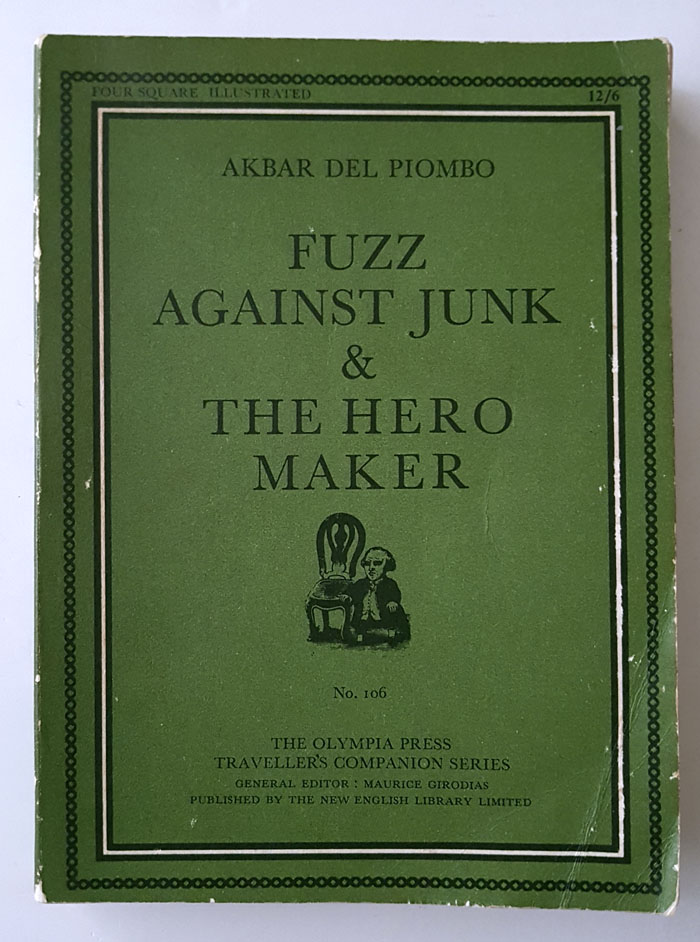
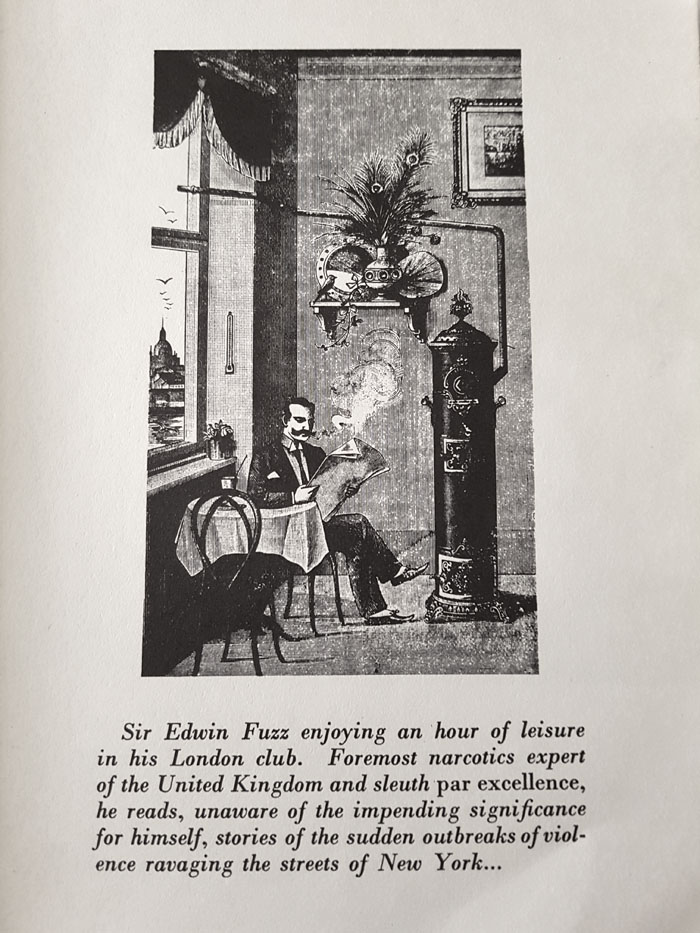
This is another of those posts in which I brag about finding an old book in a charity shop for a lot less than you’d have to pay for it online. But it does give me the opportunity to say something about American writer/artist Norman Rubington and his alter ego Akbar Del Piombo, something I was sure I’d done already. One of the weekend posts linked to an article about Rubington’s work but my discussion of his collages is in the essay I wrote about Wilfried Sätty for the Strange Attractor Journal, a piece which isn’t available here.

rubington8.jpg

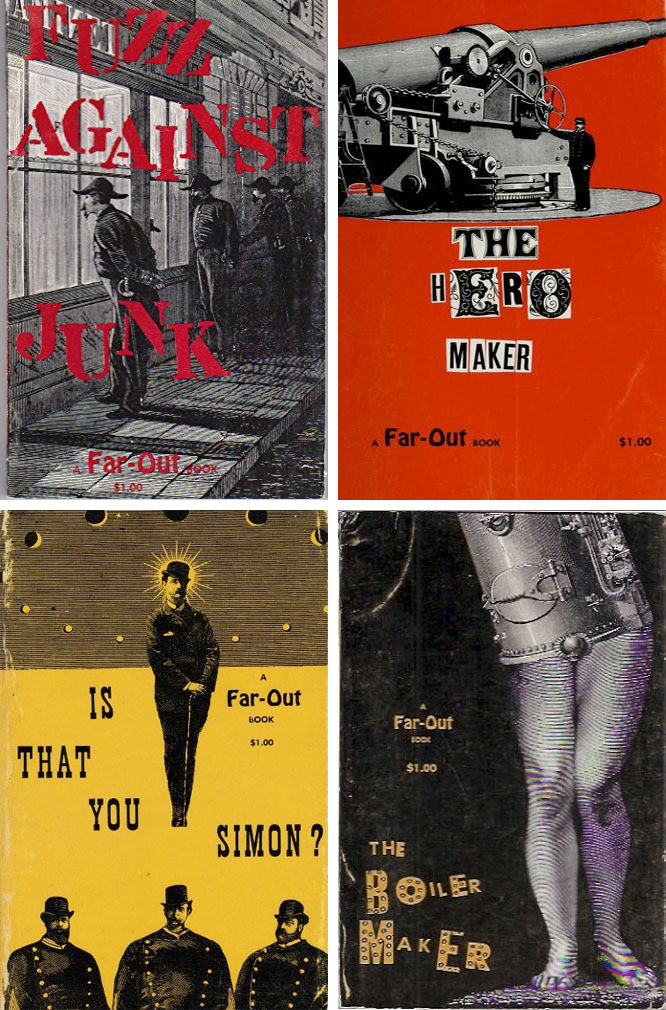
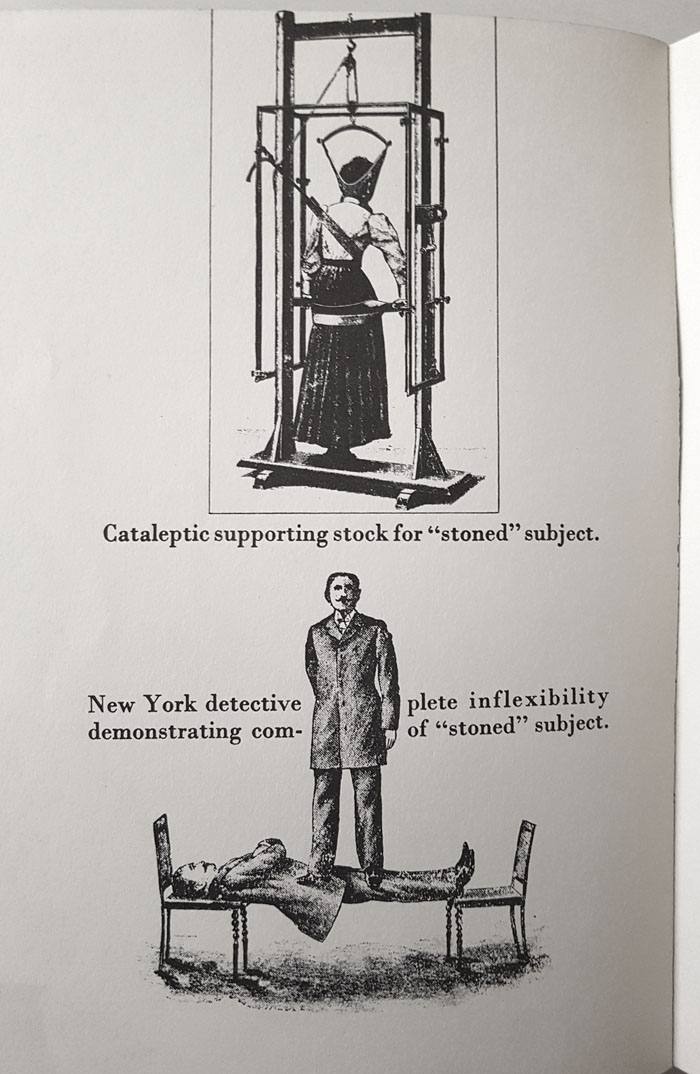
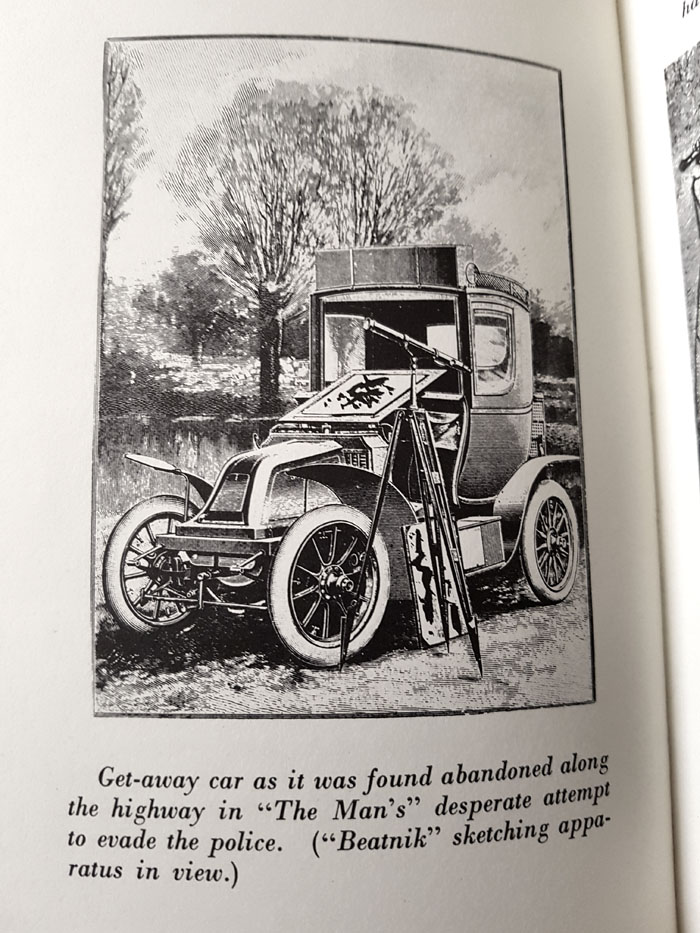
The engraving collages of Norman Rubington (1921–1991) were probably the first to use the form developed by Max Ernst for explicitly humorous purposes. They’re certainly among the earliest to take the lead from Ernst while aiming themselves at an audience outside the art world. There is humour in some of Ernst’s collages, of course, but it tends to be the black variety favoured by the Surrealists (and actually defined by them; André Breton’s 1940 Anthology of Black Humour was a pioneering study). Rubington’s small books exploit the comic potential of antique illustrations by repurposing them as the primary content in a series of absurd narratives; these aren’t “graphic novels”, they’re more like heavily-illustrated comedy routines. There were four books in the original series—Fuzz Against Junk (1959), The Hero Maker (1959), Is That You Simon? (1961) and The Boiler Maker (1961)—with a fifth title, Moonglow, appearing in 1969. Olympia Press published the books in France, with US editions appearing around the same time under the Far-Out imprint used by Citadel Press. My charity purchase is the 1966 New English Library reprint of an Olympia Press collection of the first two volumes. The olive-green Olympia covers always provoke a Pavlovian grab response when I see one on a shelf although I’ve yet to find a copy that wasn’t an NEL reprint.

rubington2.jpg

rubington3.jpg

rubington4.jpg

Continue reading “Fuzz Against Junk & The Hero Maker”

Art on film: Je t’aime, Je t’aime

resnais1.jpg

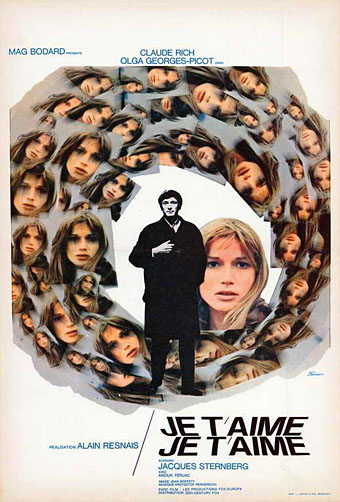
Design by René Ferracci.

Continuing an occasional series about artworks in feature films with a return to Alain Resnais. This one is less substantial than the Providence post, but 2022 happens to be the director’s centenary year, and this particular film, like Providence, is worthy of greater attention.

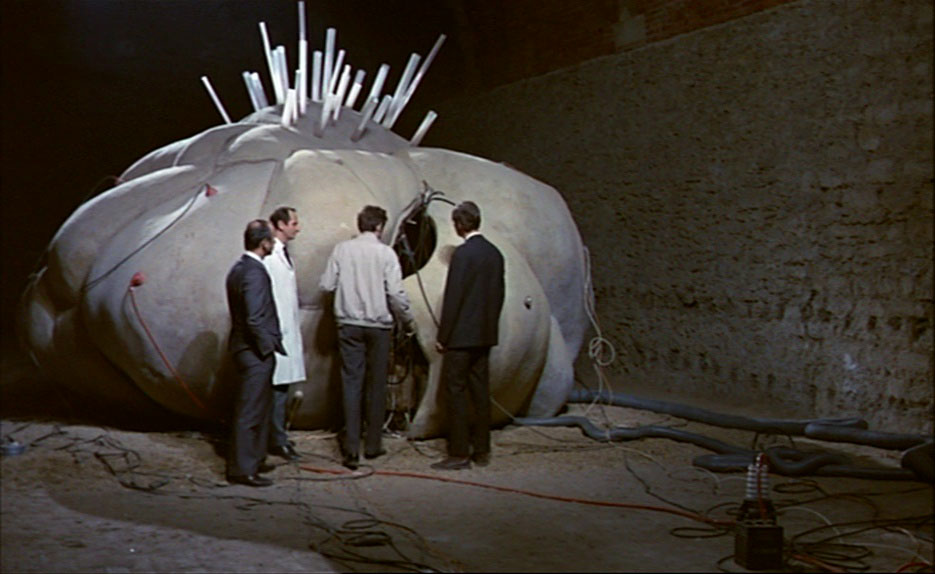
Last Year at Marienbad is occasionally proposed as science fiction of a very rarified sort (JG Ballard thought it was) but there’s no question about the SF credentials of Je t’aime, Je t’aime (1968), a drama that uses time travel to explore a troubled romantic relationship. Claude Ridder (Claude Rich), an unattached, suicidal man, is persuaded by scientists to assist with a potentially hazardous experiment. He agrees to a one-minute excursion into his past but the experiment doesn’t work as intended, causing him to be caught between the present—in which he can’t escape from a womb-like time machine—and his recent past, in which he relives brief moments without any awareness during the return period of their being a part of the experiment. The flashbacks that comprise most of the film’s running time show us a random sequence of the events leading to Claude’s suicide attempt, the end result of his relationship with his terminally ill partner, Catrine (Olga Georges-Picot).

resnais2.jpg

The time machine.

Despite the presence of a time machine and a script by Jacques Sternberg, a Belgian science-fiction writer, Resnais was adamant that Je t’aime, Je t’aime wasn’t a science-fiction film. This is the kind of comment guaranteed to annoy the more zealous SF reader but it’s true in the sense that the film isn’t about time travel or time machines per se; the temporal experiment is a device to allow the non-linear exploration of a human drama that’s the real concern of director and writer. Previous Resnais films had dealt with remembrance of one sort or another, often using flash cuts to juxtapose different moments or scenes remembered or imagined. Je t’aime, Je t’aime pushes these techniques to an extreme, showing us every facet of the Claude/Catrine relationship, from initial meeting to tragic end. The narrative fragmentation isn’t so surprising today but it was a radical step in 1968, one that proved commercially unsuccessful.

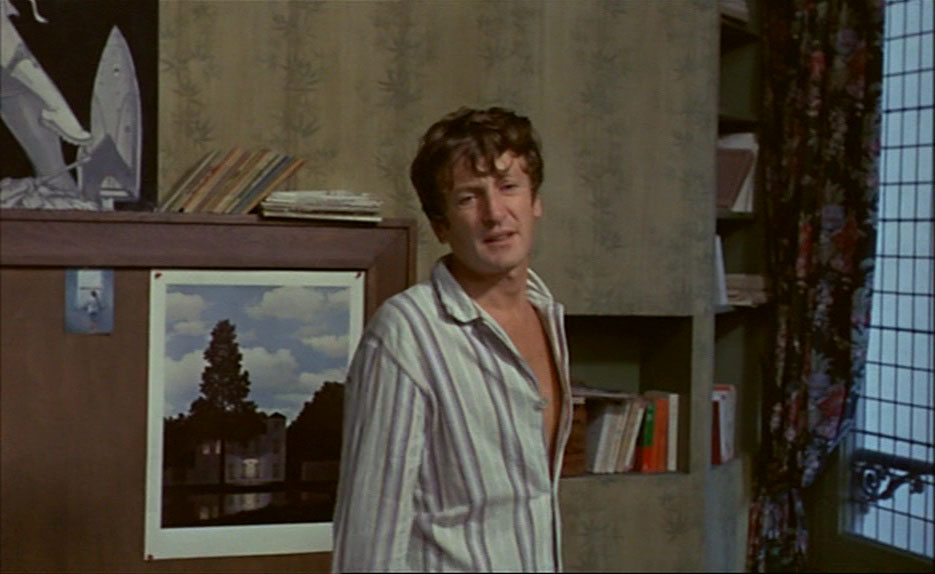
In addition to having a Belgian writer, Je t’aime, Je t’aime is mostly set in Brussels, so the art this time is a famous Belgian painting, one of the many versions of The Empire of Light by René Magritte, which appears in the scenes in Claude’s apartment.

resnais3.jpg

In other hands this might be an incidental decoration but, as Providence demonstrates, Resnais was a director who enjoyed significant details, even if the signification isn’t always obvious. The Magritte painting serves two functions: its slow migration from one side of Claude’s apartment to the other (and the appearance of other pictures around it) shows the passage of time from one flashback to the next.

Continue reading “Art on film: Je t’aime, Je t’aime”