Richard Matheson, 1926–2013

matheson1.jpg

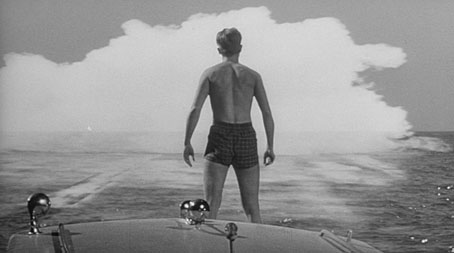
The Incredible Shrinking Man.

Of Richard Matheson’s many books I’ve only read I Am Legend so can’t say much about his fiction other than to confirm (as everyone else does) that none of the three adaptations so far have managed to do it justice. Of his work for film and television there’s too much to say, it’s so copious and indelibly memorable. Here’s a list of five favourite Matheson creations.

The Incredible Shrinking Man (1957)

JG Ballard frequently referred to this as one of his favourite science fiction films, not because of the SF element, which is never properly explained, but because of its inadvertent Surrealist qualities. For my part, every time I watched this I was always impatient to get to the later scenes where the unfortunate Scott becomes trapped in the cellar, and his own house becomes an increasingly alien and hostile environment. The ending where he accepts his condition is very Ballardian.
matheson2.jpg

Duel (1971)

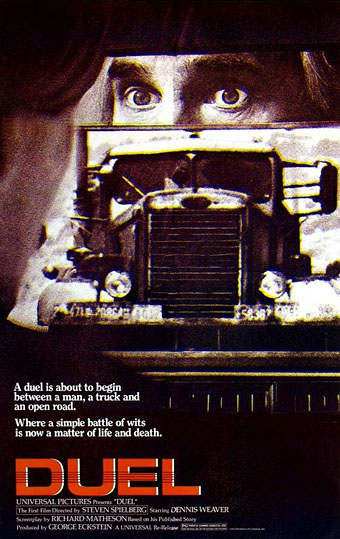
A sweating and manic Dennis Weaver is pitted against an anonymous truck driver who remains unseen but for a few shots of an arm and some boots. The lethal game of cat-and-mouse was famously directed by Steven Spielberg, his second feature, and one that’s a lot more impressive than some of his subsequent films. Watch it on YouTube.
matheson3.jpg

The Legend of Hell House (1973)

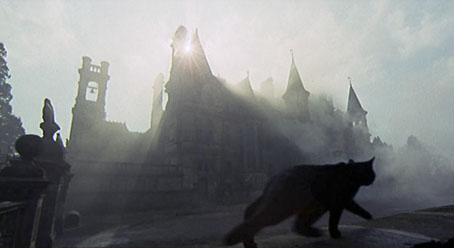
Matheson’s take on Shirley Jackson’s The Haunting of Hill House—four investigators in a haunted mansion—with the gain ramped up 100%. The film starts off quietly but is very soon into full-on hysteria; director John Hough finds so many eccentric camera angles you could actually calm down after this by watching a Terry Gilliam film. Meanwhile Roddy McDowell chews the scenery as though over-acting is going out of fashion. Bonuses are a grown-up Pamela Franklin (Flora in Jack Clayton’s superb The Innocents), and a great score from Radiophonic synthesists Brian Hodgson and Delia Derbyshire. Watch the trailer.
matheson4.jpg

Trilogy of Terror (1975)

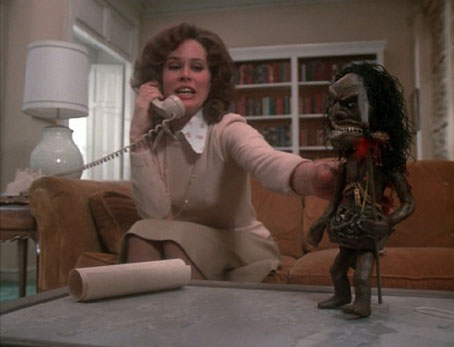
A three-story TV movie in which Karen Black took all the leading roles. No one remembers the first two stories but everyone who’s seen this remembers the third, Amelia (based on a Matheson short story, Prey), in which Ms Black is hunted in her apartment by a Zuni fetish doll. It’s on YouTube!
matheson5.jpg

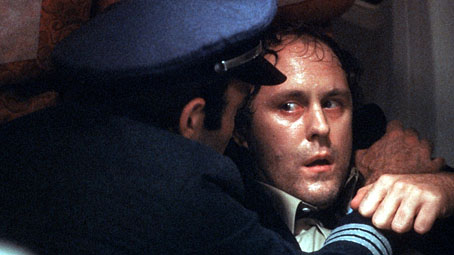
Nightmare at 20,000 Feet (1983)

Sorry, Shatnerphiles, but the superior version of this story is the one from Twilight Zone: The Movie. John Lithgow is a much better actor than William Shatner, the gremlin on the wing of the plane is a fearsome creature that’s seriously destructive (not, as Matheson lamented of the original, “a surly teddy bear”), and the whole sequence is directed by George Miller fresh from Mad Max 2. The original Twilight Zone episode wasn’t bad but it can’t compete with Miller pulling out all the stops. Watch it here.

Previously on { feuilleton }
New York City abandoned

Abrahadabra

abrahadabra01.jpg

01 First (1985).

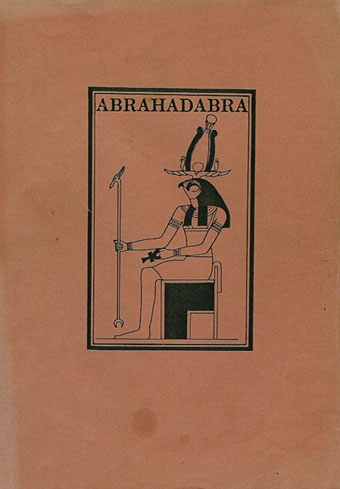
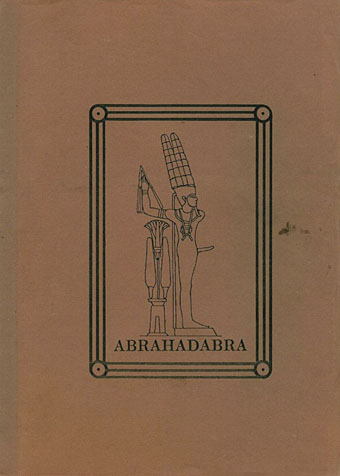
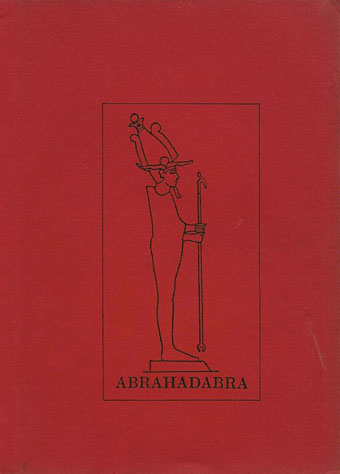
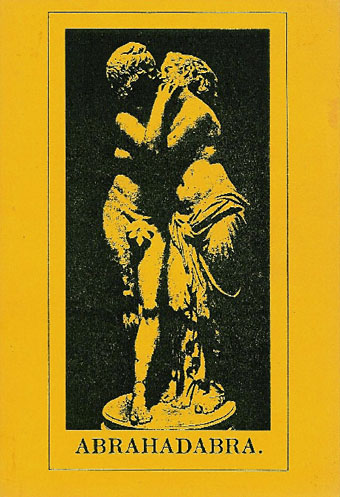
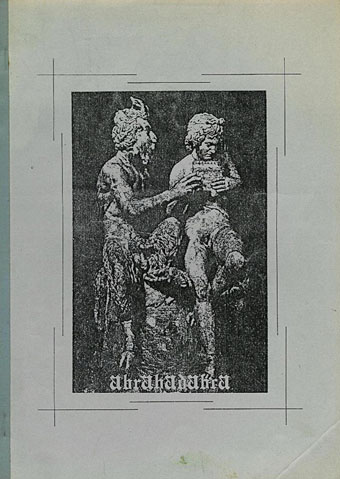
I’ve linked to so many publications at the Internet Archive I’m a little surprised it’s taken me this long to find something featuring my own work. Abrahadabra was a Dutch periodical covering subjects familiar to readers of the esoteric magazines of the 1980s (RE/Search, Rapid Eye, etc): Industrial music of the TG/Psychic TV/Coil variety, transgressive writers such as Burroughs, Ballard and Bataille, weird fiction of the Lovecraft/Machen school, and a heavy emphasis on occultism. My friend Ed was one of the contributors which is how my Pan drawing ended up in the Witches issue in 1987.

For a publication with minimal resources the production was often impressive, the drawing on the cover of the Austin Spare issue, for instance, being printed in silver ink on black paper. The contents were mostly in Dutch but each issue featured interesting and often original graphics. I also drew a small Horus head for issue 11 (which I’d forgotten about until I saw it again), whose title design was used on the cover of issue 12. Some of the other issues I hadn’t seen before so it’s good to find them scanned and easily available. The 1980s was the last time print was used as the primary medium for underground culture to talk to and disseminate itself. By the end of the decade many of the small magazines had either evolved—both RE/Search and Rapid Eye turned into books—or expired. The final Abrahadabra is dated 1990.

abrahadabra02.jpg

02 Second (1985).

abrahadabra03.jpg

03 Third (1985).

abrahadabra04.jpg

04 Sex (1985).

abrahadabra05.jpg

05 Derangement (1985).

Continue reading “Abrahadabra”

Wavelength

wavelength1.jpg

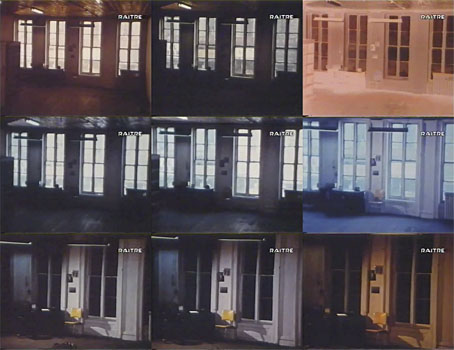
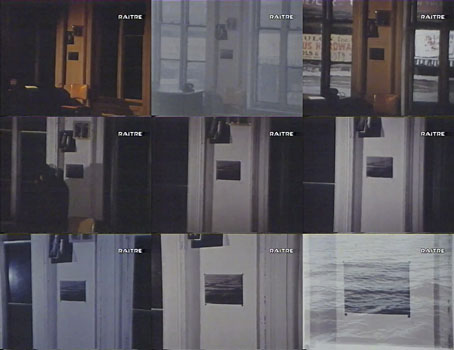
Thanks be to YouTube for once more resurrecting moments of underground cinema which would otherwise be very difficult to see. Wavelength (1967) is Michael Snow’s experimental masterwork, a 45-minute zoom across a New York loft that ends on a photograph of waves that fills the screen. This recipe for ennui is not without incident: we see a bookcase being installed, someone plays a Beatles record—Strawberry Fields Forever—a man breaks into the apartment and collapses. (He may be dead but we never find out.) Throughout this, the film is subject to flashes of colour filtering, moments of negative inversion and sudden flares of light. For at least half the running time the sound is replaced by a droning oscillator tone which rises inexorably the closer the camera brings us to its destination.

wavelength2.jpg

Between these events there’s plenty of time to meditate upon the meaning of the title: the various wavelengths of sound and light, the distance across the room to the view of the waves, the waves themselves. It’s a fascinating film which is linked for me (and may have influenced) two other takes on the long take: JG Ballard’s short story The 60 Minute Zoom (1976), in which a man monitors his wife’s infidelity from a hotel balcony, and the celebrated shot at the end of Antonioni’s The Passenger (1975) when Jack Nicholson’s character is assassinated off-screen in another hotel room while the camera floats miraculously through the iron bars of the window. You can see Wavelength in full here. I’d recommend watching it full-screen, it requires immersion.

Previously on { feuilleton }
() by Morgan Fisher
La Région Centrale
Downside Up

Weekend links 150

feanne.jpg

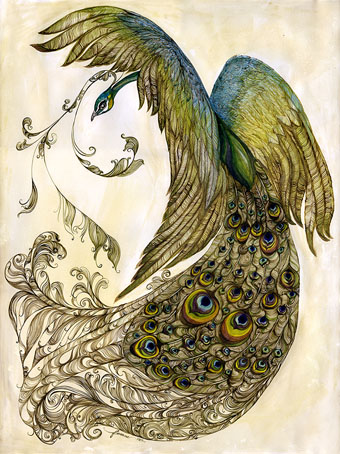
One of A Pair of Peacocks (2012) by Feanne.

Jonathan Barnbrook reveals his package design for the new David Bowie CD. The Barnbrook studio has also designed the catalogue for the forthcoming V&A Bowie exhibition. And there’s more (don’t worry, it’ll be over soon): Jon Savage on When Bowie met Burroughs.

• “Witches have a fashion moment,” says the NYT. Nice clothes but the writing trots out too many of the usual lazy clichés. Related: A Tale of Witches, Woodland and Half-remembered Melodies…, a new mix by Melmoth the Wanderer.

Calidostópia! is a free album (FLAC & mp3) from Marcus Popp aka Oval: “an enticing 16-track collaboration…with seven wonderful singers/musicians from all over South America”.

Before meeting Moorcock in person, [Hari] Kunzru went on to say, ‘I didn’t realise the role he’d played in connecting so many different scenes and undergrounds together – the psychedelic music scene, the science fiction scene, the hip experimental literature scene around people like William Burroughs, pop art’.

Brave New Worlds: A Michael Moorcock Retrospective by Carol Huston. Moorcock’s Elric novels will be published by Glénat in new bande dessinée adaptations later this year.

• More art by Michael W. Kaluta at The Golden Age. And more fantastic comics/illustration by Philippe Caza at 50 Watts. There’s more Caza here.

• Mine and David Britton’s new book, Lord Horror: Reverbstorm, was reviewed at The Spectator.

Google Street Scene: “Moments of cinema captured by Google Street View cameras”.

Cosmic Sentinels and Spiral Jetties: JG Ballard, Robert Smithson & Tacita Dean

• Strange Flowers showcases the heads of Pavel Tchelitchew, 1949–1952.

Setting in the East: Diamanda Galás on Women and Real Horror

Little Joe: “A magazine about queers and cinema, mostly.”

Nanoparticles loaded with bee venom kill HIV.

Treatises on Dust: Antic Found Texts

The Wizard Blew His Horn (1975) by Hawkwind (with Michael Moorcock) | Brothel In Rosenstrasse (1982) by Michael Moorcock’s Deep Fix | Running Through The Back Brain (1983) by Hawkwind (with Michael Moorcock)

Paul Delvaux: The Sleepwalker of Saint-Idesbald

delvaux.jpg

Saint-Idesbald is a small, unremarkable seaside town on the Belgian coast situated between Ostend and the border with France. I spent a week there on a school camping holiday in the 1970s unaware that it was the home of the great Surrealist painter Paul Delvaux (1897–1994). I suppose you could make the argument that the location of Dalí’s home in Cadaqués was equally unremarkable, but Dalí’s house was well-known, and that area of the Spanish coast is familiar from many of his paintings. The surprise in later discovering that Delvaux lived in Saint-Idesbald, rather than Brussels or Bruges, or even Ostend, is that the town is quite unlike the tram-haunted, cobblestoned, moonlit vistas of his paintings. It’s appropriate that JG Ballard thought highly enough of Delvaux to mention his paintings in some of his stories, and also commission reproductions of two lost canvases; Ballard’s Shepperton was an equally unlikely home for such a vivid imagination.

Paul Delvaux: The Sleepwalker of Saint-Idesbald is a film from the Naxos record label that lasts all of three minutes, but which happens to feature the first footage I’ve seen of Paul Delvaux as a working artist. Despite Ballard’s attention, Delvaux has often been passed over as a subject of Surrealist documentaries in favour of the usual trinity of Dalí, Magritte and Max Ernst. There are older documentaries in existence, however, so I’ll continue to hope they may turn up eventually. For anyone who happens to journey near Saint-Idesbald, many of Delvaux’s paintings can be seen in the museum there.

Previously on { feuilleton }
The Public Voice by Lejf Marcussen
Ballard and the painters
Taxandria, or Raoul Servais meets Paul Delvaux