Two new covers

rockhill.jpg

My latest cover designs have arrived in time for Spook Month, although the first of these suits the season more by association than its appearance. Jim Rockhill’s A Mind Turned in Upon Itself is a study of the work of J. Sheridan Le Fanu, Ireland’s leading writer of ghost stories and Gothic fiction. This is another design for Swan River Press which adheres to the publisher’s preferred format of a dustjacket that wraps a small hardback with textured and illustrated boards. The brief was fairly straightforward, to present a rare photograph of Le Fanu in a suitably attractive manner. My initial idea was to create a frame that would reflect to some degree various aspects of Le Fanu’s fiction, but it quickly became apparent that the portrait photo was too tall and narrow to sit easily inside a frame that matched the ratio of the book. A better option was to look for a frame which could fit the shape of the book while also filling in the space around the photo.

dore.jpg

A page from The Workshop: a Monthly Journal Devoted to Progress of the Useful Arts.

When Le Fanu was writing in the mid-19th century book design had become very lavish, with a proliferation of presentation volumes gold-blocked and embossed on their covers and spines. The Heztel editions of Jules Verne are prime examples, as are the many editions of Gustave Doré’s books. My cover is an adaptation of a German edition of Doré’s Bible which had an unusual panel in the centre that happened to be a good size and shape to accommodate the Le Fanu photo, although I still had to extend the design a little. My version also includes a pair of small Le Fanu monograms embedded in the frame.

outline.jpg

For the board illustration I followed the form of an earlier Swan River book with an Irish theme, The Far Tower, whose boards I covered with an engraving collage. The end result, which looks like a single illustration, is a composite of two smaller illustrations from a book of views of Ireland, together with a quantity of foliage which frames the design and joins the pictures together.

ppc.jpg

The second cover is for a book I’m working on at the moment, Lovecraft’s Brood, a sequel to Tachyon’s well-received Lovecraft’s Monsters. I was very pleased to be asked to work on this one, the earlier book is a favourite of mine from among the books I’ve done for Tachyon, and Ellen Datlow is an expert at compiling well-chosen story collections. There’s not much I can say about the cover which follows the form of the previous book. As with Lovecraft’s Monsters, the framed face will also appear as one of the interior illustrations. You’ll have to wait a while to see the results of this, however. Watch this space.

brood-cover.jpg

Meanwhile, I’ve neglected to mention another Tachyon book whose interiors I’ve designed which is available now. The Essential Horror of Joe R. Lansdale is a great introduction to the work of a master of horror fiction whose stories manage to be grim and witty in equal measure. Very grim at times; visceral horror is Lansdale’s forte. The collection includes his best-known story, Bubba Ho-Tep, and features cover art by another Swan River Press cover artist, Dave McKean.

Previously on { feuilleton }
Lovecraft’s Monsters

Weekend links 795

ansingh.jpg

Heksenkeuken I: The Witches’ Sabbath (1916) by Lizzy Ansingh.

A trailer for The Ice Tower, a new feature film by Lucile Hadžihalilović. Good to see the Hadžihalilović brand of weirdness being supported once again, but then they do things differently in France. Charlie Kaufman was complaining this week that nobody in Hollywood will fund his films. Maybe he should look elsewhere?

• Dreaming of Shadow and Smoke: Jim Rockhill talks to John Kenny about the enduring influence of J. Sheridan Le Fanu’s stories of the supernatural. Rockhill’s latest book is A Mind Turned in Upon Itself, a collection of writings about Le Fanu published by Swan River Press. I designed the exterior of this volume which I’ll be discussing at a later date.

• “Eerie strangeness is abroad, sometimes beautiful, much more often menacing.” Derek Turner reviews Figures Crossing the Field Towards the Group, a novella by Rebecca Gransden. The book is published by Tangerine Press. I recommend it most highly.

• At Public Domain Review: Ivan Aivazovsky’s miniature seascapes (c.1887), which the artist painted into small photographs of himself at work.

• At The Wire: Against The Grain: Mattie Colquhoun on Mark Fisher’s cultural pessimism.

• At the BFI: Miriam Balanescu chooses 10 great mockumentary films.

• Winners and finalists of Astronomy Photographer of the Year 2025.

• At Dennis Cooper’s: Galerie Dennis Cooper presents…Emma Kunz.

• New music: Magnetism by Kali Malone and Drew McDowall.

• Mix of the week: Bleep Mix 308 by DJ Food.

Daveed Diggs’ favourite albums.

Magnetic Dwarf Reptile (1977) by Chrome | Magnetic North (1998) by Skyray | Feed Me Magnetic Rain (2018) by Cavern Of Anti-Matter

Weekend links 785

mabuse.jpg

A 1933 poster for the second of Fritz Lang’s Mabuse films.

• Good news for those who missed the original run (from 2002–2013), Arthur Magazine is now available for the first time as a complete set of free PDFs. I was laterally involved with the magazine from the outset, mostly as a remote supporter, but I also did several covers and interior illustrations for the early issues.

• Among the new titles at Standard Ebooks, the home of free, high-quality, public-domain texts: Dr. Mabuse, the Gambler by Norbert Jacques (translated by Lilian A. Clare); and two books by J. Sheridan Le Fanu: Short Fiction, and a novella, The Room in the Dragon Volant.

• New music: Spilla by Ensemble Nist-Nah; and Sea-swallowed Wands by Jolanda Moletta and Karen Vogt.

With his compulsions for systems and architecture, his command of shadows and symbolism-imbued sets and props, Lang is never less than arresting. Yet few of the films make complete statements; Lang’s art, in this period, is seemingly as much a fugitive as are his archetypal characters. That is, until the moment that his long journey to the direct subject matter and cultural framework of the 1950s United States, addressed in the terms and by the means available to him in Hollywood, abruptly comes to superb fruition with The Big Heat.

Jonathan Lethem on Fritz Lang in Hollywood and one of the greatest noir pictures of the 1950s

• This week in the Bumper Book of Magic: an enthusiastic review at The Joey Zone. My thanks to Mr Shea!

• Mixes of the week: A mix for The Wire by Nina Garcia; and Isolated Mix 133 by Pentagrams Of Discordia.

• At Colossal: David Romero’s digital recreations of Frank Lloyd Wright’s unrealised buildings.

• At Smithsonian magazine: John Last investigates the history of the Tarot.

• At Planet Paul: An interview with artist Malcolm Ashman.

• At the Daily Heller: A porno gag mag with attitude.

Hodgsonia

Das Testaments Des Mabuse (1984) by Propaganda | (The Ninth Life Of…) Dr Mabuse (1984) by Propaganda | Abuse (Here) (1985) by Propaganda

Schalcken’s paintings

schalcken3.jpg

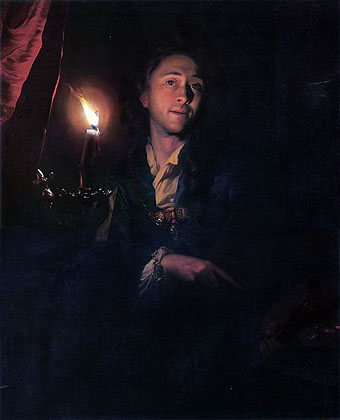
Self Portrait by Candlelight (1695).

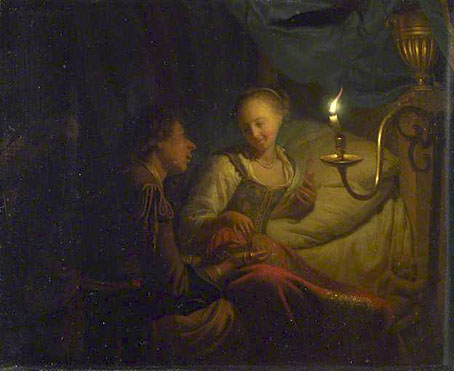
One additional pleasure of Le Fanu’s story and Leslie Megahey’s film is the way they draw attention to the work of an artist who might otherwise have remained overshadowed by his more famous contemporaries. Ever since seeing the meticulous chiaroscuro of Joseph Wright’s An Experiment on a Bird in an Air Pump (1768) I’ve been fascinated by paintings which feature a single artificial light source. Candlelit pictures are a particular fascination since these aren’t easy to paint even today when you can photograph the required scene beforehand. How much more difficult would it be painting a candlelit scene by candlelight alone? Works of this nature demonstrate an artist’s fascination with limited sources of light but also serve as displays of expertise, as did so much Dutch painting of Schalcken’s time with its emphasis on photo-realist representation.

schalcken5.jpg

Self Portrait (no date).

This small selection of paintings by Godfried Schalcken (1643–1706) shows some of the pictures that appear in Megahey’s film, or which we see being posed or replicated. At the end I’ve included Schalcken’s own take on the Salomé story which means his work can now be ushered into the Salomé archive. More of Schalcken’s work may be seen at Wikimedia Commons and the BBC’s Your Paintings site. One significant picture is unavailable: the painting which Le Fanu describes at the opening of his story. In his interview about the making of the film Megahey says that they searched the entire catalogue of Schalcken paintings but were unable to find a single picture that matches the one described in Le Fanu’s story. The painting seen in the film (which is perfectly rendered in Schalcken’s style) was created especially for the production.

schalcken6.jpg

A Candlelight Scene: A Man offering a Gold Chain and Coins to a Girl seated on a Bed (c. 1665–70).

Continue reading “Schalcken’s paintings”

Schalcken the Painter revisited

schalcken1.jpg

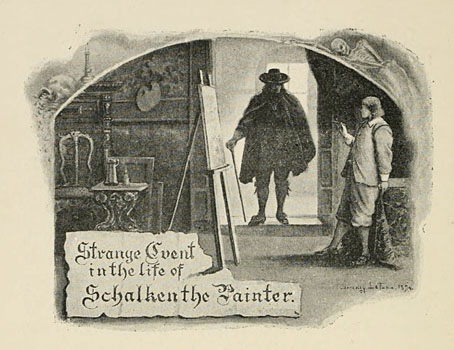
Illustration by Brinsley Sheridan Le Fanu from The Watcher and Other Weird Stories (1894) by J. Sheridan Le Fanu.

The stranger stopped at the door of the room, and displayed his form and face completely. He wore a dark-coloured cloth cloak, which was short and full, not falling quite to the knees; his legs were cased in dark purple silk stockings, and his shoes were adorned with roses of the same colour. The opening of the cloak in front showed the under-suit to consist of some very dark, perhaps sable material, and his hands were enclosed in a pair of heavy leather gloves which ran up considerably above the wrist, in the manner of a gauntlet. In one hand he carried his walking-stick and his hat, which he had removed, and the other hung heavily by his side. A quantity of grizzled hair descended in long tresses from his head, and its folds rested upon the plaits of a stiff ruff, which effectually concealed his neck.

So far all was well; but the face!

Strange Event in the Life of Schalken the Painter (1839) by J. Sheridan Le Fanu.

schalcken2.jpg

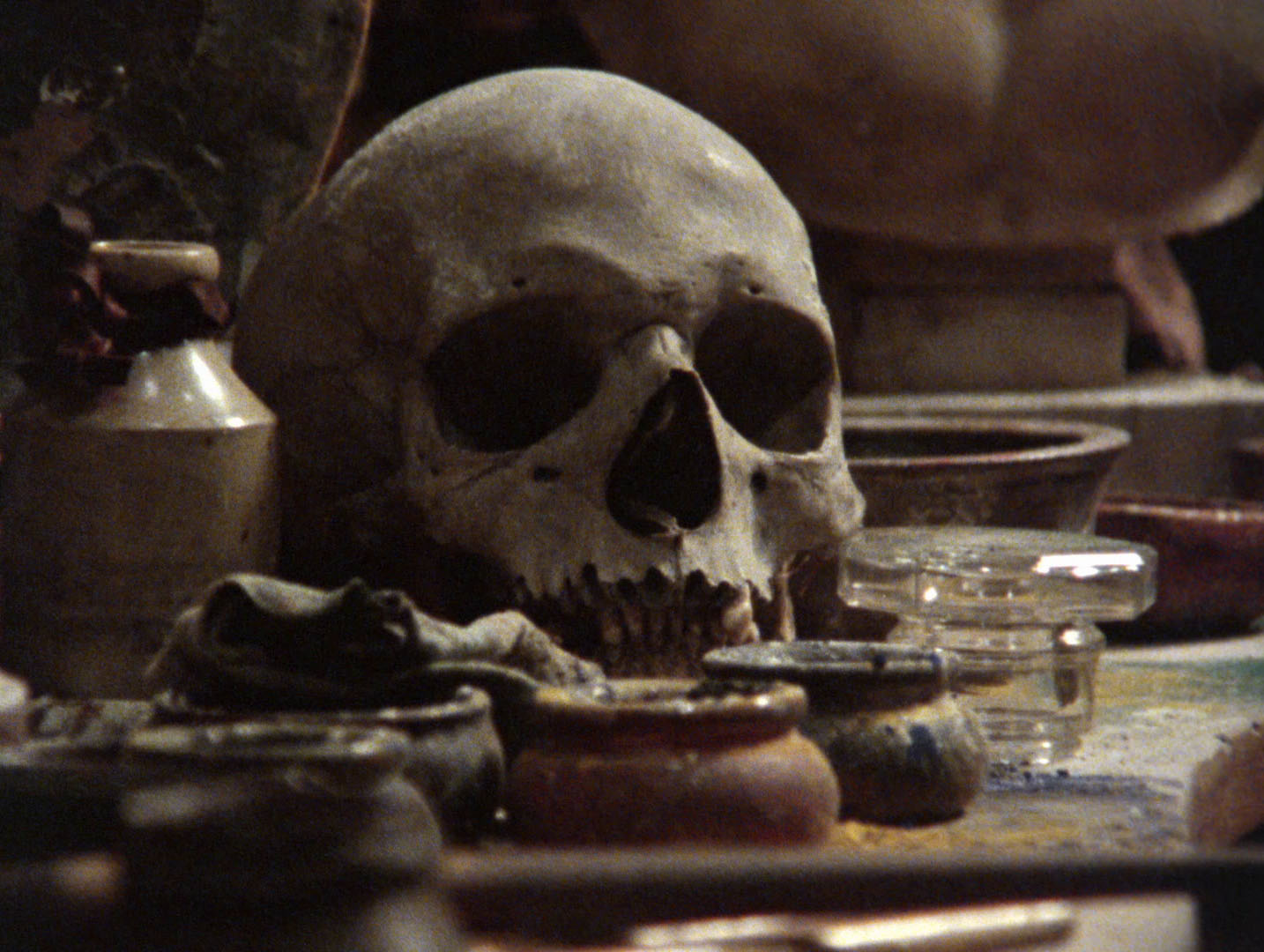
Compare this shot to the inferior YouTube version.

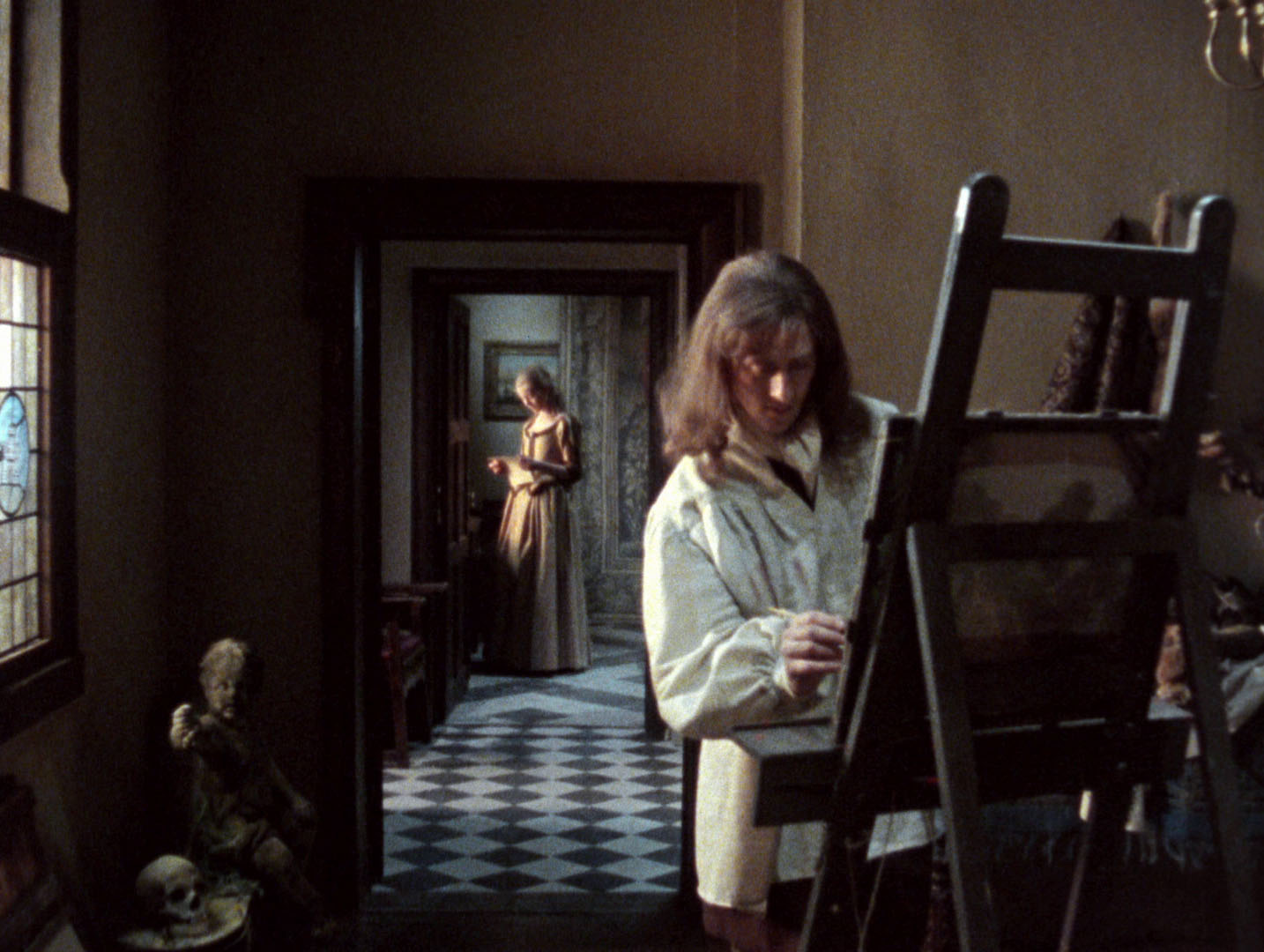
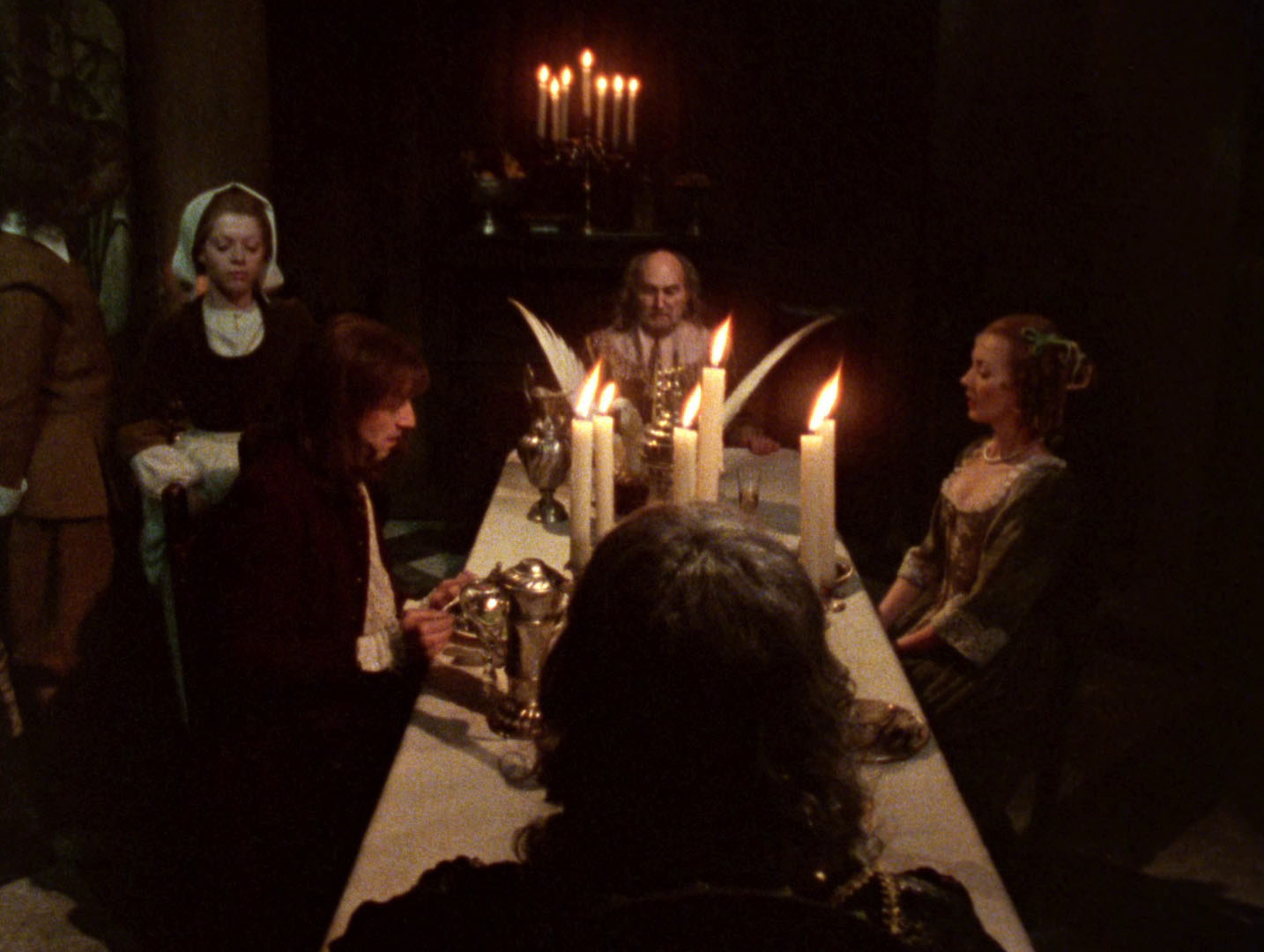
I enthused at some length about Leslie Megahey’s 1979 television film Schalcken the Painter last year so there’s no need to repeat myself. This post serves notice that the film is available at last in another marvellous dual-format release from the BFI, replete with extras, and the usual authoritative booklet notes. The Blu-ray transfer is a revelation after years spent watching an old VHS copy (the versions of YouTube are even worse). I noted before the astonishing lighting by cameraman John Hooper which successfully replicates not only the Dutch interiors so familiar from Vermeer, but also the candlelit chiaroscuro of Godfried Schalcken’s own paintings. (Le Fanu, incidentally, spelled the painter’s name “Schalken”.) Blu-ray quality might seem like overkill for a low-budget TV drama, however well-made, but this film in particular demands it, especially when the interiors begin to darken along with the story.

schalcken3.jpg

Cheryl Kennedy and Jeremy Clyde.

Among the extras there’s a 39-minute interview with Leslie Megahey and John Hooper about the making of the film. The combination of scenes based on period paintings plus candlelit interiors always makes me think of Barry Lyndon so it’s a surprise to discover that Megahey didn’t have this in mind at all. The film owes more, he says, to Blanche (1972) by Walerian Borowczyk, a period feature film which utilises a similarly flat shooting style with scenes based on medieval art. I’ve only seen Borowczyk’s earlier animated films, some of which have featured in previous posts, so this is one to look for in future.

schalcken4.jpg

In addition to the making-of piece there are two short films: The Pit (1962, 27 mins), directed by Edward Abraham, based on Poe’s Pit and the Pendulum, and The Pledge (1981, 21 mins) directed by Digby Rumsey, based on a short story by Lord Dunsany. I’ve not watched either of these yet, it seemed unfair to follow Megahey’s film with lesser fare.

After such unbridled enthusiasm it goes without saying that this is an essential purchase for anyone who enjoys the BBC’s ghost films of the 1970s. I’m biased towards Megahey’s productions but I find this a superior work to many of the MR James films. Megahey filmed another drama about a painter in 1987, Cariani and the Courtesans. It’s a non-supernatural piece but also has Charles Gray narrating and John Hooper behind the camera. I’ve not seen it for years so I’ll continue to hope it may also see a reissue soon.

Previously on { feuilleton }
Schalcken the Painter
Leslie Megahey’s Bluebeard
The Watcher and Other Weird Stories by J. Sheridan Le Fanu
Chiaroscuro