November shirts

skullprint-shirts.jpg

Skull Print shirts.

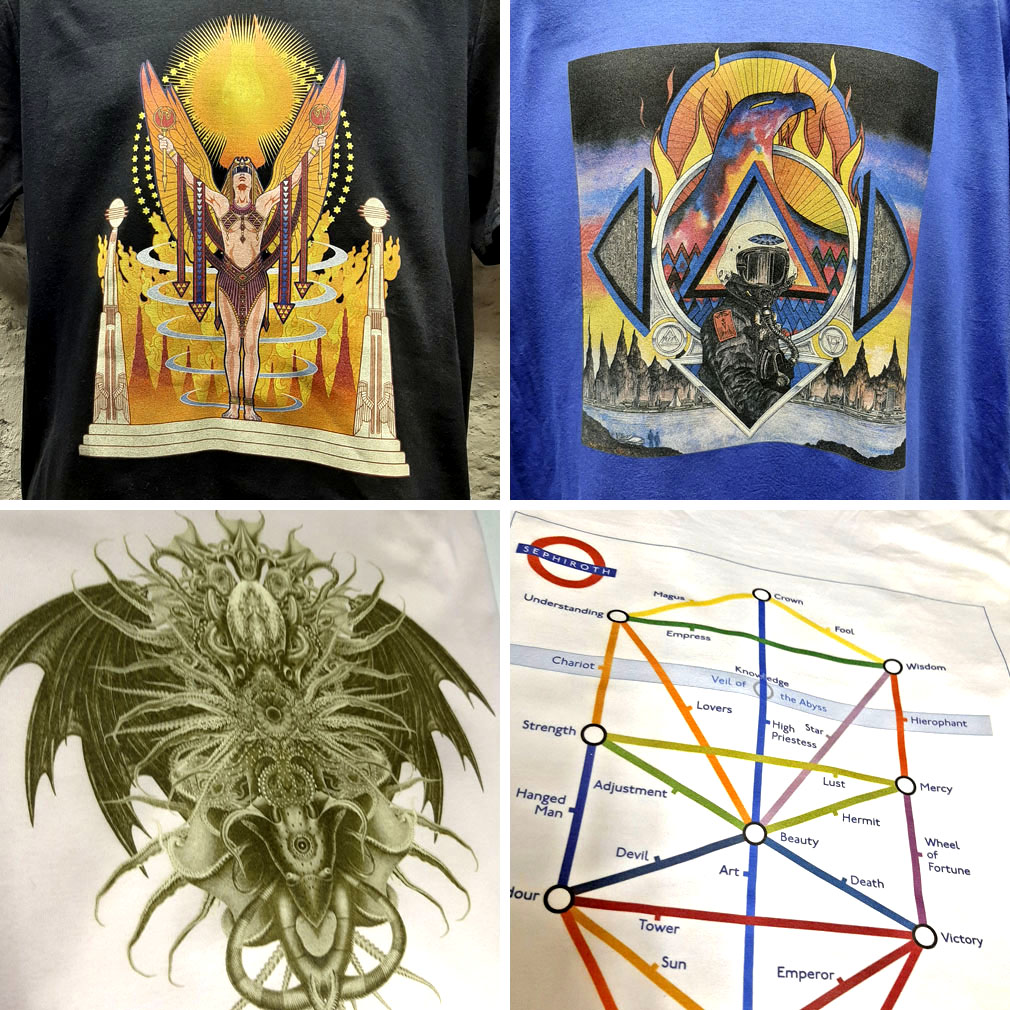
November weather isn’t exactly suitable for T-shirt wearing when you live this far north (although it’s unseasonably mild just now) but I’ve recently added four more shirt designs to my Skull Print page. As I was saying last month, now that I’ve quit CafePress all shirts featuring my art and design will be done through Skull Print, a small business who specialise in shirt-printing, and do so with very reasonable prices: £22 (inc. postage) for the UK, £32 (inc. postage) for the rest of the world. Long sleeves, sizes 3XL and over, and tie-dye colours add a little more to the cost.

skullprint-magus.jpg

It’s always the case when creating spin-off products that I’m guessing what people may want. Three of the four new designs have been extracted from popular works of the past (the Tarot designs have been given a boost now that they’re featured in the Bumper Book of Magic). I’m always open to suggestions for new designs so long as they don’t infringe on any trademarks or copyright agreements.

skullprint-priestess.jpg

skullprint-chaos.jpg

The Chaos symbol is a new creation based on a shirt I designed for Hawkwind’s Chronicle Of The Black Sword tour in 1985 (see this post). The symbol isn’t exclusive to Hawkwind, of course. Michael Moorcock invented it for the original Elric stories in the 1960s after which it was picked up by the practitioners of Chaos magic in the 1980s.

skullprint-alice.jpg

And this is one of my popular Alice in Wonderland designs which I amended for The Graphic Canon in 2012, extending the square composition into a rectangle. I may add one or two more from this series in future although this was one was easier to adapt than some of the others.

Weekend links 744

borges-stamp.jpg

Postage stamp design by Dario Canovas celebrating Argentina as guest of honour at the 2010 Frankfurt Book Fair.

Sideways Through Time, Joe Banks’ book of Hawkwind interviews, was initially available as an exclusive supplement with the special edition of Days of the Underground, Joe’s essential history of Hawkwind’s first decade. From the end of October both books will be available as separate editions from Strange Attractor, with the interview collection being republished in a revised and expanded edition.

• “Two heads are better than one”: Another extract from Two-Headed Doctor: Listening For Ghosts In Dr John’s Gris-Gris by David Toop.

• “Rammellzee was an electric presence”: Thurston Moore on NYC’s graffiti-writing hip-hop pioneer.

• New music: Long Tail Of The Quiet Gong by Robert Rich, and Neostalgia by Heiko Maile, Julian Demarre.

• At Colossal: Postage stamp designs by Tùng Nâm showing portraits of endangered animals.

• At Public Domain Review: Edwin D. Babbitt’s Principles of Light and Color (1878).

• At Print magazine: An interview with design anthropologist Keith Murphy.

• At Unquiet Things: Tristan Elwell’s visual spellcraft.

• Mix of the week: Bleep mix 287 by Sarah Davachi.

Mariam Rezaei’s favourite music.

Over Under Sideways Down (1966) by The Yardbirds | Stepping Sideways (2003) by John Foxx & Harold Budd | Trip Sideways (2010) by The Time And Space Machine

Space is one trip: the Hawkwind takes off

isos1.jpg

1: The album
Back in the 1990s, when it became apparent that record companies were committed to never-ending CD reissues of their most popular albums, I suggested to a friend that this development would eventually give us releases of the unmixed recordings which the listener would then have to mix themselves: “Now you can be George Martin!” My suggestion wasn’t entirely serious, and there are many reasons why this will never happen, but the wholesale remixing of “classic” albums has been a trend now for ten years or more, and will no doubt continue. It’s easy to see endless reissues as a pernicious development—how many more copies of The Dark Side Of The Moon does the world need?—but I can think of one or two albums which would benefit from a reappraisal of their original mixes. The first two sides of Amon Düül II’s Dance Of The Lemmings, for example, have always sounded sonically inferior to the group’s other albums. The first side in particular is swamped by bass, and the drums, which are so prominent on the previous album, Yeti, are buried in the mix. Given the overtly psychedelic nature of the cover art I sometimes wonder whether anyone in the studio was drug-free during the recording.

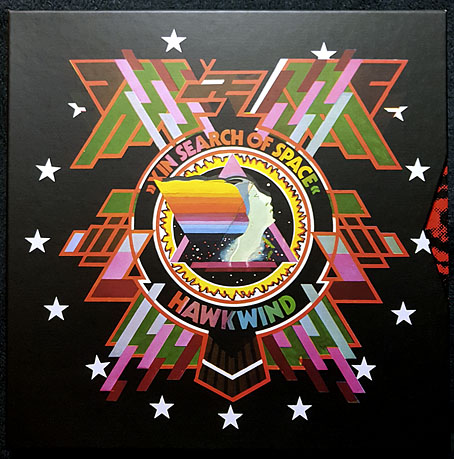
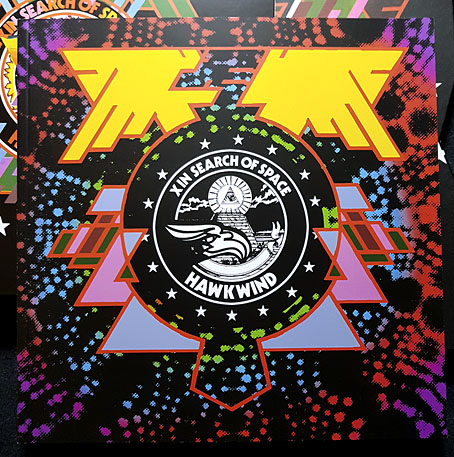
Hawkwind shared a record label with Amon Düül II for their first six albums, and the groups are further connected by bass player Dave Anderson who played on Düül’s Yeti in 1970 and Hawkwind’s In Search Of Space in 1971. The latter has just been reissued by Cherry Red in a variety of formats which include the three-disc package (2 x CD and a blu-ray disc) that arrived here at the weekend. The set features two new mixes of the entire album (one of them being the de rigueur 5-channel surround mix), a couple of outtakes, both sides of the Silver Machine single, plus the promo film for the single. The set also contains a substantial booklet which incorporates a reprint of the 24-page logbook that came with early pressings of the album. More about that below.
isos2.jpg

Hawkwind didn’t arrive as fully-fledged cosmic voyagers on their self-titled debut in 1970, it’s here on their second album that the group myth takes flight, presenting the band as travellers through time and space, or “Sonic Assassins” as they were depicted shortly before the album’s release in Codename: “Hawkwind”, a two-page promotional comic strip created by Michael Moorcock and Jim Cawthorn. Many British bands were playing with space themes in 1971 but Hawkwind were the only group to adopt the trappings of science fiction as essential elements of their persona, elements that persisted from one album to the next. In Search Of Space is loosely spacey on the musical side—You Shouldn’t Do That is the earliest example of a future Hawkwind staple, the extended mantra-like groove over which synthesizers swoop and burble—but it’s the album package created by Barney Bubbles and (in the logbook) Robert Calvert that dispels the ambiguity of songs like Master Of The Universe and Adjust Me in a science-fiction scenario where the “space” referred to by the title is dimensional as well as cosmological, with the group’s flattened spacecraft embodied by the physical album. None of this is suggested by the music, you need to read the logbook as well, but the book and the die-cut record sleeve help to frame what would otherwise be a collection of disparate rock songs into a complex artistic statement.

When it comes to the remixing of albums I’ve been sceptical of the benefits of the trend. For the past few years Steven Wilson has been the prime remixer of music from the 1970s and 80s; among other things he remixed Hawkwind’s Warrior On The Edge Of Time and the albums on last year’s Days Of The Underground set, all of which are worth hearing. Less essential have been his new mixes for King Crimson and Tangerine Dream, the latter especially where there’s little discernible difference between the old and new versions. I think the main attraction for many listeners will be the 5-channel surround mixes, especially in the case of Tangerine Dream, but I don’t have a 5-channel sound system so can’t say how effective they are. The new In Search Of Space mixes are the work of another Steve, Stephen W. Tayler, whose reworking of the album has taken me by surprise, giving it a radically different sound rather than the discreet adjusting of levels and instrumentation that I was expecting. Dave Brock has said in interviews that he always dropped acid before making the final mix of the Hawkwind albums up to Warrior On The Edge Of Time, which may explain why In Search Of Space has always sounded rather thin and dry, while the album that followed it, Doremi Fasol Latido, is a bludgeon by comparison, with everything compressed into the wall of sound which Hawkwind had developed in their live performances. Tayler’s new mix of Master Of The Universe is revelatory, bolstering the bottom end and emphasising the inverted echoes on Nik Turner’s voice, while You Shouldn’t Do That explodes into jet-propelled life. Everything sounds more substantial, and possibly more cosmic; I’ve not done a side-by-side comparison yet but I think Tayler has given greater emphasis to the effects throughout the album, especially all the swooshing and burbling electronic instruments. If you’ve ever shared my scepticism about the remixing trend then Tayler’s work here should be considered an argument in its favour.

Continue reading “Space is one trip: the Hawkwind takes off”

Pin culture

pins1.jpg

In the mail this week, a pair of new pins from the pin-maker and seller who made the exquisite Future Days pin. (eBay shop | Etsy shop) The Ege Bamyasi pin isn’t as effective as the earlier Can design but I feel compelled to encourage the effort, especially when most of the designs from this maker are for punk or post-punk bands. I also enjoy the novelty of seeing things like this at all. The years when I was discovering German music via secondhand releases (late 70s, early 80s) coincided with a period when I spent a lot of time scouring local shops for unusual badges. Growing up in a holiday resort gave me access to a greater quantity of cultural ephemera than you’d find in nearby towns, yet during this time I never saw any badges related to the German groups, not even Kraftwerk. As for prestige enamel items, you seldom saw these outside concert merchandise stalls where hardcore fans could be relied upon to pay more for their memorabilia.

pins2.jpg

Official pins from Hawkwind, Magma and Ghost Box Records.

The recent emergence of a cottage industry devoted to enamel pins means that these aren’t the only such items you’ll find on eBay or Etsy, but most of the others I’ve seen are either substandard (like another attempt to rework the Future Days cover) or are from North American sellers who want you to pay £25 or more for postage. Nein danke. But wherever the pin makers are located they all face the problem of how to create something related to groups who didn’t have a graphic identity that can easily be converted to metal and enamel. Where Can are concerned you could at least do this with their name as it appears on the Tago Mago cover. (Maybe such a thing exists already?) And I was amused to see that one pin maker has managed to reduce Manuel Göttsching’s chessboard cover for E2–E4 to pin size. What I’d really like now is a Neu! pin in black and white like the design on the cover of Neu! 75. Here’s hoping…

Previously on { feuilleton }
A Can pin
Rock shirts

Weekend links 726

ferriss.jpg

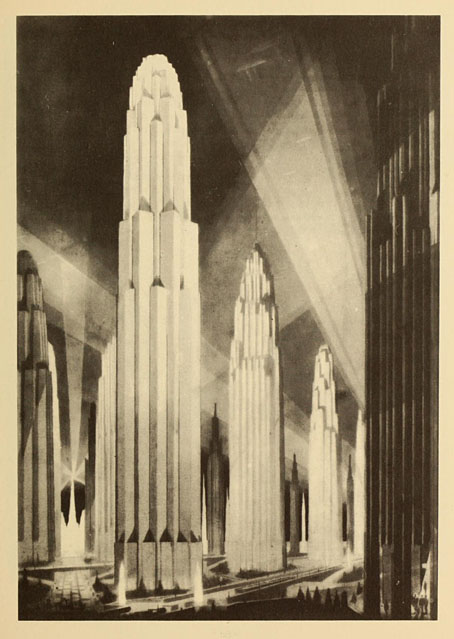
Verticals on Wide Avenues from The Metropolis of Tomorrow (1929) by Hugh Ferriss.

Megalopolis, the futuristic epic written and directed by Francis Ford Coppola, now has a trailer and a handful of mixed reviews. I recall Coppola saying years ago that he was the kind of director who would happily make films in any genre, science fiction included. I’ve wondered ever since what a full-on Coppola SF film might look like. (Captain EO and Peggy Sue Got Married don’t count). Now it seems we’re about to find out. Given his previous missteps I remain sceptical yet curious about this one. I’ve avoided his output since Bram Stoker’s Dracula but I’m still happy to see him being so ambitious while retaining his independence.

• And RIP Roger Corman who Coppola remembered as “my first boss, task-master, teacher, mentor, and role model. There is nothing about the practical matter of making movies I didn’t learn by being his assistant.” Related: It rained on the Sunday: a career interview with Roger Corman by Matthew Thrift.

• At Retro-Forteana: Fortean-themed music, from opera to metal. A difficult subject for a such short post, as the author admits. I’m amused to see one of my Hawkwind album covers in the list although the album itself doesn’t seem very Fortean to me.

• “Did you know that, if things had gone differently, the Pompidou Centre could have been an egg?” Oliver Wainwright on architecture that might have been.

• At Cartoon Brew: A closer look at great animated title sequences. I deplore the omission of Richard Williams’ titles for The Charge of the Light Brigade (1968).

• At Public Domain Review: Love Spells and Deadly Shrieks: Illustrations of Mandrakes (ca. 650–1927).

• At Wormwoodiana: “That Strange Little Book”: Ding Dong Bell by Walter de la Mare.

• At Unquiet Things: The latest collection of Intermittent Eyeball Fodder.

• Mix of the week: DreamScenes – May 2024 by Ambientblog.

Mandrake Root (1968) by Deep Purple | Mandrake (1975) by Gong | The Mandrake’s Hymn (2019) by Earth