Being PrEPared

prepdiaries.jpg

I don’t know when I first noticed that the word “introvert” contains the word “invert” but if I require a shorthand self-identification beyond the vocational then “introvert invert” is a suitable candidate. Being an introvert isn’t always easy in a resolutely extrovert world, but being an introvert invert has considerable drawbacks, such as how you meet anyone like yourself when the available meeting places—club and bars—inspire severe loathing. Clubbing is no longer the only option now that we have online dating (and gay clubs have been dying off in any case…) but the options were few in the 1980s. It’s impossible for me to think about any of this without considering that if I wasn’t such an introvert I might not be alive today. I was 20 in 1982 when the AIDS epidemic was starting to travel the world; had I been more gregarious I might have been investigating all those wretched clubs and bars instead of sitting at home, listening to music and drawing pictures.
aids.jpg

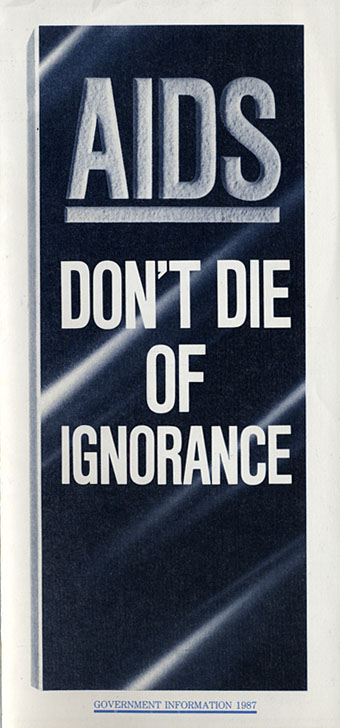
The Thatcher government only started to get serious about HIV/AIDS in 1987 when this information leaflet was delivered to every household in Britain. (See scans of the whole thing here and here.) There was also an accompanying public information film narrated by John Hurt, and directed by Nicolas Roeg, of all people. It was quickly replaced with other films that were less apocalyptic.

Whatever your attitude to nightlife, if you were gay in the 1980s then AIDS was omnipresent even before it became an issue that politicians dared to discuss in public. I remember when Patrick Cowley died (November 1982); I remember when Klaus Nomi died (August 1983); I bought the Panic/Tainted Love single by Coil when it was released (May 1985), the profits of which went to AIDS charity The Terrence Higgins Trust (the first record release to make such a donation). Coil’s doom-laden Horse Rotovator album from 1986 was shaped by the group’s experience of watching many of their friends succumb to illness and death. There were many other such responses, one of the greatest being the monumental Masque Of The Red Death album cycle by Diamanda Galás, dedicated to Galás’s brother and her friends who were killed by the epidemic. I can’t think of artist and writer Philip Core without remembering the interview he gave to The Late Show from his hospital bed in 1989, a hollow-eyed ghost of his former self. The accumulated fear and paranoia of a dark decade lingered into the 1990s even after condom-use had become widespread and HIV became manageable with drug treatments.
aidsad.jpg

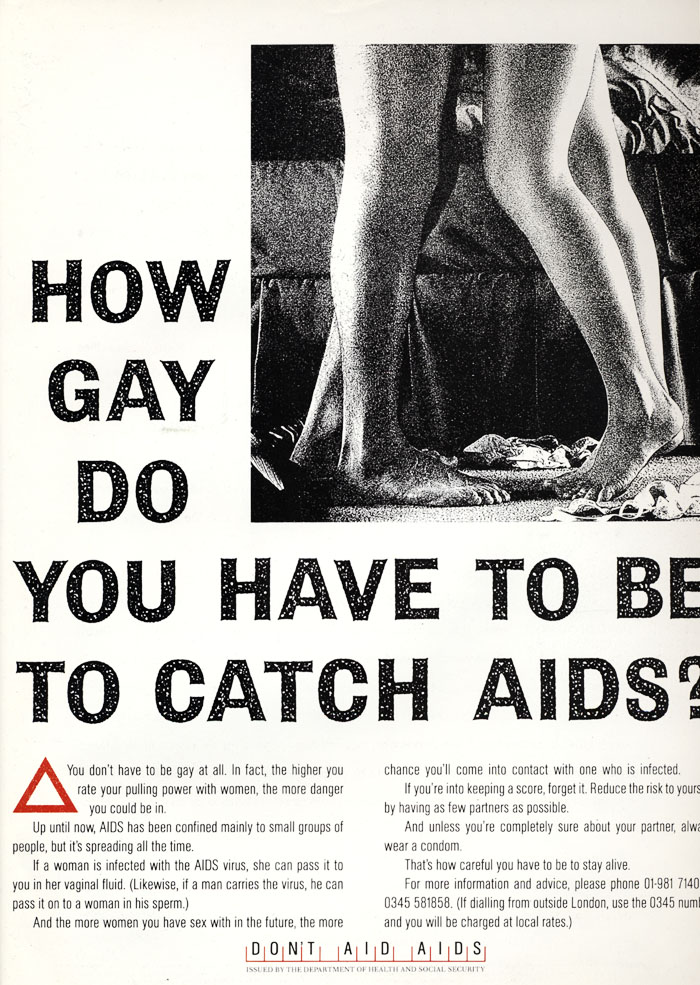
More from the fun decade. A government health ad from The Face magazine, February 1987.

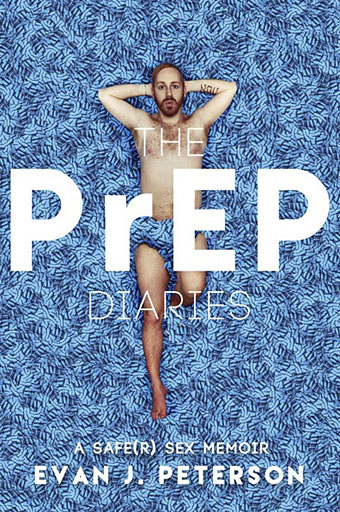
The paranoia of the 1990s is one of the first things that Evan J. Peterson discusses in The PrEP Diaries, an account of growing up gay in America at a time when HIV was treatable but still something to be worried about. Evan is a friend whose previous books have been mentioned here (one of which I contributed to), but this is his first non-fiction title, a witty and enlightening combination of erotic memoir and public service declaration. “PrEP” refers to the drug marketed in America as Truvada, a pre-exposure prophylaxis anti-viral medication which has been gaining use in the US as a preventative treatment for HIV. The drug’s use is recommended primarily to partners of those who are HIV+ but it’s also being recommended to gay men with active sex lives as an additional safeguard against HIV. I’ve been aware of Truvada for several years but since it still isn’t easily available in the UK I’ve not followed the discussion around its use or effectiveness very closely.

One of the reasons for Evan writing The PrEP Diaries was to widen the discussion about PrEP/Truvada by showing how his own use of the medication has helped dispel the paranoia he felt about HIV risks, a paranoia that had been with him since childhood. He was born in 1982, the year that AIDS first began to make headlines so he’s of a generation that has never known a time without the risk of HIV. One of the notable things about his book is the way it shows the substantial differences of experience between the gay and straight worlds, differences that persist even as legislative equality grows. Sexual risk is one of these differences, something you’re always aware of if you’re gay or bisexual but which the straight world seldom considers at all. I have a half-brother who’s a few years older than Evan, and two nephews who are a decade younger; all are straight, and I doubt that any of them have given more than a moment’s thought to the idea that sexual activity could have life-changing consequences even though viruses don’t care about your sexuality. HIV can be kept under control today yet it continues to spread, in part because the serious concerns of previous decades are no longer prevalent. You can’t go on any gay dating site without eventually seeing someone with “poz” in their name or some other indication (usually a + symbol) of their HIV status. One of the benefits of PrEP that Evan discusses is its helping people who are HIV+ to find more partners as well as protecting those partners from infection. He also emphasises something you seldom see mentioned in general discussion of HIV, that positive status doesn’t describe a single condition; some people are positive but undetectable, meaning that their viral load is extremely small.

Continue reading “Being PrEPared”

Weekend links 271

flyhead.jpg

Environment Transformer/Flyhead Helmet by Haus-Rucker-Co (1968). From Hippie Modernism at the Walker Art Center, Minneapolis.

• From 2006: Weird Tales: The Strange Life of HP Lovecraft. Geoff Ward examines Lovecraft’s life and work for BBC Radio 3 with contributions from Neil Gaiman, ST Joshi, Kelly Link, China Miéville and Peter Straub. Meanwhile, Ned Beauman wonders whether Ford Madox Ford is “as scary as Lovecraft”.

• Alexei German’s years-in-the-making feature film, Hard to be a God (previously), receives a UK release this week. Paul Duane reports on an overwhelming viewing experience, while Nigel Andrews says it “may be the greatest film since the millennium began”.

• Mixes of the week: Adventures In Sound And Music, 30 July 2015, hosted by Joseph Stannard, and RCMIX9 by worriedaboutsatan.

As Nabokov insisted, “Literature is invention. Fiction is fiction. To call a story a true story is an insult to both art and truth.” The genre thrives because its deceptions are liberating. For Wood, the thrill of reading fiction is intimately connected with the awareness that fiction constitutes “an utterly free space, where anything might be thought, anything uttered.” The excitement comes when, as readers, we’re allowed to participate in this freedom and experience the fiction imaginatively, without being required to believe that it is true.

Joanna Scott on The Virtues of Difficult Fiction

• “Writing used to be a solitary profession. How did it become so interminably social?” asks Meghan Tifft.

• The original, real-life dystopian cityscape of Kowloon Walled City, and the artwork it inspired.

• The Long, Lonely Walk: Nick Ripatrazone on hallways in horror films.

New cover designs for the Essentials range from Penguin Books.

Lemi Ghariokwu: “How I designed Fela Kuti’s album covers”.

• “Do CDs sound better than vinyl?” asks Chris Kornelis.

• Magic Fly (1977) by Space | Human Fly (1978) by The Cramps | I Am The Fly (1978) by Wire

MCMLXX

data70.jpg

Data 70, a typeface by Bob Newman.

The presence of electronic artists Data 70 in the Spatial mix at the weekend had me thinking about the preponderance of cultural items that were given “70” as a suffix in the 1960s or in the year 1970. The air of futuristic optimism in the 60s drew attention to the birth of a new decade in a manner that hadn’t really happened before, and certainly didn’t happen for 1980 by which time the optimism had been sunk by a decade of political and fuel crises, and the end of the space race.

Data 70 take their name from the “futuristic” computer-like typeface designed by Bob Newman in 1970. Newman’s typeface wasn’t the first of the Space Age designs—Colin Brignall’s Countdown appeared in 1965—but Data 70 was everywhere in the 1970s. Data 70 (the group) dedicated a piece of music to Newman.

A few more 70s follow. These are only the ones I’ve been able to remember or stumble across so I’m sure there are more. And note: to qualify for this micro-category something has to be named “70” only where the suffix signifies modernity or the future, no Expo 70 (the world’s fair in Osaka) or anything annual that happened to be labelled 70 as part of a series.

boccaccio.jpg

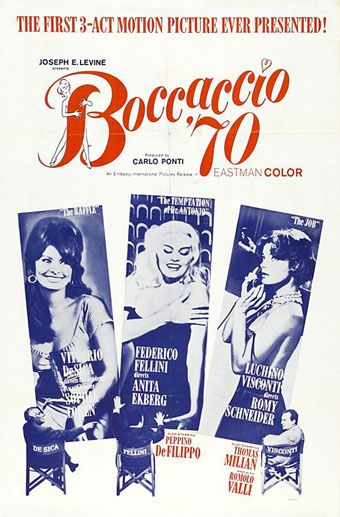
Boccaccio 70 (1962).

The label might imply the future but the predominant tone of these entries is sex. Boccaccio 70 set things in motion by updating the Decameron to modern Italy. Despite the claims of the poster, anthology films are nothing new, and this one has four stories directed by Vittorio De Sica, Federico Fellini, Mario Monicelli and Luchino Visconti. Italo Calvino was one of the writers.

Continue reading “MCMLXX”

Weekend links 23

groovy.jpg

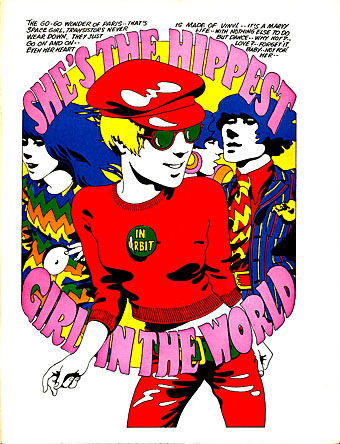
“The Go-Go wonder of Paris — That’s space girl. Transistors never wear down, they just go on and on — Even her heart is made of vinyl — It’s a marvy life — With nothing else to do but dance — Why not? – Love? — Forget it, baby — Not for her —” From Mod Love (1967) by Michael Lutin and Michel Quarez.

• “Gay people are not advancing themselves in the (publishing) industry, they’re just regurgitating familiar territory. Of course, artists are always ahead of gatekeepers. That’s the way it works—artists innovate. But in order to fulfill your promise as an editor, agent, publisher or reviewer, you have to be a person who’s embracing the new and looking to elevate what is not yet known. And unfortunately, there’s not a discussion among publishing professionals about enhancing this aspect of people’s responsibilities. In fact, it goes the other way. So there needs to be a psychological revolution on behalf of the people who are controlling what information is allowed to be seen.” From an interview with Sarah Schulman at Lambda Literary.

Jonathan Ross meets Jim Steranko. Also at the Guardian: Unearthing the truth about Alan Moore.

• Photographing an abandoned Art Deco skyscraper. From the people who photographed Neverland at night.

Powers: “aural sculptures” by Andy Partridge inspired by the strange science fiction art of Richard M Powers.

barbier.jpg

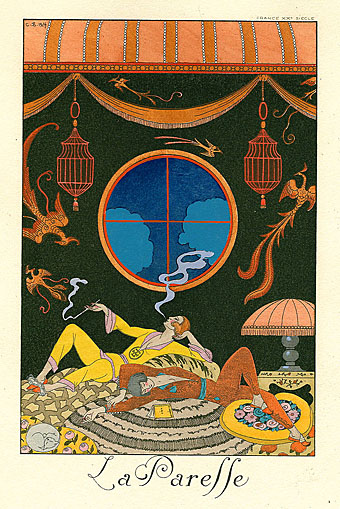
La Paresse (Laziness) (1924) by George Barbier.

Lautréamont’s poison-drenched pages. Roger Cardinal reviews a new edition of Les Chants de Maldoror and Poésies.

The Wire‘s Top 50 Rhythms of All Time, a list from 1992. Some great recommendations but it’s impossible to imagine that being written now without a mention of Klaus Dinger. And where’s Fela Kuti?

• The Wire Salon at Cafe Oto, London, on August 5th presents Rob Young discussing his forthcoming book, Electric Eden: Unearthing Britain’s Visionary Music.

American Pictorial Photography, 1912–1955. Another astonishing picture set at Golden Age Comic Book Stories.

The Beats: Pictures of a Legend. Edmund White on a new exhibition of Allen Ginsberg’s photographs. Related: the trailer for Howl.

The Dream Machine is a point-and-click adventure game made using hand-crafted animation.

Fuck yeah Francisco Lachowski: Brazilian model cutie has many Tumblr fans.

Polly Morgan’s wings of desire. The taxidermy artist interviewed.

Thomas Dolby’s solar-powered boat studio.

Rückstoss Gondoliere (1971) by Kraftwerk: pt. 1 | pt. 2

Klaus Dinger, 1946–2008

dingers.jpg

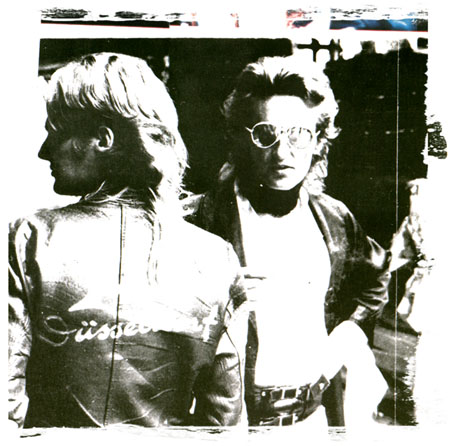
Klaus Dinger (right) with brother Thomas, circa 1978. From the sleeve of Viva by La Düsseldorf.

“There were three great beats in the ’70s: Fela Kuti’s Afrobeat, James Brown’s funk and Klaus Dinger’s Neu! beat.” Brian Eno

Klaus Dinger, the great drummer for Neu! and La Düsseldorf (and briefly Kraftwerk in 1971) died back in March but news of this has taken a while to emerge. Everything he did in the Seventies is essential, the Neu! albums especially. YouTube has a few choice examples such as this clip of someone playing Neu!’s finest (and oft-imitated) moment, Hallogallo, slightly too fast. Then there’s Isi from Neu! 75 and the crazy glam-punk of Hero (a tremendous period performance) shortly before guitarist Michael Rother left and the band transmuted into La Düsseldorf. For a blast of the latter, there’s the majestic Rheinita from Viva. Happily, Michael Rother is still with us and was interviewed in the most recent issue of The Wire.

Previously on { feuilleton }
Aerodynamik by Kraftwerk
Metabolist: Goatmanauts, Drömm-heads and the Zuehl Axis
The genius of Kraftwerk