A Pictorial History of Horror Movies by Denis Gifford

gifford01.jpg

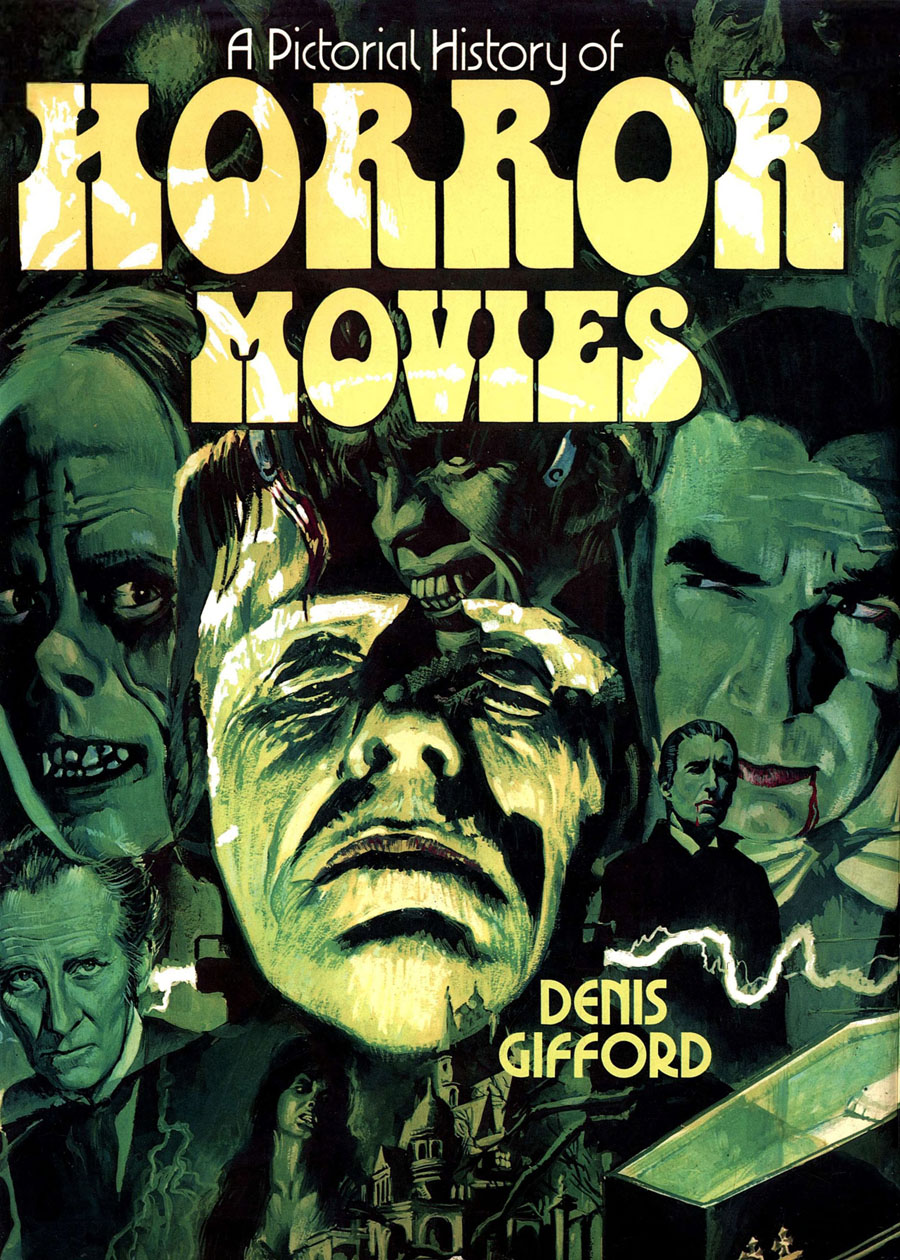
Cover art by Tom Chantrell.

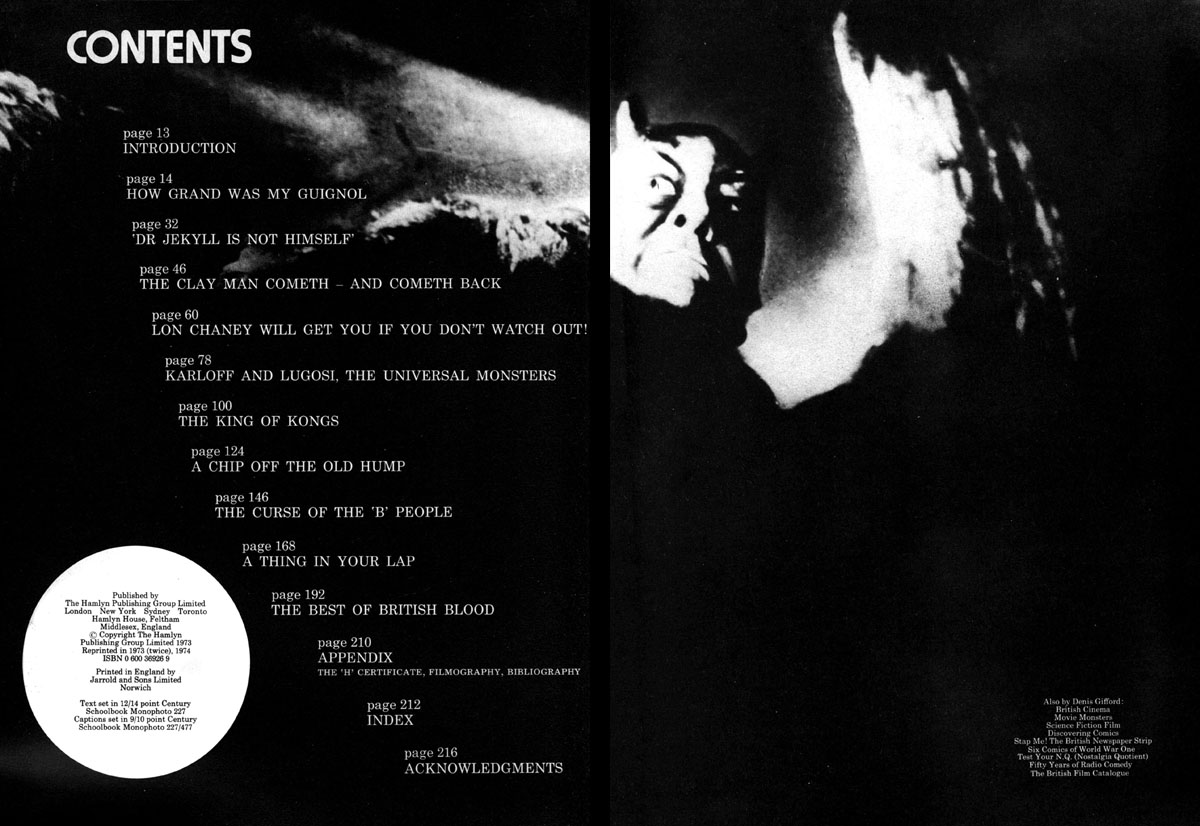
Halloween approaches so here’s a book that suits the season. Denis Gifford’s A Pictorial History of Horror Movies was published in Great Britain by Hamlyn in 1973. A large-format hardback of just over 200 pages, this was a cheap production for wide distribution, and evidently sold well: my edition from 1980 is the 12th reprint, and the book was still in print in 1983, in a slightly longer edition with a new cover.
gifford17.jpg

For a generation of British kids Gifford’s book made an indelible impression, not least because of its ubiquity. It was always easy to find—for years I didn’t have a copy of my own because I invariably seemed to know someone who did—and its mostly black-and-white pictures featured a great deal of imagery that was generally forbidden to those of us under the age of 18. This may seem surprising to Americans, or those in more liberated European countries, but Britain has always had an uneasy relationship with the horror genre despite the legacy of Gothic novels and ghost stories, never mind Dracula, Frankenstein and the rest. Literary manifestations command a grudging acceptance if enough years have passed since first publication but Britain’s moralists and censors have fretted over pictorial horror for decades, especially the film and comic-book variety.
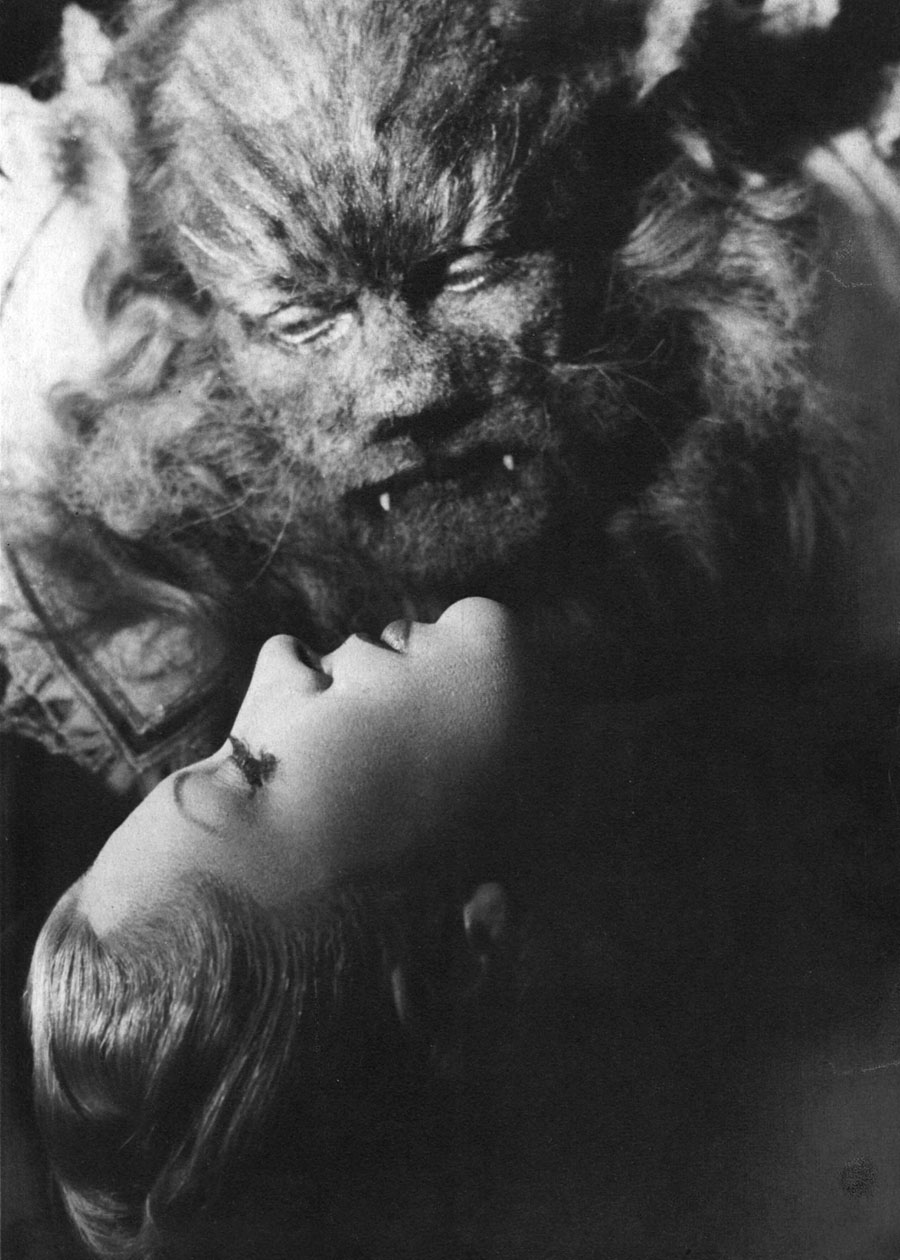
gifford02.jpg

La Belle et la Bête (1946).

Almost all horror films screened in Britain over the past century were for audiences of 18 or over, while horror films on TV were never shown before 10pm. That scene in Halloween (1978) where the kids are watching The Thing From Another World on television in the early evening would have been impossible here. In 1982 we had the start of the “video nasties” panic, a particularly disgraceful episode for those eager to interfere in other people’s entertainment, and an issue that rumbled on for the rest of the decade. As for print media, I still have a leaflet from the late 1980s given to all applicants of UK passports which lists “horror comics” along with weapons, drugs, poisons, etc, among the items forbidden from import into Britain. This climate gave Gifford’s guide an illicit charge it might not have had if published elsewhere: the book delivered a concentrated dose of the forbidden.
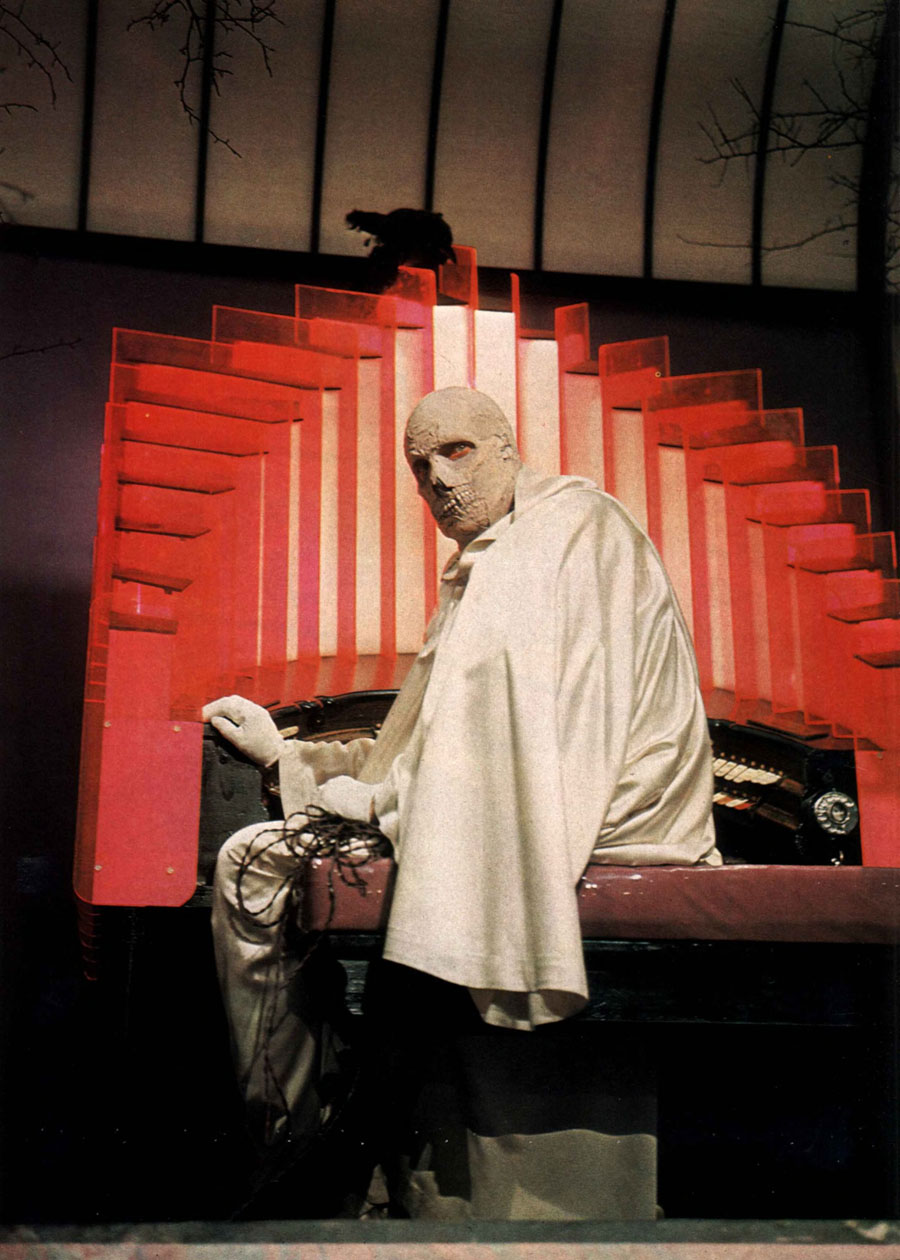
gifford03.jpg

Vincent Price as Doctor Phibes.

Denis Gifford (1927–2000) was, among other things, a comics artist, a comics and film historian, and a collector of comic books and horror ephemera. Most of the material in A Pictorial History of Horror Movies is from his own collection, and an excellent collection it was. More than 300 stills run through the entire history of horror cinema from the earliest Méliès shorts to German Expressionism, Universal horror, Hammer horror, AIP monster movies, Toho monster movies, and on to the garish efforts of the late 1960s; he even manages to get in a still from Carry On Screaming. The accompanying text is concise but authoritative, although I doubt anyone ever used the book as a serious study. Yet for a 12-year-old this was a perfect introduction to the genre, as well as a dizzying intimation of hundreds of films yet to be seen. In place of the films you had pictures implying entire worlds of mystery and terror, many of which are so good they give very unrealistic expectations of the films from which they originate. Some of the most memorable examples for me have been those which are more atmospheric or eerie than horrific, like the sinister child at the window in Mario Bava’s Operazione Paura (1966) aka Curse of the Dead. (See this post for more about the extended life of Gifford’s still.) But there were also plenty of monsters, grotesque makeup effects and even some gore; a female friend of mine was obsessed with the picture of a blonde and bloodied young woman with an axe buried in her head (see below). Looking at the book today I suspect Gifford’s punning captions may have been a nod to Famous Monsters of Filmland, a magazine with a devoted readership but not a title I ever read myself.
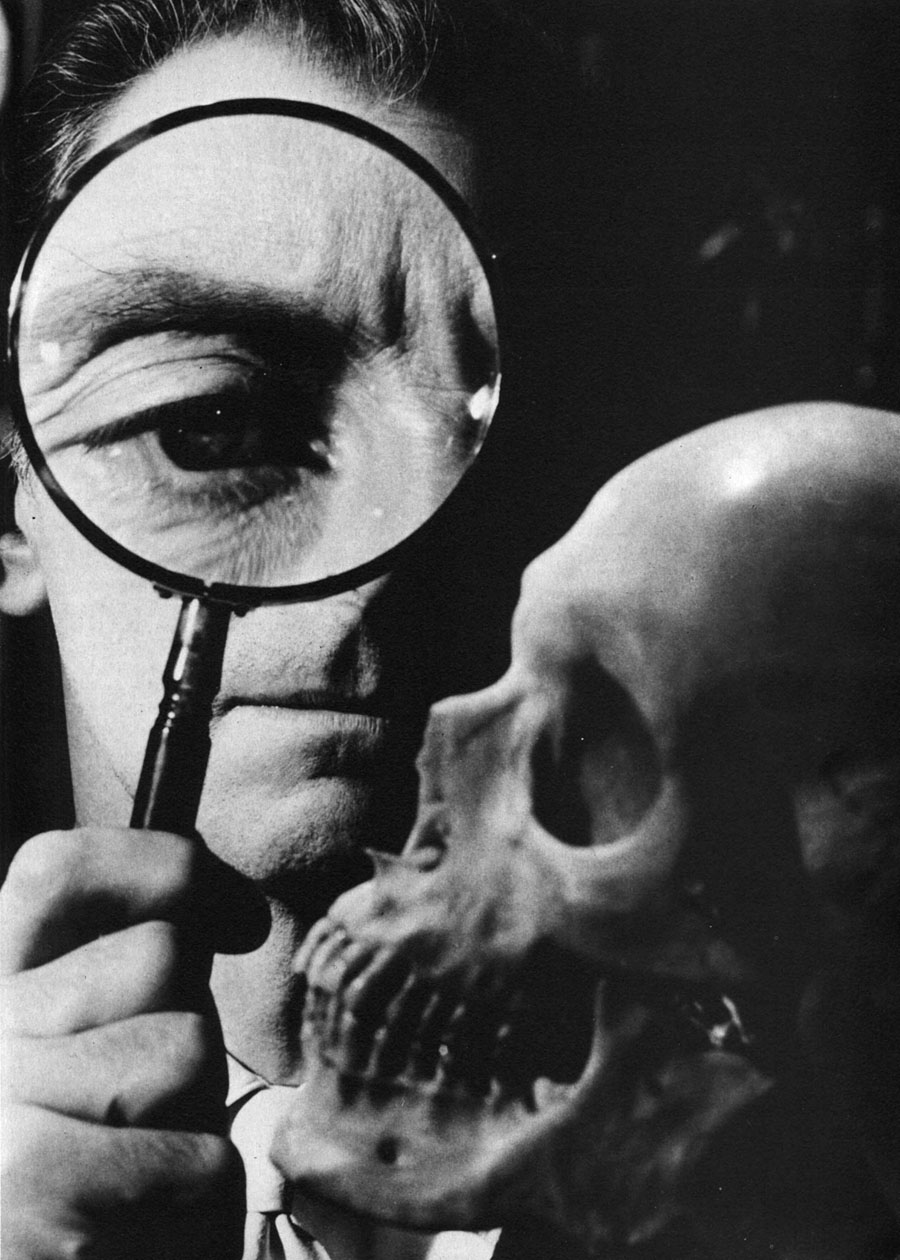
gifford04.jpg

Peter Cushing (The Skull; 1965).

All the pictures here are from an upload of the entire book at the Internet Archive. Gifford isn’t around to complain about this but the book may not remain there for long so enjoy it while you can. A few more pages follow. For an earlier appraisal of the book’s impact on impressionable minds, there’s this piece by Dave Tompkins.

Continue reading “A Pictorial History of Horror Movies by Denis Gifford”
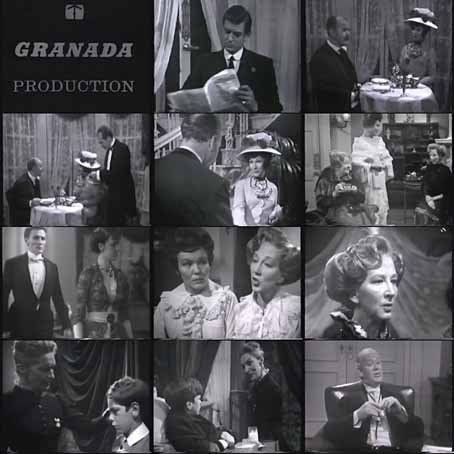
Saki: The Improper Stories of HH Munro

saki.jpg

I thought I’d written about this some time ago but it appears not so the present post can serve as a way to honour the talents of the late Fenella Fielding. The obituaries this week have inevitably emphasised her roles in the Carry On films, a series of alleged comedies that I’ve never liked, and which weren’t much liked by several of the actors who appeared in them. Fenella Fielding did much more than this, of course, especially in the theatre, on radio and in television, including appearances such as the one here from a collection of adaptations of the peerless short stories of Hector Hugh Munro, better known as Saki. Granada TV made a whole series of these in 1962, broadcasting this anthology in 1985 following the death of producer Philip Mackie. Fenella appears in the second story, A Holiday Task, as the forgetful Mary Drakmanton, and she fits so well with into Saki’s world that I really wish I’d suggested to my colleagues at Savoy Books a reading or two by Fenella from Saki. She enjoyed reading Colette for Savoy, and chose the selections herself, one of which concerned Colette’s homosexual friends. Given this, I can imagine Fenella teasing out some of the sly gay humour that runs like a scarlet thread through Saki’s Clovis stories.

The other pieces in this Granada collection are The Stampeding of Lady Bastable, The Way to the Dairy, Sredni Vashtar and A Defensive Diamond. The story editor was Gerald Savory who later did such an excellent job adapting Dracula for the BBC.

Previously on { feuilleton }
Fenella Fielding reads Colette

Weekend links 429

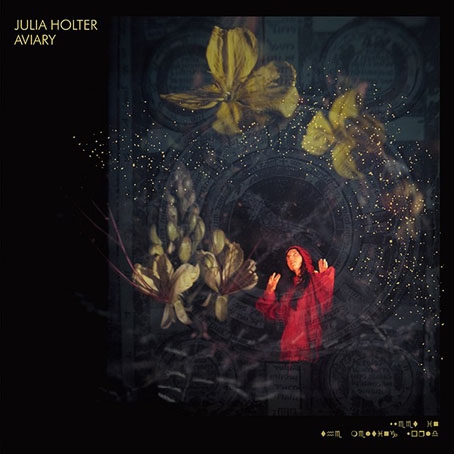
holter.jpg

• Julia Holter’s next album, Aviary, will arrive next month with a cover design bearing astrological symbols (a cryptic message?) and what looks like a grimoire page in the background, although I may be reading too much into this. Whatever the esoterics signify, the album is a double, and going by the sound of new song I Shall Love 2 it’s going to be a good one. Aviary will be released on 26th October just in time for the witch season.

Donna Ferguson talks to Oscar Wilde’s grandson, Merlin Holland, about the manuscript for The Picture of Dorian Gray which includes more openly homoerotic sentences than were included in the printed versions. A facsimile of the manuscript is now available in a limited, numbered edition from SP Books.

• The final single in the excellent Other Voices series from the Ghost Box label is released later this month. Something Out Of Nothing is by Sharron Kraus and Belbury Poly.

…we’re still trying to operate this new, paranoid society on what amounts to a psychedelic substrate—with little or no awareness of how our sets and settings are determining our results. The set and setting of the advertiser yield addictive behavioral design and persuasive technologies. The set and setting of the investor lead to algorithmic trading and winner-takes-all, extractive businesses. The set and setting of the military lead to drone warfare. The set and setting of the politician lead to targeted propaganda and digital fascism.

America is unconsciously living in a psychedelic landscape and having a bad trip. We don’t realize that we are living in a media environment that offers us an unprecedented capacity over reality. The world may have always been a consensual hallucination to some extent, but never before have we built our world so completely.

The internet is acid, and America is having a bad trip, says Douglas Rushkoff

Photographia Erotica Historica is a tiny leatherbound collection of antique pornography from Goliath Books.

Why is the Federal Government threatening an indie book publisher with $100,000 in fines?

• Undead, undead: my illustrations for Dracula are featured at Dangerous Minds. Thanks!

• The Vinyl Factory meets Japanese composer and musician Midori Takada.

• Exploring HP Lovecraft’s Gothic roots by Dr Xavier Aldana Reyes.

• From 2013: Dario Argento discussing his films with Alan Jones.

• Aurora Mitchell on Electro pioneer Doris Norton.

• Mix of the week: XLR8R Podcast 558 by DJ T.

Aviator (1970) by Michael Chapman | Aviation (2000) by Fluxion | Aviation (2001) by Monolake

Illustrating Sherlock Holmes

beeton.jpg

Beeton’s Christmas Annual, 1887.

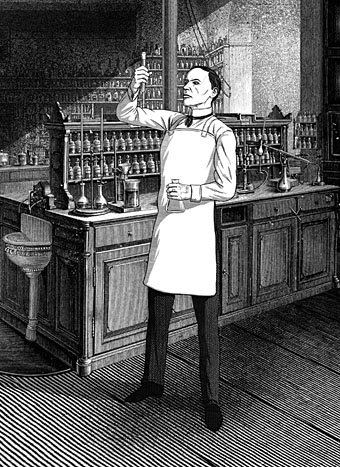
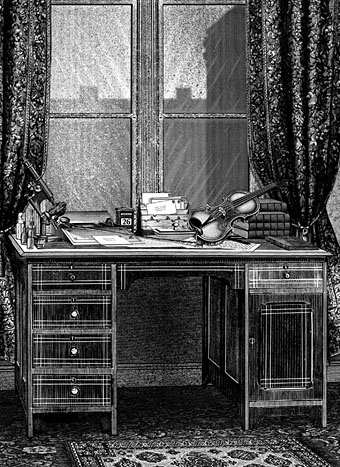
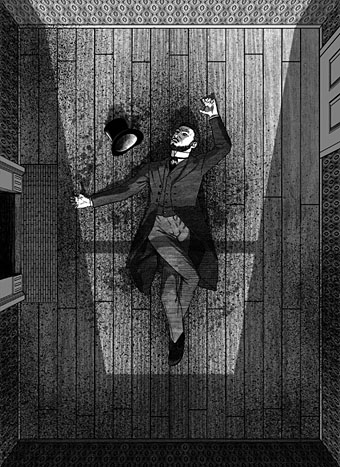
The latest in the series of illustrated editions I’ve been working on for Spanish publisher Editorial Alma is a single-volume collection of two short Sherlock Holmes novels, A Study in Scarlet and The Sign of Four. Work on this book began immediately after I’d finished Dracula so maintaining the Victorian theme was easy enough, although the commission as a whole was an awkward one. The main problem was having barely enough time to create 20 new illustrations while I was finishing work on the huge Jim Cawthorn book. But even with enough time this would have been a difficult brief. I regard Sidney Paget‘s original Holmes illustrations as the definitive ones so trying to offer people a fresh take on the world’s greatest detective is difficult. (And, as with Dracula, there’s further competition from the innumerable screen adaptations.) Then there are the stories themselves which are often more cerebral than visual, offering little for an illustrator beyond successive views of rooms, streets, houses and so on. Even Paget has trouble with this aspect of the stories, with many of his illustrations showing the various characters standing or sitting in rooms. If I’d had more time I might have tried a lateral take on the content—two of the illustrations in Dracula avoided the people-in-rooms problem by showing collections of objects on tables—but I didn’t have the time…

paget.jpg

Watson and Holmes by Sidney Paget. From The Adventure of Silver Blaze, The Strand Magazine, December 1892.

As things turned out, the least satisfying of the novels from a story perspective, A Study in Scarlet, was easier to illustrate because much of the second half takes place in the United States. This was the first Holmes novel, and it doesn’t work as well as the others for precisely this reason, the narrative attention is removed from Holmes, Watson and London, but the change of scene is a benefit for an artist. The second novel, The Sign of Four, is a better story but was compromised in this edition because the publisher only wanted every other chapter illustrated. For this reason Holmes and Watson are elusive presences in their own books although given the problems outlined above this may be for the best.

There’s still one more volume to emerge from my recent round of work for Alma, a collection of four Lovecraft stories, three of which I hadn’t illustrated before. More about this in a month or so. In the meantime, the full run of Holmes pictures follows below, while all may be seen at a larger size here.

A Study in Scarlet

holmes01.jpg

holmes02.jpg

holmes03.jpg

Continue reading “Illustrating Sherlock Holmes”

The South Bank Show: Dracula

sbs1.jpg

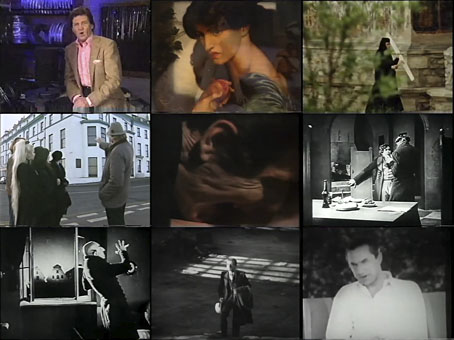
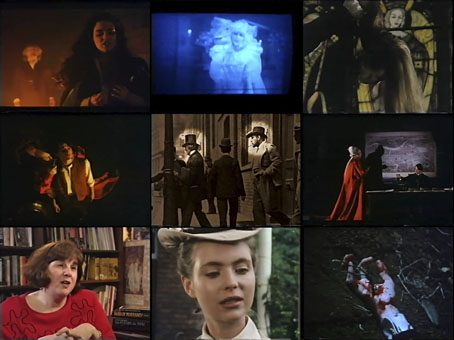
While illustrating Dracula earlier this year I was listening to Wojciech Kilar’s soundtrack to Francis Coppola’s Dracula to sustain the vampiric mood. I also watched Coppola’s film again, it’s an adaptation I enjoy a great deal despite its flaws. (This post detailed some of the plus points.) The South Bank Show‘s programme devoted to Dracula on page and screen was broadcast in early 1993, timed for the opening of Coppola’s film in the UK. I watched this when it was first shown, and remembered it being a good one but neglected to go searching for it back in January. I also remembered it being more about Coppola’s film than it is, although there’s still enough to make it a substantial promo piece.

sbs2.jpg

The territory here may be familiar but the evolution of Stoker’s novel is contextualised by some expert commentators—Leonard Wolf, Elaine Showalter (with a copy of Bram Dijkstra’s Idols of Perversity at her side) and Christopher Frayling—while discussion of the film adaptations includes Christopher Lee, Francis Coppola, James V. Hart (the screenwriter of Coppola’s film), Gary Oldman, Winona Ryder and others. Among the film clips there are several scenes from Count Dracula, Gerald Savory’s 1977 adaptation for the BBC. This is surprising since The South Bank Show was screened by the BBC’s rival, ITV. But Savory’s Count Dracula is still the most faithful screen adaptation that I’ve seen (and possibly the most faithful to date) so it’s a worthwhile choice, and one whose naturalism makes a sober contrast to Coppola’s Sturm und Drang.

Previously on { feuilleton }
Illustrating Dracula
Illustrating Frankenstein
Dracula and I by Christopher Lee
The Dracula Annual
Nightmare: The Birth of Horror
Albin Grau’s Nosferatu
Count Dracula
Symbolist cinema