Made To Measure

mtm1.jpg

When you’ve sated yourself on a group’s back catalogue there’s always the solo albums. In the case of Tuxedomoon there are a number of these to choose from, thanks to several of the band members being both multi-instrumentalists and talented songwriters. Some of the more offbeat solo outings may be found among the albums released as part of the Made To Measure series, an offshoot of the excellent Belgian record label, Crammed Discs. Crammed have been Tuxedomoon’s label for some time, and seem increasingly unique in a world where independent labels tend to cater to narrow genres and small, select audiences. Crammed’s roster of artists is extremely eclectic, ranging from the expected Euro-pop and dance releases to a wide range of traditional and contemporary music from around the world.
mtm2.jpg

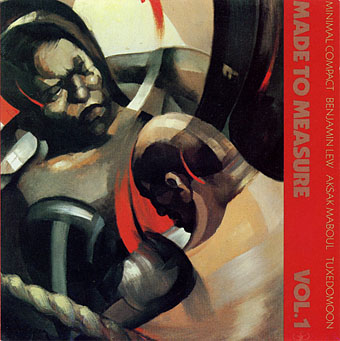
Made To Measure Vol. 1 (1984). Painting by Fernand Steven.

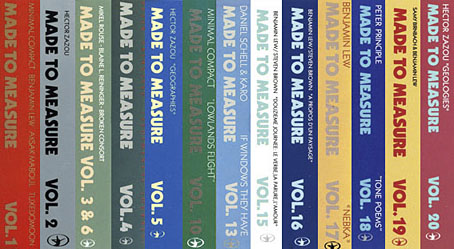
From 1984 to 1994 the Made To Measure series released over 30 albums that represent the more esoteric side of an already fairly esoteric label. All of the early releases were numbered, and Tuxedomoon happen to be on the first release, Made To Measure Vol. 1, together with Minimal Compact, Benjamin Lew, and Aksak Maboul. The series title refers to all of the music being “made to measure” some pre-existing work—film, theatre, dance performance, etc—although some of the later releases were simply an excuse to put out new music by an established Crammed artist. In addition to the first release, Tuxedomoon members Blaine L. Reininger, Peter Principle and Steven Brown were regular contributors to subsequent albums. Two of the Steven Brown albums, A Propos D’Un Paysage (MTM 15, 1985) and Douzième Journée: Le Verbe, La Parure, L’Amour (MTM 16, 1988) are marvellous instrumental collaborations with Benjamin Lew that are very different in tone to Tuxedomoon but well worth seeking out. Brown also recorded a soundtrack album, De Doute Et De Grace (MTM 22, 1990), with readings by actress Delphine Seyrig. The series has been discontinued in recent years but the MTM numbering was resurrected for the latest Tuxedomoon album, Pink Narcissus, which is MTM 39.
mtm3.jpg

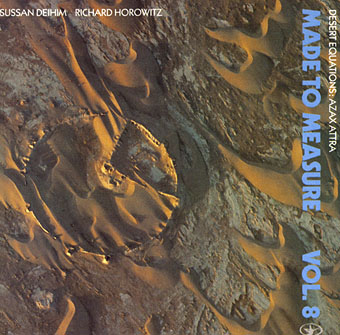
Desert Equations: Azax Attra (1986). Photography by Georg Gerster.

I’ve still not heard all of the Made To Measure series, and I don’t like everything I have heard—I have to be in the mood for Hector Zazou’s quirkier moments. Aside from those mentioned above, the notable releases for me would include Desert Equations: Azax Attra (MTM 8, 1986) by Sussan Deyhim (here credited as Deihim) & Richard Horowitz, an album that led me to acquire almost everything Sussan Deyhim has recorded; If Windows They Have (MTM 13, 1986) by Daniel Schell & Karo; Nekonotopia Nekonomania (MTM 29, 1990) by Seigen Ono; Water (MTM 31, 1992) by David Cunningham; Sahara Blue (MTM 32, 1993) by Hector Zazou; Glyph (MTM 37, 1995) by Harold Budd & Hector Zazou. Sahara Blue exemplifies in miniature the eclecticism of Crammed Discs, being a tribute to Arthur Rimbaud featuring (among others) John Cale, Ryuichi Sakamoto, Gérard Depardieu, Khaled, David Sylvian, Bill Laswell, Lisa Gerrard, Sussan Deyhim and Tim Simenon.
mtm4.jpg

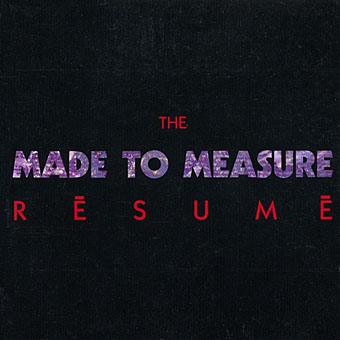
For those wishing to explore further without shelling out on mysterious, unknown quantities, I’d recommend The Made To Measure Résumé (1987), a compilation of tracks from the first 16 MTM releases, and an ideal introduction to the series.

Previously on { feuilleton }
Subterranean Modern: The Residents, Chrome, MX-80 Sound and Tuxedomoon
Tuxedomoon on La Edad de Oro, 1983
Tuxedomoon designs by Patrick Roques
Pink Narcissus: James Bidgood and Tuxedomoon
Weekend links 143

empire.jpg

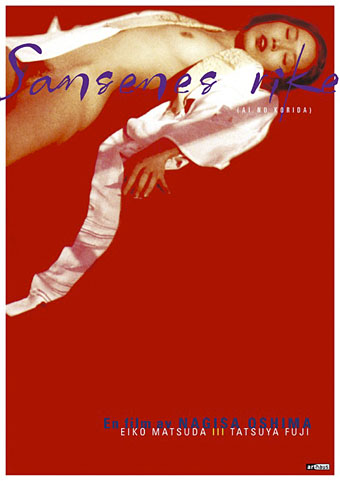
Ai No Corrida poster design by Egil Haraldsen (2001).

• “Back then, publishing an interview with Félix Guattari alongside little chats with rough trade and street walkers was unheard of — it still is for the most part.” BUTT on Kraximo, a gay Greek magazine of the 1980s.

13 books for 2013: A selection of forthcoming titles at Strange Flowers which so closely aligns with my preoccupations that I worry he’s reading my mind.

• “The Macaulay Library is the world’s largest and oldest scientific archive of biodiversity audio and video recordings.”

• A free BitTorrent Robert Anton Wilson audio and video pack. See also the RAW files at the Internet Archive.

beijing.jpg

The Pangu Building, Beijing, January 12th, 2013. Blade Runner arrives six years early.

Wired celebrates 100 years of Edward Johnston’s typeface for the London Underground.

Borges’ translation of Ulysses. Or of the last page of Ulysses as a translation of Ulysses.

0181, a new album by Four Tet, can be heard in full at SoundCloud.

• The Edge question for 2013: “What should we be worried about?

JG Ballard documentaries at Ubuweb.

Unlocking Dockstader.

• RIP Nagisa Oshima.

Ai No Corrida (1980) by Quincy Jones | Empire Of The Senses (1982) by Bill Nelson | Forbidden Colours (1983) by David Sylvian & Riuichi Sakamoto

Weekend links 88

zarnowerowna.jpg

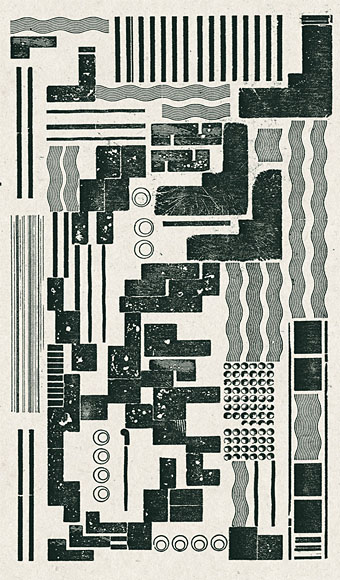
Typographic Composition (1924) by Teresa Zarnowerówna from a post about Polish graphic design at 50 Watts.

• “Direct action is a matter of acting as if you were already free… […] …the link between military and money systems remains the dirty secret of capitalism.” A lengthy and essential interview with “anarchist anthropologist” David Graeber, author of Debt: The First 5000 Years.

• “…it was after being told by an art director that he preferred her images of women to men that Toyin [Ibidapo] began to shoot boys in an attempt to prove him wrong. Something that Cult of Boys does perfectly.”

The pornographic imagination is deeply intertwined with the pain and horror of life. Some of that comes from our basic biological reality, which is unpleasant enough, and much of it comes from our social structures. Biological life has been completely degraded and continues to become more and more degraded in novel and more horrific ways, so it is inevitable that our horrible social structures – our schools, prisons, families, slaughterhouses and farms – become sites for the pornographic imagination.

Stephen Beachy discusses his novel, boneyard.

• “To my right is a wall bracket that, on closer inspection, turns out to be a human face made of porcelain fruits. The anteater rests on top of the television.” Jonathan Jones meets Jan Švankmajer.

Anselm Kiefer‘s new exhibtion at White Cube, London, takes its name and some inspiration from Fulcanelli’s alchemical exegesis, Le Mystère des Cathédrales (1926).

• Today (Sunday, 11th December) on Resonance FM at 8.00pm GMT, Alex Fitch talks to Alan Moore about HP Lovecraft and related matters.

Nick Hydra is putting all 112 issues of occult encyclopaedia Man, Myth & Magic online.

• Ira Cohen ‘s 1968 film The Invasion of Thunderbolt Pagoda is available again on DVD.

• Colleen Corradi Brannigan’s paintings of Italo Calvino’s Invisible Cities.

• “Margate’s a bloody toilet!” Can you handle The Reprisalizer?

• Bibliothèque Gay on Cocteau’s Le livre blanc (in French).

• Josie & the Pussycats in A Clockwork Orange.

Lovely Book Covers

Words With The Shaman (1985) by David Sylvian w/ Jon Hassell, Steve Jansen & Holger Czukay – I: Ancient Evening | II: Incantation | III: Awakening (Songs From The Treetops).

Samuel Beckett and Russell Mills

beckett1.jpg

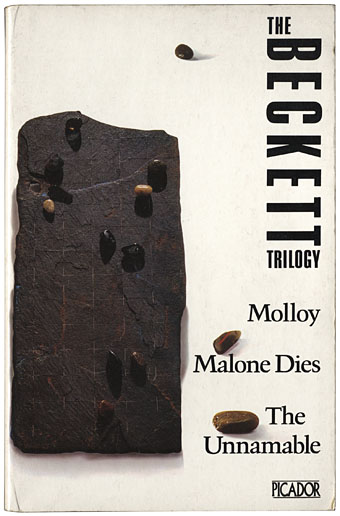
This 1979 Picador edition of The Beckett Trilogy is one of my favourite paperback cover designs. The “illustration” (as it’s described on the back) is a photograph of an artwork by artist/designer Russell Mills and the minimal credit gives no indication as to whether it was Mills who was responsible for the striking type layout. I’ve noted previously the equally striking Picador designs by the Quay Brothers who were responsible for both art and layout on their covers. Mills extended his work into graphic design later with album cover designs (and some book design) for Brian Eno, David Sylvian, David Toop and others so I’ll give him the benefit of the doubt in this case.

beckett2.jpg

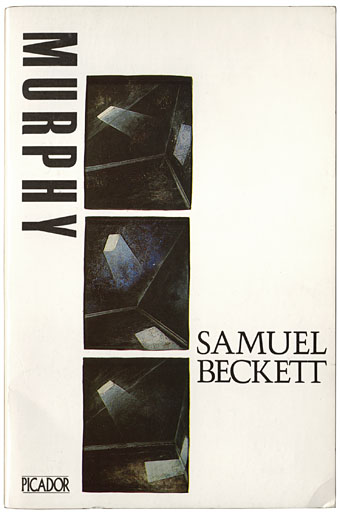
The Picador edition of Murphy was published in 1983 and comprises part of this week’s book haul. The three small Mills paintings suit the novel but I prefer his sculptural and collage works. I’ve taken to collecting more of these older Picador editions in recent years since they don’t turn up secondhand as often as they used to. As with the Quay Brothers and Italo Calvino, I wonder now how many Beckett covers Mills produced for Picador. The books list More Pricks than Kicks and Company in addition to these titles. He was still working for them up to 1986 when he and Brian Eno collaborated on the graphics for Don DeLillo’s White Noise. Unlike the world of Penguin collecting, this area lacks adequate documentation; further investigation is required.

Elsewhere on { feuilleton }
The book covers archive

Previously on { feuilleton }
Thursday Afternoon by Brian Eno
Crossed destinies revisted
Beckett directs Beckett
Crossed destinies: when the Quays met Calvino
The art of Shinro Ohtake
Not I by Samuel Beckett
Film by Samuel Beckett