Zeuhl Ẁortz!

magma-single.jpg

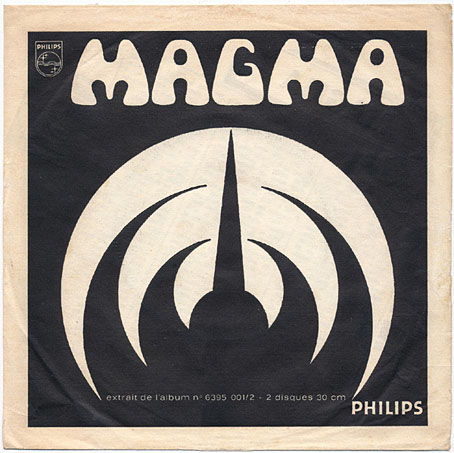
Kobaïa / Müh (1970), a single by Magma.

1: Zeuhl definitions

Zeuhl is an adjective in Kobaïan, the language written by Christian Vander, drummer and founder of the French band Magma.

Pronunciation: zEU(h)l, while the EU are like a French E with a slight U, and the (h) is a semi-silent letter which is an integrated part of the EU, totalling in a “syllable and a half”. (Prog Archives)

Zeuhl (pronounced [zœl]; lit. ’celestial’) is a music genre that is a hybrid of jazz fusion, symphonic rock and neoclassical music, established in 1969 by the French band Magma. The term comes from Kobaïan, the fictional language created by Magma’s Christian Vander and Klaus Blasquiz for Magma, in which Zeuhl Ẁortz means approximately ‘celestial force’.
[…]
Zeuhl is determined by several characteristic elements. Especially important are dominant rhythm fractions, usually in the form of a pumping bass guitar and sometimes sluggish or flexibly playing drum kits. Slow repetitive structures that serve to build a hypnotic atmosphere are just as prominent as solo passages of high technical finesse. Vocals are often widely present and can consist of polyphonic choral movements, such as Carl Orff’s Carmina Burana, or soloistically performed passages with shrill intonation. Zeuhl bands also often have solo guitarists or pianists that usually have a more than accompanying function, especially to emphasize the repetitive patterns. (Wikipedia)


2: The Birth of the Zeuhl

“1967,” he says. “The year John Coltrane died. It seemed to me that afterwards, it was as though music had to try to start all over again. Someone had to pick up the pieces, go on searching in the way that he had. Nobody could match him, but people could pick up the flame. It was almost impossible for anyone to do anything new after Coltrane, but you had to try, try to find other new directions. So that’s what I tried to do with Magma. I was a bit young at the time, but…”

Christian Vander describing the birth of Magma to Paul Stump, The Wire, July 1995


3: Zeuhl lists
weidorje.jpg

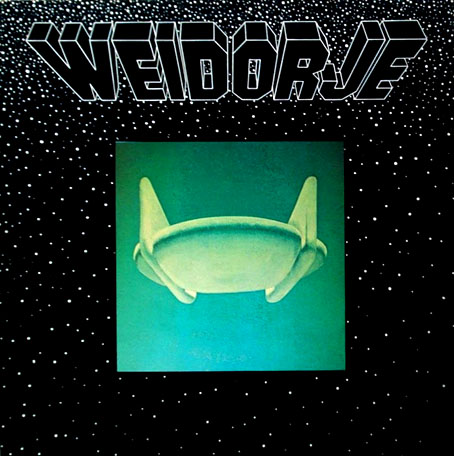
Weidorje (1978) by Weidorje. Cover art by Klaus Blasquiz.

Shindig! Magazine: Magma in seven records, and Deeper Underground: the best albums by the Magma family by Warren Hatter.

• Prog Is Alive and Well in the 21st Century: My Favourite Zeuhl Albums of All-Time by Drew Fisher.

• Bandcamp: There is No Prog, Only Zeuhl: A Guide to One of Rock’s Most Imaginative Subgenres by Jim Allen.

• Discogs: Zeuhl lists by Neit and ultimathulerecords.

• Prog Archives: Top 100 Zeuhl.


4: Live Zeuhl

magma-poster.jpg

A poster by Jofre Conjota for a concert in Chile demonstrating that Zeuhl can exist without electricity.

Magma, Hippodrome du Pantin, Paris, 1977 (46 mins; a French TV film that captures one of the 70s lineups in peak form. Includes an almost complete performance of Mekanïk Destruktïẁ Kommandöh.)

Weidorje, French TV, 1979 (11 mins; Magma offshoot Weidorje were only active for a couple of years, this may be their only TV appearance.)

Magma, Théâtre Bobino, Paris, 1981 (A complete concert—1 hr 53 mins—from the group’s weird-funk period: Christian Vander leaves his drumkit to sing and rant at the audience, everyone is dressed in spacey glitter outfits, and some of the songs from the Merci album can’t be classed as Zeuhl at all. The musicians are all first rate, however.)

Magma play Köhntarkösz, 2005 (A fantastic 32-minute performance in a very cramped venue.)

Collectif PTÄH interprète Magma (12 mins; a Magma covers band playing in a village square.)


5: Cinematic Zeuhl
tristan.jpg

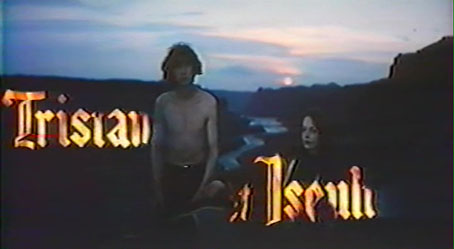
Tristan et Iseult (1972): a French feature film with a score by Christian Vander and three members of Magma. The soundtrack album was later incorporated into the Magma official discography as Ẁurdah Ïtah.

Moi y’en a vouloir des sous (1973): a French satire in which Magma make a brief appearance as a way-out rock group.


6: Lovecraftian Zeuhl
shub-niggurath.jpg

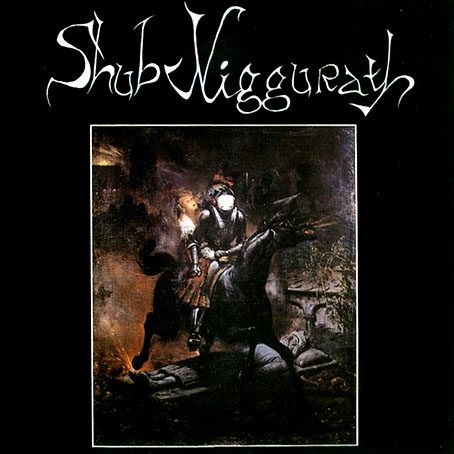
Les Morts Vont Vite (1986) by Shub Niggurath. Cover art: La Ballade de Lénore (1839) by Horace Vernet.

Liriïk Necronomicus Kanht (1978) by Magma.

Dagon (1980) by Eskaton.

La musique d’Erich Zann (1981) by Univers Zero (a Belgian group, originally named Necronomicon, which included former members of an earlier group named Arkham).

Yog-Sothoth (1986) by Shub Niggurath.


7: Comic Zeuhl

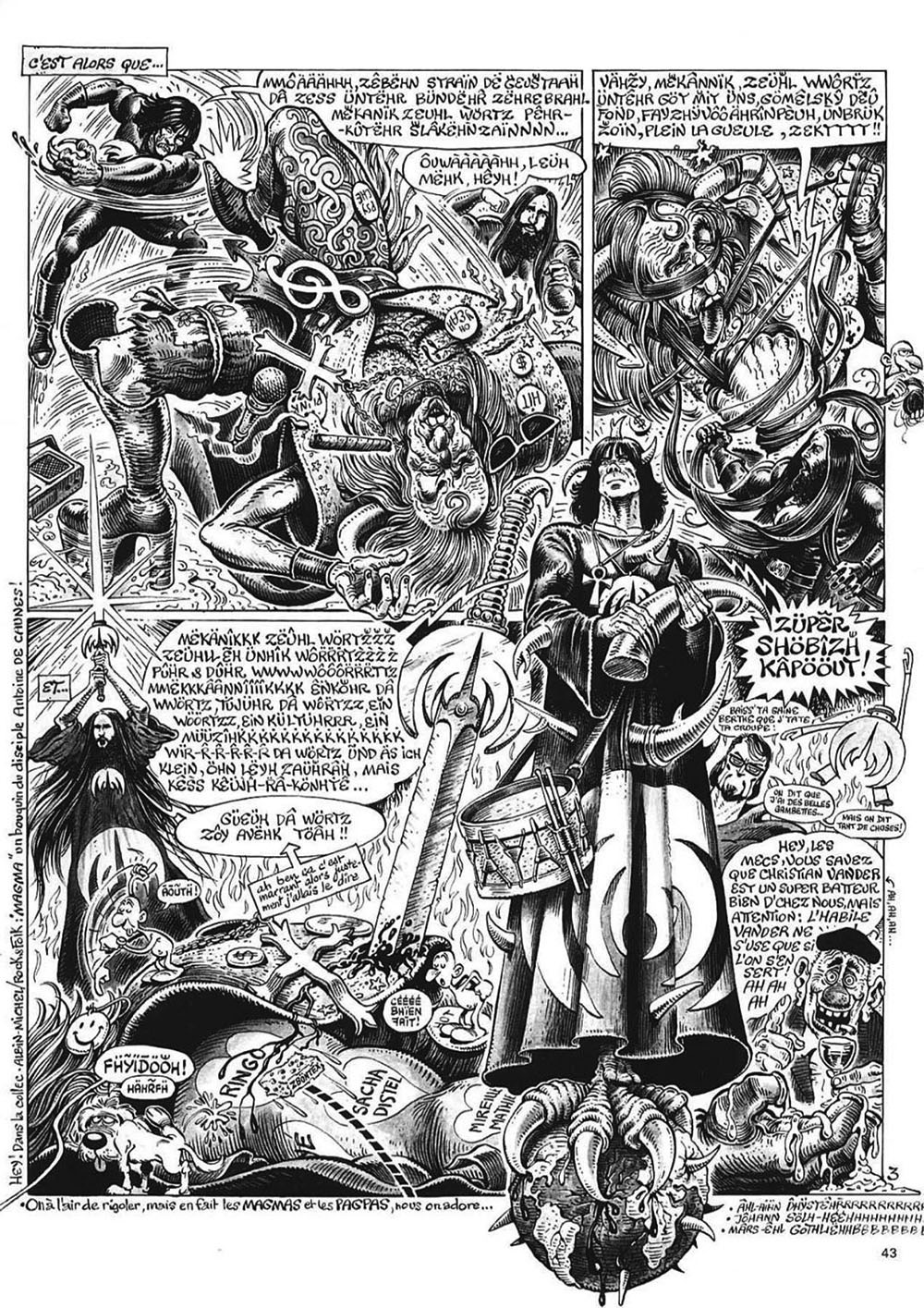
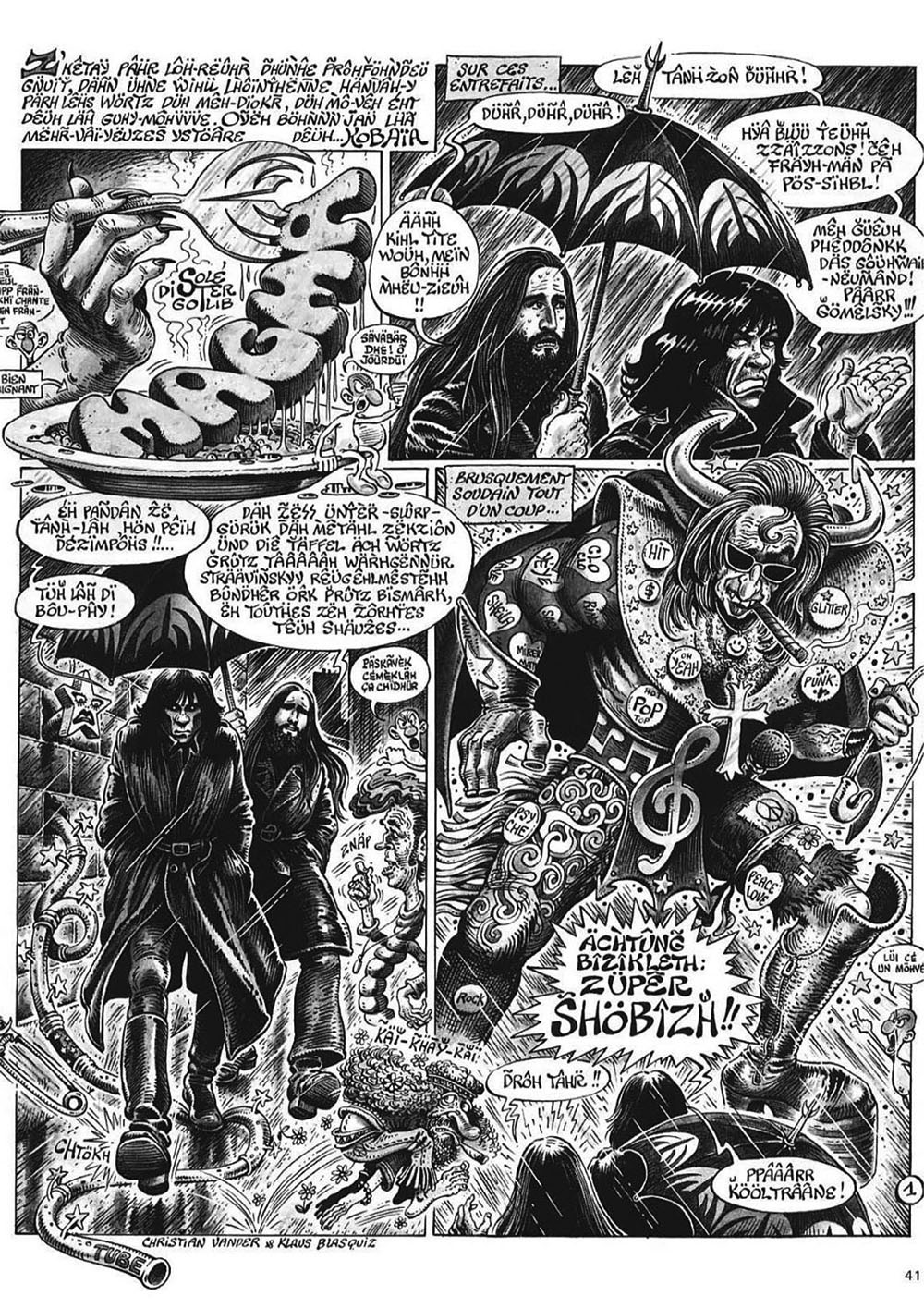
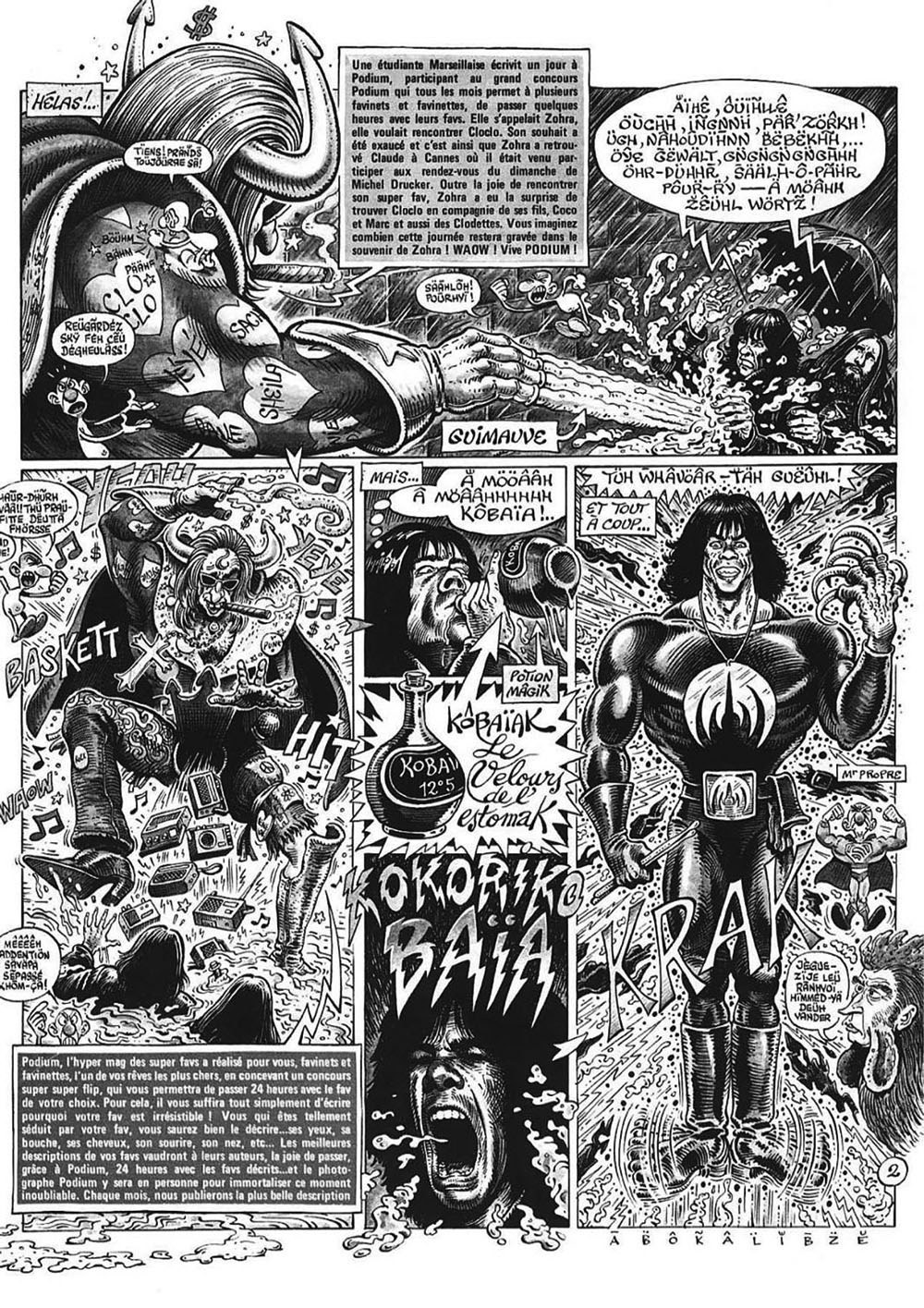
Magma’s Christian Vander and Klaus Blasquiz in a three-page comic strip from Pop & Rock & Colégram (1978), a collection of satirical music-themed pieces by Jean Solé, Alain Dister & Marcel Gotlib.
magma-comic1.jpg

magma-comic2.jpg

magma-comic3.jpg

Previously on { feuilleton }
Dune: some French connections
HR Giger album covers

Weekend links 486

magma.jpg

Magma concert poster, 2017. Art by Jofre Conjota.

The Dream Foundry is a new venture with a mission “to bolster and sustain the nascent careers of professionals working in the field of speculative literature.” This includes artists as well as writers, and to this end I was asked to answer a few questions about my work as a creator of book covers. I also offer some advice about visibility as an artist which I tried not to hedge with too many caveats. Related: my cover for The Resurrectionist of Caligo by Wendy Trimboli & Alicia Zaloga was one of the covers of the month at Muddy Colors.

• “…for a band that were so compositionally advanced, they were adept at producing primordially insistent and hypnotic rhythms.” John Doran on Magma (again), appraising the band’s music and history before presenting Christian and Stella Vander with questions from appreciative musicians.

• Mixes of the week: FACT mix 731 by Meemo Comma, mr.K’s Soundstripe vol 2 by radioShirley, The Ivy-Strangled Path Vol. XIX by David Colohan, and The Pumpkin Tide by Haunted Air.

• At Dangerous Minds: Roddy McDowall reads HP Lovecraft’s The Outsider and The Hound. Related: David McCallum reads HP Lovecraft’s The Dunwich Horror and The Haunter of the Dark.

• “Mathematics is not unique in drawing out charlatans and kooks, of course…” David S. Richeson on cranks, past and present.

• “I plan to take psychedelics again…” Helen Joyce, the finance editor of The Economist, takes a trip.

• The City of Light and its shadows: Brassaï’s Paris.

• At Dennis Cooper’s: Dennis Hopper Day.

Paris (1958) by Perez Prado And His Orchestra | Paris 1919 (1973) by John Cale | Paris 1971 (1971) by Suzanne Ciani

HR Giger album covers

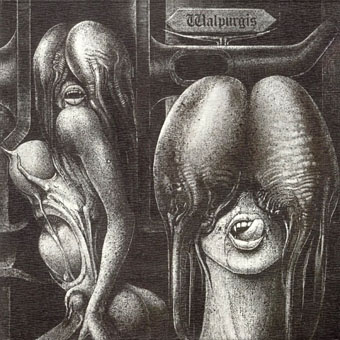
giger4.jpg

Walpurgis (1969) by The Shiver.

An inevitable follow-up to yesterday’s post, this continues an occasional look at album cover art by people better known for their work elsewhere. Giger’s album covers fall into two categories: those with some direct involvement from the artist and those which are merely reuses of pre-existing paintings. The former category is the one that’s of concern here.

The Shiver were a German Swiss group who Discogs label as “Krautrock”, a term with an unfortunate tendency these days to get attached to any German music that isn’t James Last. From what I’ve heard the group are a lot more ordinary than that, doing the kind of late psychedelic/early progressive rock common to many European bands in 1969.

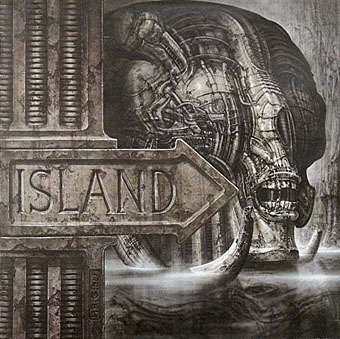
Update: Further research reveals that The Shiver were Swiss, not German as they’re listed at Discogs. They evolved later into Island (see below) which explains why both groups released albums bearing Giger cover art.

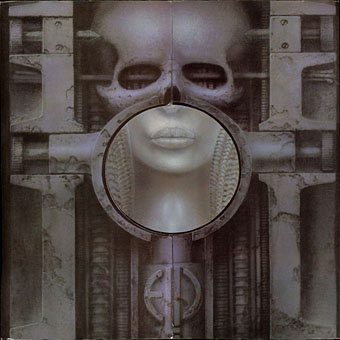
giger5.jpg

Brain Salad Surgery (1973) by Emerson, Lake & Palmer.

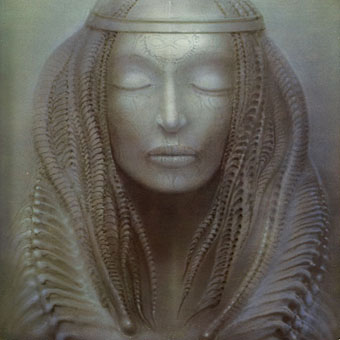
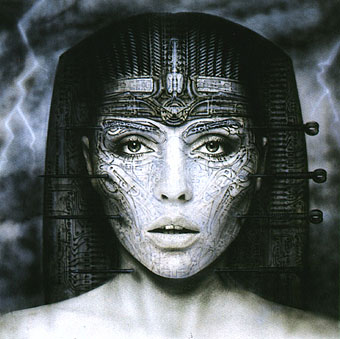
And speaking of prog… I’ve always loved the cover for this album which in its vinyl edition opens out to reveal the spectral woman beneath. The female face is named Isis on a poster I still have somewhere. Despite liking the cover I never really liked ELP so this is one album of the period I’ve yet to hear.

giger6.jpg

Brain Salad Surgery interior.

giger7.jpg

Pictures (1977) by Island.

And yet more prog… Island were a Swiss group. The cover painting is Necronom IIIa (1976) with some Giger lettering added.

giger8.jpg

Attahk (1978) by Magma.

Magma are (of course) Christian Vander’s ongoing jazz/prog/opera/Zeuhl/sf/freakout music project. Giger declares a taste for jazz and jazz rock in one of his books so I imagine this commission would have appealed more than others, Magma’s approach to jazz having an apocalyptic tendency. Track titles like Liriïk Necronomicus Kanht (In Which Our Heroes Ourgon & Gorgo Meet) wouldn’t have done much harm either. The safety-pin sunglasses were inspired by the safety-pin fashions of punk.

giger9.jpg

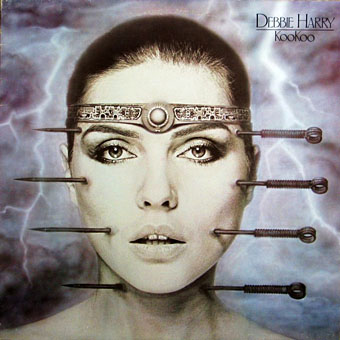
KooKoo (1981) by Debbie Harry.

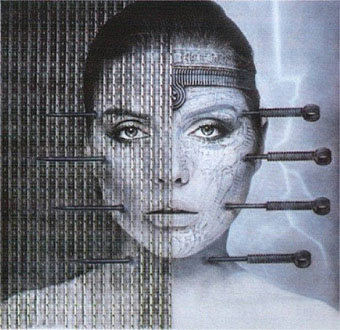
And speaking of punk… Giger considered Debbie Harry to be “the Queen of the Punks” so he decided to pierce her face accordingly. The album isn’t punk, however, it’s a collection of smart and funky pop songs produced by Nile Rodgers & Bernard Edwards. Two singles from the album have Giger-directed videos, Backfired (which HRG also appears in), and Now I Know You Know which has Ms Harry posing against the Passagen paintings in a black wig and a biomechanical body stocking. There’s more about the KooKoo album at the Giger site.

giger10.jpg

gige11.jpg

Elsewhere on { feuilleton }
The album covers archive

Previously on { feuilleton }
Giger’s Necronomicon
Dan O’Bannon, 1946–2009
Alejandro Jodorowsky’s Dune
The monstrous tome

Metabolist: Goatmanauts, Drömm-heads and the Zuehl Axis

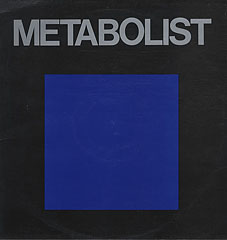
metabolist.jpgNo, not the school of Japanese architecture, we’re concerning ourselves here with a UK band from the early 1980s. There’s still a number of important albums from this period that remain caught in a curious limbo between the end of the time when vinyl was the prime carrier for new music and the start of the CD era. A few groups such as Metabolist expired before CDs became something commonly used by smaller labels and their recordings have tended to evade reissue. In addition, what recordings there are were often released in small quantities through obscure independent labels (the origin of the now thoroughly disreputable term “indie”) which means that the original works can be hard to find.

Metabolist were Malcolm Lane (guitar, synth, vocals), Simon Millward (bass, vocals, synth) and Mark Rowlatt (drums, percussion), with Jacqueline Bailey designing the covers in a Suprematist style that would no doubt have pleased Kazimir Malevich. All Metabolist covers feature variations on the same line of Helvetica plus a coloured (or black) square. As to the music, here’s my good friend Gav (who carefully digitised his Metabolist collection for me) on an old forum posting:

Initially very underrated and now just unknown, Metabolist were reviewed in the UK music press (NME & Sounds specifically) alongside The Pop Group, Cabaret Voltaire, Throbbing Gristle & This Heat as part of a brief vanguard of new UK experimental music, and for a little while it looked like fractured noise and Europe-inspired riffing might become an important part of the independent (as opposed to indie) mainstream…but alas…

According to “Eurock” magazine in 1980:

“gladiators of independent music, Metabolist have existed in one form or another for 3 or 4 years, the present group consisting of Malcolm Lane, Anton Loach, Simon Millward and Mark Rowlatt. The group is run along co-operative lines to include Jacqueline Bailey who handles publicity promotion, etc. The five of us have all reached the decision to work outside of the large companies in the music business and have therefore formed our own company – Drömm Records. So far we have released 1 EP, 15 minutes of music incl. “Drömm”, “Slaves” and “Eulam’s Beat”, plus a cassette tape of first take rehearsal material called “Goatmanaut”, also containing 3 tracks “Zordan Returns”, “Chained” and “Thru the Black Hole”. The groups first album “Hansten Klork is released in January 1980, closely followed by a single, “I Can’t Identify”. All these recordings have been made at the group’s studio with members of the group being responsible for recording, mixing and editing. We feel that this is the only way, apart from having unlimited cash, that Metabolist can have control over their musical output at every stage. All artwork and sleeve design are also handled within the group. Thanks to the growth of alternative distribution networks in recent years our records can now become available worldwide, so we consider independence to be both viable and desirable. Musically the group has been through many changes, Metabolist refuse to be dictated to by fashion, or by establishing a Metabolist “sound” and sticking to it for ever after. You can therefore find that you love the album, but hate the EP and so on. You will have to trust us as we do not intend to have 10 versions of a hit sound on our LP’s.”

Metabolist only released one full-length vinyl LP, 2 cassettes, a 7″ EP and a single, and their entire oeuvre, including peripheral compilation contributions, would fit onto a nice double CD comp, but none of it has ever been re-released – DURTRO were rumoured to be interested at one time, but as all original members were either untraceable or uninterested, it remains up to original fans (like myself – for the record I bought all their releases directly from the band) to champion their cause – and a worthy cause it is: imagine a lo-fi garageband Magma rehearsing & recording in a gents’ toilet, minus the chorale but compensating with the intensity of ‘Metal Box’ PiL or ‘Monster Movie’ Can, grunted vocals in a kind of proto-Kobaïan neo-dialect (‘Chained’, ‘King Quack’), or short bursts of bleeping and burping feedback and electronics like a lost ‘Faust Tapes’ outtake (‘Racing Poodles’, ‘Zordan Returns’)…and at a time when ‘Krautrock’ was just the first track on ‘Faust IV’ and ‘Mekanïk Destruktïw Kommandöh’ was a quid in any and every secondhand record shop, Metabolist were citing Der Kosmische Music and Magma as major influences, not a good starting point for a suspicious post-punk record-buying public…I’ve always loved this band because they did it their way, they rocked hard, and they then just disappeared, leaving a small but perfectly-formed Ur-Cosmic body of work that will be rediscovered at some point…surely…

Surely, but not yet. My summation of the Metabolist sound would be something like “Magma’s Christian Vander jamming with This Heat”, but seeing them as a poor man’s This Heat is rather unfair since they have their own distinct personality beyond the few areas of sound and production (This Heat also had their own studio) that overlap with Brixton’s finest. In place of This Heat’s familiar post-punk concerns, Metabolist are often fiercer and weirder, deliberately plugging themselves into a post-Magma “Zeuhl” axis as they growl many of their songs in an invented (?) tongue. Little wonder, then, that they remain beyond the pale. Other bands from the period such as Wire, The Gang of Four—even The Fire Engines!—have been resurrected, reissued and even reformed, with younger groups declaring them as influences. We’re currently lacking any enterprising Drömm-heads prepared to take this formidable sound as the starting point for something new. If they’re out there, they’ll need to be hardy souls with little expectation of reward; Franz Ferdinand wouldn’t have graced the charts shouting incoherently into an echo chamber while heavy bass rumbles and drums pound and ricochet in the background.

Thanks to Gav for permission to re-use his words. And for the music, of course…

The recordings:
Dromm (7″) (Drömm Records, 1979).
Goatmanaut (cassette) (Drömm Records, 1979).
Hansten Klork (LP) (Drömm Records, 1980).
Identify (7″) (Drömm Records, 1980).
Split (7″) (Bain Total, 1981).
Stagmanaut! (cassette) (Cassette King, 1981).
Tracks appear on:
Compilation Internationale No.1 (LP) Le Grand Prique, Chained (Scopa Invisible, 1980).
Miniatures (LP) Racing Poodles (Pipe, 1980).

Elsewhere on { feuilleton }
The album covers archive

Previously on { feuilleton }
Maximum Heaviosity
The music of Igor Wakhévitch
This Heat