Origami tessellations

origami1.jpg

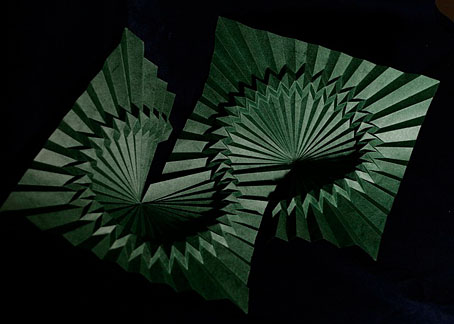
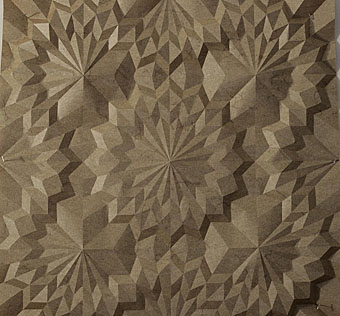
I seldom try origami these days despite an enthusiasm for it when I was younger, but I still like to see how people are developing the artform. These tessellation designs are part of a sub-genre of abstract paper-folding that’s a long way from the traditional Japanese animal shapes. The examples here are by Ray Schamp from his Flickr set. There are many more examples at the Origami Tessellations Flickr pool.

origami2.jpg

Previously on { feuilleton }
Sipho Mabona’s origami insects
Robert Lang’s origami insects

Weekend links 59

duetemmo.jpg

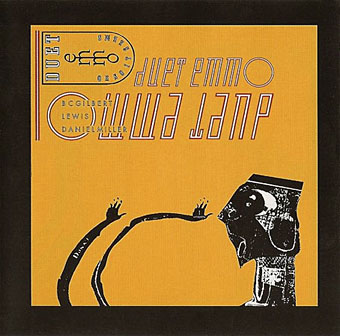
Or So It Seems (1983) by Duet Emmo. Design by The Brothers Quay.

• “Make things, no rules, but be quick.” Bruce Gilbert, musician in (among others) Wire, Dome and Duet Emmo is interviewed. Related: Daniel Miller, Mute label boss and another member of Duet Emmo is interviewed (and provides a mix) at The Quietus. For more electronica with nothing at all to do with Duet Emmo there’s this Matmos interview.

donovan.jpg

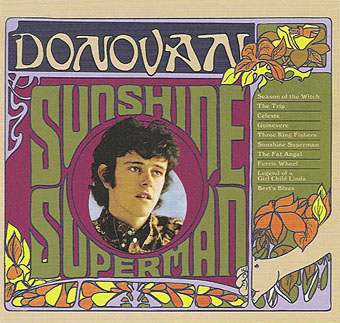
Design by Dick Smith.

“It’s psychedelic not because we were stoned before we wrote the songs, or stoned during composing them, but the experiences of searching for the transcendental world though altered states of consciousness were in the songs,” he says, which sounds suspiciously like another way of saying he was stoned before he wrote them, but perhaps it’s best not to quibble with the description of the method in the face of such impressive results…

Donovan revisits one of his finest works, Sunshine Superman.

• Yet more Guardian features: A Clockwork Orange: The droog rides again | Ira Cohen: psychedelic photography master | A life in writing: China Miéville | The stars of modern SF pick the best science fiction.

• There are many stars of the gaseous variety in Nick Risinger’s 5000-megapixel photograph of the Milky Way.

“It is quite true I have worshipped you with far more romance of feeling than a man should ever give to a friend. Somehow I have never loved a woman…. From the moment I met you, your personality had the most extraordinary influence over me…. I adored you madly, extravagantly, absurdly. I was jealous of everyone to whom you spoke. I wanted to have you all to myself. I was only happy when I was with you.”

Salon reviews the new unexpurgated edition of The Picture of Dorian Gray.

• Paul Gorman discovered the gay art origins of the notorious Cowboys T-shirt.

The full complement of Saul Bass’s designs for Vertigo‘s print advertising.

Photos of the recent Dodgem Logic event by Rosie Reed Gold.

Peter Ashworth is still taking great photos.

Jodorowsky’s Dune Finally Revealed?

Sunshine Superman (1966) by Donovan | Or So It Seems (1983) by Duet Emmo.

Weekend links 58

delpozo1.jpg

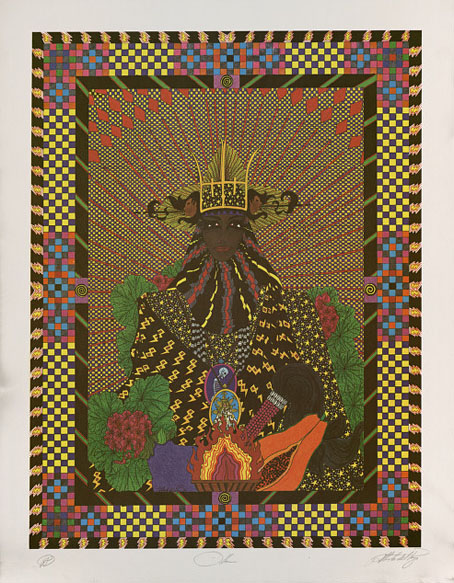
Oya by Alberto del Pozo (1945–1992). Also known as Yansa, Oya is Changó’s third wife. She is the goddess of the winds and of lightning and is mistress of the cemetery gates. Passionate and brave she fights by her husband’s side if needed. Her favorite offerings are papaya, eggplant and geraniums. From Santeria at BibliOdyssey.

Austin Osman Spare is a good example of the dictum that quality will out in the end, no matter how long it remains buried. Overlooked by the art establishment after he retreated into his private mythologies, a substantial portion of his output was equally ignored by occultists who wanted to preserve him as a weird and scary working-class magus. One group dismissed his deeply-felt spiritual interests in a manner they wouldn’t dare employ if he’d been a follower of Santeria, say (or even a devout Christian), while the other group seemed to regard his superb portraits as too mundane to be worthy of attention. Now that Phil Baker’s Spare biography has been published by Strange Attractor we might have reached the end of such short-sighted appraisals and can finally see a more rounded picture of the man and his work:

[Kenneth] Grant preserved and magnified Spare’s own tendency to confabulation, giving him the starring role in stories further influenced by Grant’s own reading of visionary and pulp writers such as Arthur Machen, HP Lovecraft, and Fu Manchu creator Sax Rohmer. Grant’s Spare seems to inhabit a parallel London; a city with an alchemist in Islington, a mysterious Chinese dream-control cult in Stockwell, and a small shop with a labyrinthine basement complex, its grottoes decorated by Spare, where a magical lodge holds meetings. This shop – then a furrier, now an Islamic bookshop, near Baker Street – really existed, and part of the fascination of Grant’s version of Spare’s London is its misty overlap with reality.

Austin Osman Spare: Cockney visionary by Phil Baker.

Austin Osman Spare: The man art history left behind | A Flickr set: Austin Osman Spare at the Cuming Museum | HV Morton meets Austin Spare (1927).

• More quality rising from obscurity: Jerzy Skolimowski’s Deep End. Skolimowski’s drama is one of unpleasant characters behaving badly towards each other. Anglo-American cinema featured a great deal of this in the 1970s when filmmakers disregarded the sympathies of their audience in a manner that would be difficult today. John Patterson looks at another example which is also given a re-release this month, the “feral, minatory and menacing masterwork” that is Taxi Driver.
delpozo2.jpg

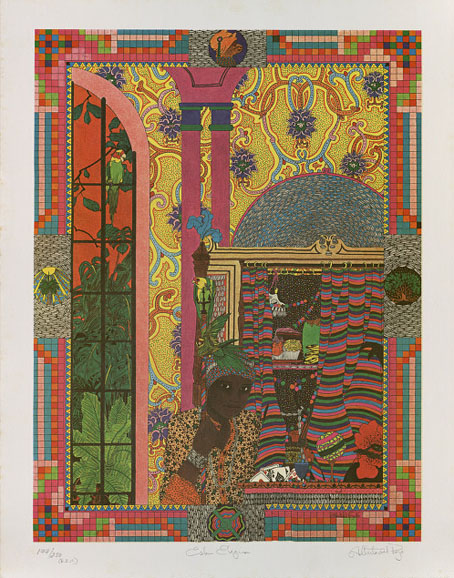
Echú Eleguá by Alberto del Pozo. Among the most ancient of the orishas Echú Eleguá is the messenger of the gods, who forges roads, protects the house, and is heaven’s gate-keeper. In any ceremony he is invoked first. He owns all cowrie shells and is the god of luck. A prankster, Echú Eleguá frequently has a monkey and a black rooster by his side. Like a mischievous boy he enjoys gossip and must be pampered with offerings of toys, fruit, and candy.

Minutes, a compilation on the LTM label from 1987: William Burroughs, Jean Cocteau, Tuxedomoon, Jacques Derrida, The Monochrome Set, and er…Richard Jobson. Thomi Wroblewski designed covers for a number of Burroughs titles in the 1980s, and he also provided the cover art for this release.

Mikel Marton Photography: a Tumblr of erotic photography and self-portraits.

From Death Factory To Norfolk Fens: Chris & Cosey interviewed.

NASA announces results of epic space-time experiment.

Oritsunagumono by Takayuki Hori: origami x-rays.

Plexus magazine at 50 Watts.

Mother Sky (1970) by Can | Late For The Sky (1974) by Jackson Browne.

Ira Cohen, 1935–2011

cohen.jpg

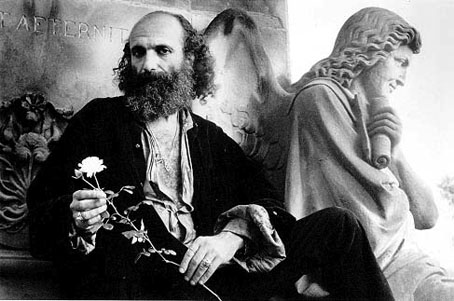
Ira Cohen (1979) by Gerard Malanga.

Another of the psychedelic magi departed our mundane sphere this week, and for the moment his passing seems to have been unacknowledged by those cultural wardens who you’d think would know better. Ira Cohen was a poet with a gift for phrases which demand to be appended to Mati Klarwein paintings (one such phrase, The Surgeon Of The Nightsky Restores Dead Things By The Power Of Sound, was used by Jon Hassell for an album title); he was also a photographer whose use of a chamber covered in sheets of reflective Mylar turned photo-portraiture into a psychotropic art:

I never wanted to be a photographer like the commercial photographers. For me, it was more about the involvement of the mirror, and scrying, reflection, crystal-ball-gazing, trying to get to some other place. It was all about reflection, in the deepest sense of the word. (More.)

Cohen’s 1968 film, The Invasion of Thunderbolt Pagoda, used his Mylar Chamber as a locus to create one of the key works of psychedelic cinema. More of that work can be seen here while his 1994 album of readings and music, The Majoon Traveler, is available via iTunes.

The Invasion of Thunderbolt Pagoda, six postcards from Aspen no. 9 (1971).

Previously on { feuilleton }
Dreamweapon: The Art and Life of Angus MacLise, 1938–1979
William Burroughs by Ira Cohen, 1967
The Invasion of Thunderbolt Pagoda