Steven Arnold: Heavenly Bodies

arnold01.jpg

One consequence of writing posts like this for the past 19 years is the blossoming into familiarity of previously unknown subjects. Such has been the case with the work of Steven Arnold (1943–1994), an American artist/photographer/film-maker whose photographs I hadn’t seen until I was pointed towards the Steven Arnold Archive by a reader in 2009. (Hi Thom, if you’re out there!) Since that brief post I’ve logged the occasional appearance of Arnold exhibitions and, more recently, the blu-ray release of Arnold’s sole feature film, Luminous Procuress.

arnold02.jpg

Steven Arnold: Heavenly Bodies is a feature-length documentary by Vishnu Dass about Arnold and the circle of friends and collaborators who helped create his films and photographic tableaux. The documentary was released by the Steven Arnold Archive in 2019, and is now freely available for viewing at Vimeo. (The “Mature” tag means you need to either log in or create an account to watch it.) Dass presents a collection of video interviews with Arnold and his associates, together with more recent interviews with surviving friends and enthusiasts, to supply the biographical detail behind Arnold’s extraordinary endeavours. Angelica Huston narrates the film which also includes poignant testimony from Arnold’s close friend, Ellen Burstyn.

arnold03.jpg

The interviews chart the artist’s progress: education in Oakland and San Francisco; his early experiments with film; his experience as a member of Salvador Dalí’s circle of hippy acolytes; the creation of all those beautiful black-and-white photographs in his Los Angeles studio. Arnold is revealed to have been a pioneer even by the elevated standards of San Francisco in the 1960s; he was taking acid in 1964, and at the height of the psychedelic era was cultivating with his friends an attitude of glamorous, polymorphous sexuality and gender play that went beyond the out-gay status of the Beats. In one of the interviews he talks eloquently about his concept of androgyny, which he regarded as an almost spiritual state, an attitude the alchemists of old would have endorsed. Arnold was the founder of San Francisco’s midnight movie shows in 1967, the same shows which saw the birth of the Cockettes, an anything-goes performing troupe who turn up later in Luminous Procuress. I didn’t know that Arnold’s midnight shows (for which he designed the posters) were taking place three years before the screening of El Topo in New York, the event which is usually cited as the origin of the nationwide Midnight Movie trend.

arnold04.jpg

Luminous Procuress was the culmination of his time in San Francisco, and the film that caught the attention of Salvador Dalí when it too was screened in New York. The film is a rare example of Arnold arranging his tableaux in full colour. When he moved to Los Angeles he was living among vividly coloured fabrics and decorations yet all his photographs are high-contrast black-and-white creations. I was hoping we might hear more about the reason for this. Arnold does refer at one point to enjoying the directness of the black-and-white image, and monochrome no doubt made his tableaux arrangement easier if he didn’t have to worry about harmonising colours. But he doesn’t explain the choice in any detail.

arnold05.jpg

This is an inspiring documentary, and a valuable record of a thread of San Francisco’s cultural history which is seldom acknowledged in recountings of the psychedelic era. It’s also a dispiriting portrait when you’re watching another creative life cut short by the AIDS pandemic. When considering histories like these it’s easy to fret over the loss of unrealised works. Better, I think, to appreciate anew the work that remains. (Thanks to Larry for the tip!)

arnold06.jpg

arnold07.jpg

arnold08.jpg

Previously on { feuilleton }
The Liberation of Mannique Mechanique
Luminous Procuress
Flamboyant excess: the art of Steven Arnold

Karel Zeman film posters

zeman17.jpg

A festival poster from 2022. Zeman’s films are popular in Japan.

Last week’s post about Czech film-maker Karel Zeman prompted me to see whether any more of his feature films have become available on disc. The international success of Zeman’s semi-animated adventures led to the production of more films along similar lines, although not all of these are as fantastic (or as popular) as Invention for Destruction or Baron Munchausen. A Jester’s Tale, for example, is a historical drama, albeit one which still makes use of Zeman’s skill with animation and special effects. The Karel Zeman Museum in Prague has been slowly restoring and reissuing the director’s features on DVD and blu-ray discs, the most recent title being The Stolen Airship, another film based on Jules Verne’s novels which I’m looking forward to seeing. The museum has also been increasing its production of spin-off products, including poster prints which include a couple of designs I hadn’t seen before. Browsing the poster sites revealed a few more attractive designs for international releases.


The Treasure of Bird Island (1953)

zeman01.jpg

Czech, 1953. Art by Jindřich Cech.

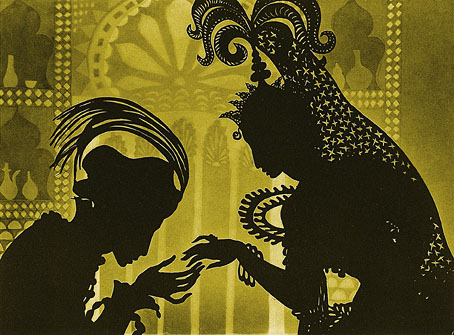
I still haven’t seen Zeman’s first two features. The Treasure of Bird Island is wholly animated story based on a Persian fairy tale.


Journey to Prehistory (1955)

zeman02.jpg

Poland, 1955. Art by Jan Młodożeniec.

Zeman’s second feature is his first film to mix live action and animation, with a story about a group of boys whose journey down a river leads to an encounter with prehistoric creatures. I like the way this poster reduces the narrative to its basic elements while also looking like a design for a Godzilla-themed postage stamp.


Invention for Destruction (1958)

zeman03.jpg

Czech, 1958. Art by Karel Knechtl.

A film I’ve enthused about before, and an ideal place to start with Zeman’s fantasies.

zeman04.jpg

Poland, 1958. Art by Jan Lenica.

“That looks like a Jan Lenica design,” I thought, and so it is. The human-headed fish vehicle has little to do with Zeman’s film but a character like this wouldn’t be out of place in one of Lenica’s own animations, especially Labirynt.

Continue reading “Karel Zeman film posters”

Weekend links 793

junichiro.jpg

Shinagawa, Tokyo Tower (Tokaido Station 1) (1967) by Sekino Jun’ichiro.

• “The historical figures who interested [Cormac] McCarthy the most, judging by the number of books he owned about them, were Albert Einstein (114 books), Winston Churchill (88) and James Joyce (78). Architecture is the dominant subject in the collection, with 855 books. The human being whom McCarthy most admired, Dennis confirms, was Ludwig Wittgenstein. The team catalogued a staggering 142 books by or about the philosopher, with a high proportion annotated.” Richard Grant for Smithsonian Magazine reports on the cataloguing of Cormac McCarthy’s personal library.

• The Real City of the Future: a long read by Charles T. Rubin taking in William Gibson’s urban fictions and Paolo Soleri’s towering Arcologies.

• At Colossal: “Atmospheric oil paintings by Martin Wittfooth illuminate nature’s timeless cycles.”

• Old music: White Souls In Black Suits by Clock DVA, receiving its first reissue since 1990.

• At the BFI: Carmen Gray on where to begin with Sergei Parajanov.

• At Ultrawolvesunderthefullmoon: The art of Sekino Jun’ichiro.

• At Dennis Cooper’s: Unica Zürn Day (restored and expanded).

• New music: Imploded Versions by The Bug vs. Ghost Dubs.

• The Strange World of…Van Morrison.

Dev Hynes’ favourite albums.

Carnival Of Souls (1989) by David Van Tieghem | All Souls (1989) by Opal | The Cult Of Souls (2011) by The Wounded Kings

Inspiration, a film by Karel Zeman

inspiration1.jpg

I thought I’d written about this one before; I had but only a brief mention in a post about Czech film-maker Karel Zeman which links to a deleted YouTube copy of the film. More of a glass world than a crystal world, Inspiration (1948) is Zeman’s most celebrated short, one which predates his marvellous semi-animated features based on books by Jules Verne and others.

inspiration2.jpg

A creator of glass ornaments abandons his unsatisfying sketching to gaze at the rain running down a window pane. Outside the window the water gathered on a leaf contains an ice-like world of frozen surfaces, penguins, swans and skating figures. It’s an entrancing piece that makes glass figurines seem as pliable as creatures fashioned from clay or Plasticine. The film is also notable for a musical accompaniment by Zdeněk Liška, one of the composer’s earliest scores that sounds rather anonymous next to the idiosyncrasies of his later works.

Previously on { feuilleton }
Zemania

Weekend links 792

caroff.jpg

West Side Story (1961) poster designed by Joe Caroff.

• “From the very moment of its inception, the Wound Man was an image intimately tied to actual practice. He was in fact many, many things at once: epistemic diagram, medical tool, affective muse, technical spur, international artwork.” Jack Hartnell explores the tortured paths of book illustration known as the Wound Man.

• At The Daily Heller: The late Joe Caroff, who Steven Heller calls “the most prolific designer you’ve never heard of”.

• From V to Vineland and Inherent Vice: John Keenan ranks Thomas Pynchon’s books.

• Sometimes Easy, Sometimes Hard: Toby Manning on Harmonia’s Deluxe at 50.

• At Unquiet Things: The infinite cosmos of Martina Hoffmann.

• Mix of the week: A mix for The Wire by Sanam.

• The Strange World of…Joe McPhee.

• RIP Terence Stamp.

Gravity’s Angel (1984) by Laurie Anderson | Wounder (2006) by Burial | Melodie Is A Wound (2025) by Stereolab