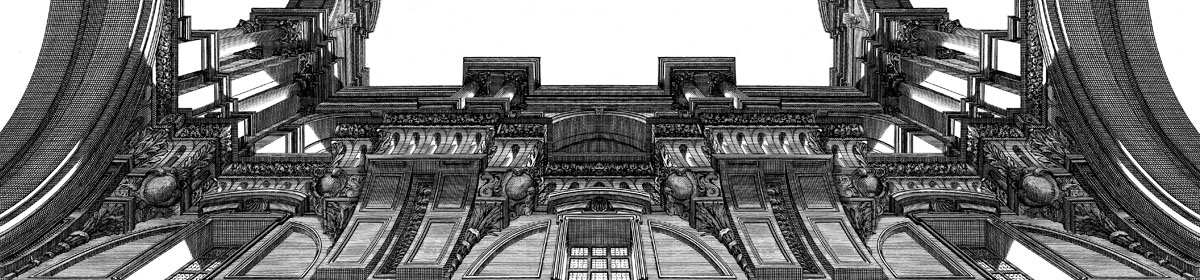
Externsteine panoramas

externsteine3.jpg

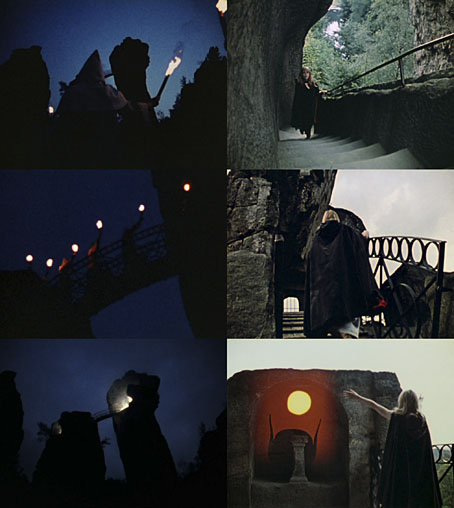
Lucifer Rising (1973).

The first time I saw Kenneth Anger’s Lucifer Rising (1983, at a film club) I recognised all the ancient monuments apart from the peculiar group of rocks where we see a line of robed and cowled torchbearers ascending a stairway at night. These shots are intercut with a caped Marianne Faithfull making the same ascent in daytime until she reaches an alcove where she’s given a vision of an Egyptian sunset. It took a few more years to discover the location was the Externsteine rock formation in northwest Germany, one of those singular outcrops which—like Glastonbury Tor—was a focus of pagan ritual before being co-opted by the Christian church.
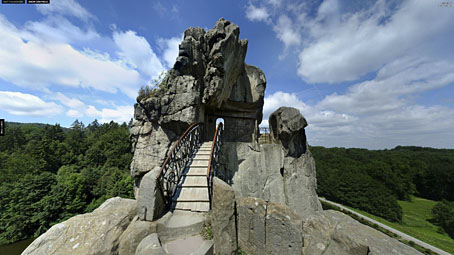
externsteine1.jpg

Photo by Markus Krueger.

360cities.net has a number of panoramic views of the area, the best being the one above which shows Marianne’s alcove as well as allowing views of the surrounding countryside. Photos such as the one below are far more common. While these give some idea of the unusual nature of the site they don’t show just how isolated the rocks are. For an older view, the Library of Congress has this Photocrom print.
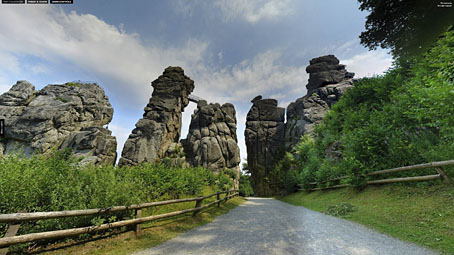
externsteine2.jpg

Photo by Wilfried Pinsdorf.

Elsewhere on { feuilleton }
The panoramas archive

Previously on { feuilleton }
Kenneth Anger on DVD again

Weekend links 106

oshiro.jpg

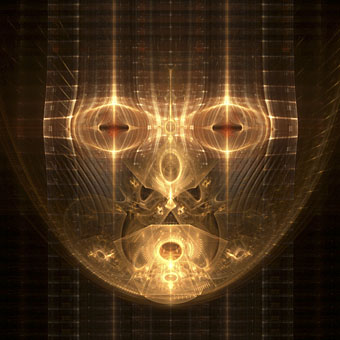
Gold Head 2 (2011) by Kouji Oshiro.

Josef Hartwig’s 1922 Bauhaus chess set. Contemporary copies can be bought from Naef Spiele but they’re not cheap. Related: Bauhaus: Art as Life, a major exhibition at the Barbican, London. Related, related: Art as life by Fiona MacCarthy.

• Rattera is a new font by Barnbrook Design for Fuse 1–20, Taschen’s collection of the experimental typography publication. Related: The Fuse poster explained.

Genesis (1981), video feedback and computer animation by Ron Hays with an electronic score by Ragnar Grippe.

Deadly Doris, a recording by Malcolm Mooney-era Can from the forthcoming Lost Tapes collection.

• “How did a pop band end up in a museum” Sasha Frere-Jones on Kraftwerk.

Philip Glass & Robert Wilson on how they made Einstein on the Beach.

• An astonishing aerial photo of post-quake San Francisco in 1906.

• More electronic music: Buddha Machine’s SoundCloud page.

My Baby, music and video from Julia Holter & Jib Kidder.

Homotography‘s photos can now be browsed at Pinterest.

Deviates, Inc., a Tumblr.

• Raoul Björkenheim live: Apocalypso pt. 1 | Apocalypso pt. 2 | 1-2-11 DMG, NYC

Weekend links 105

klikovac.jpg

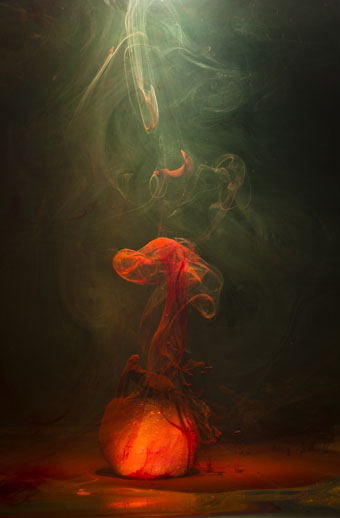
A suspended fluid photograph from Demersal, a series by Luka Klikovac.

• “Soon, Mr. Lachman was writing occult music. His song “(I’m Always Touched by Your) Presence, Dear,” which appeared on Blondie’s 1977 album Plastic Letters, was an example.” Gary Lachman: from Blondie to Swedenborg.

Neil Krug’s cover art for the new Scissor Sisters album, Magic Hour, channels the cloudless skies and photographic surrealism of Storm Thorgerson.

Implicate Explicate, a multiple 16mm film installation by Rose Kallal. Sound by Rose Kallal & Mark Pilkington using modular synthesizers.

Despite conservative queerdom’s best efforts to hide its “otherness” behind a velvet wall of “same as you” Tom and Hank and Jill and Janes, Mattilda and her like will not be ignored. As parades of neo-nuclear same sex families mug for the cameras on courthouse steps, queer body boys parade and flex impossibly taut muscles across our nation’s gym runways and circuit parties, and far, far too many proudly proclaim in knee-jerk defensiveness how “straight-acting” they are across the net, Sycamore blows raspberries at the forced mirage and holds up faded pictures of yesteryear boys and girls whose one claim to fame once was their difference.

Mattilda Bernstein Sycamore is interviewed at Lambda Literary

Paul Oestreicher, an Anglican priest, sets the cat squarely among the pigeons with the question (and answer) “Was Jesus gay? Probably.”

Andromeon, video by Alexander Tucker and Serena Korda for a new song by Alexander Tucker.

• Museums of Melancholy: Iain Sinclair on London’s memorials. An LRB essay from 2005.

FACT mix 325 is by Battles: from Boredoms to Cluster and The Alchemist.

The glass hills of Mars, “a region the size of Europe”.

Labyrinths and clues, an essay by Alan Wall.

The Alchemy of Emptiness.

Drop (1972) by Soft Machine | Drop (2002) by Hope Sandoval & The Warm Inventions | Airdrop (2006) by Kashiwa Daisuke.

Weekend links 104

cummings.jpg

Prettiest Star (2004) by Timothy Cummings.

I Want Your Love, a feature film directed by Travis Mathews catches my attention for having been described as “the gay Shortbus” even though (as the director notes) Shortbus was pretty gay to begin with.

• I’ve always found Hans Christian Andersen’s story of The Tinderbox—a tale of spectral dogs with enormous eyes—to be rather weird. But these illustrations by Heinrich Strub for a 1956 edition beat everything.

• “From an early age, however, I became in secret the slave of certain appetites.” The line that Robert Louis Stevenson deleted from The Strange Case of Dr Jekyll and Mr Hyde.

Scientific American: Homophobes might be hidden homosexuals. Not exactly fresh news but always worth bearing in mind when someone starts ranting about those evil gays.

Minimal Wave: The 80s synth-pop underground. The Minimal Wave label releases a vinyl compilation by Hard Corps this month.

• “Blame the Victorians for making menswear boring.” Alex Jung on the endless tyranny of the suit-and-tie combination.

• Women, Vaginas and Blood: Breaking menstrual taboos with artist Sarah Maple.

London’s lost rivers (again): the hidden history of the city’s buried waterways.

Vincenzo Pacelli says the Knights of Malta murdered Caravaggio.

Street style 1906: Edward Linley Sambourne’s fashion blog.

Architectural Stationery Vignettes at BibliOdyssey.

Hans Bellmer & Unica Zürn at Ubu Gallery, NYC.

Pam Grossman admits to being a “candle hooch”.

Dirty (1986) by Hard Corps | Lost Rivers Of London (1996) by Coil | The Tinderbox (2009) by Patrick Wolf.

Tamotsu Yato’s men with katanas

yato1.jpg

Unidentified model from Otoko (1972).

Two photos by Tamotsu Yato (c. 1928–1973), a pioneer of homoerotic photography in Japan who published his work in three collections: Young Samurai: Bodybuilders of Japan (1967), Naked festival: A Photo-Essay (1969), and Otoko: Photo-Studies of the Young Japanese Male (1972). Yukio Mishima introduced the first two volumes, and also appeared in the first posing with a sword. The third book was dedicated to Mishima’s memory. This site has a selection from each of the books while Richard Hawkins’ site has a fascinating overview of the photographer’s life and work. Via Form is Void.

yato2.jpg

Yukio Mishima from Young Samurai: Bodybuilders of Japan (1967).

Elsewhere on { feuilleton }
The men with swords archive

Previously on { feuilleton }
Forbidden Colours
Mishima’s Rite of Love and Death