The art of Pierre Clayette, 1930–2005

clayette1.jpg

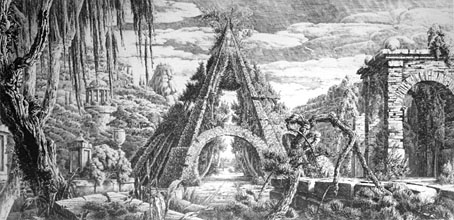
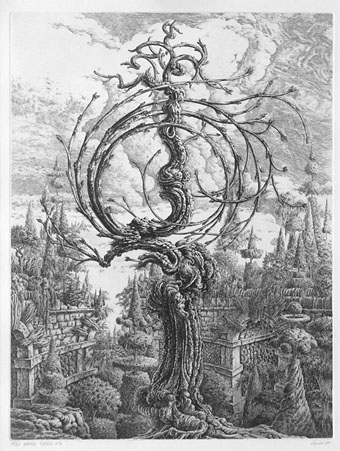
The Library of Babel (no date).

Another French artist who specialised in fantastic architecture, Pierre Clayette’s work came to my attention via the picture above which illustrates a Borges story. This leads me to wonder once again what it is about French and Belgian artists which attracts them more than others to this type of imagery.

clayette2.jpg

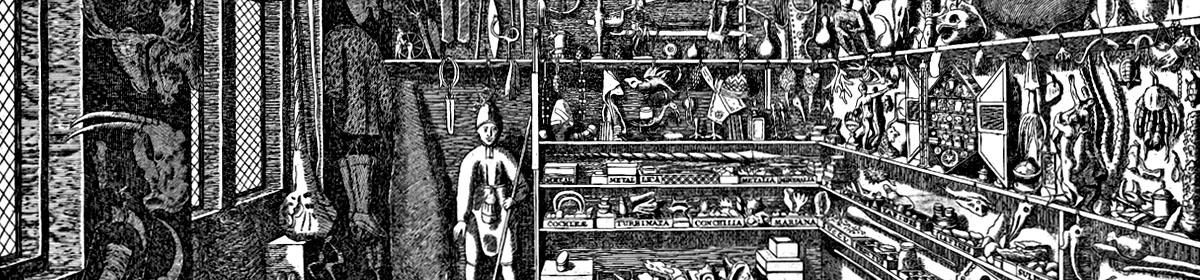
Whatever the reason, there isn’t a great deal of Clayette’s work online and biographical details are few. This page (the source of the untitled picture above) reveals that he worked as an illustrator for Planète magazine, the journal of “fantastic realism” founded by Jacques Bergier and Louis Pauwels in the early Sixties. Some readers may know that pair as the authors of a { feuilleton } cult volume, The Morning of the Magicians (1960), whose vertiginous blend of speculative and weird fiction, occultism and futurology Planète was intended to continue.

clayette3.jpg

Clayette also worked as a theatre designer and book illustrator. Le Chateau (above) is an illustration from Songes de Pierres, a 1984 portfolio depicting scenes from Pierres by Roger Caillois. That writer has his own significant Borges connection, being responsible for introducing Borges’ work to France via his editorship of the UNESCO journal, Diogenes. (Pauwels and Bergier later published Borges in Planète.)

Finally, there’s a less extravagant Flickr collection of some Clayette covers for Penguin Shakespeare editions. All of which only scratches the surface of what was evidently a prolific career; I’ll look forward to more examples of his work coming to light.

Elsewhere on { feuilleton }
The fantastic art archive
The illustrators archive

Previously on { feuilleton }
The art of Michiko Hoshino
The art of Erik Desmazières
The art of Gérard Trignac
The Absolute Elsewhere

Kelly McCallum’s insect art

mccallum.jpg

In addition to insects, Kelly McCallum also has birds filled with clockwork mechanisms, stuffed animals being eaten by gilded grubs, jewellery carved from human bones, and more. Plus a quote from the Prince of Quotation, Walter Benjamin: “The grey film of dust covering things has become their best part.”

Via 3quarksdaily.

Previously on { feuilleton }
Walmor Corrêa’s Memento Mori
The art of Jo Whaley
The art of Ron Pippin
Custom creatures
Polly Morgan, fine art taxidermist
Insect Lab
The art of Jessica Joslin

Tugra of Suleiman the Magnificent

tugra.jpg

The Tugra, or imperial monogram, of Suleiman the Magnificent, c. 1550–65. From the calligraphy section of the Islamic art collection at the Los Angeles County Museum of Art.

Previously on { feuilleton }
Ottoman calligraphy and Arabic typography
Flourishes
Ghubar
Calligraphy by Mouneer Al-Shaárani
The Journal of Ottoman Calligraphy
Word into Art: Artists of the Modern Middle East

Design as virus 5: Gideon Glaser

new_york.jpg

New York magazine, April 8, 1968. Design by Milton Glaser.

Part of an occasional series.

It’s probably only coincidence that the sleeve of the second High Llamas album resembles the cover of the first (?) issue of New York magazine. But many of the other High Llamas albums feature design elements borrowed from the Sixties and Seventies and the music on this one owes much to American music of the period, notably Pet Sounds-era Beach Boys.

New York magazine celebrated its fortieth anniversary this year. I tried my hand a couple of years ago at designing the magazine’s High Priority graphic for an online competition. I didn’t win but I did make the runners-up list (along with 120 others).

gideon.jpg

Gideon Gaye by The High Llamas (1994). Art by Kevin Hopper, design by André & Brown, Tony Lyons.

Previously on { feuilleton }
Design as virus 4: Metamorphoses
Design as virus 3: the sincerest form of flattery
Design as virus 2: album covers
Design as virus 1: Victorian borders
High Priorities 2
High Priorities