The art of Motohiko Odani

odani.jpg

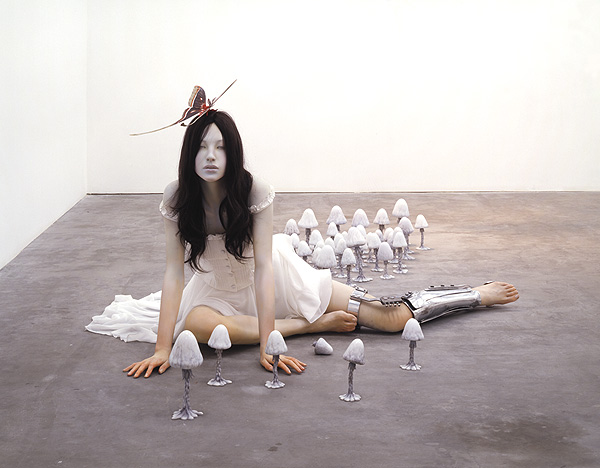
Erectro (clara) (2004).

From Alice in Wonderland to something in a similar, if freakier, vein. Unlike many contemporary artists, Odani doesn’t do the same thing over and over, there’s a very varied selection of work at the Yamamoto Gendai gallery. Many of the other artists there are also worth a look, the Peter Max-like pictures by Yayoi Deki many even be called (yes, that word again…) psychedelic.

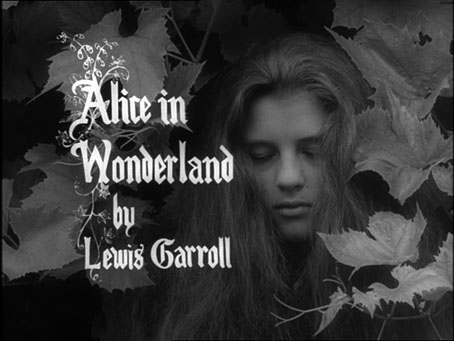
Alice in Wonderland by Jonathan Miller

miller1.jpg

I said, “Girl, you drank a lot of Drink Me,
But you ain’t in a Wonderland
You know I might-a be there to greet you, child,
When your trippin’ ship touches sand.”

Donovan, The Trip (1966)

Most of the key texts of the psychedelic period tend to be either non-fiction—Aldous Huxley’s Doors of Perception, Timothy Leary’s The Psychedelic Experience—or spiritual works such as The Tibetan Book of the Dead, the volume upon which Leary’s book is based and which subsequently provided John Lennon with lines for Tomorrow Never Knows. The key fictional work of the era has to be Lewis Carroll’s Alice in Wonderland, a fact that would no doubt have surprised the book’s legions of enthusiastic Victorian readers, never mind its author. Grace Slick created the definitive Alice song with White Rabbit in 1965, written while she was with the Great Society but only recorded properly in 1967 after she’d joined Jefferson Airplane. But Alice’s adventures run a rich seam of Victorian whimsy through the music of 1966 to ’69, especially among the British bands whose lyrics tend to be far more childish and frivolous than their American counterparts. Donovan probably got there first among the Brits with The Trip on his Sunshine Superman album. Among the profusion of later references can be found one-off singles such as Alice in Wonderland (1967) by the Dave Heenan Set (who recorded songs for the Barbarella soundtrack as The Glitterhouse) and Jabberwock/Which Dreamed It? (1968) by Boeing Duveen & The Beautiful Soup, a band whose songwriter is better known today as Hank Wangford.

Continue reading “Alice in Wonderland by Jonathan Miller”

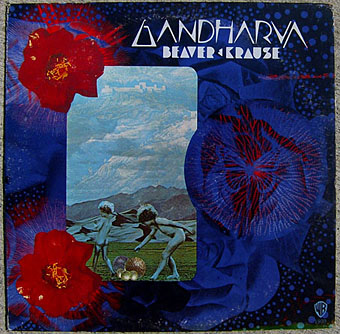
Gandharva by Beaver & Krause

gandharva.jpg

I mentioned Wilfried Sätty’s collage work last week and this album sports one of his few cover designs. A cult object for several reasons, not least Sätty’s involvement. The title lettering was by fellow psychedelic artist David Singer who I had the good fortune to meet in California in 2005 whilst researching Sätty’s career. That chunky Seventies lettering style now looks distinctly contemporary having come back into fashion over the past couple of years.

Beaver & Krause were among the pioneers of Moog-based electronic music in the 1960s and notably provided the throbs and drones which Jack Nitzsche mixed into the soundtrack for Donald Cammell & Nicolas Roeg’s Performance. Gandharva was released in 1971 and one of the few all-electronic pieces on the album, Nine Moons in Alaska, is an outtake from those sessions. The first side is very uneven, with a blues jam and a gospel piece that don’t sit well with each other, never mind with the Moog tracks. Side two, however, is a far more successful suite of improvisations with organ, electronics, guitar, harp and saxophone (played by Gerry Mulligan) recorded live in Grace Cathedral, San Francisco.

Cover photo from the Psychedelic Music Flickr pool which features many fine examples of cover design from the late Sixties on.

Elsewhere on { feuilleton }
The illustrators archive

Elsewhere on { feuilleton }
The album covers archive

Previously on { feuilleton }
Ginsberg’s Howl and the view from the street
Further back and faster
Quite a performance
Borges in Performance

Penguin science fiction

drought.jpg

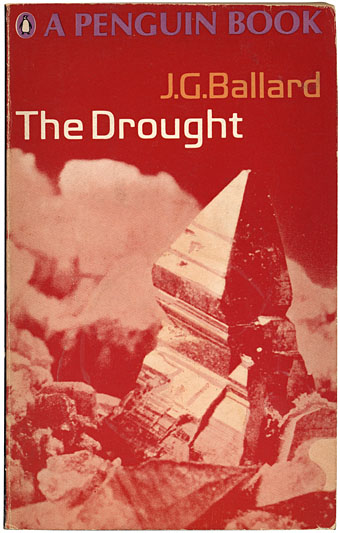
The Drought, 1968; design by Richard Hollis, photography by Dr. J Comroe.

James Pardey contacted me earlier this week announcing his site devoted to Penguin Books’ science fiction covers. I posted some of my own dishevelled copies a while back and this news gives me an excuse to throw up another Ballard cover. Pardey’s site is just the kind of thing I enjoy seeing, with a comprehensive collection and detailed notes for each design. The front page is especially good since you can see immediately how the look of the titles evolved, from spare layouts and pictorial covers through to bold graphic design which culminates in David Pelham’s great run as designer during the 1970s. Creative Review posted a talk Pelham gave a couple of years ago which explores his work at Penguin and touches on the covers he did for Ballard. A shame they didn’t do a complete set of Ballard’s titles at the time, I’d have loved to see how he treated the other books.

Elsewhere on { feuilleton }
The book covers archive

Previously on { feuilleton }
Penguin Labyrinths and the Thief’s Journal
Penguin Surrealism
Penguin book covers