The Temples of Bagan

bagan1.jpg

Anyone who’s seen Werner Herzog’s The Enigma of Kaspar Hauser (1974) will recognise vistas of Bagan, Burma with their apparently endless plain of Buddhist temples and stupas. These appear near the end of the film in a startling moment when Herzog’s doomed protagonist is given a final vision on his deathbed, another instance of Herzog’s fantastic realism like the valley filled with thousands of windmills in Signs of Life. It’s dismaying to read that this region has been denied World Heritage status as a consequence of unsympathetic restoration work carried out by the wretches currently governing the place. It’s even more dismaying to read about that most useless of human creations, a golf course, being built in the area. May the storms of Burma be lightning-rich and eager for men waving metal poles.

There are plenty of photos of Bagan at Flickr, of course. This set showing departing balloons is particularly good.

bagan2.jpg

Previously on { feuilleton }
Aguirre by Popol Vuh
Temples for Future Religions by François Garas
The temples of Angkor

Deutsche Kunst und Dekoration #18

dkd18-01.jpg

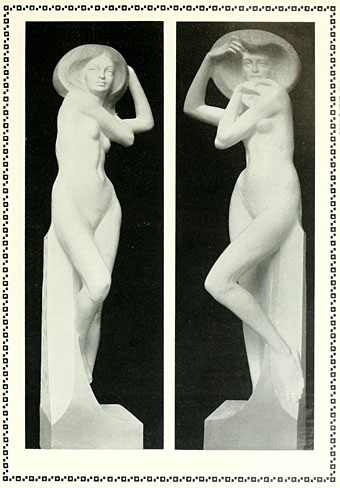
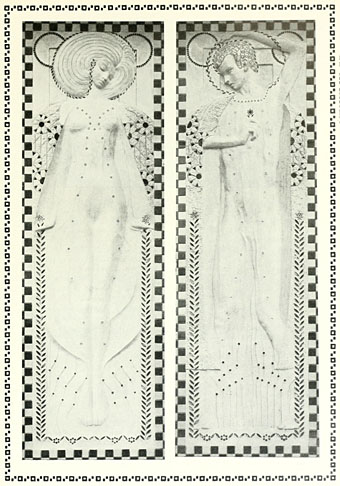
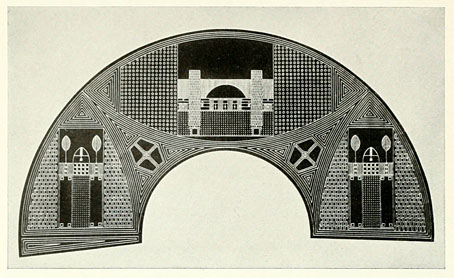
Continuing the delve into back numbers of Deutsche Kunst und Dekoration, the German periodical of art and decoration. There’s yet another frustrating jump in the numbers here, from volume 16 to volume 18 which covers the period from April to September 1906. Inside there’s more rectilinear interior design from the Wiener Werkstätte (above) as well as a great deal of less interesting interior design from elsewhere. The most notable feature of this edition is the article on the illustration work of Marcus Behmer, a member of Adolf Brand’s pioneering gay rights circle in Berlin whose drawings from this volume were featured in an earlier post.

As usual, anyone wishing to see these samples in greater detail is advised to download the entire number at the Internet Archive. There’ll be more DK&D next week.

dkd18-02.jpg

dkd18-03.jpg

Continue reading “Deutsche Kunst und Dekoration #18”

Sibilla by Giulio Aristide Sartorio

sartorio1.jpg

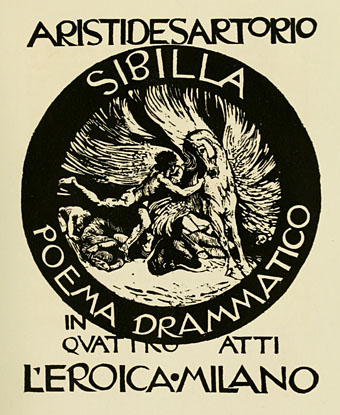
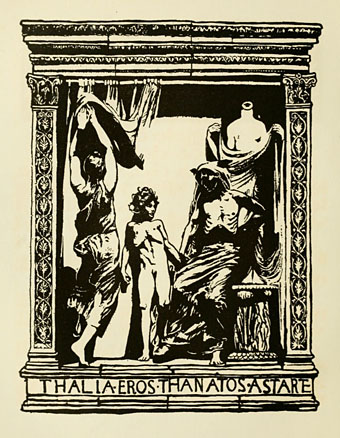
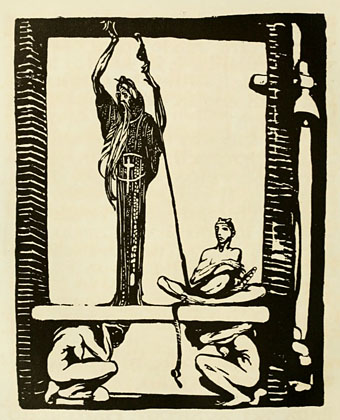
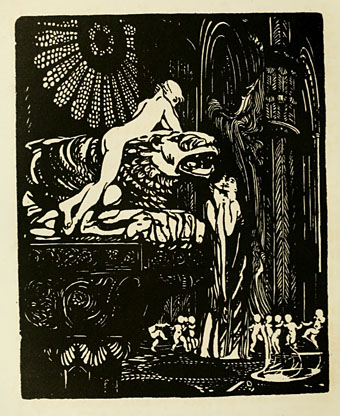
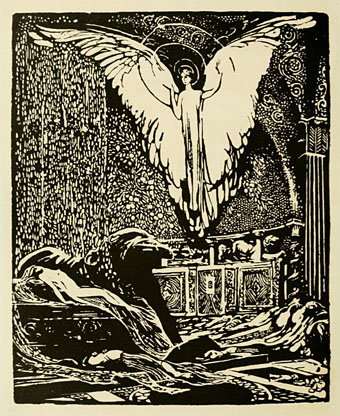
When the paintings of Giulio Aristide Sartorio were featured here a while back I wasn’t aware of Sibilla: poema drammatico in quattro atti, a book written and illustrated by the artist and published in a numbered edition of 1333 copies in 1922. Not content to merely write a lengthy dramatic poem then add some illustrations, Sartorio hand-crafted some 240 pages, text as well as illustrations, in what looks like woodcut printing but this page tells us was a style of relief etching which gives a woodcut appearance. At least half the book comprises full-page illustrations so it’s no surprise that Sartorio spent the best part of a decade working on it. The copy at the Internet Archive is one of the original printings, signed by the author/artist and his publisher, Ettore Cozzani. This page shows preliminary sketches for what has to be one of the final breaths of fin de siècle excess.

sartorio2.jpg

sartorio3.jpg

sartorio4.jpg

sartorio5.jpg

Elsewhere on { feuilleton }
The illustrators archive

Previously on { feuilleton }
Lussuria, Invidia, Superbia
The art of Giulio Aristide Sartorio, 1860–1932

Sedlec Ossuary panoramas

sedlec1.jpg

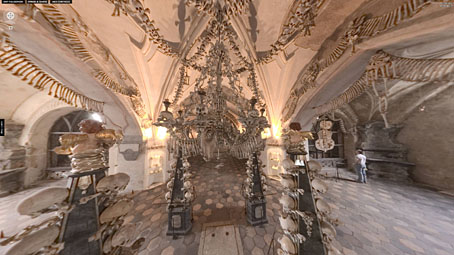
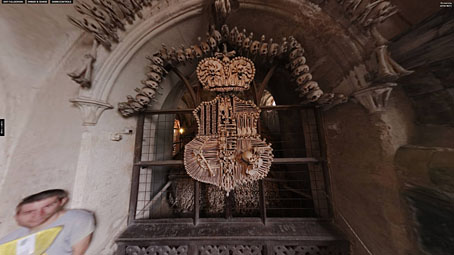
A couple of panoramic views from the celebrated Sedlec Ossuary in the Cemetery Church of All Saints at Sedlec, Kutná Hora in the Czech Republic. The quality of these isn’t as good as some of the panoramas I’ve linked to in the past but they help give an idea of the crypt which is now a World Heritage site. Jan Švankmajer enthusiasts should be familiar with the bone sculptures from his 1970 film, The Ossuary, which can be found on the BFI’s Svankmajer DVD set.

Sedlec Ossuary at Flickr

sedlec2.jpg

Elsewhere on { feuilleton }
The panoramas archive

Previously on { feuilleton }
Karel Plicka’s views of Prague

Dalí and the City

dali.jpg

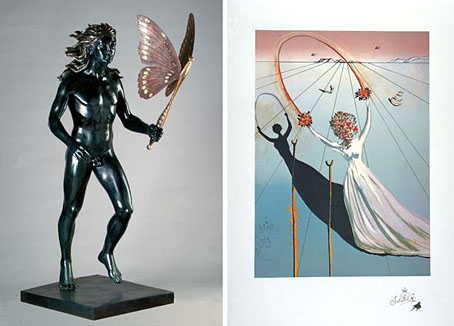
left: Lady Godiva with Butterflies; right: Alice in Wonderland.

London already has a number of Salvador Dalí works on display but there’s even more to see this month with an exhibition at Moor House, London Wall, where a handful of minor pieces are on show until 30th June, 2011. Dalí and the City features the artist’s Alice in Wonderland sculpture as well as the print shown here, and also some Tarot card designs. The masculine form of Lady Godiva above can be taken as further confirmation of Dalí’s recurrent interest in gender confusion. The Independent has more examples from the show while this page has details of opening times.

Previously on { feuilleton }
Dalí’s Elephant
Dalí in Wonderland
Dirty Dalí
Impressions de la Haute Mongolie revisited
Dalí and Film
Salvador Dalí’s apocalyptic happening
Dalí Atomicus
Impressions de la Haute Mongolie