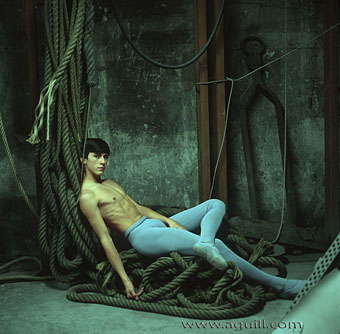
Jean-Philippe Guillemain’s dancers

guillemain1.jpg

Mathieu by Jean-Philippe Guillemain.

A collection of male dancers pose beside the usual complement of agency models in the portfolio of French photographer Jean-Philippe Guillemain. Are all European dancers this attractive or does he just have a good eye? See the others on his site.

Previously on { feuilleton }
Danseur Noble
The tights have it
Torero
Eonism and Eonnagata
Tiger Lily
Chris Nash
Peter Reed and Salomé After Dark
Felix D’Eon
Dancers by John Andresen
Youssef Nabil
Images of Nijinsky

Hello Dali!

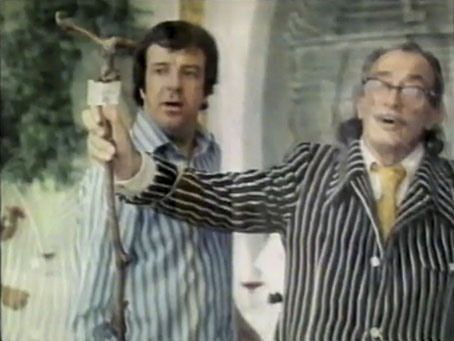
hellodali.jpg

Russell Harty and Salvador Dalí, 1973.

This would have been a real find if the quality wasn’t so poor. Hello Dali! was a 50-minute documentary film about Salvador Dalí broadcast in the UK in 1973 as part of ITV’s Aquarius arts strand. The whole thing is on YouTube chopped into five parts and is unfortunately blighted by severe ghosting throughout. Apart from that it’s perfectly watchable.

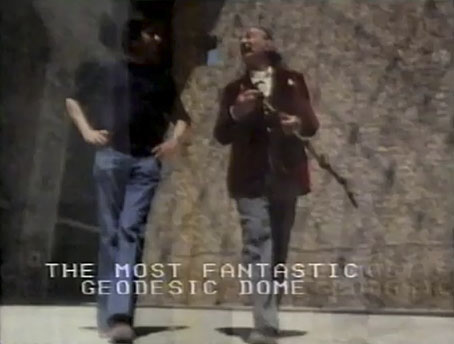
hellodali2.jpg

Some conversations are subtitled so viewers are better able to make sense of Dalí’s English/Spanish/French dialect.

Brits who are old enough may remember Aquarius which was replaced in the late 70s by The South Bank Show, a programme using the same format of a short studio introduction followed by a self-contained film. In place of the SBS‘s Melvyn Bragg we have Humphrey Burton introducing a film directed by Bruce Gowers. Russell Harty is the front man, seen here in the days before he achieved greater fame as a gossipy chat-show host. I’d been wanting to see this for a long time, having lost a video tape of it years ago. I never saw the original broadcast but it was screened again after Dalí’s death in 1989, and I remembered it as being particularly good for showing a slightly more human side to the eccentric and occasionally annoying artist. So it is, giving us a brief portrait of Dalí in his 69th year, preoccupied at that time with the construction of his museum in Figueres. The nature of Harty and Gowers coup in getting the artist to allow a film crew into his home can be found in subsequent documentaries many of which use uncredited extracts from these interviews. It’s the brief moments of interview which make this even though they reveal little, it’s refreshing seeing Dalí talking conversationally rather than putting on a performance.

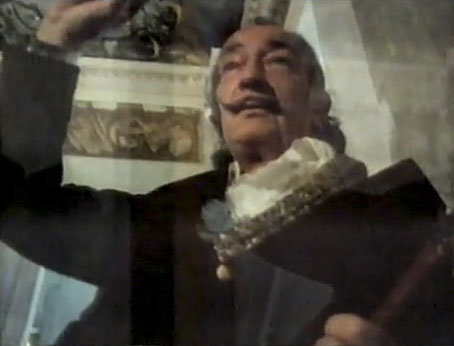
hellodali3.jpg

The early 70s saw the last flare of real interest in Dalí from the world at large. Dalí and Surrealism in general had a resurgence of popularity in the late 60s as a consequence of psychedelic culture: a number of books by or about the artist were published or reprinted, among them Peter Owen’s 1973 revival of the novel Hidden Faces which Dalí had written in 1944. About the same time Alejandro Jodorowsky was circling the Dalí camp trying to inveigle the artist into portraying the Emperor in his planned film adaptation of Dune. One detail worthy of note in the conversation with Russell Harty is mention of a golden toilet, something which Jodorowsky says Dalí wanted as his throne if he was going to be filmed. We never got to see Jodorowsky’s Dune but it’s good to find this documentary available once again. Here’s hoping a better copy turns up eventually.

Hello Dali! Pt 1 | Pt 2 | Pt 3 | Pt 4 | Pt 5

Previously on { feuilleton }
Dalí and the City
Dalí’s Elephant
Dalí in Wonderland
Alejandro Jodorowsky’s Dune
Dirty Dalí
Impressions de la Haute Mongolie revisited
Dalí and Film
Salvador Dalí’s apocalyptic happening
Dalí Atomicus
Impressions de la Haute Mongolie

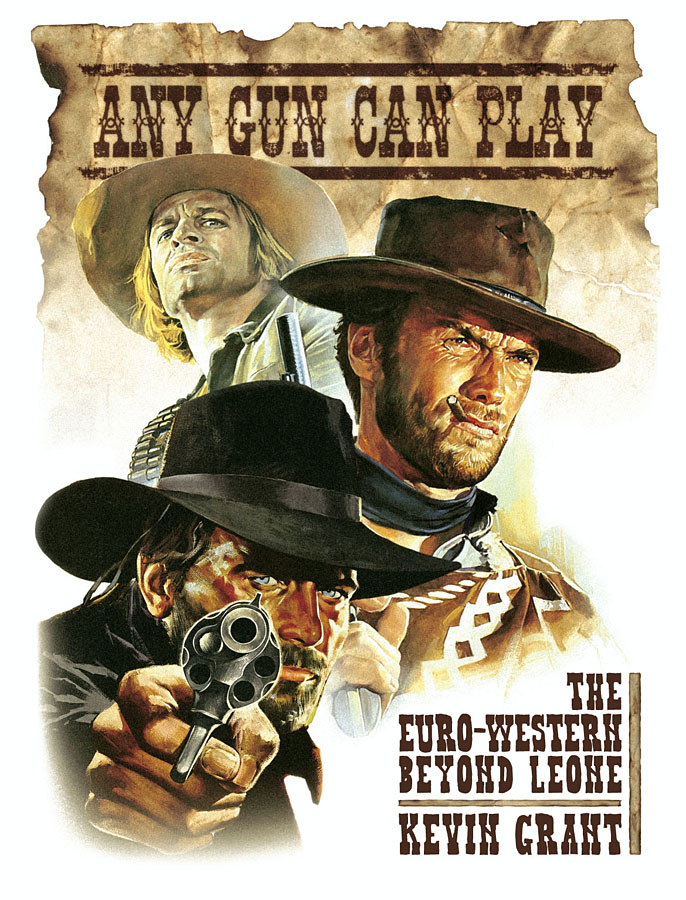
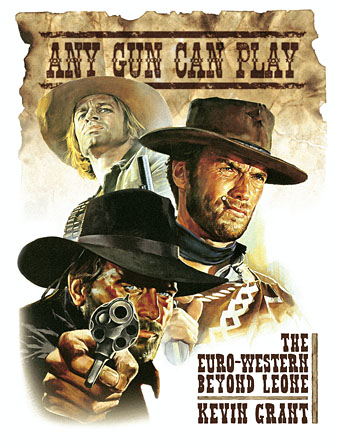
Any Gun Can Play by Kevin Grant

anygun.jpg

This was something I put together last year for FAB Press but the book has only been published in the past month. The design was little more than an assembly job on my part, with Harvey at FAB requesting a montage of the three poster-art gunmen plus suitable Western typography. We went through a number of generic fonts then I added a little creative touch with the background for the title type which was a sheet of paper scorched and stained using tap water, a tea bag and a gas-ring. Forget Photoshop filters, you still can’t beat the trusty tea bag for random stains.

Cynical and stylish, bloody and baroque, Euro-westerns replaced straight-shooting sheriffs and courageous cowboys with amoral adventurers, whose murderous methods would shock the heroes of Hollywood Westerns. These films became box-office sensations around the world, and their influence can still be felt today.

Any Gun Can Play puts the phenomenon into perspective, exploring the films’ wider reaches, their recurrent themes, characters, quirks and motifs. It examines Euro-westerns in relation to their American ancestors and the mechanics of the Italian popular film industry, and spotlights the unsung actors, directors and other artists who subverted the ‘code’ of the Western and dragged it into the modern age.

Based on years of research backed up by interviews with many of the genre’s leading lights, including actors Franco Nero, Giuliano Gemma and Gianni Garko, writer Sergio Donati, and directors Sergio Sollima and Giuliano Carnimeo, Any Gun Can Play will satisfy both connoisseurs and the curious.

Despite my minimal contribution, this is a very handsome volume to be connected to. I’ve had Christopher Frayling’s Spaghetti Westerns (1981) book for years so I’m already disposed towards the subject. Frayling’s book is a semi-academic analysis which for a long time was the only serious study of the subgenre. Additional studies by Frayling and others have followed but Kevin Grant’s book, subtitled The Essential Guide to Euro-Westerns, looks like a tough one to beat: 480 pages, detailed analyses, a who’s who section, filmography, and a huge quantity of photos and poster graphics, many in colour. There’s also a foreword by actor Franco Nero, threatening everyone on the cover in his Django guise. To test the author’s thoroughness I looked up Se sei vivo spara (1967) (If You Live, Shoot!), a film also known as Django Kill! even though it’s nothing to do with the Django series. Giulio Questi’s film is a very bizarre (and occasionally inept) blend of Spaghetti tropes and horror-style scenes of graphic gore, featuring (among other things) a crucified hero, a vampire bat, and a band of black-clad homosexual cowboys. Frayling’s book devotes a few paragraphs to the film while Grant gives it two-and-a-half pages plus pictures. IMDB may tell us the facts about a film’s production but the barely-literate reviews and troll-filled discussion boards on that site are useless. For authoritative review and analysis you still need a book like this. Any Gun Can Play can be ordered direct from FAB Press where they’re selling a limited number signed by Franco Nero and the author.
Weekend links 67

hofstatter.jpg

Neutron Drip (2011) by Amrei Hofstätter.

The Lavender Scare is “the first feature-length documentary film to tell the story of the U.S. government’s ruthless campaign in the 1950s and ’60s to hunt down and fire every Federal employee it suspected was gay”. A film by Josh Howard based on the book by David K Johnson which the author has made a free download here.

• “Annette Peacock, the avant garde American composer, collaborator with Salvador Dalí, friend of Albert Ayler and Moog-synth pioneer, brought this seismically influential session out in 1972…” John Fordham reviews Annette Peacock’s I’m The One which can be purchased here.

• Writer and graphic design historian Steven Heller looks at The Steampunk Bible (edited by SJ Chambers & Jeff VanderMeer) in his column for The Atlantic. He also talks to Galen Smith about the book’s design.

M John Harrison reveals more about his forthcoming sf novel Pearlent, a partial sequel to Light and Nova Swing. I just re-read Light, and I’m currently In The Event Zone with the follow-up, so I’m looking forward to this one.

The Raven, a book by Lou Reed & Lorenzo Mattotti (and Edgar Allan Poe). A Journey Round My Skull previewed this in 2009.

Orson Welles’ Falstaff film, Chimes at Midnight, emerges into the light once more. When do we get a decent DVD release?

• More of the usual concerns: Iain Sinclair’s struggles with the city of London and Erik Davis talks to Alan Moore about psychogeography, John Dee, comic gods, and the art of magic.

Eddie Campbell takes a tip from Jim Steranko. Related: “Hey! A Jim Steranko effect!

Lambshead Cabinet: Win Jake von Slatt’s Mooney & Finch Somnotrope!

• Tilda Swinton is The Woman Who Fell to Earth.

XXth Century Avantgarde [sic] Books at Flickr.

Sound sculptures & installations by Zimoun.

I’m The One (1972) by Annette Peacock.

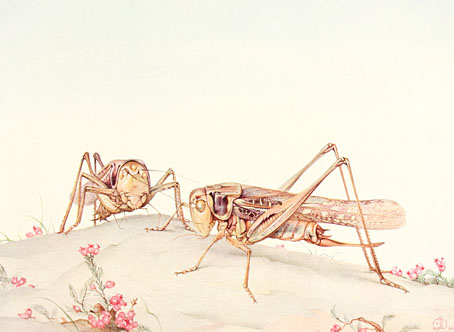
Detmold’s insects

detmold1.jpg

The White-Faced Decticus.

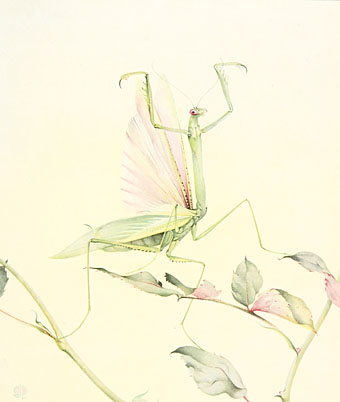
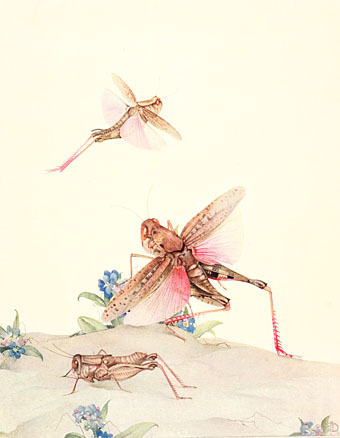
Edward Julius Detmold’s (1883–1957) skill at drawing animals gave him a great advantage when it came to illustrating Kipling’s The Jungle Book and Aesop’s Fables, still among the very best editions of those books. Less well-known are his illustrations for Fabre’s Book of Insects (1921), a guide by naturalist Jean-Henri Fabre. Bud Plant has details about the artist’s unhappy life, while the Internet Archive also has copies of the Aesop and the Kipling.

detmold2.jpg

The Praying Mantis.

detmold3.jpg

Italian Locusts.

Elsewhere on { feuilleton }
The illustrators archive

Previously on { feuilleton }
Entomologia
Fantastic art from Pan Books