Schütze and Unstable at Maggs Bros

schutze.jpg

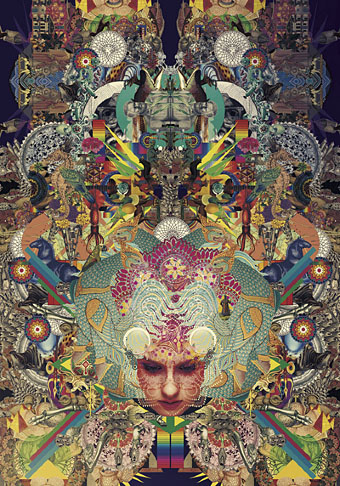
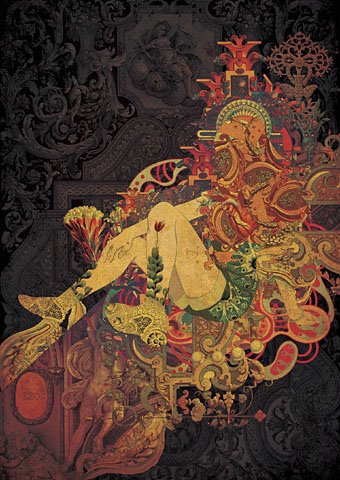
Maggs Bros. Ltd, London, hosts two events soon featuring { feuilleton } friends and cohorts. First up is Paul Schütze with Air Into Light, a showing of eighteen of his photo prints with musical and perfume accompaniment. Paul has been making perfume a subject of particular concern recently. The combination of sound and scent is still little explored despite Scriabin’s ambitious plans for his apocalyptic Mysterium. Air Into Light opens on 12th March.

biroco.jpg

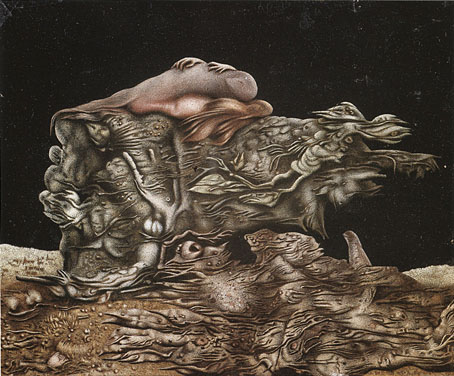
Chaos (2001) by Joel Biroco.

Unstable is a Strange Attractor event which will run from 8th May to 8th June, 2012 presenting new and old work by Battle of the Eyes (Chris Long & Edwin Pouncey), Joel Biroco, Julian House and Cathy Ward. Maggs Bros. has a page with exhibition details here including a PDF catalogue.

Previously on { feuilleton }
Strange Attractor Salon

Odilon Redon’s musical afterlife

redon5.jpg

Pilgrim Of The Sublunary World (2002) by Heid.

It would have been surprising if Magazine were the only group to have used Odilon Redon’s art for album covers. What is surprising is that these releases are all relatively recent and aren’t the cluster of Goth doodlings I would have expected: descriptions at Discogs list Heid as an industrial outfit, Revelation and While Heaven Wept are doom metal while Spider Trio play jazz. Odilon Redon is unusual in being able to provide artwork strange enough for Magazine or, in the case of his many pastel drawings, pretty enough for classical recordings. I omitted a couple of other CD covers which inset his pictures in dreadful layouts. The Heid album uses more Redon art on the insert pages.

redon4.jpg

Live @ Rendezvous/Jewelbox Theater 8.12.06 (2007) by Spider Trio.

redon1.jpg

Never Comes Silence (2007) by Revelation.

redon3.jpg

L’Amour De Loin (2009) by Kaija Saariaho.

redon2.jpg

Sorrow Of The Angels (2010) by While Heaven Wept.

Elsewhere on { feuilleton }
The album covers archive

Previously on { feuilleton }
Odilon Redon and Magazine
Odilon Redon lithographs
The eyes of Odilon Redon
Aubrey Beardsley’s musical afterlife

Odilon Redon and Magazine

magazine1.jpg

Shot By Both Sides (1978). Design by Malcolm Garrett. Art: La Chimere regarda avec effroi toutes choses (1886) by Odilon Redon.

The first two albums by British post-punk band Magazine have been soundtracking the inner landscape here for the past couple of weeks. Looking at some of their cover art on Discogs reminded me that two of their early singles came dressed with drawings by Symbolist artist Odilon Redon (1840–1916) so these covers may well have been the first place I saw any of Redon’s work at all. This was an unusual choice at the time which makes it typical of a group that stood slightly apart from much of the music around them, often being regarded as too proficient and too clever. (Pop music and politics are the only places where incompetence and stupidity are virtues.)

magazine2.jpg

Give Me Everything (1978). Design by Malcolm Garrett? Art:The Cactus Man (1881) by Odilon Redon.

Magazine’s golden era runs from 1978 to 1980 and for me their music and that of fellow Mancunians Joy Division remains inextricably connected to memories of Manchester in the late 1970s, a place I visited sporadically before moving here in 1982. The city then was a lot more grimy and run-down, filled with the disused mills and warehouses of the collapsed cotton industry, blighted by the failed architecture of the 1960s and polluted by endless convoys of orange buses. This photo from 1978 fixes the mephitic ambience, as does some of M. John Harrison‘s fiction from the period, notably his short story Egnaro. Unlike Joy Divison, Magazine haven’t been burdened with an increasingly inflated reputation which makes revisiting their works all the more enjoyable. They pull you back to those gloomy times then take you off elsewhere, into the cajoling and neurotic imagination of that Nosferatu-in-a-leather-jacket, Howard Devoto.

magazine3.jpg

No Thyself (2009). Designer unknown. Art: Le polype difforme flottait sur les rivages, sorte de cyclope souriant et hideux, Les Origines (1883) by Odilon Redon.

The band reformed in 2009 although I’m not convinced the current incarnation is for me, I’m generally sceptical of such moves and the absence of ace guitarist John McGeogh (who died in 2004) and bassist Barry Adamson means it won’t be the same. No Thyself did refer back to their origins, however, literally so in the title of the Odilon Redon picture on the cover, while the Chimera from the first single turned up on a recent tour poster. Howard Devoto talked late last year to The Quietus about the recent album.

Elsewhere on { feuilleton }
The album covers archive

Previously on { feuilleton }
Odilon Redon lithographs
The eyes of Odilon Redon

Weekend links 98

postcard.jpg

The Arcimboldo Effect again. An undated postcard from the image section of A Virtual Wunderkammer: Early Twentieth Century Erotica in Spain.

“I took George Clinton and Bootsy Collins to the Battle Station for the first time, and they left feeling like they’d just had a close encounter,” said the bassist and music producer Bill Laswell, who met Rammellzee in the early 1980s and remained one of the few people who saw him regularly.

Rammellzee’s Work and Reputation Re-emerge

• Also in the NYT: China Miéville on Apocalyptic London: “Everyone knows there’s a catastrophe unfolding, that few can afford to live in their own city. It was not always so.” Reverse the perspective and find Iain Sinclair writing in 2002 about Abel Ferrara’s The King of New York: “A memento mori of the century’s ultimate city in meltdown.”

• The Inverted Gaze: Queering the French Literary Classics in America by François Cusset. Related: Glitterwolf Magazine is asking for submissions from LGBT writers/artists/photographers.

• The vinyl releases of Cristal music by Structures Sonores Lasry-Baschet continue to be scarce and unreissued. Mark Morb has a high-quality rip of the group’s No. 4 EP here.

Henri’s Walk to Paris, the children’s book designed by Saul Bass in 1962, is being republished. Steven Heller takes a look.

As the critic Jon Savage points out, even rock’n’roll’s very roots, the blues, contained a weird gay subculture. The genre was home to songs such as George Hannah’s Freakish Man Blues, Luis Russell’s The New Call of the Freaks, and Kokomo Arnold’s Sissy Man Blues. “I woke up this morning with my pork grindin’ business in my hand,” offers Arnold, adding, “Lord, if you can’t send me no woman, please send me some sissy man.”

Straight and narrow: how pop lost its gay edge by Alexis Petridis

David Pelham: The Art of Inner Space. James Pardey interviews the designer for Ballardian.

BBCX365: Johnny Selman designs an entire year of news stories.

• Sarah Funke Butler on Nabokov’s notes for Eugene Onegin.

• Leslie S. Klinger on The cult of Sherlock Holmes.

How piracy built the US publishing industry.

SynthCats

The Light Pours Out Of Me (1978) by Magazine | Touch And Go (1978) by Magazine | Motorcade (1978) by Magazine | Feed The Enemy (1979) by Magazine | Cut-Out Shapes (1979) by Magazine.

Opium dens

opiumden1.jpg

The Opium Den (1881) by William Lamb Picknell.

The romantic side of the addiction business. Needless to say, there’s a lot more of this kind of thing. The ultimate opium-related pictorial art is still Attila Sassy’s remarkable Opium Dreams from 1909, a series of drawings which can be seen at 50 Watts in high-quality scans.

opiumden2.jpg

The Opium Den (no date) by Vincent G. Stiepevich.

opiumden3.jpg

Chez la Marchande de Pavots (The House of the Poppy Merchant, 1920) by George Barbier.

opiumden4.jpg

Opium den from Fantasio (1915) by George Barbier.

Previously on { feuilleton }
Opium fiends
La Morphine by Victorien du Saussay
Haschisch Hallucinations by HE Gowers
The Dark Ledger
Demon rum leads to heroin
German opium smokers, 1900