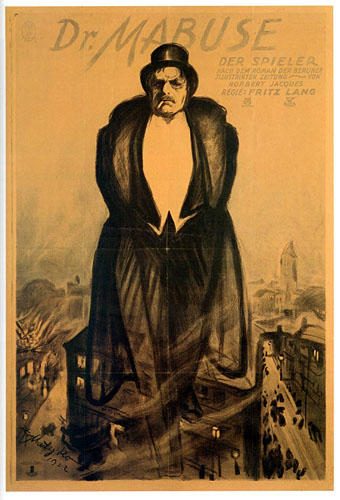
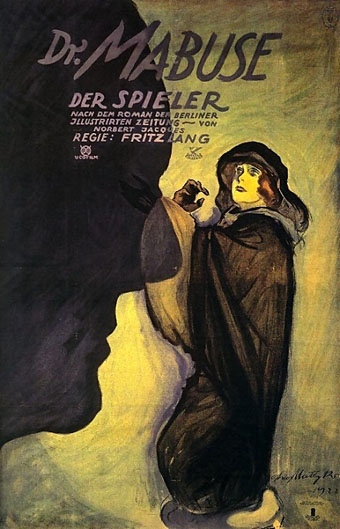
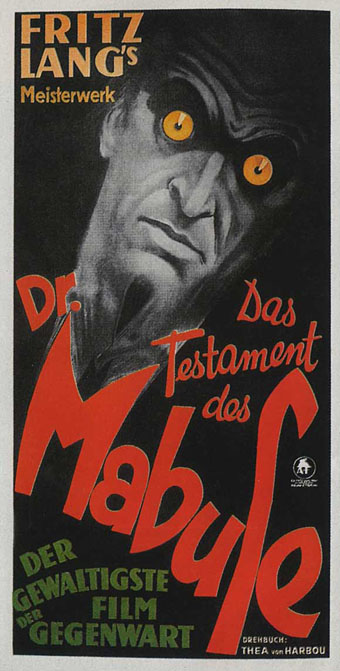
Dr Mabuse posters

mabuse00.jpg

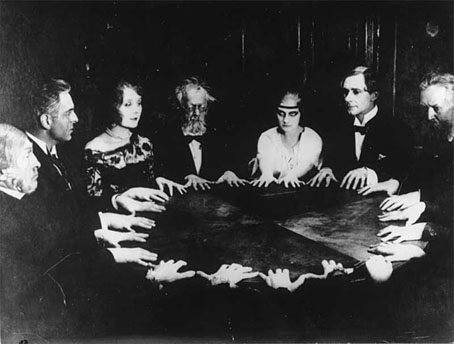
This picture of a séance in the 1920s circulates endlessly in the Tumblr labyrinth, usually without attribution so that many of the people seeing it won’t be aware that it’s a still (or a set photo) from Fritz Lang’s Dr. Mabuse, The Gambler (1922). Mabuse himself originates in a novel of the same name by Norbert Jacques published in 1921, the tale of a Moriarty-like super-criminal at large in Weimar-era Berlin. Lang made three films about the character, the first two of which, Dr. Mabuse, The Gambler, and The Testament of Dr. Mabuse (1933) feature Rudolf Klein-Rogge as the sinister Doctor, an actor better known today for his role as the mad scientist, Rotwang, in Lang’s Metropolis (1927). Testament was banned by Goebbels for being subversive. The third film, The Thousand Eyes of Dr. Mabuse (1960), was also one of the director’s last but it managed to revive interest in the character at a time when super-criminals were coming back into vogue. Wolfgang Preiss played Mabuse in this film, and in several sequels by other directors.
mabuse01.jpg

I’ve known about the Mabuse films for years, thanks in part to Lotte Eisner’s superb history of German silent cinema, The Haunted Screen (1952), yet despite this I’ve still not seen any of the films. That should change soon with the news that Eureka Video are releasing a new print of Dr. Mabuse, The Gambler on Blu-ray at the end of October, a restored version that will run for 280 minutes. The running time sounds excessive but Eisner points out that the film was originally screened in two parts: The Great Gambler: An Image of the Age, and Inferno: A Game for the People of our Age. In addition to Rudolf Klein-Rogge fixing everyone with his hawk-like glare there’s also Alfred Abel playing a weaker character than his master of the city in Metropolis. Moviemail describes Mabuse as “a criminal mastermind whose nefarious machinations are based around hypnotism, charlatanism, hallucinations, Chinese incantations, cold-blooded murder, opiate narcosis and cocaine anxiety”; how can one resist?

The posters gathered here are from a web trawl so lack the usual credits. The second film evidently had a wider distribution hence the greater quantity of posters from other countries.
mabuse02.jpg

mabuse03.jpg

Continue reading “Dr Mabuse posters”

The art of Roland Cat

cat02.jpg

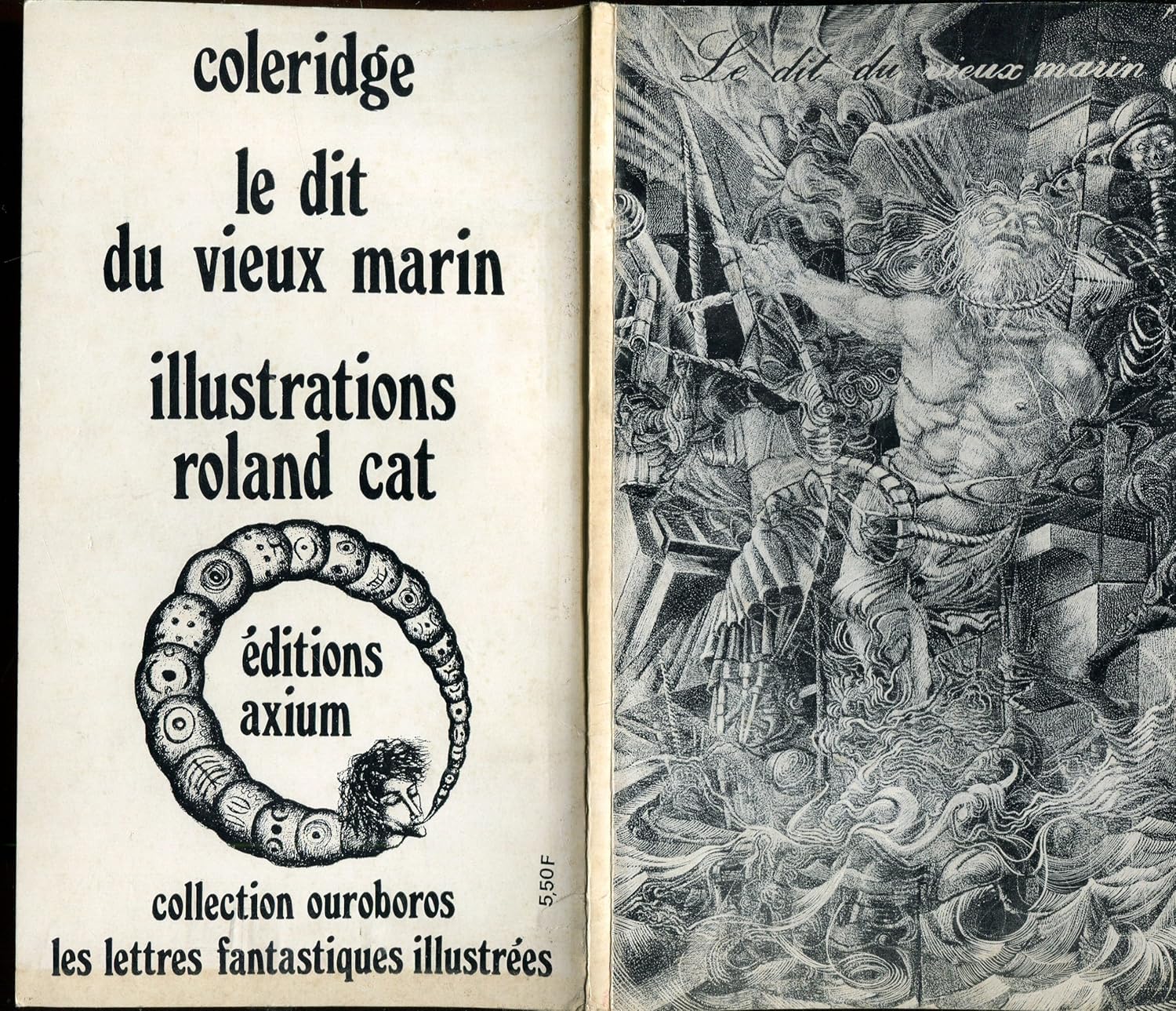
The Rime of the Ancient Mariner (Axium, 1969).

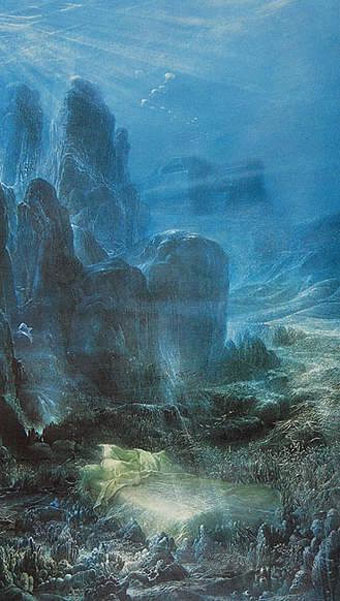
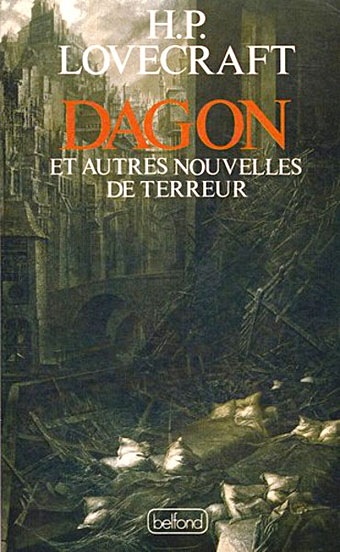
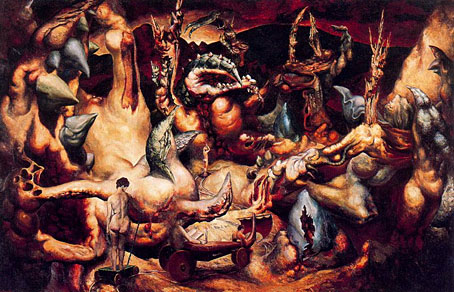
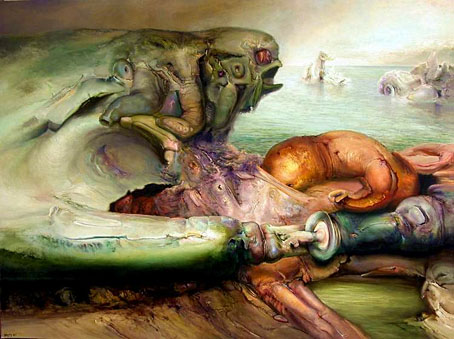
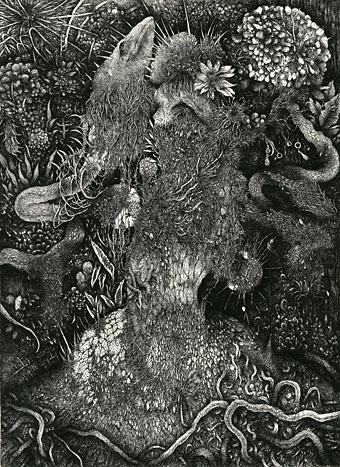
The work of French artist Roland Cat is less Surreal—although some of it could be classed as such—than Fantastic in a manner similar to that of contemporaries such as Michel Henricot, Jean-Pierre Ugarte, Jean-Marie Poumeyrol, Gérard Trignac and others. Art of this nature receives support and encouragement from the French to a degree which often seems inversely proportional to the ignorance it receives from the Anglophone art world. For years the only example of Cat’s work I’d seen was the picture that Dave Britton used on the cover of the Savoy edition of New Worlds magazine in 1979. The examples here are the result of a web trawl, hence the missing titles and dates.

The Coleridge illustration above was for a volume that was part of a series produced by a French publisher in 1969, each edition of which was illustrated by a different artist. This forum post has more details. For more about Roland Cat see this short appraisal at Visionary Review.

cat08.jpg

Sleep (1980).

cat01.jpg

Dagon (Belfond, 1987).

Continue reading “The art of Roland Cat”

The art of James Gleeson, 1915–2008

gleeson1.jpg

Funeral Procession in a Wounded Landscape (1945).

James Gleeson was an Australian Surrealist painter whose work I don’t think I’d seen before. The early pictures tend towards the post-Dalí school that crowds the second and third generation of Surrealist painting. More interesting for me are the later landscapes (if they can be labelled such) produced by a combination of collage and painting techniques. Some of HR Giger’s work in the 1970s explored similar organic terrain but this period didn’t last very long before he was into his biomechanical territory.

gleeson3.jpg

Locus Ganesa (1985).

gleeson2.jpg

Sky Techtonics (2002).

Elsewhere on { feuilleton }
The fantastic art archive

Weekend links 174

ikuma.jpg

Dress (2012) by Nao Ikuma.

• Two of my Cthulhu artworks can currently be seen in the Ars Necronomica exhibition at the Cohen Gallery, Brown University, Providence, RI. The exhibition is part of NecronomiCon, and runs to September 13th. In related news, my steampunk illustration has been nominated in the Visual category of this year’s Airship Awards. Winners will be announced at Steamcon V in October.

• “…the story of how a small cabal of British jazz obsessives conducting a besotted affair with the style arcana of Europe and America somehow became an army of scooter-borne rock fans…” Ian Penman looks back at the culture of Mod for the LRB.

• “What is it about the writer in the First World that wants the Third World writer to be nakedly political, a blunt instrument bludgeoning his world’s ills?” Gina Apostol on Borges, Politics, and the Postcolonial.

If someone had designed a work regime perfectly suited to maintaining the power of finance capital, it’s hard to see how they could have done a better job. Real, productive workers are relentlessly squeezed and exploited. The remainder are divided between a terrorised stratum of the, universally reviled, unemployed and a larger stratum who are basically paid to do nothing, in positions designed to make them identify with the perspectives and sensibilities of the ruling class (managers, administrators, etc) – and particularly its financial avatars – but, at the same time, foster a simmering resentment against anyone whose work has clear and undeniable social value. Clearly, the system was never consciously designed. It emerged from almost a century of trial and error. But it is the only explanation for why, despite our technological capacities, we are not all working 3–4 hour days.

On the Phenomenon of Bullshit Jobs by David Graeber

Ron Rosenbaum talks to Al Pacino about all the usual stuff, and reveals some detail about the actor’s obsessive interest in Oscar Wilde’s Salomé.

• More queer history: The Brixton Fairies and the South London Gay Community Centre, Brixton 1974–6.

• At Dangerous Minds: Anthony Burgess and the Top Secret Code in A Clockwork Orange

• Every day for 100 days, Jessica Svendsen redesigned a Josef Müller-Brockmann poster.

LondonTypographica: Mapping the typographic landscape of London.

• Mix of the week: Secret Thirteen Mix 083 by Demdike Stare.

• At Strange Flowers: Alfred Kubin the writer.

Derek Jarman’s sketchbooks.

Rick Poynor on Collage Now.

• Thomas Leer: Private Plane (1978) | Tight As A Drum (1981) | Heartbeat (1985)

Doublevision Presents Cabaret Voltaire

cvdv1.jpg

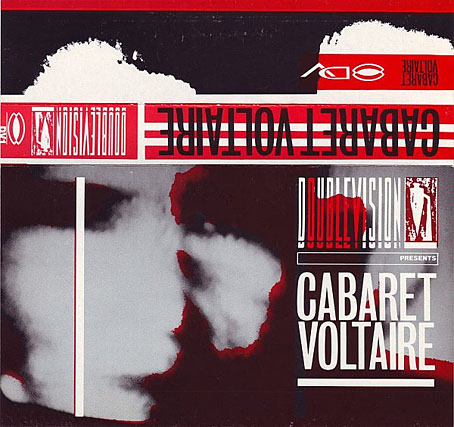
Videocassette box insert. Design by Neville Brody.

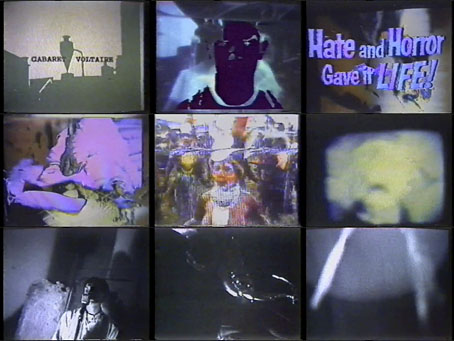
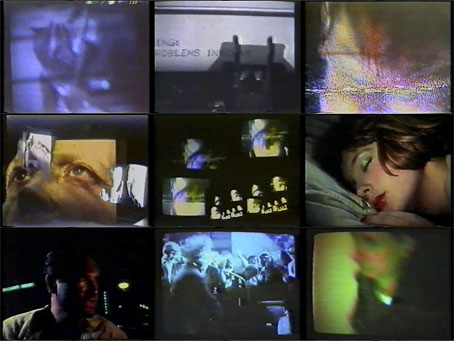
A couple of years back I tracked down some of the releases on Cabaret Voltaire’s Doublevision video label, the early titles of which have never been reissued on DVD. The first Doublevision release was the Cabs’ collection of their own music videos which Mute Records reissued on DVD 2004. That reissue seems to be deleted for the moment so it’s good to find a copy of the original tape release on YouTube. As with the other Doublevision releases I was well aware of this but didn’t have a VHS player at the time so wasn’t eager to buy anything I couldn’t watch. Unlike the other releases I did get to see several of the tracks during the Cabs’ Doublevision video night at the Haçienda in 1983, an evening that ended with the group performing for an hour.

cvdv2.jpg

It’s good to be reminded of these videos, however crude they appear today. As with any early use of technology you need to bear in mind the limitations of the time. The tape was released in 1982 but the group had been experimenting with video equipment from about 1979 onwards. At that time commercial music video was just getting started but most of the examples on TV were paid for by the big record companies. Cabaret Voltaire and some of their associates in the UK Industrial scene—notably Throbbing Gristle and 23 Skidoo—were ahead of the game in acquiring equipment to make their own video recordings and promos. These videos were seldom shown on mainstream TV; I recall being thrilled to see a clip from the Nag, Nag, Nag promo on a pop programme but that was a rare one-off moment. The music industry was being forced to accommodate the awkward DIY merchants but the gates of broadcast television remained heavily policed.

cvdv3.jpg

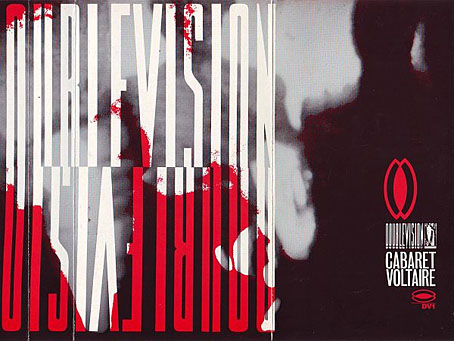
And speaking of heavy policing, you get some of that here, the Cabs’ obsessions with coercion and control being illustrated by footage of riot squads, together with religious mania, medical surgery, psychotronic films and much else, all of it processed, fragmented and distorted. Direction was by the group and by St. John Walker, with an extract from Johnny YesNo (recently reissued by Mute) directed by Peter Care. I’ve been listening to Seconds Too Late a lot this week so it’s great to see a video for that song. There’s also a slight conundrum in the tracklisting: if you’re familiar with the free four-track single that came with The Crackdown album it seems that Badge of Evil and Moscow have had their titles swapped. The Moscow video track, however, includes a shot of an Aeroflot passenger plane so it’s more likely that the tracks on one side of the single were mis-labelled when they appeared a year later, an error carried over to the CD release.

Tracklist: Diskono / Obsession / Trash (Part 1) / Badge Of Evil / Nag, Nag, Nag / Eddie’s Out / Landslide / Photophobia / Trash (Part 2) / Seconds Too Late / Extract From Johnny YesNo / Walls Of Jericho / This Is Entertainment / Moscow

cvdv4.jpg

Previously on { feuilleton }
Just the ticket: Cabaret Voltaire
European Rendezvous by CTI
TV Wipeout
Seven Songs by 23 Skidoo
Elemental 7 by CTI
The Crackdown by Cabaret Voltaire
Network 21 TV