City of Night by John Rechy

rechy1.jpg

City of Night (1963), Grove Press.

Surprising to read this week that John Rechy’s pioneering novel of gay nightlife in America is now fifty years old. The attitude and style of Rechy’s work looks so much to the 1970s that it seems out-of-place in a time when writing about male hustlers was almost as risky as being one. Charles Casillo revisits the novel for the Los Angeles Review of Books, and also talks to the author. Casillo turns up again at Lambda Literary to ask a collection of other writers for their recollections about Rechy and his work.

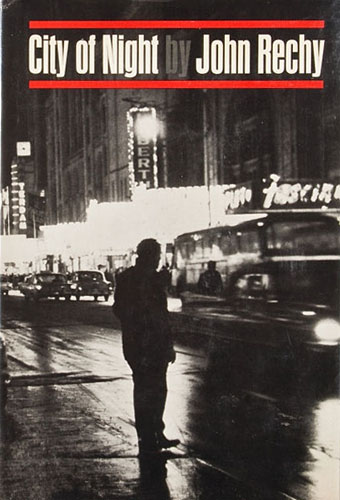
The usual curiosity impelled me to go looking for City of Night cover designs. The results are disappointing, there having been little advance from the Grove Press first edition (above) which I’m guessing was a Roy Kuhlman design. (And while we’re looking at it, Taxi Driver aficionados might note the “Fascination” sign.)
rechy2.jpg

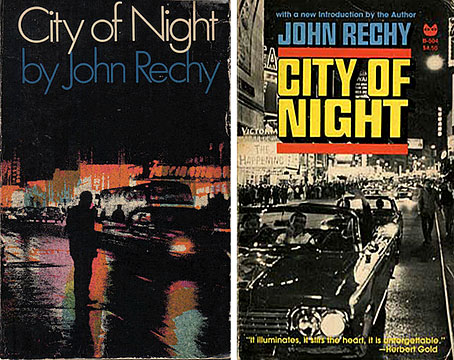
The Grove Press paperback (left) reused the photo, and set the template for many subsequent editions, all of which could easily be mistaken for crime novels. The early editions play safe but that solitary figure does at least communicate the book’s emphasis on loneliness. Later editions offer lazy variations on the words “city” and “night” with no indication that the book is also about sex.
rechy3.jpg

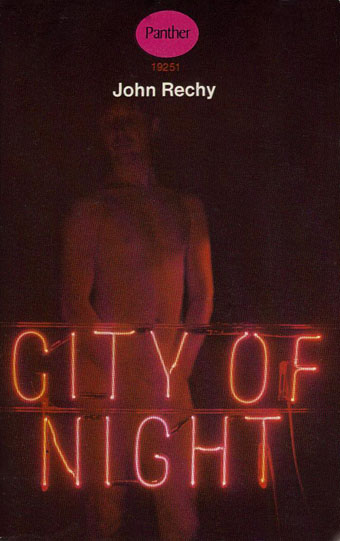
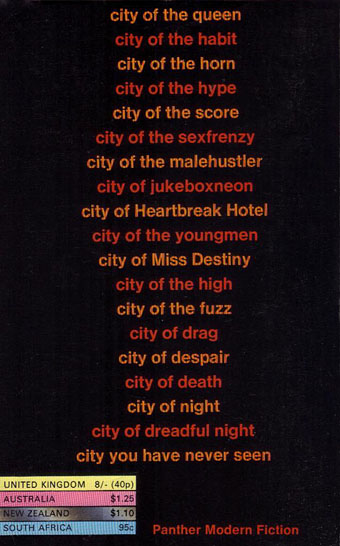
The Panther (UK) paperback from 1969 is the edition I’m most familiar with, and it’s a surprise again to find that this cover design is still the best I’ve seen. Panther had a run of great cover designs from the late 60s into the 1970s, many of them uncredited. They also published a fair amount of gay fiction in editions that were smart and unsensational. This cover exemplifies the approach: sexy, direct, blurb-free, and with that enticing list of Joyce-like neologisms (“youngmen” is a Rechy trademark) on the back. Goodreads has a handful of other designs.
rechy4.jpg

Elsewhere on { feuilleton }
The book covers archive

Previously on { feuilleton }
William E. Jones on Fred Halsted
California boys by Mel Roberts
Wildeana 11

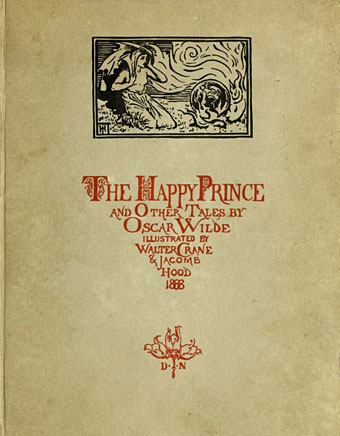
wilde1.jpg

The Happy Prince And Other Tales (1888).

Continuing an occasional series. Recent Wildean links.

Jeanette Winterson makes a persuasive case for the importance of Wilde’s stories for children: “Wilde had a streak of prophecy in him. The children’s stories can be read as notes from the future about Wilde’s fate. It is as though the little child in him was trying to warn him of the dangers his adult self would soon face. ‘Every single work of art is the fulfilment of a prophecy’, he writes in De Profundis.”

• At the Morgan Library & Museum: a collection of Wilde’s manuscripts and letters, including the MS of The Selfish Giant, one of the stories discussed in Winterson’s piece.

• At The Smart Set: “Oscar Wilde abandoned journalism and hated fashion – so why is his essay The Philosophy of Dress so important?” asks Nathaniel Popkin.

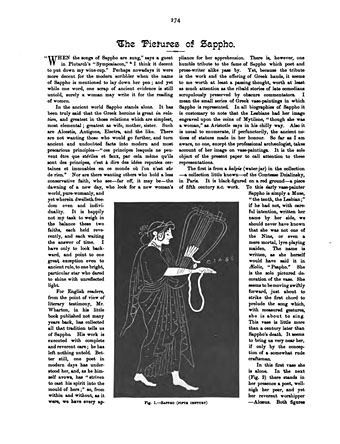
wilde2.jpg

The Pictures of Sappho from The Woman’s World.

• Wilde’s The Philosophy of Dress led to his being asked to edit The Lady’s World in 1887, a magazine he promptly renamed The Woman’s World. He was editor for two years. A collected run of the magazine may be browsed here.

Elsewhere on { feuilleton }
The Oscar Wilde archive

Ye Sundial Booke

sundial22.jpg

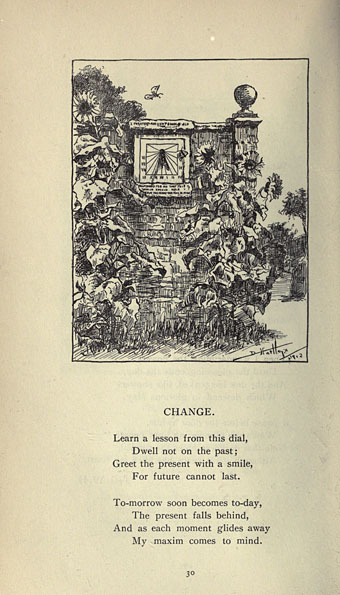
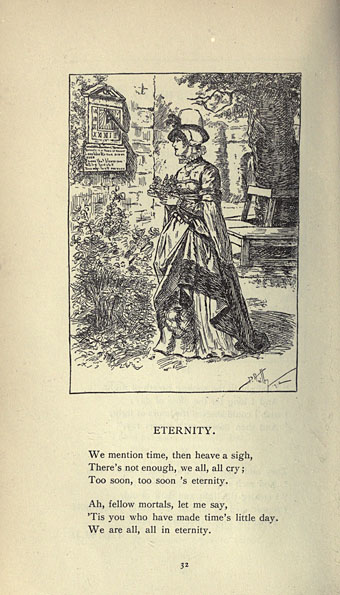
I almost posted this in place of The Book of Old Sundials but to have done so would have made the former volume redundant. This is the same idea—pen drawings of British sundials with accompanying pages of sundial mottos—but a much more comprehensive treatment. The antiquated title is an affectation by its author, T. Geoffrey W. Henslow, the book having been published in 1914. What’s most remarkable about this study is the 370 drawings by Dorothy Hartley (1893–1985), a job of illustration that must have involved considerable labour even if she was working from photographs. Looking for details of Ms Hartley’s career it’s possible she researched the sites herself. In addition to being an illustrator and art teacher she was also a noted social historian and rural archivist, and author of a celebrated book of culinary history, Food in England (1954), which is still in print today.

These page selections do little more than scratch the surface of this extraordinary book. Browse the rest of it here or download it here. For more about Dorothy Hartley and her historical research there’s an hour-long BBC documentary, Food in England: The Lost World of Dorothy Hartley.

sundial23.jpg

sundial24.jpg

sundial25.jpg

sundial26.jpg

Continue reading “Ye Sundial Booke”

Weekend links 182

iwami.jpg

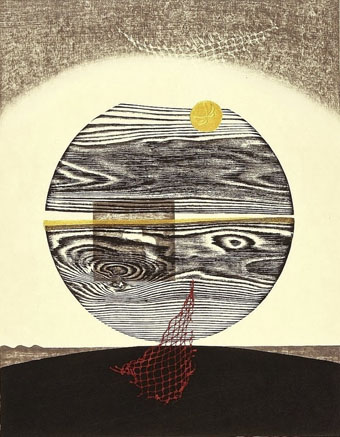
Mirror of Water (1981) by Reika Iwami.

• The week in comics: Paul Gravett interviews Enki Bilal. | Paul Kirchner’s wordless and inventively surreal strip, The Bus, was republished in France last year but it’s been out-of-print for years everywhere else. Read it online here. | Bill Watterson has made the entire run of Calvin and Hobbes available for free.

• “…seek and learn to recognize who and what, in the midst of the inferno, are not inferno, then make them endure, give them space.” Leland de la Durantaye reviews Italo Calvino: Letters 1941–1985.

• Artist Charles Ross says “My interest in science is related to how mysterious it is.” Ross Andersen visited Ross’s Star Axis, “a masterpiece forty years in the making”.

There is a satirical intent at work here, as well as mordant humour, a potent mix that reminds one more of the absurdist fictions of the French jazz musician Boris Vian than of anything in the SF canon. Science fiction is not central in Harrison’s work – not even as a target of his sharp wit – and it is a mistake to regard him as being chiefly interested in demolishing a genre that is only one of several he has mastered.

John Gray on M. John Harrison’s Kefahuchi Tract trilogy. This week Harrison posted a new piece of fiction on his blog.

• Mixes of the week: Secret Thirteen Mix 091 by Sugai Ken, and Bride of the Abominable Marshman, an early Halloween mix by Hackneymarshman.

• Clive Hicks-Jenkins on Schandmasken (masks of shame), and the clay visage of Paul Wegener’s Golem.

• A version of Kraftwerk’s Trans Europe Express by Chicago band Disappears.

Postcards to the Curious: MR James-themed artwork by Alisdair Wood.

Clive Barker: Why I Once Gave Up Horror Movies Entirely.

• Artist Melinda Gebbie at Phantasmaphile.

Fragment, a new video from Emptyset.

38 photos of airships through the ages.

• This Much I Know: Kenneth Anger.

• Trans Europe Express (2000) by Señor Coconut Y Su Conjunto | Trans Europe Express (2007) by Receptors | Trans Europe Express (2012) by Daniel Mantey

The Book of Old Sundials

sundial01.jpg

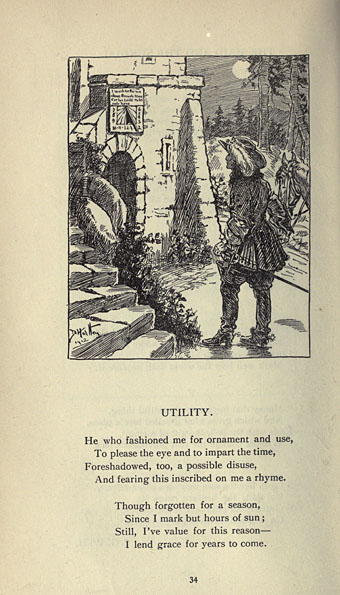
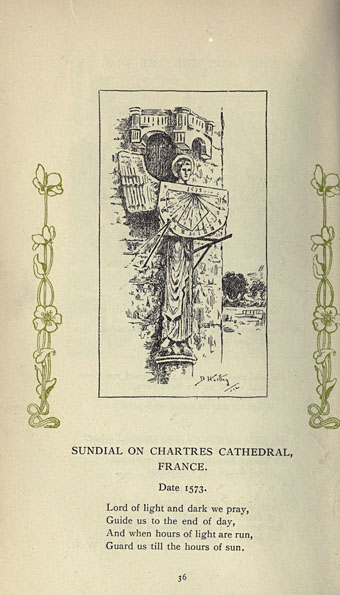
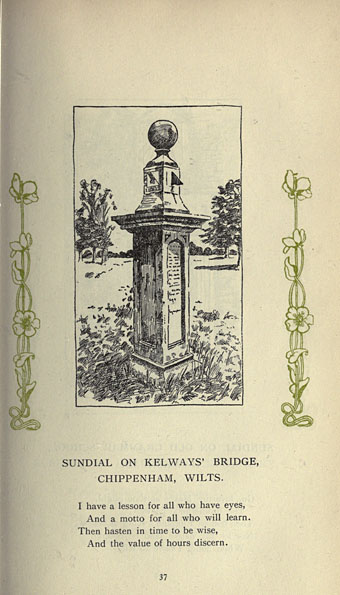
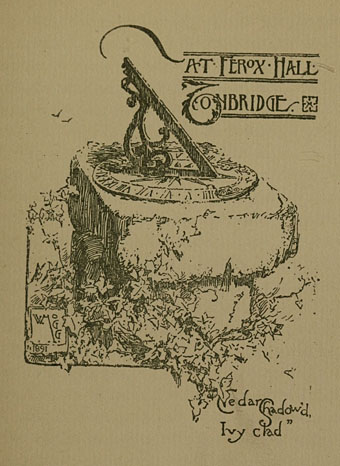
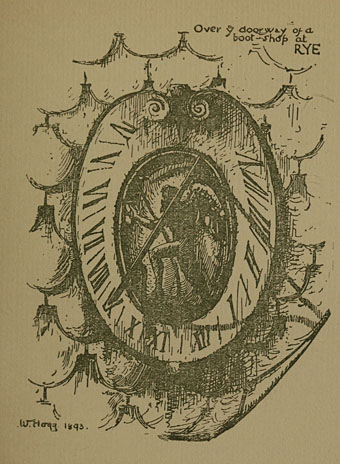
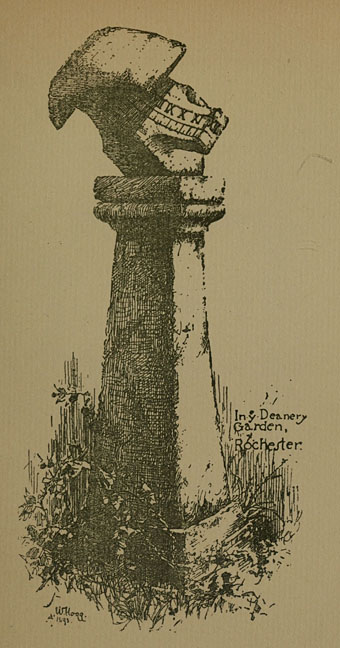
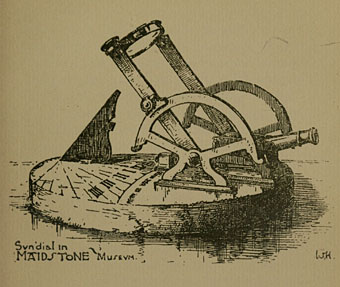
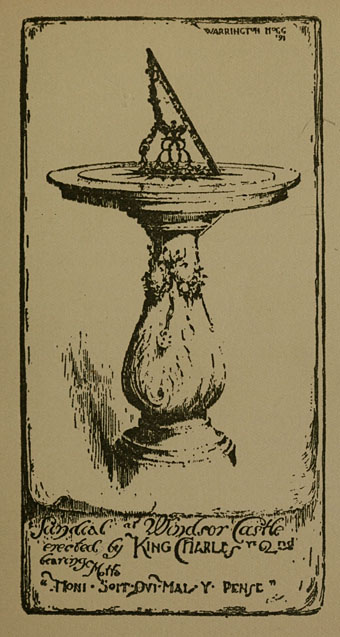
The Book of Old Sundials & Their Mottoes (1922) is uncredited although it contains an introductory essay which may be the work of the Viscount Knutsford. The mottos section runs throughout the rest of the book, a collection of philosophical rhymes, moralising admonitions and the inevitable sombre memento mori. The illustrations by one Warrington Hogg are an equal attraction, showing the variety of sundial construction with examples from buildings in England that date back to the Roman occupation. Hogg’s drawings themselves date from the 1890s so its possible this is a reprint of an older volume. See the rest of the book here or download it here.

sundial02.jpg

sundial03.jpg

sundial04.jpg

sundial05.jpg

Continue reading “The Book of Old Sundials”