The Last Angel of History: Afrofuturism, science fiction and electronic music

lastangel1.jpg

There’s been a resurgence of interest recently in Afrofuturism (see this recent newspaper article, and this site), not before time when the term has been around since 1993. The concept itself goes back a long way, at least as far as the remarkable body of work produced by Sun Ra (1914–1993) whose vast discography dates from 1956, and has to be considered the first concerted attempt to craft an expansive cosmic/futuristic mythos in music.

lastangel2.jpg

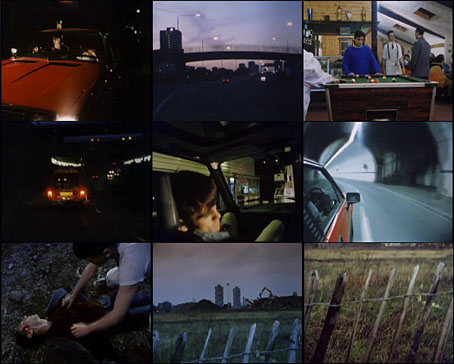
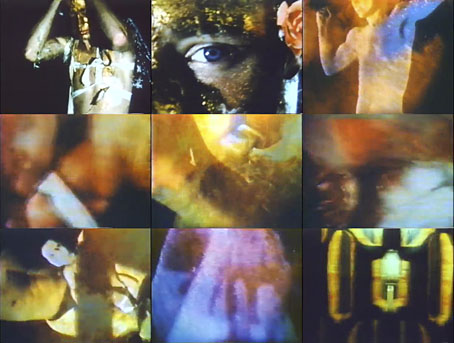
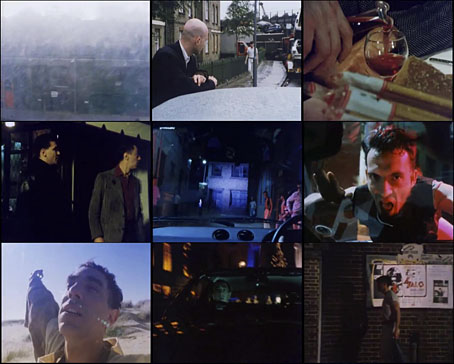
Sun Ra and his Arkestra make fleeting appearances in The Last Angel of History (1997), a 45-minute documentary by John Akomfrah which looks at Afrofuturism via its manifestations in fiction, contemporary music, and in space travel. The connecting tissue is a somewhat dated bit of cyperpunk fluff but it’s worth sticking around for the cast of interviewees. On the musical side there’s George Clinton, Derrick May, Juan Atkins, Carl Craig, DJ Spooky, Goldie, and A Guy Called Gerald; on the writing side there’s Ishmael Reed (whose early novels would have been published by my colleagues at Savoy Books if the company hadn’t gone bust in the early 80s), Samuel R. Delany (Savoy did publish one of his novels), Octavia Butler, Kodwo Eshun and Greg Tate; Nichelle Nichols has a chance to talk about something other than Star Trek for once, since she helped with NASA’s recruitment programme. There’s also Bernard A. Harris Jr, one of the first African-Americans in space. The techno-fetishism seems overheated now that we’ve all calmed down about computers and the internet, but that doesn’t negate the important points: SF as a reflection of the present moment and a means to imagine a different situation or way of life. With 2014 being Sun Ra’s centenary year I’m anticipating a lot more of this.

The Last Angel of History: part 1 | part 2 | part 3

Previously on { feuilleton }
Rammellzee RIP

Weekend links 194

roberts.jpg

Untitled glass sculpture by Richard Roberts.

Lord Horror: Reverbstorm, my collaboration with David Britton, makes The Quietus list of Literary Highlights of 2013. At the same site there’s Russell Cuzner talking to English Heretic. “His methodology takes in magick, psychogeography and horror film geekdom, along with firm roots in Britain’s industrial music culture of the early 1980s, to form potent, novel topographies of an otherwise unconnected world of occultists and psychopaths.”

• A slew of London links this week: Geoff Manaugh on how the capital was redesigned to survive wartime blackouts, a piece which inadvertently explains why you see so much black-and-white street furniture in post-war films | Bob Mazzer’s photos of the London Underground in the 1970s and 1980s | Philipp Ebeling’s photos of the capital and its inhabitants today.

• “Science has become an international bully. Nowhere is its bullying more outrageous than in its assault on the phenomenon known as subjectivity.” David Gelernter on “The Closing of the Scientific Mind”. Related: “When Science Becomes Scientism” by Stanislav Grof.

• My favourite book about Orson Welles is This is Orson Welles (1992), a collection of Peter Bogdanovich’s interviews with Welles edited by Jonathan Rosenbaum. Bogdanovich’s interview tapes can now be heard at the Internet Archive.

• Brian Dillon on Dada collagist Hannah Höch who he calls “art’s original punk”, and Sean O’Hagan talking to another collage artist, Linder Sterling, who says “Lady Gaga didn’t acknowledge I wore a meat dress first”.

• One Hundred Years Of Weird Fear: Daniel José Older on HP Lovecraft’s literature of genealogical terror. More fear (and Lovecraft): Will Wiles on the growth of Creepypasta.

The Last Alan Moore Interview? A lengthy discussion with Pádraig Ó Méalóid. Shunning interviews hasn’t done Cormac McCarthy any harm so if I was Alan I wouldn’t worry.

• And speaking of Cormac McCarthy, the headline of the week: “Cormac McCarthy’s ex-wife busted after pulling gun from vagina during alien argument“.

• Where the bodies are buried: Mick Brown presents a potted biography of Kenneth Anger who offers a few reluctant quotes.

• A short animation for gore-obsessed kids: Pingu’s The Thing by Lee Hardcastle.

Helen Yentus designs a 3D-printed slipcase for a novel by Chang-rae Lee.

Ralph Steadman‘s illustrations for Alice’s Adventures in Wonderland.

• Mix of the week: Secret Thirteen Mix 103 by Lustmord.

Collage art at Pinterest.

No Escape (1966) by The Seeds | Pushin’ Too Hard (1966) by The Seeds | No Escape (1979) by Cabaret Voltaire | Pushin’ Too Hard (1982) by Paul Parker

The Angel of the Revolution

aotr01.jpg

The British Library’s recent uploading of a million copyright-free images to Flickr has been a mixed blessing. On the one hand it’s an exemplary gesture on the Library’s part, on the other I wish they’d archived their images somewhere other than Flickr where the recent interface changes have made using the site for any length of time a very frustrating business.

Complaints aside, the unsorted BL haul is being slowly sifted by those who aren’t dissuaded by Yahoo’s iniquities. A recent set labelled Science Fiction is comprised as much of science fact as fiction but it does include these illustrations from The Angel of the Revolution: A Tale of the Coming Terror (1893), a novel of aerial warfare and anarchist revolt by British author George Griffith. This is one of several works from the late Victorian era which show how lazy it is to characterise the period as a time of unthinking imperialism:

First published in 1893, The Angel of the Revolution is a fantastical tale of air warfare in which an intrepid group of Socialists, Anarchists and Nihilists defeat Capitalism with their superior knowledge of dirigibles. Led by a crippled, brilliant Russian Jew and his daughter, Natasha, The Brotherhood of Freedom establishes a ‘pax aeronautica’ over the world, thanks to the expertise of Richard Arnold, a young scientist. Arnold falls in love with Natasha (the eponymous Angel), and Griffith builds a utopian vision of Socialism and romance.

As well as writing a cracking good story, Griffith is also remarkably prescient in predicting future technology, including air travel, tidal power, and solar energy. He also engages with timeless debates over social responsibility. Griffith imagines a world in which the wealth of the obscenely rich is sequestered, their property seized for the public good, and their businesses nationalised. Those with unearned incomes are forced to either pay punitive tax, or to undertake equivalent labour in the community. Griffith’s message lacks subtlety, but it couldn’t be more pertinent in the twenty-first century. (Précis swiped from here.)

aotr02.jpg

Griffith’s novel is essentially Jules Verne’s Robur the Conqueror (1886) with a helping of revolutionary politics; even the aircraft are similar, with Griffith’s illustrator, Fred T. Jane, depicting an armed sky-boat held aloft by the same vertical propellers as those used by Robur’s machine. Jane (not “Janes” as they name him on the Flickr pages) later founded the Jane’s series of warship and aircraft catalogues so it’s fitting that his illustrations combine both those craft in a single design.

aotr03.jpg

Continue reading “The Angel of the Revolution”

January

january2.jpg

January, Skating on the Frozen River (First half of the seventeenth century) by Jan Wildens.

The first month of the year doesn’t seem to provide much inspiration going by the few examples at Wikipaintings and the Google Art Project/Cultural Institute. We haven’t had any snow so far this winter, the days more closely resemble Isidre Nonell’s gloomy park scene.

january3.jpg

The Park in January (1894) by Isidre Nonell.

january6.jpg

La Belle Jardiniere—January (1896) by Eugène Grasset.

january5.jpg

January (1940) by Grant Wood.

january1.jpg

January Full Moon (1941) by George Copeland.

Wound Man

woundman.jpg

Wound Man from Feldbuch der Wundarzney (Field Book of Surgery, 1517).

For years I wondered about the precise appearance of Wound Man after reading the following in Red Dragon (1981) by Thomas Harris:

“It was a coincidence,” Graham said. “The sixth victim was killed in his workshop. He had woodworking equipment and he kept his hunting stuff out there. He was laced to a pegboard where the tools hung and he was really torn up, cut and stabbed and he had arrows in him. The wounds reminded me of something. I couldn’t think what it was.”

“And you had to go on to the next ones.”

“Yes. Lecter was very hot – he did the next three in nine days. But this sixth one, he had two old scars on his thigh. The pathologist checked with the local hospital and found he had fallen out of a tree-blind five years before while he was bow hunting and stuck an arrow through his leg.

“The doctor of record was a resident surgeon, but Lecter had treated him first – he was on duty in the emergency room. His name was on the admissions log. It had been a long time since the accident, but I thought Lecter might remember if anything had seemed fishy about the arrow wound, so I went to his office to see him. We were grabbing at anything then.

“He was practicing psychiatry by that time. He had a nice office. Antiques. He said he didn’t remember much about the arrow wound, that one of the victim’s hunting buddies had brought him in, and that was it.

“Something bothered me though. I thought it was something Lecter had said or something in the office. Crawford and I hashed it over. We checked the files and Lecter had no record. I wanted some time in his office by myself but we couldn’t get a warrant. We had nothing to show. So I went back to see him.

“It was Sunday, he saw patients on Sunday. The building was empty except for a couple of people in his waiting-room. He saw me right away. We were talking and he was making this polite effort to help me and I looked up at some very old medical books on the shelf above his head. And I knew it was him.

“When I looked at him again maybe my face changed, I don’t know. I knew it and he knew I knew it. I still couldn’t think of the reason though. I didn’t trust it. I had to figure it out. So I mumbled something and got out of there, into the hall. There was a pay phone in the hall. I didn’t want to stir him up until I had some help. I was talking to the police switchboard when he came out of a service door behind me in his socks. I never heard him coming. I felt his breath was all and then – there was the rest of it.”

“How did you know, though?”

“I think it was maybe a week later in the hospital I finally figured it out. It was Wound Man – an illustration they used in a lot of the early medical books like the ones Lecter had. It shows different kinds of battle injuries, all in one figure. I had seen it in a survey course a pathologist was teaching at G.W.U. The sixth victim’s position and his injuries were a close match to Wound Man.”

Wound Man, you say? That’s all you had?”

“Well, yeah. It was a coincidence that I had seen it. A piece of luck.”

With the proliferation of online archives mysteries no longer stay unresolved for very long. There’s more than one Wound Man to be discovered, but the one that’s reproduced most often is probably the same one to which Harris refers. Feldbuch der Wundarzney by Hans von Gersdorff features a number of illustrations which turn up in later textbooks, if only as examples of the hazards of medieval medicine. Wound Man is one of the more popular examples, as is this illustration showing the treatment of a head wound which I think I used somewhere inside The Thackery T Lambshead Pocket Guide to Eccentric and Discredited Diseases (2003). Wound Man has also seen service in one of my book designs, appearing on the contents pages of Lucy Swan’s The Adventures of Little Lou in 2007.