El Lissitzky record covers

genx.jpg

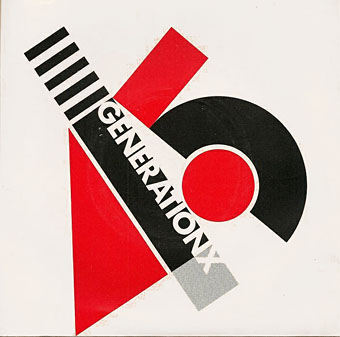
Your Generation (1977) by Generation X. Design by Barney Bubbles.

Continuing an occasional series about the work of particular artists or designers being used on record sleeves. El Lissitzky (1890–1941) is an interesting candidate in this area since his pioneering abstractions have greatly influenced subsequent generations of graphic designers. As a result of this you’re just as likely to find his Suprematist style being pastiched on an album cover as find one of his paintings decorating the sleeve. Pastiches are difficult to locate unless you already know they exist—or unless the album credits acknowledge the style they’re imitating—so this list will no doubt be incomplete.

Barney Bubbles’ design for the debut single by Generation X is the earliest example I’m aware of that makes use of the El Lissitzky style. It was also one of Bubbles’ first sleeves for a punk band, and a significant break with his often florid hippy designs.

kraftwerk1.jpg

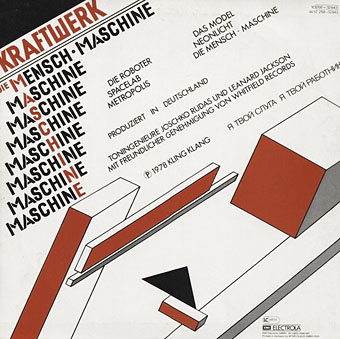
Die Mensch Maschine (1978) by Kraftwerk. Design by Karl Klefisch, “inspired by El Lissitzky”.

Kraftwerk’s seventh album uses Lissitzkian typography and graphics on its front and back covers. A very popular album with the post-punk crowd that would have been the first introduction for many people to El Lissitzky’s name. Kraftwerk still use that vibrant arrangement of black, red and white in their stage shows.
kraftwerk2.jpg

sakamoto1.jpg

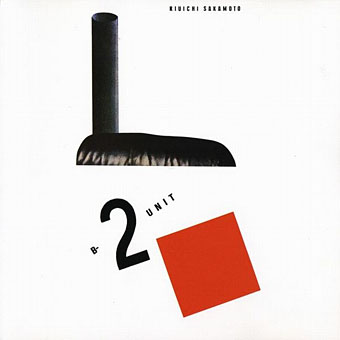
B-2 Unit (1980) by Riuichi Sakamoto. Design by Tsuguya Inoue.

More pastiche, this time borrowing from El Lissitzky’s Suprematist book for children: About Two Squares: In 6 Constructions: A Suprematist Tale (1922). The book’s two characters of a red square and a black square appear on the vinyl labels. This is a great album, incidentally, still my favourite by Sakamoto.

sakamoto2.jpg

Continue reading “El Lissitzky record covers”

Weekend links 221

cornell.jpg

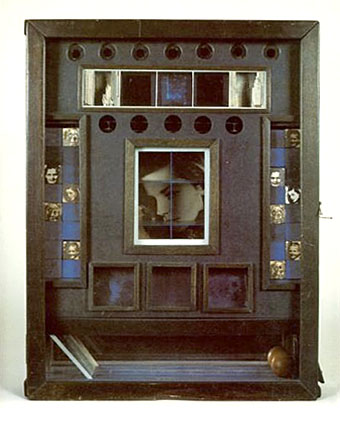
Untitled (Penny Arcade Portrait of Lauren Bacall) (1946) by Joseph Cornell.

• Having been a Bernard Szajner enthusiast for many years it’s good to see his music receiving some belated reappraisal. David McKenna talked to Szajner about his Visions Of Dune album (which is being reissued by InFiné next month), laser harps, The (Hypothetical) Prophets, and working with Howard Devoto.

• Priscilla Frank posts some big views of Marjorie Cameron’s occult paintings as a preview of the forthcoming exhibition at MOCA Pacific Design Center, Los Angeles.

• Fascinating reading in light of the recent kerfuffle over True Detective, Christopher Loring Knowles on the possible sources of HP Lovecraft’s Cthulhu Mythos.

Those who set up oppositions between the electronic technology and that of the printing press perpetuate Frollo’s fallacy. They want us to believe that the book—an instrument as perfect as the wheel or the knife, capable of holding memory and experience, an instrument that is truly interactive, allowing us to begin and end a text wherever we choose, to annotate in the margins, to give its reading a rhythm at will—should be discarded in favor of a newer tool. Such intransigent choices result in technocratic extremism. In an intelligent world, electronic devices and printed books share the space of our work desks and offer each of us different qualities and reading possibilities. Context, whether intellectual or material, matters, as most readers know.

Alberto Manguel, lucid as always, on the act and import of reading.

• “It’s time to give prog rock’s artist-in-residence Roger Dean his due,” says Amber Frost. No argument there, I did my bit in 2010.

• “Why do the covers of so many self-published books look like shit?” asks B. David Zarley.

• Mixes of the week: FACT mix 455 by Airhead, and Secret Thirteen mix 225 by Clock DVA.

• At Core77: Rain Noe chooses favourite skyscraper photos by Russian urban explorers.

• “O, Excellent Air Bag”: Mike Jay on the nitrous oxide fad of the early 19th century.

Nick Carr goes in search of Manhattan’s last remaining skybridges.

Lauren Bacall at Pinterest.

• Shaï Hulud (1979) by Zed (Bernard Szajner) | Welcome (To Death Row) (1980) by Bernard Szajner | Person To Person (1982) by The (Hypothetical) Prophets

Angkor in Paris, 1931

angkor1.jpg

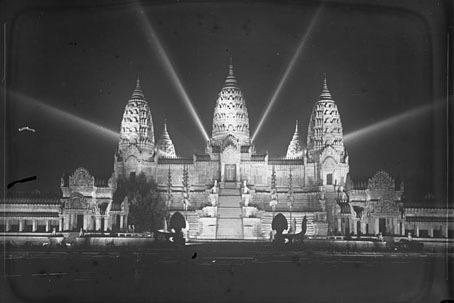
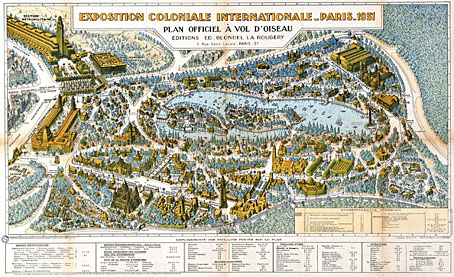
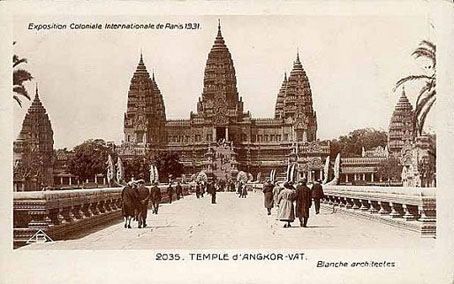
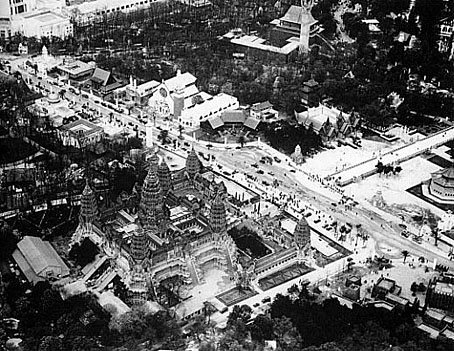
Searching for old photos of the Boi de Vincennes turned up some startling images from another exposition that I’d not come across before. The Paris Colonial Exposition filled a corner of the city’s largest park with a variety of exhibits and pavilions intended by the government of the day to show the colonial enterprise in a positive light. Among the replicas of buildings from overseas there was this spectacular reconstruction in plaster of the temple at Angkor Wat, built to represent the French presence in Indochina. No one would dream of creating such an exposition today, of course, and the idea was controversial at the time. To their credit, the authorities did allow the Communist Party to stage their own exhibit showing the damaging and exploitative nature of colonialism.

angkor2.jpg

Politics aside, I’m fascinated by the idea of a full-scale Cambodian temple materialising in the heart of Paris. The Exposition Universelle of 1900 had its share of replicas: the Swiss exhibit was a miniature mountainside populated with a chalet, cows and milkmaids, while one bank of the Seine was taken over by Albert Robida’s reconstruction of medieval Paris. Neither of those seem as surprising as this resurrection of Angkor, especially in the spotlit night shots. I’ve been wondering what the Surrealists would have made of this and the juxtapositions presented by the other reconstructions. André Breton was a member of the Communist Party at the time (they expelled him in 1933) so I’d expect from his point of view at least the exposition would have been dismissed as bourgeois propaganda.

angkor3.jpg

Among the many web pages with photos of the exposition this Flickr set of Dutch tourist pictures is particularly good. Traces of the pavilions still remain, including some of the Nagas from the avenue leading to the temple.

angkor4.jpg

Continue reading “Angkor in Paris, 1931”

Balloon parade

rainparade.jpg

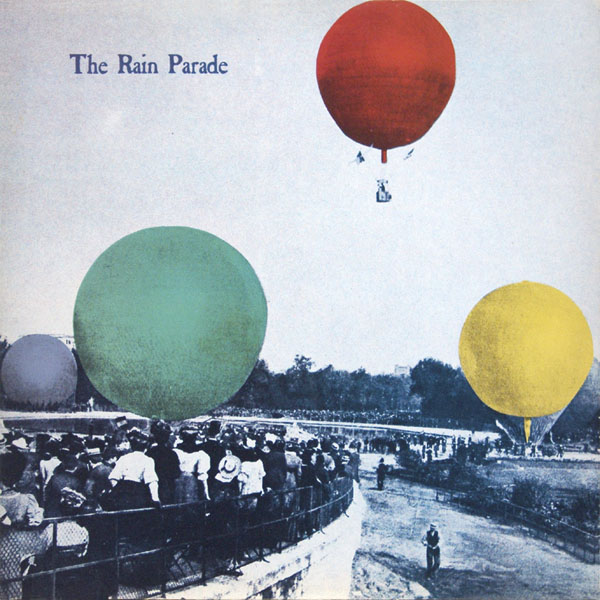
Emergency Third Rail Power Trip (1983) by The Rain Parade.

Another minor piece of album-cover detective work. A couple of years ago I was looking for dirigible pictures for a steampunk book I was working on, and in the searching came across the original of the photo used on the cover of the Rain Parade’s neo-psychedelic debut album. I didn’t want pictures of round balloons, however, and since I was ripping through a number of websites I neglected to bookmark the page. I’ve still not seen the photo since—which I recall was in a landscape ratio with more balloons to the left—but I’m fairly sure I’ve identified the event as being the balloon race that took place in the Bois de Vincennes, Paris, in October 1900.

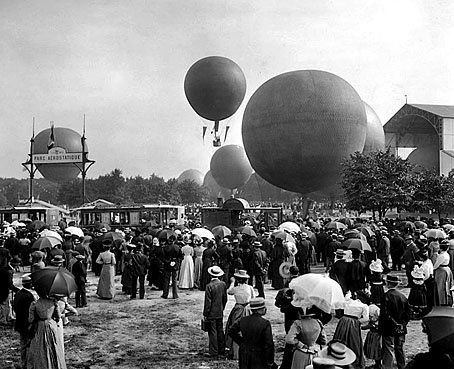
balloons1.jpg

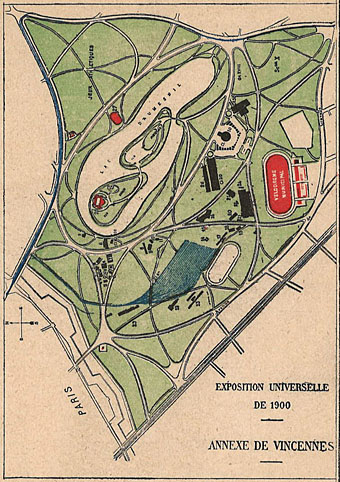
The significance of the cover photo for this blog is that the balloon race in question was one of the Olympic Games competitions being held that year in tandem with the Exposition Universelle, an event which has been fairly thoroughly explored in earlier postings. Needless to say, balloon racing was later discontinued as an Olympic sport. The picture above shows another view of the “Parc Aérostatique”, while from the map below one can determine that the people in the foreground of the album cover photo are standing on the velodrome parapet.

balloons3.jpg

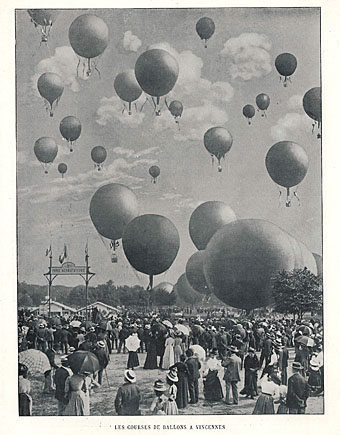
The picture below from L’Illustration magazine might have made a better cover shot for Emergency Third Rail Power Trip if it was suitably cropped and coloured. If I turn up the errant photo at a later date I’ll post it here. As for the album itself, it was reissued on CD in 1992 together with its follow-up, Explosions In The Glass Palace, a mini-album that remains the pinnacle of the Rain Parade’s studio recordings.

balloons2.jpg

Elsewhere on { feuilleton }
The album covers archive

Previously on { feuilleton }
Balloons in the Grand Palais

The art of Frieda Harris, 1877–1962

harris01.jpg

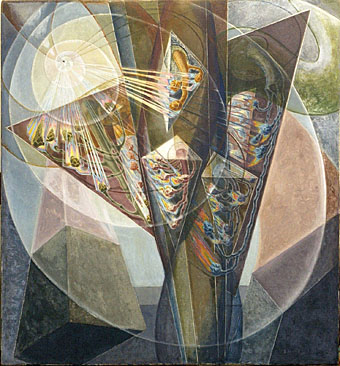
Searching around for artwork by Frieda Harris turned up a few examples I hadn’t seen before including the marvellous painting above which is unfortunately untitled and undated. Harris is very familiar to Aleister Crowley aficionados and those with an interest in the Tarot via her paintings for the Thoth Tarot deck, a project that she and Crowley worked on during the 1930s. The deck is justly celebrated for its modernising of the Tarot symbolism, and for its radical art style which wasn’t afraid to combine some of the developments in 20th-century art with Harris’s studies of Projective Synthetic Geometry.

harris05.jpg

Masonic Tracing Boards.

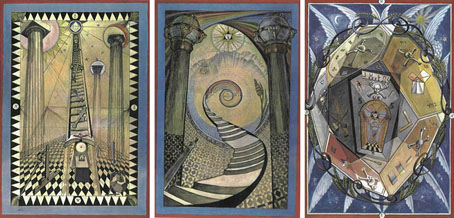
Less familiar is her work away from the Tarot deck, some of which can be seen here. Prior to meeting Crowley, Harris was involved with Freemasonry for which she produced three designs for the Masonic teaching aids known as Tracing Boards. (See larger copies here.) I used to think these looked like outtakes from the Tarot deck but seeing them in the light of the mysterious painting above it’s evident that the Tarot style wasn’t unique to that set of cards.

harris04.jpg

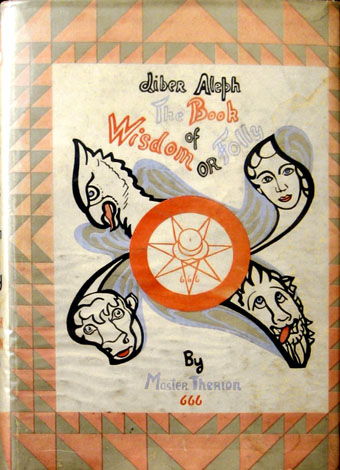
Liber Aleph vel CXI: The Book of Wisdom or Folly (1918) by Aleister Crowley.

A book cover which pre-dates the Tarot designs. The heads are the traditional embodiments of the four elements but with one change: the human figure has a feminine face rather than the usual masculine features. The same figures appear on her painting for the final Tarot Trump, The Universe (below), but in a more traditional guise.

Continue reading “The art of Frieda Harris, 1877–1962”