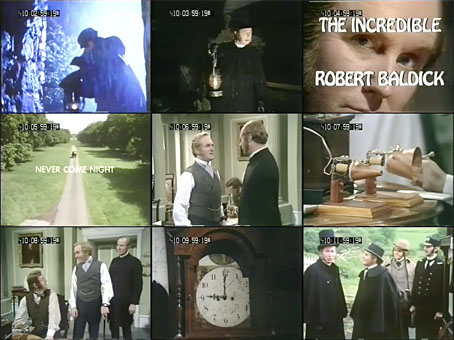
The Incredible Robert Baldick

baldick1.jpg

This is an odd one-off TV drama whose title I’ve known for years but which I hadn’t seen until this week. The Incredible Robert Baldick was broadcast in 1972 in a slot used by the BBC to test dramas that might later become series. The writer was Terry Nation, creator of Doctor Who and the dour post-apocalypse series, Survivors. Robert Hardy plays Robert Baldick, an aristocratic occult detective who we’re informed “cannot resist the inexplicable”. We’re also told he’s one of the finest scientific minds in 19th-century Britain. The exact period is vague but we first see Baldick and cohorts playing with an “electrical telepathy” communication device which would fix the time around the turn of the century. Baldick has a country estate, a bulletproof Russian train (“The Tsar”), a valet who is also an expert in Classics and ancient languages, a gamekeeper with preternatural senses, and a pet owl named Cosmo.
baldick2.jpg

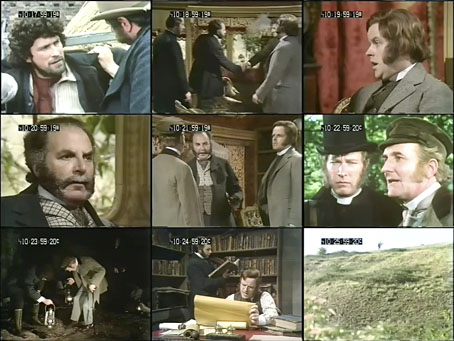
The one-and-only 50-minute episode is entitled Never Come Night, and plays like something Nigel Kneale might have written, a combination of supernatural horror, suspicious yokels and archaeology, with an abrupt swerve into outright science fiction at the end. The cast features many familiar faces from film and television of the period: James Cossins as a fearful clergyman, Barry Andrews playing the same type of rustic he also played in Blood on Satan’s Claw, Julian Holloway as Thomas the valet, and John Rhys-Davies (Gimli in The Lord of the Rings) as Caleb the gamekeeper. All the ingredients are in place for what might have been a promising series along the lines of The Rivals of Sherlock Holmes, the first season of which had been running on another channel the year before, and which may have been an inspiration. A shame that the only women in the cast are a couple of barely visible servants and a corpse; even Holmes and Watson had Mrs Hudson. The timecoded copy on YouTube has evidently been hijacked from the BBC archives but it’s watchable enough.

Previously on { feuilleton }
The Horse of the Invisible
“The game is afoot!”

The weekend artists, 2014

crystal.jpg

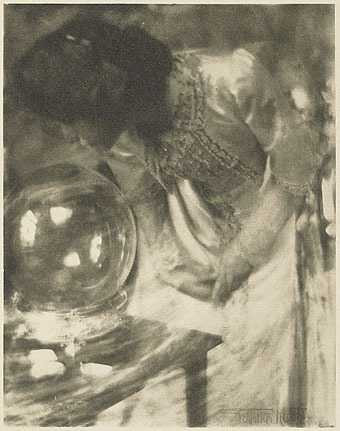
The Crystal Gazer (or The Magic Crystal, 1904) by Gertrude Käsebier.

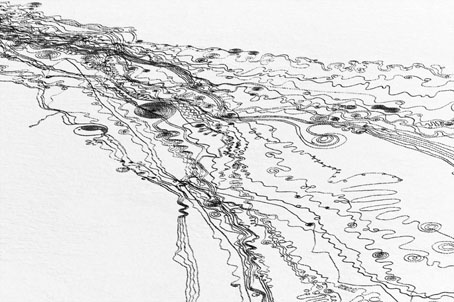
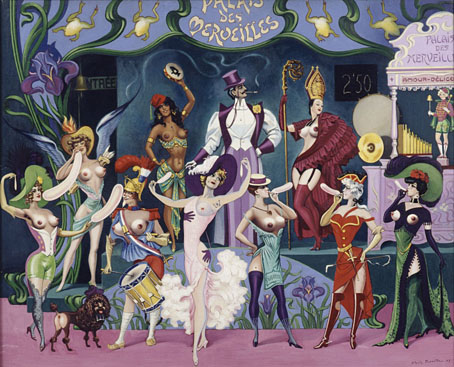
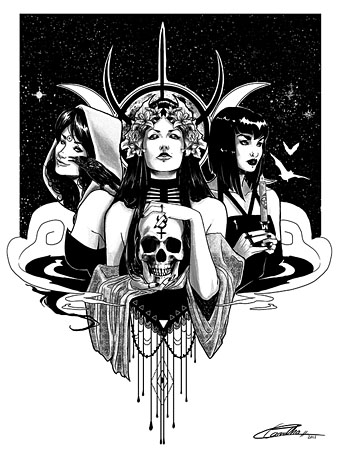
Once again the annual review of artists/designers/photographers featured in the weekend posts arrives at the beginning of the new year rather than the end of the old. Scroll down to see what caught my attention over the past twelve months.

hinrichsen.jpg

We Are The Water – Snow Drawings Project, Colorado (2014) by Sonja Hinrichsen with 50 volunteers.

trouille.jpg

Le Palais des Merveilles, 1907 – 1927 – 1960 by Clovis Trouille.

carvalho.jpg

The Three Witches (2014) by Lorena Carvalho.

Continue reading “The weekend artists, 2014”

William Heath Robinson’s Rabelais

rabelais00.jpg

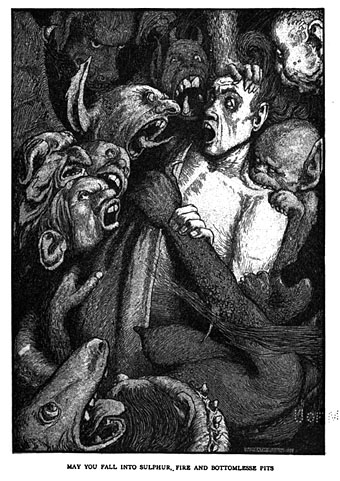
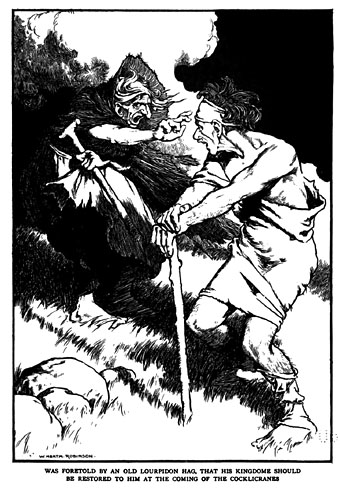
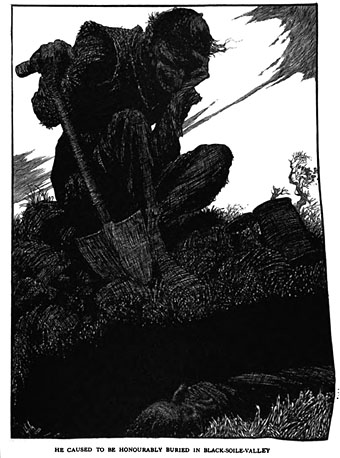
Ending the year with some Heath Robinson illustrations I’d not seen before, probably because their grotesque qualities set them apart from the rest of his whimsical drawings and fairy tale illustrations. Illustrated editions of Rabelais are rare owing to the coarse and scatological nature of the novels. Gustave Doré‘s robust and bloodthirsty character made him a good match for the material but it’s a surprise to find a generally light-hearted illustrator like Heath Robinson tackling the same stories.

rabelais01.jpg

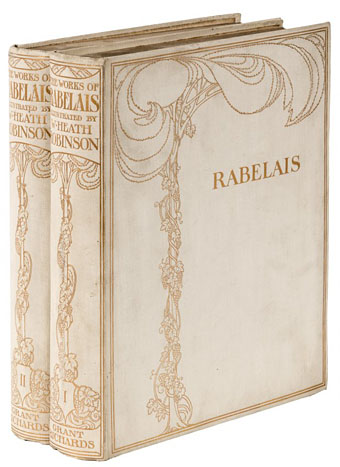
Robinson’s illustrations were for a two-volume set published in 1904 (see here and here), and are suitably dark with plenty of solid blacks and heavy cross-hatching. Some of the drawings are so different to the artist’s usual work they could be taken at first glance for pieces by Sidney Sime or Mervyn Peake. More typical are the numerous vignettes that appear at the ends of chapters. The examples here are from Google scans at the Internet Archive but some of the original drawings may be seen in better quality (and purchased if you have the money) at the Chris Beetles gallery.

rabelais02.jpg

rabelais03.jpg

Continue reading “William Heath Robinson’s Rabelais”

The Talking Thrush and Other Tales of India

thrush01.jpg

British illustrator William Heath Robinson died in 1944 which means that 2015 will see his own books fall into the public domain in many countries. The books he produced during and after the First World War established his reputation as a creator of impromptu contraptions, to such a degree that the term “Heath Robinson” has the same currency in Britain as “Rube Goldberg” does in the US when describing an improbable mechanical device. Robinson’s whimsical drawings have always been his most popular works but I favour his earlier illustrations, especially his illustrated Poe and A Midsummer Night’s Dream.

thrush02.jpg

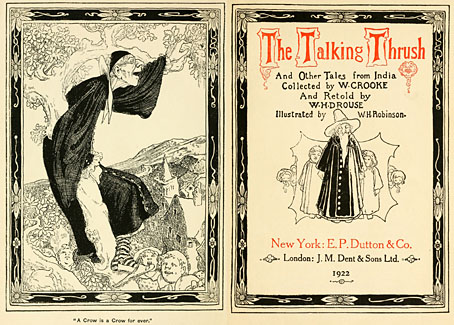
The Talking Thrush and Other Tales of India by William Crooke and William Henry Denham was first published in 1899; the version linked here is a reprint from 1922. The fin de siècle is evident in the Art Nouveau styling of some of the borders, the kind of detailing that Heath’s brother, Charles Robinson, often deployed. Heath’s later illustrations dropped the decoration to concentrate on human figures, caricature and the positive use of white space.

thrush03.jpg

Continue reading “The Talking Thrush and Other Tales of India”