Dell Mapbacks

mapback08.jpg

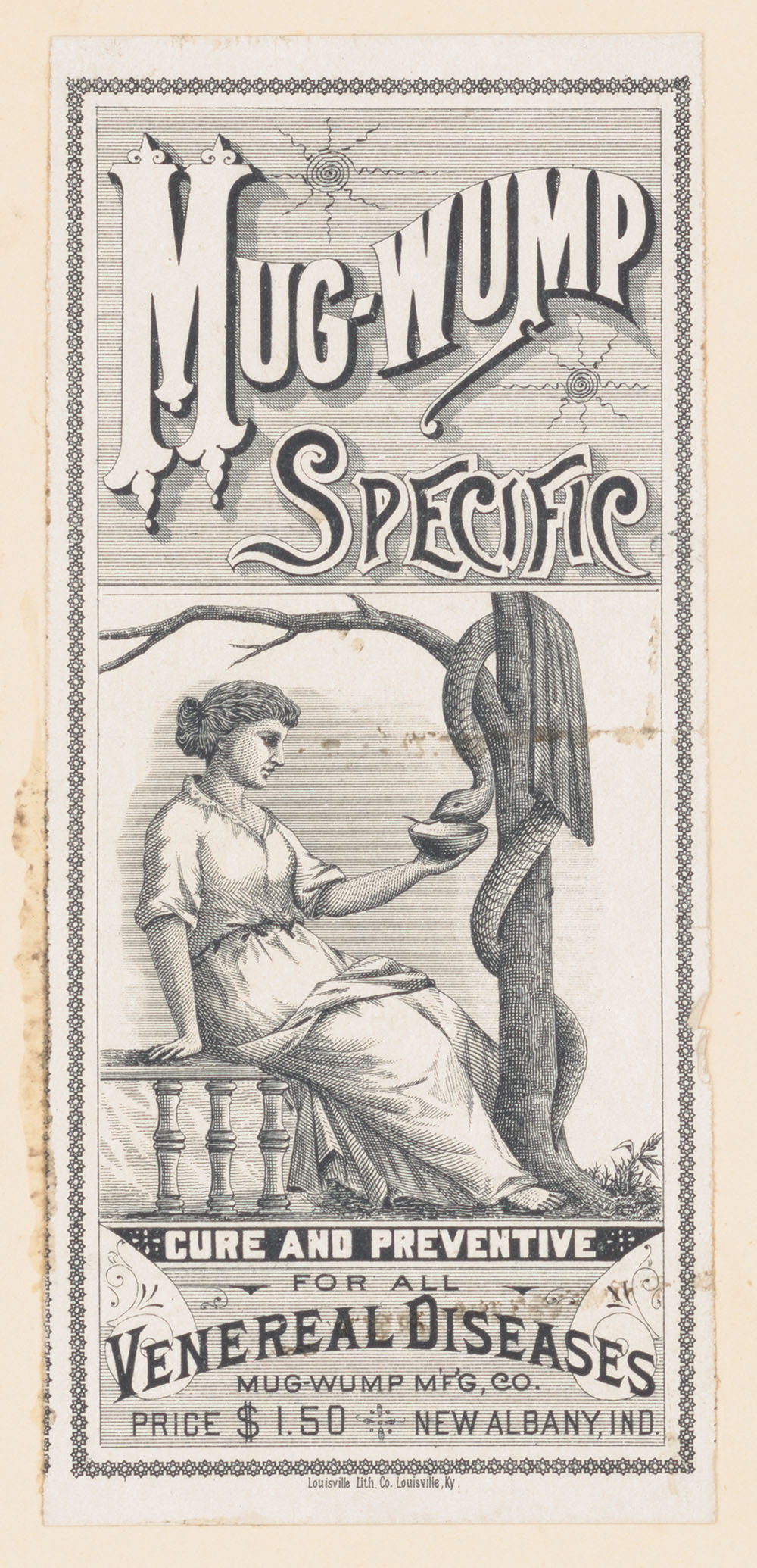
Dell 5, Four Frightened Women by George Harmon Coxe, was the first of the mapbacks. On the back cover of each of these books is, naturally, a map—a cutaway bird’s-eye view of the apartment building, house, hotel or city-section in which the events of the book take place. These drawings were generally quite faithful to the books; the most careful one was probably the map sketched by author Hake Talbot for his own book, Rim of the Pit (Dell 173), and executed, as were most of the mapbacks, by Ruth Belew.

Almost all Dell Books published until 1951 were provided with a mapback; beginning in that year, the practice was gradually abandoned. Dell’s sales department hated the idea; they found the maps unnecessary and noncommercial, and felt that back covers could better be reserved for advertising blurbs.

The Book of the Paperback: A Visual History of the Paperback Book (1982) by Piet Schreuders

I’ve long been fascinated by the Dell Mapbacks even though I’ve only ever seen pictures of them. (And to stave off the inevitable emails: no, I don’t want to buy any.) They form a truncated path in the evolution of the paperback book, one where the gimmick of creating a map for each title was globally applied, regardless of whether the contents warranted such a thing. Dell began life as a publisher of mysteries, hence the logo of an eye peeping through a keyhole. Maps are more justifiable if applied to a detective story, where a map may help the reader picture the layout of a location or trace the movements of a character. But once Dell branched out into other areas of fiction the maps seemed increasingly superfluous, especially those that limit themselves to the plan of an office or apartment. For some there’s also the question of accuracy. The novelisation of Alfred Hitchcock’s Rope shows a map of the apartment that doesn’t correspond to the layout of the rooms as they’re seen on the screen, something that readers who’d seen the film would have been quick to recognise.

mapback04.jpg

For this post I went looking for a few of the more unusual mapbacks, prompted by the discovery of Invasion from Mars. I’d been watching an Orson Welles’ question-and-answer session from 1982 which was recorded after a screening of Welles’ adaptation of The Trial. Welles declares at one point that he “used to write for the pulps, as we called them then”. The claim surprised me. I knew that Welles had been writing newspaper columns in the 1940s; he’s also credited as the author of a novel, Mr Arkadin (1955), which was actually written by a Frenchman, Maurice Bessy, whose serialised adaptation of Welles’ Mr Arkadin screen story was published in novel form. Invasion from Mars seems to be Welles’ sole encounter with pulp-land unless you include the pulpy origins of The Lady from Shanghai and Touch of Evil. Invasion from Mars collects a handful of Mars-related SF stories, together with the Howard Koch script for the Mercury Theatre radio broadcast of The War of the Worlds. The superfluous map on this occasion is for The Million Year Picnic, one of Ray Bradbury’s Martian Chronicles stories. Dell didn’t publish very much science fiction so the Mars book and First Men in the Moon are the only titles I’ve seen with maps showing extraterrestrial locations. Would-be collectors may like to know that after writing a history of the paperback book Piet Schreuders put together a short guide to collecting this series, The Dell “Mapbacks”, which was published in 1997.

• Further reading: Dell Mapbacks: A History.
Dell Mapbacks (sorted). An extensive cover collection at Flickr.

mapback03.jpg

mapback06.jpg

Another film tie-in, published for the US release of Powell & Pressburger’s Gone To Earth (1950).

mapback01.jpg

Continue reading “Dell Mapbacks”

Weekend links 826

vasarely.jpg

Hexa (1971) by Victor Vasarely.

• New music of the week is Tape 05, three minutes from Boards Of Canada following their thirteen-year silence, which was released on Thursday after several days of the group and their record label teasing a comeback with mysterious VHS cassettes and cryptic posters. I’ve been listening to the Sandison brothers’ discography for most of the week while trying to get a major illustration commission finished; this revelation has been the icing on a deteriorated, over-processed cake. I’m now looking forward to whatever emerges next.

The Long London Uncovered: Alan Moore (again) and Iain Sinclair (again) in conversation. Alan’s second novel in the Long London cycle, I Hear A New World, will be published next month.

• RIP Chris Mullen. Not a name that most will recognise but Mullen’s sprawling website, The Visual Telling of Stories, has been linked here on many occasions. A remarkable resource.

• More new music: Boots On The Ground by Massive Attack, Tom Waits; Angel Lost by Luca Formentini; Phaser For The Ocean, Chorus For The Moon by Hatchback.

• Coming soon from Strange Attractor: Sensual Laboratories, Light Shows, Experimental, Film and Psychedelic Art by Sophia Satchell-Baeza.

• At Public Domain Review: “A beautiful purplish hue”: Frank Dudley Beane’s experience with ergot and Cannabis Indica (1884).

• Mixes of the week: An Invisible Jukebox mix for Irmin Schmidt at The Wire; and DreamScenes – April 2026 at Ambientblog.

• At The Quietus: Greg Anderson and Stephen O’Malley of Sunn O))) discuss their love of hiking.

• At Film Quarterly: Elinor Dolliver on the surprising folklore of analogue horror.

• Steven Heller’s font of the month is Gilway Paradox.

• The Strange World of…Spacemen 3.

Tape Kebab (1974) by Can | The Attic Tapes (1975/6) by Cabaret Voltaire | The Black Mill Video Tape (2012) by Pye Corner Audio

Three short films by Piotr Kamler

telemann.jpg

Telemann.

The DVD of Piotr Kamler’s animations released by aaa a few years ago contained almost all of the director’s works, comprising a handful of short films together with the 50-minute Chronopolis. The most recent film in the collection was Une mission éphémère, made in 1993, but this wasn’t the last of Kamler’s films. He was still active in the 2000s, and exploring new animation methods using computer graphics. Four shorts resulted from this period: Telemann (2006), Continu-discontinu 2010 (a reworking of one of his earliest films), Five Visual Pieces for Solo Computer (2013), and Perpetuum Mobile (2015). Continu-discontinu 2010 turned up on Vimeo a few years ago, and still seems to be there although you now have to be logged in to see it. The other three films were uploaded recently to the Internet Archive, and together form a distinct quartet in the Kamler filmography.

five-pieces.jpg

Five Visual Pieces for Solo Computer.

All four films are exercises in abstract animation, where shapes and colours evolve and change in time to a musical accompaniment. This is a very old cinematic form yet one that still seems fresh because of its scarcity. Telemann, which harks back to the “visual music” of Oskar Fischinger, pairs a dancing group of vertical lines with a piece by Baroque composer Georg Telemann. The animation isn’t as strictly choreographed as Fischinger’s films or Lejf Marcussen’s Tone Traces but it functions well enough as another abstract rendering of musical transcription. The other two films are closer to Kamler’s earlier shorts in the restless motion of their separate elements, with music by Beatriz Ferreyra and Polish group Kwadrofonik.

perpetuum.jpg

Perpetuum Mobile.

I thought for a while that the Kamler DVD was out of print but the aaa website still has a page with an active purchase link. A high-definition collection of all of Kamler’s films would be the ideal but for now the DVD is the best you can get.

Elsewhere on { feuilleton }
The abstract cinema archive

Previously on { feuilleton }
Continu-discontinu 2010, a film by Piotr Kamler
L’Araignéléphant
Le labyrinthe and Coeur de secours
Chronopolis by Piotr Kamler

Kay Nielsen’s Arabian Nights

nielsen01.jpg

Prologue.

Last week a Kay Nielsen illustration passed through my RSS feed, a picture I thought for a moment I hadn’t seen before. A quick search revealed that the illustration is in fact present in a book on my shelves, The Unknown Paintings of Kay Nielsen (1977), one of the series of art books co-published by Pan and Ballantine in the 1970s. A selection of Nielsen’s illustrations had appeared in the series two years earlier in a book simply titled Kay Nielsen; the arrival of a follow-up made the Dane the only featured artist aside from Frank Frazetta to be the subject of multiple volumes.

nielsen02.jpg

Prologue.

Nielsen’s illustrations in the second book were labelled “unknown” because they hadn’t been printed before, despite being commissioned for a new Danish translation of The Thousand and One Nights by Arthur Christensen. Hildegarde Flanner, a friend of the Nielsens when they were living in Los Angeles in the 1940s, writes in an introductory “elegy” that Nielsen worked on the illustrations from 1918 to 1922, but publication of the book was abandoned as a result of the economic climate in post-war Denmark. There were further difficulties later on. When Nielsen died in 1957 the illustrations still hadn’t been published. Nielsen’s widow, Ulla, passed them on to Hildegarde Flanner and Frederick Monhoff who subsequently tried to place them with museums in the USA and Denmark. None of the institutions they contacted were interested, an unthinkable situation today.

nielsen03.jpg

Prologue.

There’s more of an adult tone to Nielsen’s Arabian Nights than there is in his earlier works, a quality which suits the material but which may explain why they had to wait until the 1970s to see print. Simplified versions of the tales of Aladdin and Sin(d)bad have seen The Thousand and One Nights continually miscast as children’s fiction when the original stories were intended for adults; Scheherazade invents a new story each night to save herself from execution in the morning. Nielsen’s illustrations bring the stories closer to their origin while also maintaining the influence of Persian art on the style of his drawings.

nielsen04.jpg

The Tale of the Little Hunchback.

The copies you see here show the colour plates alone but Nielsen also created a number of monochrome vignettes and other pieces to be used as decoration elsewhere in the book. The Unknown Paintings of Kay Nielsen doesn’t reprint the stories so has to pad out its pages by combining details from the colour plates with the ink borders. More recently the illustrations were reprinted in one of Taschen’s expensive editions which is closer to Nielsen’s original plan for the book.

nielsen05.jpg

The Tailor’s Tale of the Lame Young Man.

Continue reading “Kay Nielsen’s Arabian Nights”

Weekend links 825

demeric.jpg

Hexagon Sequence II (c. 1970) by Rosalie de Meric.

• Boards Of Canada obsessives have been in a frenzy this week following the appearance of mysterious VHS cassettes sent at random to a small number of users of the Warp Records mail-order service. The contents of the tapes look like this. With the group having been silent for the past thirteen years there’s been an understandable flood of wild speculation on the BOC Reddit page, the supposition being that the tapes (and now an equally cryptic set of posters) mean that a new record release is on the way. We’ll find out soon enough. In the meantime, here’s DJ Food’s O Is For Orange 2025 (version 3), a Boards Of Canada-themed mix that I neglected to link to last year.

• “There is no artistic process that isn’t magical in that it’s an attempt to magically conjure an idea, something that is invisible and intangible, into material form…” Alan Moore (again) talking to Dominique Musorrafiti about art and magic. Also the comics business, which people really ought to stop asking him about when his reluctance to discuss his old work is so evident.

• “I’m not a commercial director—I’m not even a professional film-maker.” Jim Jarmusch talking to Amy Raphael about his career and his latest film, Father Mother Sister Brother. At Little White Lies, Claire Biddle examines the music in Jarmusch’s films and his collaborative albums.

• “Painting and sculpture influenced me greatly. You start to see the world, the outside, everything around you, the tone, with the eyes of seeing a picture that’s framed.” Irmin Schmidt talking to Adelle Stripe about his early life and Requiem, his new album.

• New music: All Clouds Bring Not Rain by Memorials; Afterlife Requiem by Those Who Walk Away; Where Light Pauses In The Silence Of The Sun by Abul Mogard & Rafael Anton Irisarri.

• At Colossal: Daniel Sackheim traverses Los Angeles’ noir side in The City Unseen.

• At Bandcamp Daily: Jim Allen on the sound of the ’70s French Underground.

• At the BFI: Rory Doherty selects 10 great Australian debut features.

NASA Johnson

Hexagon (1990) by Ruins | Octagon (1994) by Basic Channel | Triangles And Rhombuses (1998) by Boards Of Canada