Weekend links 230

bebergal.jpg

Cover art by Arik Roper.

Peter Bebergal’s Season of the Witch: How the Occult Saved Rock and Roll was published this week. Articles about rock music’s occult preoccupations have been a recurrent feature of music magazines, especially around Halloween, but Bebergal’s book is the first attempt at a wide-ranging, full-length study. Despite the subtitle, the scope goes beyond the familiar—David Bowie’s Golden Dawn references, Jimmy Page’s Aleister Crowley obsession—to take in the pagan nature of the blues, pre-Beatles rock’n’roll, and the byways of electronic music. My old employers, Hawkwind, provide a title (Space Ritual) for one section, and I was pleased to see the Krautrock scene receiving some attention: years ago you couldn’t have counted on this from an American music study. As Bebergal notes, Can’s Aumgn on Tago Mago (1971) isn’t the hippy Aum/Om but originates in a mantra defined in Crowley’s Magick in Theory and Practice.

• “We don’t just have skeletons in our cupboard, we have an ossuary.” Another week, another Alan Moore interview, but Tim Martin‘s piece is as much a portrait of the man as a conversation about the usual subjects: art, science, magic, etc.

• “Europe’s history of penis worship was cast aside when the Catholic Church realized Jesus’s foreskin was too potent to control.” Stassa Edwards on venerated members.

Gays and horror actually have  somewhat of a lost history. FW Murnau, the director of Nosferatu, was openly gay. Frankenstein’s real creator, James Whale, was also out. Given the talent involved, and the illicit nature of the genre, amateur and professional critics have been divining queer themes from horror films for decades.

Patrick Rosenquist on Gory, Gay & Loving It: Why Homosexuals Heart Horror

• “I thought that fine art was fairly dishonest as an industry. It pretends to be about culture but it’s really about money.” Andy Butler interviews designer Neville Brody.

• Snapping, Humming, Buzzing, Banging: Richard B. Woodward on the creative partnership between David Lynch and sound-design genius Alan Splet.

• Also published this week: Discovering Scarfolk, Richard Littler’s guide to the occult-obsessed, rabies-infested English town.

• More rock music: When Art Rocked: San Francisco Music Posters, 1966–1971 by Ben Marks.

• The trailer for 808, a documentary about Roland’s celebrated drum machine.

• At The Millions: Devin Kelly on the collaborative art of words and images.

• More Crowley: Strange Flowers goes looking for Aleister Crowley’s Berlin.

• Mix of the week: Secret Thirteen Mix 130 by Gábor Lázár.

• Yello’s Boris Blank on his 10 favourite electronic records.

Richard Hirst‘s Top 5 Robert Aickman Stories.

I Put A Spell On You (1968) by Arthur Brown | I Put A Spell On You (1992) by Diamanda Galás | I Put A Spell On You (2004) by Queen Latifah

Newlyborn, a film by Dave Colohan

newlyborn1.jpg

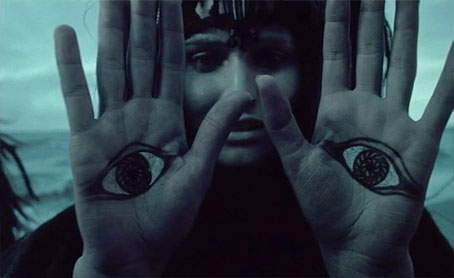
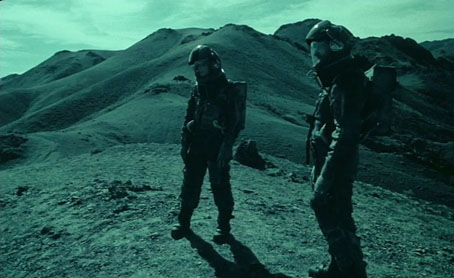
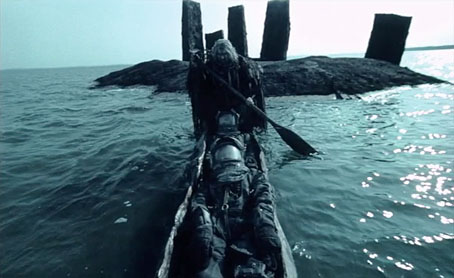
Dave Colohan was in touch recently to tell me he enjoyed the posts here (thanks, Dave) and also to point the way to Newlyborn, a short film he’s made. This is a moody piece that suits the season, black-and-white shots of South Longford, Ireland, accompanying Niamh Beirne’s narration. The music is minimal but Dave Colohan has a growing discography of music production by himself and in collaboration with others. I’d come across Taskerlands before—immediately notable because their name is a reference to The Stone Tape—and have had Raising Holy Sparks recommended to me, but there’s more there to explore. The No Longer Reel Vimeo channel has three videos for Raising Holy Sparks.

newlyborn2.jpg

newlyborn3.jpg

The Devil’s Cabaret

devil1.jpg

Halloween approaches so here’s a frivolous piece of Hollywood Diablerie. The Devil’s Cabaret (1930) was one of several short films made to showcase dance sequences shot for The March of Time, an MGM musical abandoned by the studio halfway through production. The footage from the earlier film is a short ballet sequence featuring a company of horned ballerinas dancing around an enormous, leering Devil’s head. Dimitri Tiomkin composed the music. All the footage was shot using an early Technicolor process so the film is subtitled “A Colortone Novelty”.

devil2.jpg

The framing narrative is a sequence of short sketches that offend many of the principles the Hays Code was brought in to protect a few years later. An uncredited Charles Middleton (Ming the Merciless in the Flash Gordon films) is a CEO-like Satan urging his Vice President Howie Burns (geddit?) to counter Heaven’s successes by bringing more souls to Hades (the word “Hell” only gets used at the end but after 1934 it was banned from use altogether). Burns does this by interrupting a religious meeting on Earth with a jazzy dance sequence that turns into a strip show; everyone in the audience rushes to join the damned. Once in Hades the newcomers are treated to the March of Time ballet. Elsewhere there’s some laboured humour, references to the Wall Street Crash and Prohibition, and a fair amount of salacious dialogue. Films such as these are always a good reminder of how risqué Hollywood could be before everyone adopted the production code. (Thanks to Gabe for the tip!)

The Devil’s Cabaret: part one | part two

Previously on { feuilleton }
Chocolate devils
Harry Lachman’s Inferno

Here and There, a film by Andrzej Pawlowski

hereandthere.jpg

I only realised earlier today that the post about The Saragossa Manuscript provides continuity with last week’s examples of Polish cinema; unintentional but it shows where my head is at just now.

Here’s another example, and another abstract filmmaker I hadn’t come across before. Andrzej Pawlowski (1925–1986) was also a painter, and his films take a painterly approach to their manipulation of light and colour. Here and There is a short from 1957 that would have been labelled psychedelic if it had been made ten years later. The gorgeous visuals seem at odds with the score by Adam Walacinski, a typical piece of mid-century dissonance that now seems less avant-garde than merely unsuitable. One challenge of abstract cinema is to find music (if music is required) that doesn’t seem to have been chosen at random. Here and There would work just as well with many other six-minute pieces as its score.

Elsewhere on { feuilleton }
The abstract cinema archive

Saragossa Manuscript posters

saragossa1.jpg

Polish poster (1965) by Jerzy Skarzynski who was also the film’s production designer.

I love The Saragossa Manuscript, both the novel by Potocki and the movie by Has. I saw the film three times which, in my case, is absolutely exceptional.

Luis Buñuel in My Last Sigh (1983)

No surprise that a lifelong Surrealist was enamoured with Jan Potocki’s rambling collection of stories-within-stories. The 1965 Polish film by Wojciech Has had another famous enthusiast in Jerry Garcia whose efforts to restore and reissue The Saragossa Manuscript helped bring the film to a new generation of viewers in 1999. I was a beneficiary of this, having been intrigued for years by descriptions whilst hoping in vain that it might turn up on television. I prefer the film to the novel although to be fair to Potocki it’s a long time since I read his book.

saragossa2.jpg

Another Polish design showing Zbigniew Cybulski as Alphonse.

Watching The Saragossa Manuscript again this weekend sent me looking for posters, some of which can be seen below. There are odd omissions: plenty of examples from the Eastern Bloc countries but few at all from Western Europe. The film suffered by having its 3-hour running time hacked about by distributors which didn’t help its reception outside Poland. The manuscript of the title is a book discovered during a skirmish in the Napoleonic wars, an account of the strange adventures of Alphonse Van Worden in the Sierra Morena region of Spain; one of the soldiers reading the manuscript is Van Worden’s grandson, the first of many coincidental connections. Van Worden’s adventures seem macabre at first—there are more bones in the opening scenes than in many horror films—but they soon turn farcical. As a burgeoning cast of characters appears, many of whom have their own tales to tell, the mood veers into outright sex comedy, albeit with mild philosophical overtones. Some scenes aren’t very far removed from Monty Python, especially those that feature an inept band of Spanish Inquisitors.

saragossa10.jpg

Background drawings from the title sequence. Yes, the score is by Penderecki, his first.

All of which means this is another film that presents a challenge for a poster designer. Most of the early examples take their cues from the opening titles whose backgrounds feature drawings with a vaguely Surrealist and occult flavour that I’m guessing are also the work of Jerzy Skarzynski.

Continue reading “Saragossa Manuscript posters”