Centaurs

centaur1.jpg

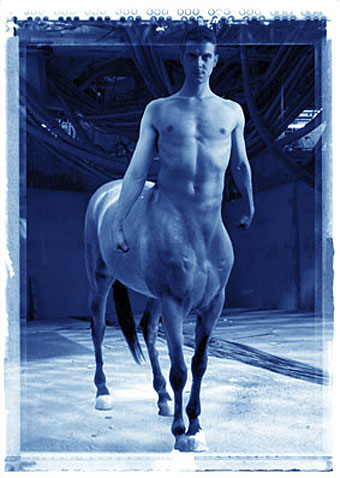
Elatus from Pandaemonium I (Centaurs) (2010) by David Trullo.

One of a series of centaur portraits by Spanish artist David Trullo. Placing characters from Classical mythology in contemporary settings makes a change. The title Pandaemonium I implies further series so I’m curious to see how Trullo follows these.
centaur2.jpg

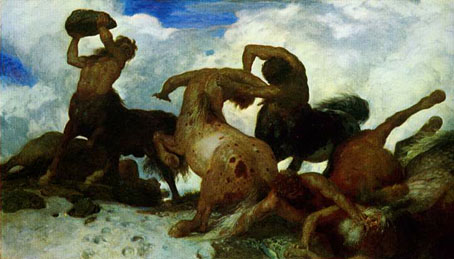
Battling Centaurs (1873) by Arnold Böcklin.

Centaurs had a flush of popularity in Germanic art of the 19th century; Franz Stuck painted them a number of times and Jugend magazine is littered with many often grotesque representations. I’ve never seen an explanation for this resurgence of interest. Is it because a man/horse hybrid is a potent symbol of masculine power? Arnold Böcklin’s painting is one of the better examples and suits its title more than Michelangelo’s famous sculpture in which the hybrids are lost in a tangle of writhing bodies.

Previously on { feuilleton }
Mermaids
The Masks of Medusa

Peacock couture

lamarr.jpg

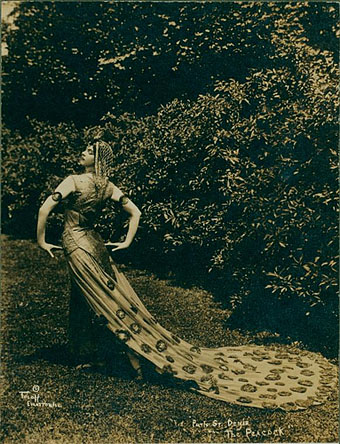
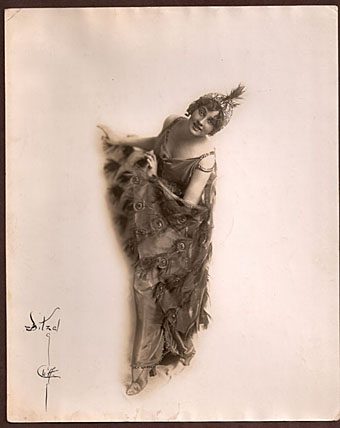
Hedy Lamarr strikes a pose in a peacock dress for Samson and Deliah (1949), one of Hollywood’s many tiresome Biblical epics. If the photo isn’t just a promo shot and Hedy appears wearing this it’s no doubt a highlight but it’s so long since I saw the film the only thing I remember is Victor Mature bringing down the temple at the end. Ms Lamarr’s outfit wasn’t the first of its kind, of course, the examples below from dancer Ruth St Denis and film star Betty Blythe have appeared here before, but Hedy’s dress is a lot more extravagant; Aubrey Beardsley would have loved it. I might have said it was the most extravagant but that honour should go to a Chinese wedding dress made of 2,009 peacock feathers which was unveiled last year. Impressive if completely impractical.

Thanks to Thom for the Hedy tip!

denis1.jpg

Ruth St Denis—The Peacock.

blythe2.jpg

Betty Blythe.

Previously on { feuilleton }
Betty Blythe
Ruth St Denis
The Feminine Sphinx
Alla Nazimova’s Salomé

Weekend links 20

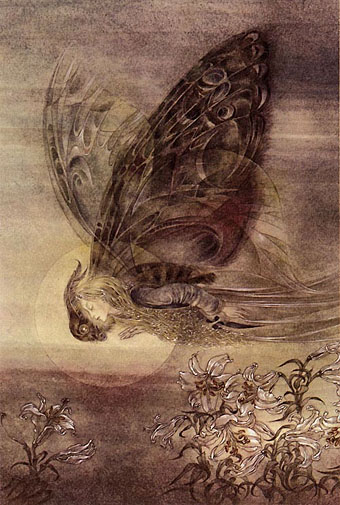
wulfing.jpg

Transfiguration (1952) by Sulamith Wülfing.

• Observatory posted photos of its Lovecraft art exhibition; see if you can spot my pics. Related: Write Club has more photos. Also, A Word From Our Sponsor.

Taking the broooooaaaaad view of things: A Conversation with James Grauerholz on William S. Burroughs and Magick. Related: Beat Memories—The Photographs of Allen Ginsberg.

• Adam Curtis on BP and the Axis of Evil; how the the Anglo-Iranian Oil Company became British Petroleum and helped give Iran over to the Ayatollahs.

• The Quietus interviews Peter Christopherson (TG, Coil, etc) and Dr John.

The Strange World of Adolf Hoffmeister at A Journey Round My Skull.

An Artists’ Dialogue On CocoRosie’s Grey Oceans at Stereogum.

Werner Herzog and David Lynch combine their talents.

Jon Savage on The Residents versus The Beatles.

• BUTT magazine interviews James Bidgood.

• The Daily Drop Cap.

The Gay Rub.

Can on German TV in 1971.

Edinburgh, 1929

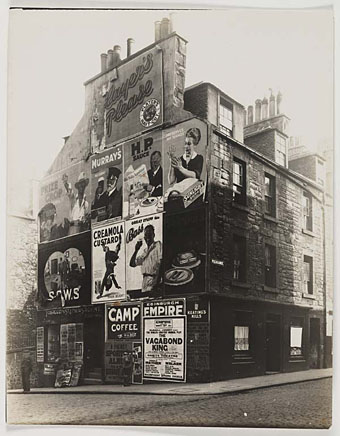
edinburgh1.jpg

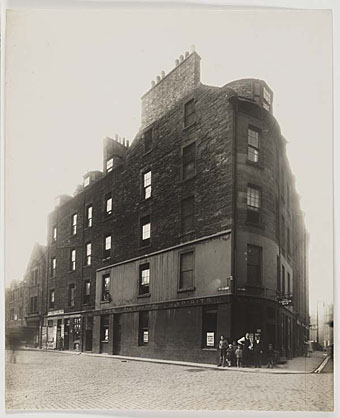
2A Arthur Street.

Samples from a collection of photographs by Alfred Henry Rushbrook at the National Library of Scotland’s Flickr pages showing the St Leonards area of Edinburgh. These were taken in 1929 but the age of the buildings and the curiously fogged appearance of the prints makes them seem a lot older. The City of Edinburgh Improvement Trust commissioned Rushbrook to record views of the area before slum clearances took place. In that respect his photos are like a Scots equivalent of the famous views of Paris taken by Atget before Hausmann’s demolition teams set to work.

edinburgh2.jpg

2–4 Lothian Street and 3–5–7 Potterow.

Previously on { feuilleton }
Old Bunker Hill
Inondations 1910
Berenice Abbott
Jessie M King’s Grey City of the North
Eugene de Salignac
Luther Gerlach’s Los Angeles
The temples of Angkor
The Bradbury Building: Looking Backward from the Future
Edward Steichen
Karel Plicka’s views of Prague
Atget’s Paris
Downtown LA by Ansel Adams

The recurrent pose 36

gaetano.jpg

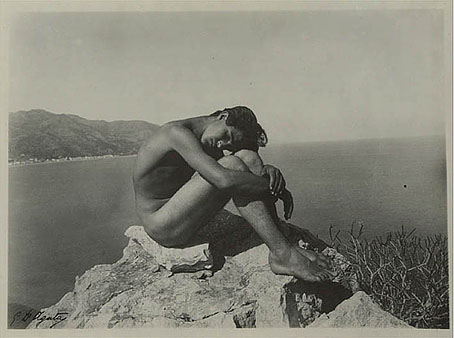
Another antique example of the Flandrin pose. Are you bored yet? Gaetano D’Agata (1883–1949) was one of the photographers who continued a tradition begun by Wilhelm von Gloeden for capturing the youth of Taormina, Sicily, in order to create tasteful prints for those who preferred their erotica to arrive with the vague excuse of Classical allusion. I’ve noted before that von Gloeden was possibly the first photographer to copy Flandrin’s painting, and his example led later photographers to copy him in turn, even borrowing his title, Cain, which reads into the painter’s work a Biblical meaning that seems misplaced. This picture comes from a Flickr selection which includes a similar rendering in postcard form, and also this rather cramped variation.

Elsewhere on { feuilleton }
The recurrent pose archive