John Dee’s Monas Hieroglyphica

monas1.jpg

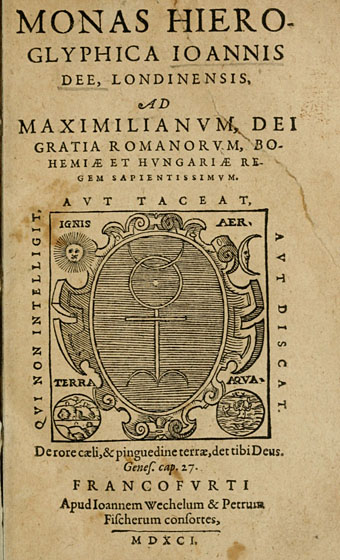
I swear I didn’t go hunting for this. Among the various library collections at the Internet Archive one can find The Getty Alchemy Collection, a substantial gathering of very old alchemical texts scanned in a variety of formats. John Dee’s Monas Hieroglyphica caught my eye during a random search, a third edition of his treatise from 1564 in which he describes his Monas Hieroglyphica, a glyph designed to combine symbols of the Sun, the Moon, the Elements and Fire in a single figure.
monas2.jpg

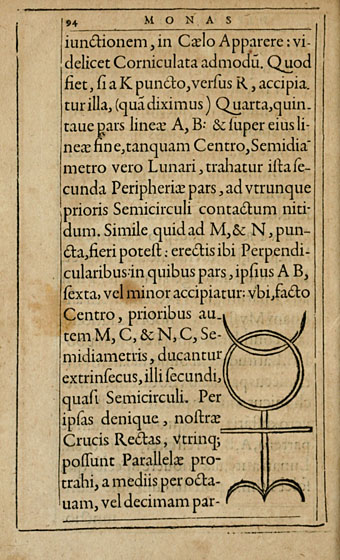
The glyph also intentionally resembles a human form, and Dee relates its individual parts to various astrological and chemical symbols. I’ve mentioned before that Dee scholar Derek Jarman deliberately based Prospero on John Dee in his 1979 film of The Tempest, giving the magus a scrying wand shaped to resemble the Monas Hieroglyphica.
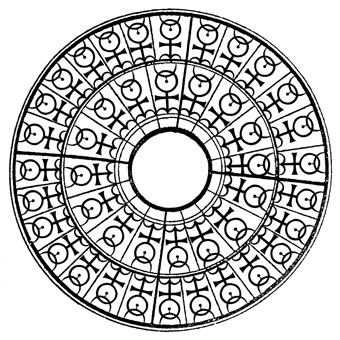
monas3.jpg

I produced my own variations on the glyph in 2009 when working on the cover of Jeff VanderMeer’s novel, Finch. The symbol recurs in Jeff’s fictional city of Ambergris and I seem to recall there being some discussion about including this doorway design somewhere in the book. In the end it was incorporated into the cover design in a rather subtle fashion. I think this is the first time the design alone has appeared in public.

The Internet Archive has a few other Dee-related items, including Lists of manuscripts formerly owned by Dr. John Dee; with preface and identifications (1921), a 500-page book by antiquarian and ghost story writer MR James.

Previously on { feuilleton }
Mister Jarman, Mister Moore and Doctor Dee
Alchemically Yours
Laurie Lipton’s Splendor Solis
The Arms of the Art
Splendor Solis
Amphitheatrum Sapientiae Aeternae
The Tempest illustrated
Cabala, Speculum Artis Et Naturae In Alchymia
Digital alchemy
Designs on Doctor Dee

Any Gun Can Play by Kevin Grant

anygun.jpg

This was something I put together last year for FAB Press but the book has only been published in the past month. The design was little more than an assembly job on my part, with Harvey at FAB requesting a montage of the three poster-art gunmen plus suitable Western typography. We went through a number of generic fonts then I added a little creative touch with the background for the title type which was a sheet of paper scorched and stained using tap water, a tea bag and a gas-ring. Forget Photoshop filters, you still can’t beat the trusty tea bag for random stains.

Cynical and stylish, bloody and baroque, Euro-westerns replaced straight-shooting sheriffs and courageous cowboys with amoral adventurers, whose murderous methods would shock the heroes of Hollywood Westerns. These films became box-office sensations around the world, and their influence can still be felt today.

Any Gun Can Play puts the phenomenon into perspective, exploring the films’ wider reaches, their recurrent themes, characters, quirks and motifs. It examines Euro-westerns in relation to their American ancestors and the mechanics of the Italian popular film industry, and spotlights the unsung actors, directors and other artists who subverted the ‘code’ of the Western and dragged it into the modern age.

Based on years of research backed up by interviews with many of the genre’s leading lights, including actors Franco Nero, Giuliano Gemma and Gianni Garko, writer Sergio Donati, and directors Sergio Sollima and Giuliano Carnimeo, Any Gun Can Play will satisfy both connoisseurs and the curious.

Despite my minimal contribution, this is a very handsome volume to be connected to. I’ve had Christopher Frayling’s Spaghetti Westerns (1981) book for years so I’m already disposed towards the subject. Frayling’s book is a semi-academic analysis which for a long time was the only serious study of the subgenre. Additional studies by Frayling and others have followed but Kevin Grant’s book, subtitled The Essential Guide to Euro-Westerns, looks like a tough one to beat: 480 pages, detailed analyses, a who’s who section, filmography, and a huge quantity of photos and poster graphics, many in colour. There’s also a foreword by actor Franco Nero, threatening everyone on the cover in his Django guise. To test the author’s thoroughness I looked up Se sei vivo spara (1967) (If You Live, Shoot!), a film also known as Django Kill! even though it’s nothing to do with the Django series. Giulio Questi’s film is a very bizarre (and occasionally inept) blend of Spaghetti tropes and horror-style scenes of graphic gore, featuring (among other things) a crucified hero, a vampire bat, and a band of black-clad homosexual cowboys. Frayling’s book devotes a few paragraphs to the film while Grant gives it two-and-a-half pages plus pictures. IMDB may tell us the facts about a film’s production but the barely-literate reviews and troll-filled discussion boards on that site are useless. For authoritative review and analysis you still need a book like this. Any Gun Can Play can be ordered direct from FAB Press where they’re selling a limited number signed by Franco Nero and the author.

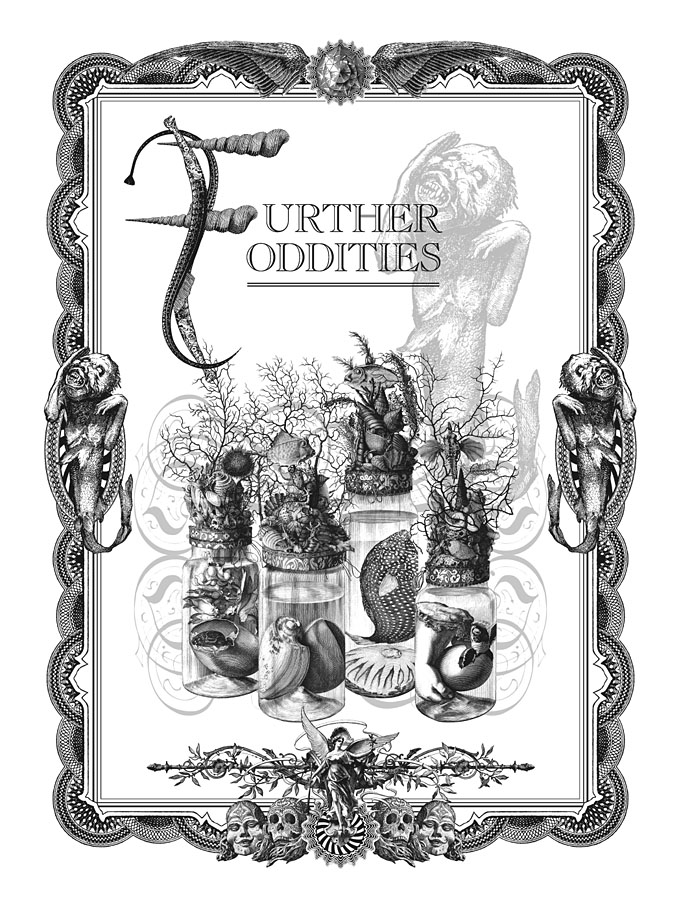
Further oddities

lambshead-further.jpg

Another of my Lambshead title pages.

A slight return to that book. Co-editor Jeff VanderMeer posted a page of Lambshead links which he’ll be following up with extracts from some of the contributors. He’ll also be having a draw to give out signed copies to people who write something about the book:

Bloggers (non-contributors) who post the link to their mention of the antho in the [Ecstatic Days] comments thread will be in the drawing for a free copy of the book, signed by the editors, as well as a copy of the coffee table book The Steampunk Bible, along with a few surprises…

cacodaemonis.jpg

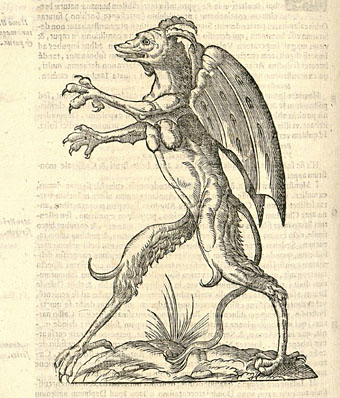
Monstrum alatum, & cornutum instar Cacodaemonis.

And by coincidence, the latest post at BibliOdyssey is a selection of woodcut illustrations from Ulissi Aldrovandi’s Monstrorum Historia (1642). Many of these (or copies of the same) are familiar from later collections but as always it’s good to see the original printings.

Elsewhere on { feuilleton }
The etching and engraving archive

Previously on { feuilleton }
The Thackery T. Lambshead Cabinet of Curiosities
Liceti’s monsters
Portuguese Diseases
The specimens of Alex CF
Walmor Corrêa’s Memento Mori
Pasticheur’s Addiction
The art of Ron Pippin
Custom creatures
Jan Švankmajer: The Complete Short Films
Cryptozoology
The Museum of Fantastic Specimens

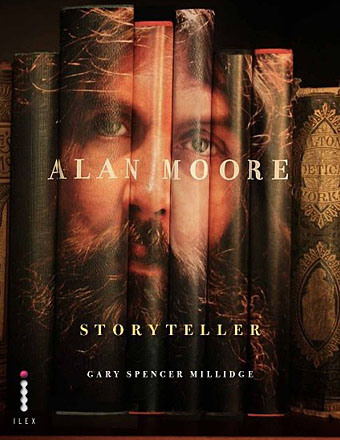
Alan Moore: Storyteller

millidge.jpg

Another book out this month from Ilex Press (the Lambshead anthology should be out in the US today), Alan Moore: Storyteller is an illustrated biography of Mr Moore by comics writer and artist Gary Spencer Millidge whose 50th birthday tribute Alan Moore: Portrait of An Extraordinary Gentleman appeared in 2003.

Subjects covered include rarely-seen early work, breakthrough UK comics, the hugely successful American work that brought comics to a wider, adult audience, and the genre-defying independent stories of the 1990s, up to his current alternative periodical, Dodgem Logic.

Of equal interest, and covered in full here, are Moore’s other endeavours: freedom of speech; magic and ritual; performance art; anarchism; self-publishing; and supporting the arts in his native Northampton, amongst others. (more)

My copy is on its way, apparently, so I haven’t seen the contents yet but it should include some of my designs and illustrations for the Moon & Serpent CDs. The book also includes a 19-track CD of songs, readings, and performances by Alan and co. I’m looking forward to this one.

snakesout.jpg

My insert for the Snakes & Ladders CD (2003).

Previously on { feuilleton }
Alan Moore: Tisser l’invisible
Dodgem Logic #4
Watchmen
Alan Moore interview, 1988

The Thackery T. Lambshead Cabinet of Curiosities

lambshead-cover.jpg

Cover design by James Iacobelli.

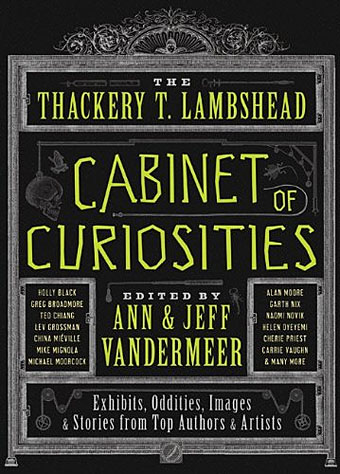
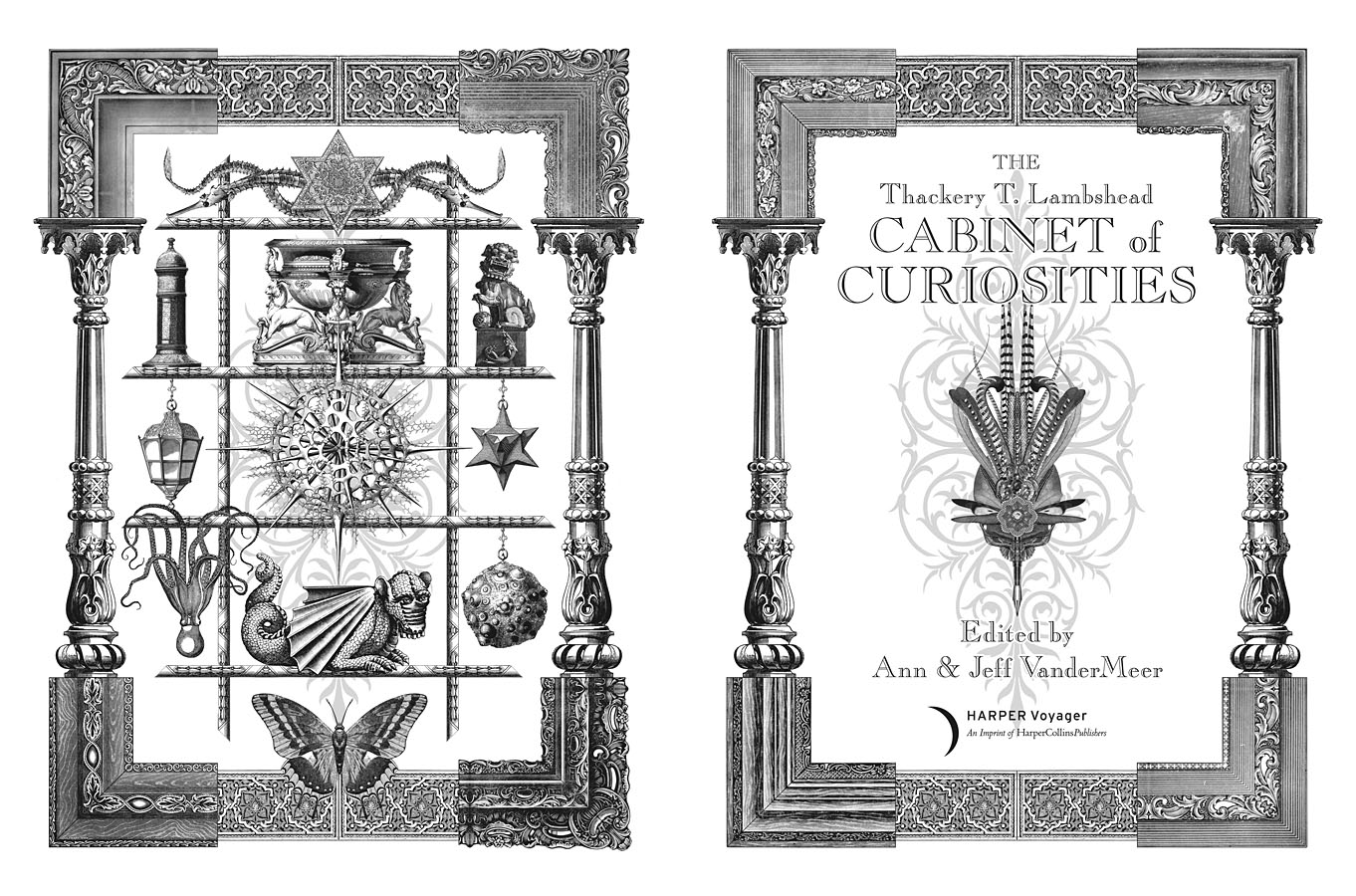
The sequel to The Thackery T. Lambshead Pocket Guide to Eccentric & Discredited Diseases is published next week in the US but we have permission to write about it before the official release. The Thackery T. Lambshead Cabinet of Curiosities is a chunky hardback of 320 pages with a host of contributors including Holly Black, Greg Broadmore, Ted Chiang, Rikki Ducornet, Amal El-Mohtar, Minister Faust, Jeffrey Ford, Lev Grossman, N.K. Jemisin, Caitlín R. Kiernan, China Miéville, Mike Mignola, Michael Moorcock, Alan Moore, Garth Nix, Naomi Novik, James A. Owen, Helen Oyeyemi, J.K. Potter, Cherie Priest, Ekaterina Sedia, Jan Švankmajer, Rachel Swirsky, Carrie Vaughn, Jake von Slatt, Tad Williams, Charles Yu and others. I provided title pages for the various sections of the book, as well as a variety of found and bespoke illustrations. And seeing as how I seldom miss an opportunity to take a dig at Rupert Murdoch (especially this week), it would be remiss of me if I didn’t mention that it’s published by an imprint of HarperCollins which means I’m currently feeling somewhat tainted by the Evil Empire. Mea culpa. When you sup with the devil, use a long spoon.

lambshead-title.jpg

My title spread.

That aside, this is a treat for anyone who enjoys the more experimental, eccentric and surreal end of the fantasy spectrum:

After the death of Dr. Thackery T. Lambshead at his house in Wimpering-on-the-Brook, England, a remarkable discovery was unearthed: the remains of an astonishing cabinet of curiosities. Many of these artifacts, curios, and wonders related to anecdotes and stories in the doctor’s personal journals. Others, when shown to the doctor’s friends, elicited further tales from a life like no other. Thus, in keeping with the bold spirit exemplified by Dr. Lambs­head and his exploits, we now proudly present highlights from the doctor’s cabinet, reconstructed not only through visual representations but also through exciting stories of intrigue and adventure. A carefully selected group of popular artists and acclaimed, bestselling authors has been assembled to bring this cabinet of curiosities to life.

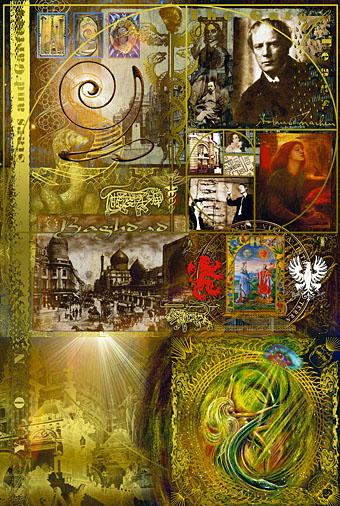
From what I’ve read so far the general tone is a lot less overtly wacky than the first book, and if set beside some of the more clichéd and pedestrian fantasy works being jobbed out at the moment will probably seem downright avant garde. Editors Ann and Jeff VanderMeer have been at pains to emphasise that this isn’t another steampunk collection although seeing as how many people now equate steampunk with any kind of antique graphics that’s the way some may take it. Alan Moore aficionados should know that Alan’s piece, Objects Discovered in a Novel Under Construction, is a riff on some of the contents of his forthcoming novel Jerusalem. My illustration for that entry is below.

Jeff had some blog posts this week related to the book, one looking back at the Disease Guide, the other with details of the US tour he and Ann will shortly be undertaking. A couple of my other contributions follow.

Continue reading “The Thackery T. Lambshead Cabinet of Curiosities”