Old Marvel versus Sherlock Holmes

oldmarvel4.jpg

Arriving in the post this week, one of the books whose covers I was creating late last year. Work-wise, the past year has been busier than usual which means I’ve fallen behind with the logging of recent commissions. In the past few months I’ve created several album designs, more book covers, an entire book design (cover plus interior), and also been working on two bigger projects at the same time. Things have calmed down a little now so updates will be forthcoming.

oldmarvel1.jpg

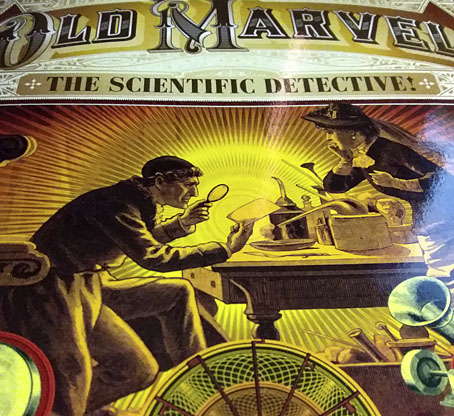
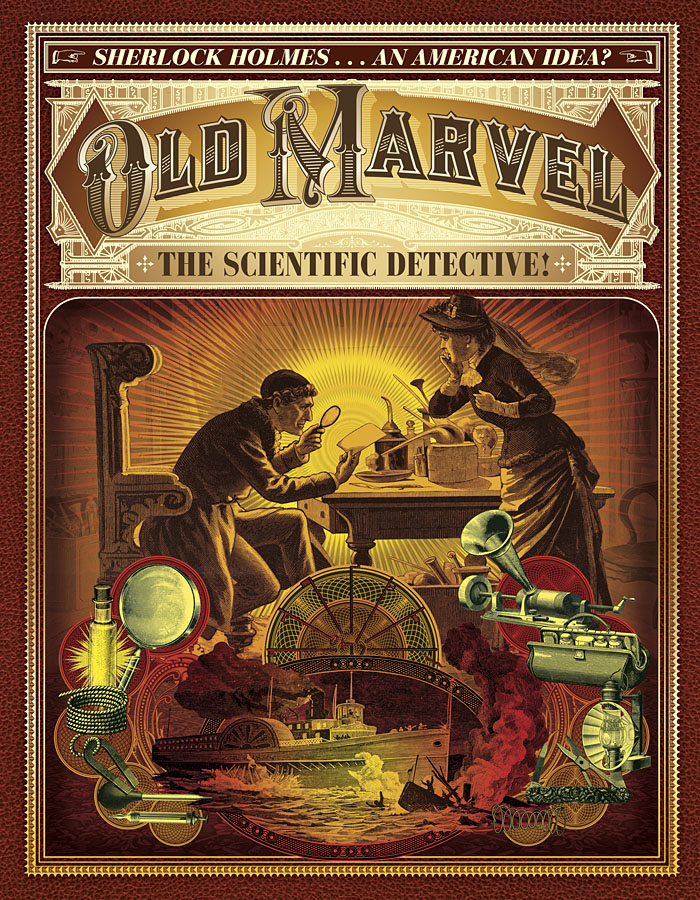
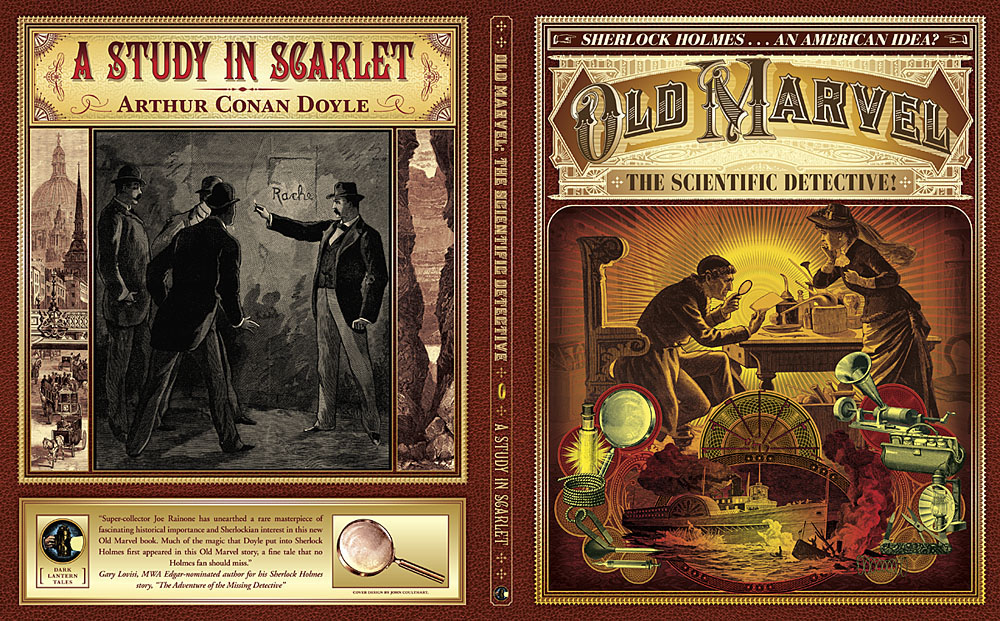
Old Marvel: The Scientific Detective is another design for Mark Williams’ Dark Lantern Tales imprint which once again resurrects a forgotten detective from pulp obscurity, and in a larger format than before. The new volume is significant for presenting a Sherlock Holmes-like character—credited to the pseudonymous “Grip”—who predates Holmes’ first appearance by three years, thereby suggesting a possible inspiration for Arthur Conan Doyle. Holmes collector Joe Rainone provides the details of publication and sets out the available evidence in an informative foreword. The Old Marvel character not only pre-empts Holmes by using his scientific knowledge to solve mysteries but he also pre-empts subsequent generations of spies and investigators with the various gadgets he uses, including what may be the first fictional deployment of an Edison voice recorder. My brief for the cover was to combine the illustration of the character with a vignette showing a shipping disaster from the story plus some of the contents of the detective’s tool kit.

oldmarvel2.jpg

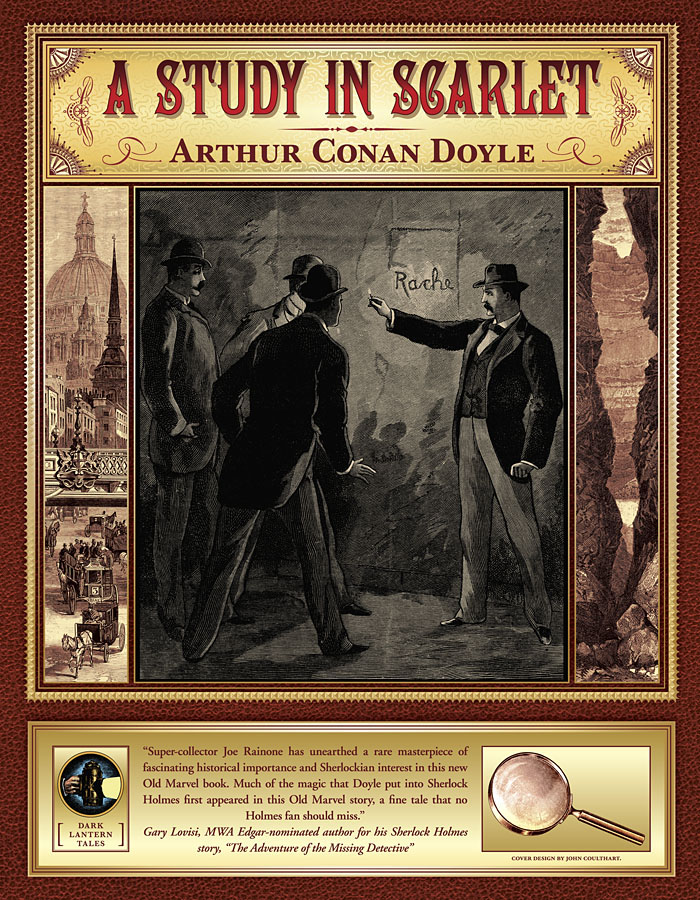
The book is actually two stories in one volume, with the second half being a reprint of the very first Sherlock Holmes novel, A Study in Scarlet. Both stories are presented as semi-facsimiles of their original US printings, together with reproductions of title pages and so on. The Holmes story is reproduced from its appearance in The Illustrated Home Guest in 1892, and includes rare illustrations one of which appears on the cover. Doyle’s first Holmes novel is the most controversial of all his stories—at least if you’re a Mormon—since this is the one where the inhabitants of Salt Lake City are depicted as a murderous religious cult. I filled out the cover with panels showing the two main story locations: a view of London via Ludgate Circus and a canyon in Utah. Finding a period engraving of St Paul’s Cathedral that remained visually interesting when narrowed down in this way took some time.

oldmarvel3.jpg

Previously on { feuilleton }
More detectives
The Joe Phenix Detective Series
Illustrating Sherlock Holmes

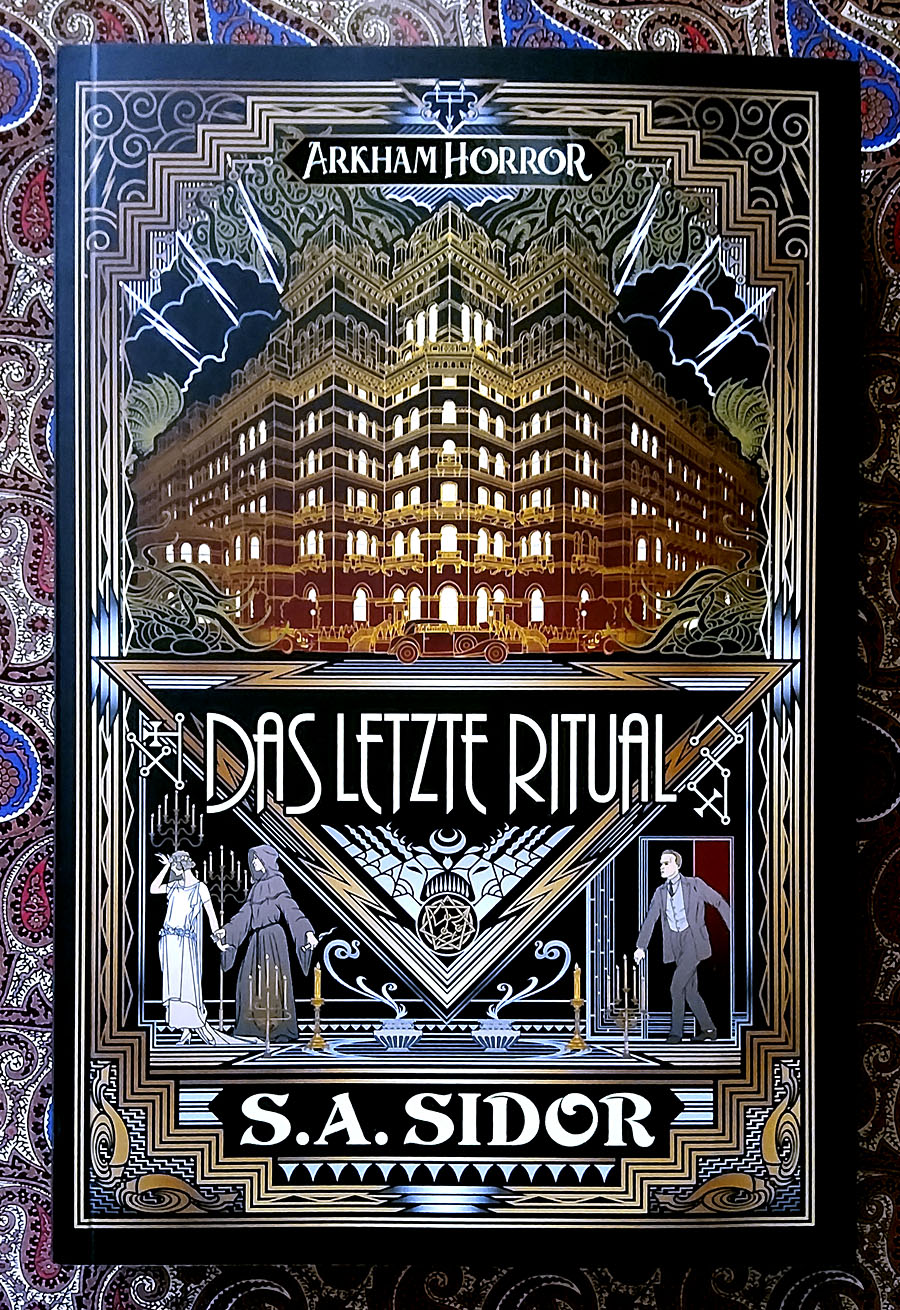
Das Letzte Ritual

letzte.jpg

Arriving in the post this week, the German edition of The Last Ritual by SA Sidor, a novel with one of the Art Deco-styled cover designs that I’ve been producing recently for Aconyte Books. This isn’t the first example of my artwork being published in Germany—the Magic: The Gathering cards I was painting in the 1990s were sold in many different countries with translated captions and credits—but I think it’s my first German book cover. If that statement sounds unnecessarily vague it’s because things can sometimes be published or reprinted in other countries without anyone telling you about them, especially if a large company is behind the production.

Anyway, my congratulations to Mr Sidor on having his book translated by Cross Cult. There’s also an audio version of this one available. Meanwhile, I’ve just finished another cover for the Arkham Horror series but I can’t show it yet until the title has been announced. More on that later.

Previously on { feuilleton }
The Devourer Below
Litany of Dreams
The Last Ritual

Prints update

tarot.jpg

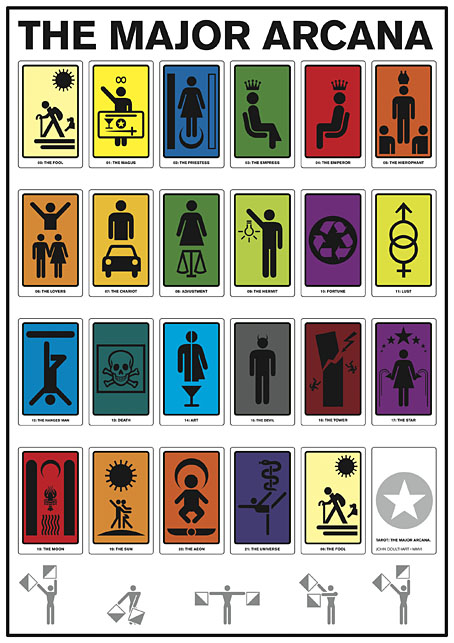
The Major Arcana (2006): a C-type print on Fuji gloss paper. A1 or A2 sizes.

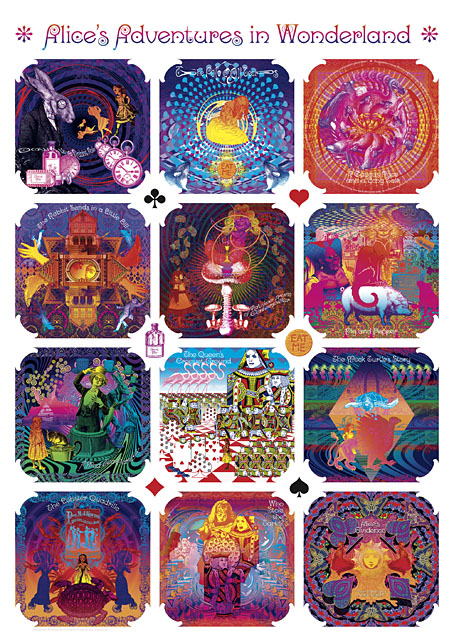
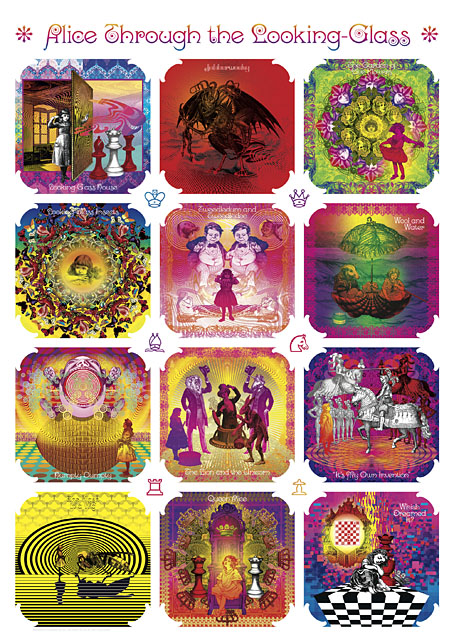
I’m continuing to add artwork to Etsy which will be available as prints in a variety of sizes and papers. I would have done more of this by now but I’m still very busy working through the commissions of the past few months so progress has been slow. The system does actually work as intended, however, with orders being routed automatically to the printer then printed and shipped within 24 hours. The initial setup may take longer than places like CafePress but the benefits are multiple, not only a faster turnaround (and cheaper worldwide postage) but now I can create prints of any size I want, and with a variety of papers and finishes. Most of the items there at the moment are the things I consider “greatest hits” so the latest additions include new poster versions of my psychedelic Alice in Wonderland artwork, together with the International Symbols Tarot poster and yet more Lovecraftiana. Requests are, of course, still welcome.

wonderland.jpg

Psychedelic Wonderland (2009): a C-type print on Fuji gloss paper. A1 or A2 sizes.

looking-glass.jpg

Psychedelic Looking-Glass (2010): a C-type print on Fuji gloss paper. A1 or A2 sizes.

cthulhu.jpg

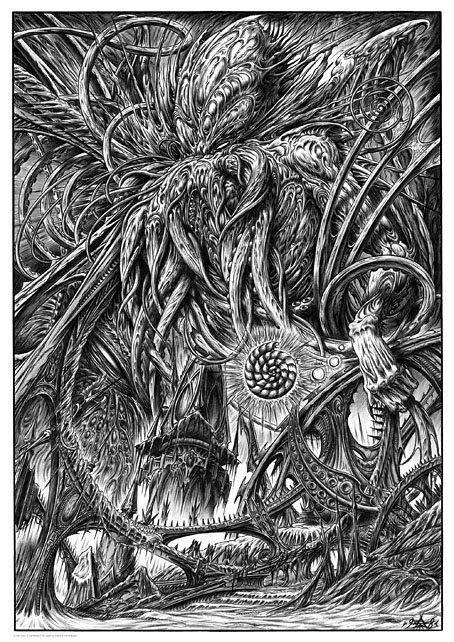
Cthulhu (1998): a giclée print on Canson Aquarelle rag paper. A3 size.

dagon.jpg

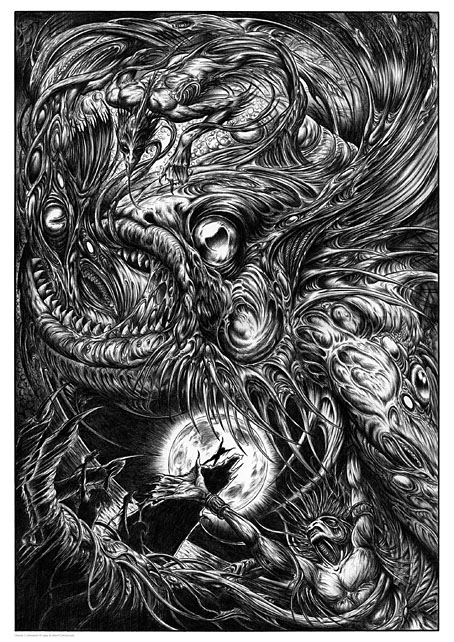
Dagon (1999): a giclée print on Canson Aquarelle rag paper. A3 size.

Previously on { feuilleton }
Prints at Etsy

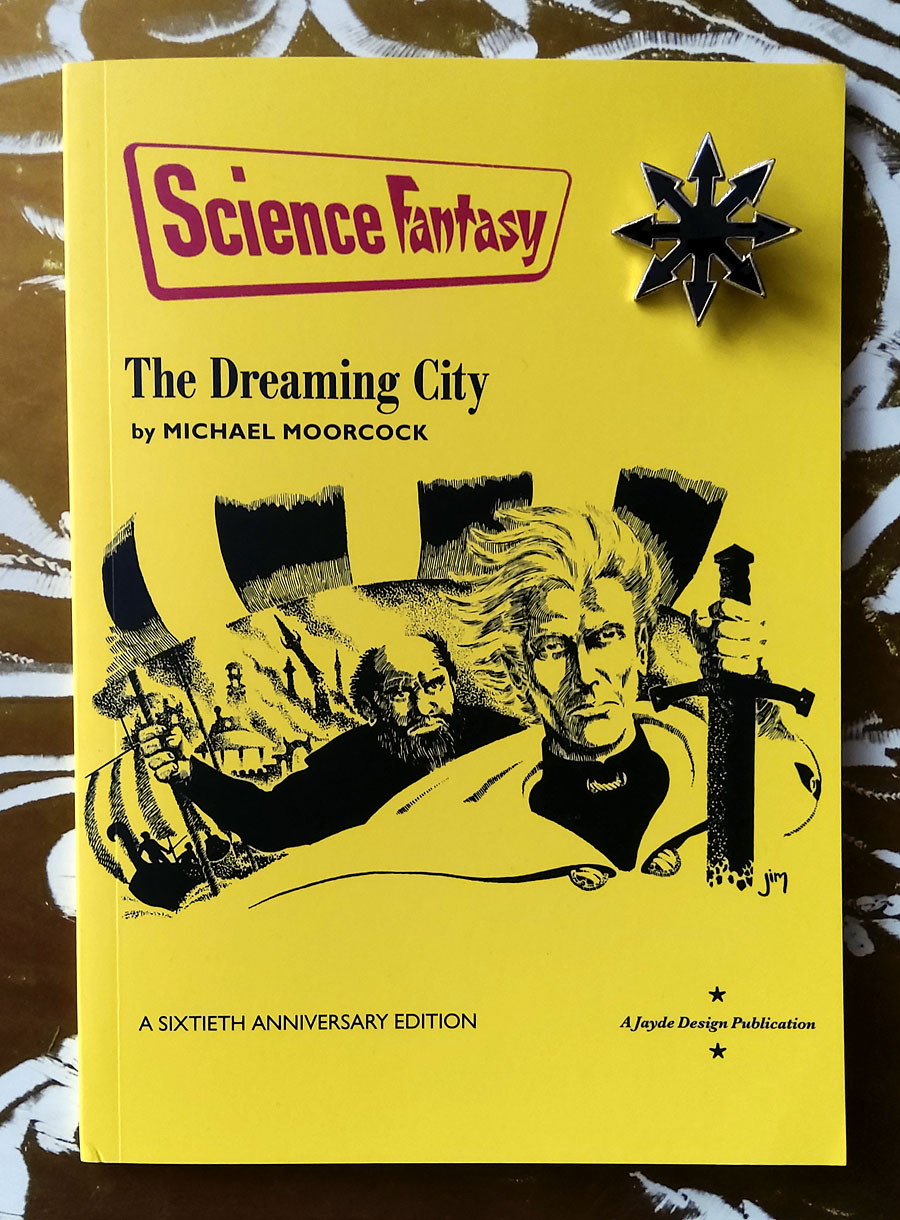
The Dreaming City by Michael Moorcock

dreaming.jpg

Cover art by James Cawthorn. Chaos pin not included.

More sword and sorcery. Last month I was asked to design a reprinting of the very first Elric story by Michael Moorcock, a standalone publication from Jayde Design intended to commemorate the 60th anniversary of Moorcock’s most popular character. The Dreaming City was published in issue 47 of Science Fantasy magazine in June 1961, following a request from the editor, John Carnell, for Moorcock to write a new series of fantasy stories. Over the next three years Science Fantasy published all ten of the novellas that established Elric’s character and his world, ending with Doomed Lord’s Passing in April 1964, the entry which saw Moorcock destroy his creation in a Boschian apocalyptic finale.

The Dreaming City: A Sixtieth Anniversary Edition is a compound facsimile of these publications. The interior design follows the template of the magazine interiors while the front cover is based on one of the later numbers which ran the fifth Elric story, The Flame Bringers, with a cover illustration by James Cawthorn. That illustration may have been attached to a different story but it actually depicts a scene from the end of The Dreaming City when Elric is leaving Imrryr in burning ruins after the place has been sacked by the raiding party he led there. It’s also a much better illustration than the one by Brian Lewis that appeared on the cover of the June 1961 issue. In addition to recreating the cover we’ve also restored the drawing, which in its printed form was slightly cropped at one side, with the complete version taken from Cawthorn’s original. Jim Cawthorn was closely involved with the creation of Elric, and even co-wrote Kings in Darkness, another of the stories in the Science Fantasy sequence. Inside the new edition there are four further illustrations which Cawthorn produced for a German collection of Elric stories published by Heyne in 1979.

dreaming2.jpg

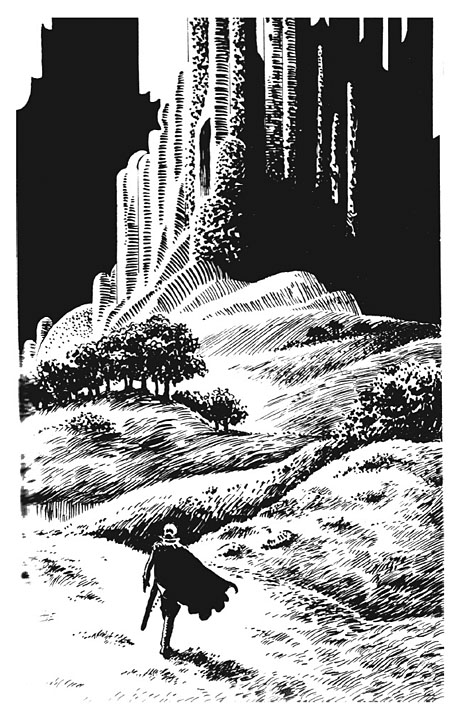
One of James Cawthorn’s interior illustrations.

This small publication will only be of interest to collectors but it was a good thing to be involved with. In the past I’ve designed an Elric-themed album cover for Hawkwind, and last year designed The Stormbringer Sessions, a very limited publication of Jim Cawthorn’s sketched outline for his unfinished Elric graphic novel. The Dreaming City is the first Elric design of mine that features Moorcock’s own text. For an opening shot in what would become a saga spanning several decades and a variety of media The Dreaming City is a remarkably confident piece of work, even more so when you consider that the author was only 21 at the time. Elric begins and ends the story as an outsider, exiled and alone, and with his existence bound to his cursed sword, Stormbringer. Subsequent novels and stories would fill in the history before pitching Elric into the multiverse along with many of Moorcock’s other characters. But this is where it all begins, with six Sea Lords waiting in a tavern wondering whether the albino prince will turn up at all.

The Dreaming City: A Sixtieth Anniversary Edition is available here.

Previously on { feuilleton }
The Stormbringer Sessions by James Cawthorn
James Cawthorn: The Man and His Art
The Chronicle of the Cursed Sleeve
Moorcock: Faith, Hope and Anxiety
Elric 1: Le trône de rubis
The Sonic Assassins
Jim Cawthorn, 1929–2008

Resurrecting R’lyeh

rlyeh-2021.jpg

Then, driven ahead by curiosity in their captured yacht under Johansen’s command, the men sight a great stone pillar sticking out of the sea, and in S. Latitude 47°9′, W. Longitude 126°43′, come upon a coastline of mingled mud, ooze, and weedy Cyclopean masonry which can be nothing less than the tangible substance of earth’s supreme terror—the nightmare corpse-city of R’lyeh, that was built in measureless aeons behind history by the vast, loathsome shapes that seeped down from the dark stars. There lay great Cthulhu and his hordes, hidden in green slimy vaults and sending out at last, after cycles incalculable, the thoughts that spread fear to the dreams of the sensitive and called imperiously to the faithful to come on a pilgrimage of liberation and restoration.

HP Lovecraft, The Call of Cthulhu (1928)

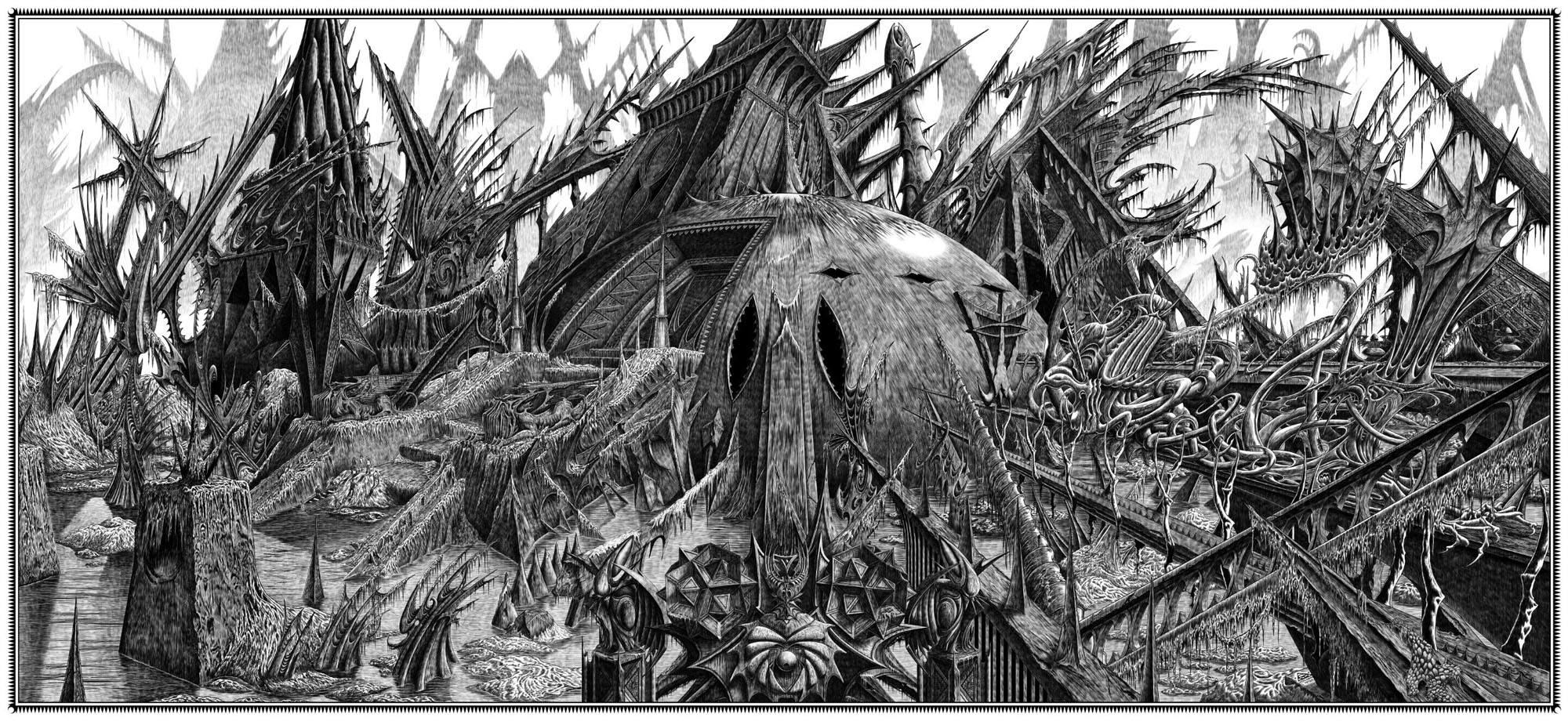
Behold the fruits of a more benevolent pilgrimage of liberation and restoration. It was just over a year ago that I decided to draw an exact replica of the R’lyeh triple-spread from my comic-strip adaptation of The Call of Cthulhu, the intention being to make the picture available as a poster-sized print once I had a print-ordering system in place. The picture may now be purchased here as a giclée print on Hahnemüle Pearl art paper. This is a big picture (870.46 x 401.15 mm or 34.27 x 15.793 ins), and unlike my other Etsy prints I’m afraid there won’t be a half-size version which means the price will remain relatively high. I’m also keeping it as a black-and-white piece despite the temptation to create a tinted version.

And so to the obvious question: why did I want to redraw a large and very detailed piece of art in the first place? Pull up a weed-festooned Cyclopean bollard and I’ll explain…
starrywisdom.jpg

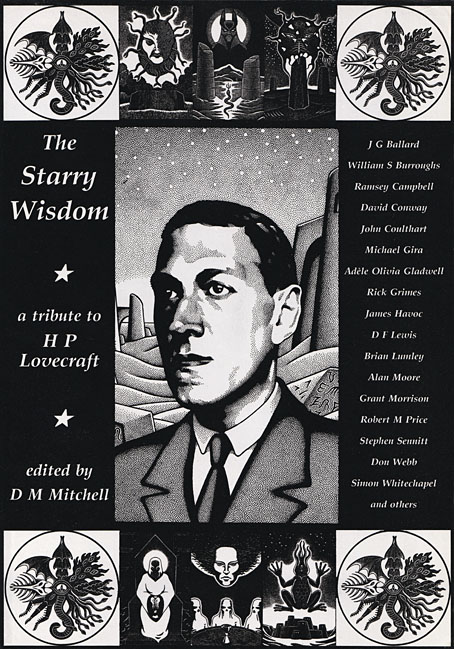
Creation Books, 1994. Cover art by Peter Smith.

I spent 17 months drawing The Call of Cthulhu, from January 1987 to May 1988, using my preferred media of the time, a 0.2 mm Rotring Variant pen on A3 sheets of Daler cartridge paper. The story took its time getting into print but it was eventually published in 1994 by Creation Books as part of The Starry Wisdom, a collection of Lovecraftian fiction edited by DM Mitchell. I was very pleased to be represented in the book but the pleasure turned to dismay when it transpired that all the artwork had vanished after the printing was done. Or almost all the artwork… To this day I don’t know whether the drawings by other artists suffered the same fate, but my Cthulhu pages disappeared along with the anatomical cross-section and the Yuggoth collage that I created specially for the collection. I still don’t know what really happened either, whether the drawings were stolen (possible), thrown away deliberately (unlikely), or thrown away accidentally (also possible). The lack of resolution to the whole business is partly my fault. Losing all that art was a painful thing to consider, and I couldn’t accuse the printer of anything when nobody could say what had happened (I was in the Creation office during one of the phone conversations between publisher and printer). The printer was also located in the middle of a rural county somewhere so journeying there would have been difficult for this non-driver, as well as being pointless if they could only tell me what I knew already. Time passed and I did my best to put the whole episode behind me.
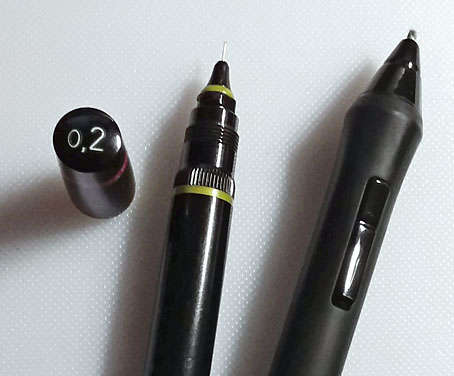
pens.jpg

Drawing technology then and now: the Variant pen I used throughout the 1980s and the Wacom stylus I use today. That Variant nib is so fine that I have a faint ink dot tattooed on one of my knuckles from where I accidentally stabbed it into my hand. The Wacom pen looks stubby in comparison but is capable of drawing equally fine lines and much more besides.

On the plus side (there was one), the printer had done a good job of half-toning the artwork, so even though the Starry Wisdom pages are rather small the detail in the drawings is still evident. And I also had a complete set of photocopies of the A3-sized originals. I’d been working for Savoy Books since 1989 during which time making photocopies of new drawings had become second nature. Since 1994 this set of copies has become the original art for the Call of Cthulhu strip, rather like the surviving prints of Murnau’s Nosferatu which are all that anyone can see of his film today. The analogy is an apt one since it also extends to picture quality. Just as silent films always look their best when they’ve been restored from the camera negative, my Rotring drawings really need to be reproduced from the originals. The 0.2 mm pen that I insisted on using throughout the 1980s was too fine for the photocopy machines of the time, especially when my shading was so densely rendered that I might as well have been using a pencil. This isn’t so much of a problem if the pages are being reduced in size but it became one last year when I had the idea of making a print of the R’lyeh panorama that would be the same size as the original drawings. Giclée printing is an ink-jet process that reproduces fine detail with great accuracy, so while I could make full-size prints of the Cthulhu pages they’d never look better than what they were, photocopies that hadn’t fully captured the fine lines of the drawings. This wasn’t the only problem.

Continue reading “Resurrecting R’lyeh”