The Art of the Occult

occult1.jpg

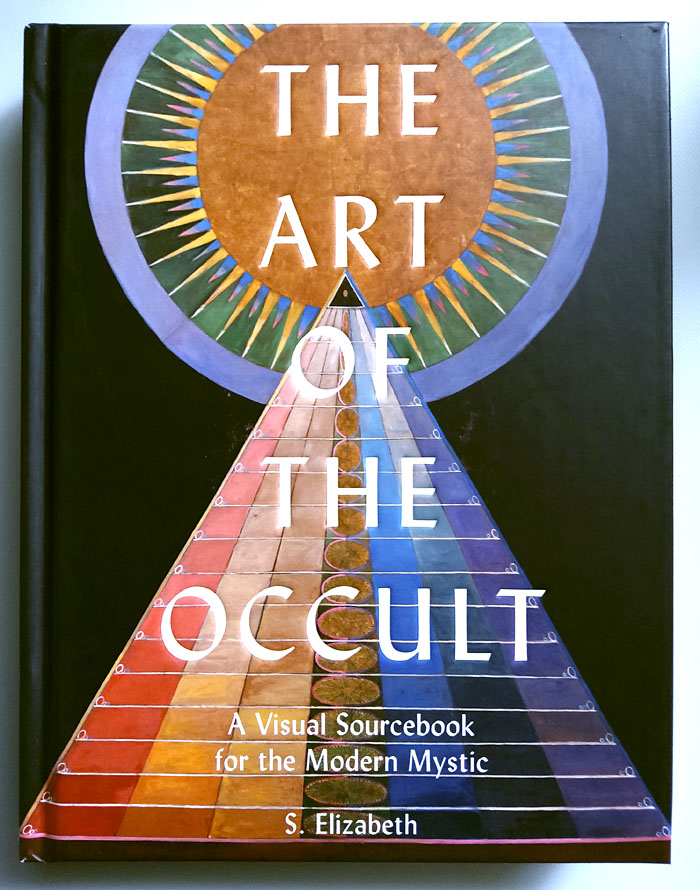
Cover art: Group X, No. 1, Altarpiece (1915) by Hilma af Klint. Design by Paileen Currie.

A surprise arrival in today’s post, the occult art compendium by S. Elizabeth which I would have wanted to read even if it didn’t contain one of my pictures:

From theosophy and kabbalah, to the zodiac and alchemy; spiritualism and ceremonial magic, to the elements and sacred geometry – The Art of the Occult introduces major occult themes and showcases the artists who have been influenced and led by them. Discover the symbolic and mythical images of the Pre-Raphaelites; the automatic drawing of Hilma af Klint and Madge Gill; Leonora Carrington’s surrealist interpretation of myth, alchemy and kabbalah; and much more.

Most of the books I’ve seen on this subject have either been very general and in need of an update (Thames and Hudson’s venerable Magic: The Western Tradition) or exhibition catalogues which are never comprehensive and become increasingly hard to find since they don’t get reprinted. The Art of the Occult is an ideal introduction to the subject for the curious reader, as well as being a useful overview for the aficionado (or initiate) which spans several hundred years of art and illustration, from the earliest occult manuscripts to contemporary works. Occult art is a house with many mansions, a form which can encompass photo-realism, Symbolism, Surrealism or total abstraction without the definition breaking down. The Art of the Occult contains a satisfyingly wide range of examples, 200 in all, and includes many artists whose work I hadn’t seen before. It also reinforces the origin of abstract art in occult concerns, a lineage that went unmentioned for many years by critics who couldn’t accept that their beloved “pure” idiom was tainted by mysticism.
occult2.jpg

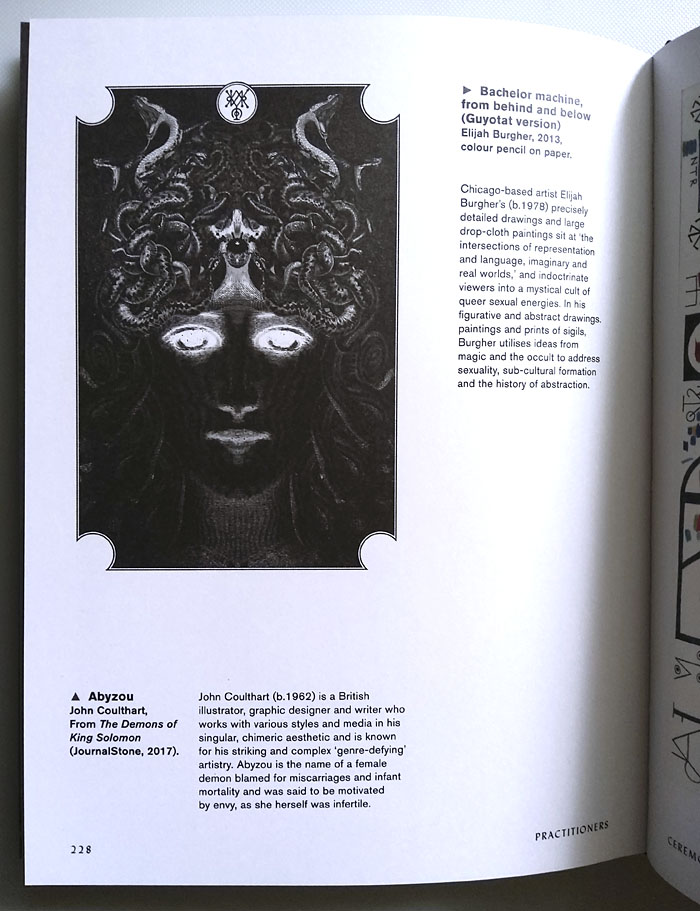
My piece is a portrait of the serpent-haired Abyzou, one of the Solomonic demons I depicted for The Demons of King Solomon in 2017. The picture was one of the better representations in a series I would have preferred to have more time to work on. I was pleased to see my contribution facing one of Elijah Burgher’s sigil drawings; I like Burgher’s art so he makes a good companion. This is the first and maybe the only book where my name is listed in an index between Pamela Colman Smith and Aleister Crowley.

The Art of the Occult will be published by White Lion Publishing on 13th of October, just in time for the annual spook-fest.

Update: Haute Macabre has a new post by S. Elizabeth showing more pages from the book’s interior plus the opportunity to win a copy.

Previously on { feuilleton }
Calendrier Magique
The Demons of King Solomon
Typefaces of the occult revival
The art of Frieda Harris, 1877–1962
The art of Fay Pomerance, 1912–2001
Songs for the Witch Woman
Wilfried Sätty: Artist of the occult
The art of Scott Treleaven

Man Ray and the Marquis

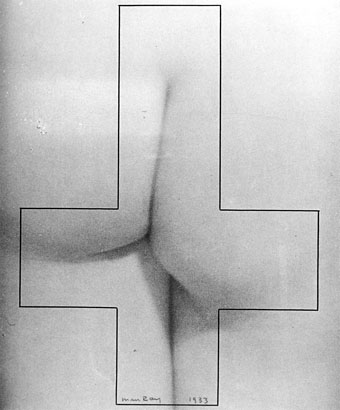
manray1.jpg

Monument to D.A.F. de Sade (1933).

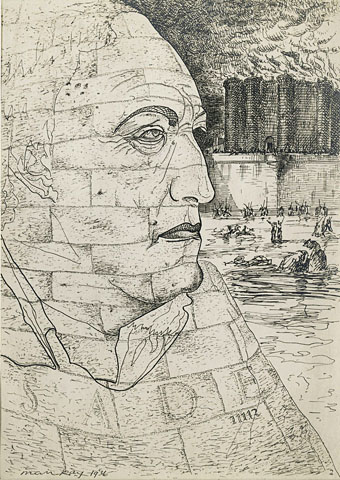
A slight return to the literary outlaw. Man Ray was more preoccupied by the Marquis de Sade than many of his fellow Surrealists, although he never took his interest as far as the obsessive Jean Benoît. His imaginary portraits were created after Sade scholar Maurice Heine complained that the only surviving picture of the Marquis was a drawing that could be of any other young aristocrat of the time.

manray2.jpg

Imaginary Portrait of D.A.F. de Sade (1936).

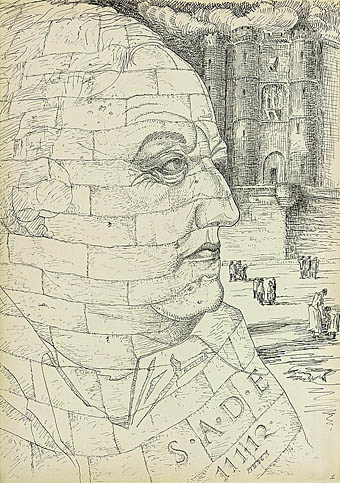
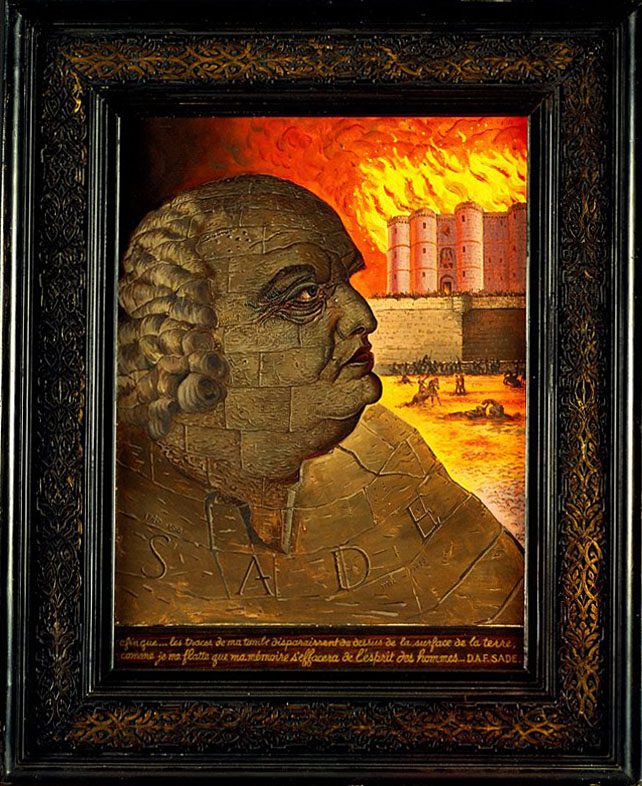
Man Ray’s portraits ran through several variations, first as drawings, then as two paintings, finally as a bronze. These always seemed to me to be more representations of Sade’s character as it comes through his writing than portraits of the writer himself. The two paintings could easily depict the villainous Duke de Blangis from The 120 Days of Sodom, with the castle of the Bastille standing for the castle where Blangis and his colleagues conduct their murderous games. An earlier photo work, Monument to D.A.F. de Sade (1933), was used by Mary Reynolds in a metal binding she created in 1935 for the first print edition of the 120 Days. Penguin used the same photo on the cover of their new translation of the book in 2016. And it would be remiss of me if I didn’t mention the gay variation designed by Peter Christopherson for the CD release of Scatology by Coil.

manray3.jpg

Imaginary Portrait of D.A.F. de Sade (1936).

manray4.jpg

Imaginary Portrait of D.A.F. de Sade (1938).

Continue reading “Man Ray and the Marquis”

Weekend links 535

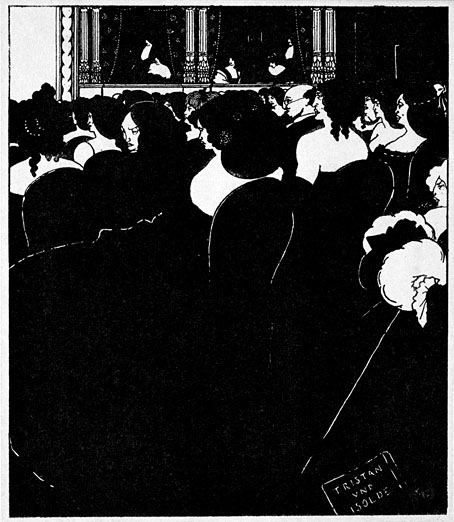
beardsley.jpg

The Wagnerites (1894) by Aubrey Beardsley.

• “Part of my problem with influence is that the concept is too univocal; most of us are impacted by many others during our lifetimes, but often in oblique ways. So many of the most interesting bits of cultural transmission happen nonlinearly, via large groups of people, and in zigzag mutations. Assigning influence can also have the unintentional effect of stripping artists of their own originality and vision.” Geeta Dayal reviewing Wagnerism by Alex Ross.

• “Buñuel stubbornly refused to have any group affiliation whatsoever. Even though critics always tried to categorize him, he never wanted to explain the hidden meanings of any of his films and often denied that there were any.” Matt Hanson on the surreal banality of Luis Buñuel’s The Exterminating Angel.

• Next month Soul Jazz release the fourth multi-disc compilation in their Deutsche Elektronische Musik series devoted to German music from the 1970s and 80s. The third collection was the weakest of the lot so I wasn’t expecting another but this one looks like it may be better.

James Balmont chooses the five best films by Kiyoshi Kurosawa, who he calls “cinema’s master of horror”. I’ve yet to see any of these so I can’t say whether the label is warranted or not.

• At Wormwoodiana: Mark Valentine in a two-part post here and here charts the emergence of an under-examined sub-genre, the metaphysical thriller.

• Power Spots: 13 artists choose favourite pieces of music by Jon Hassell. A surprising amount of interest in his first album, Vernal Equinox.

• At Spine: George Orwell’s Animal Farm receives new cover designs for its 75th anniversary.

• “Pierre Guyotat’s work is more relevant now than ever,” says Donatien Grau.

• Mix of the week: FACT mix 775 by Sarah Davachi.

May 24th by Matthew Cardinal.

• Ry Cooder with Jon Hassell & Jim Keltner: Video Drive-By (1993) | Goose And Lucky (1993) | Totally Boxed In (1993)

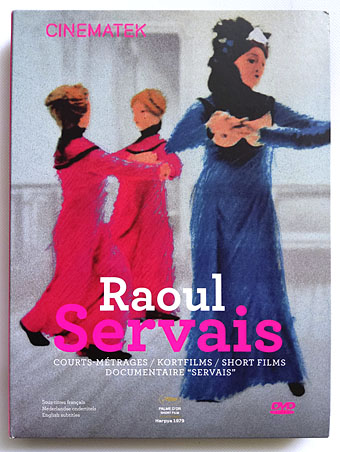
Raoul Servais: Courts-Métrages

servais.jpg

“Courts-métrages”, the French term for short films, is one of those phrases like “bande dessinée” that I prefer to its English equivalent. Among the weekend’s viewing was this double-disc DVD release devoted to the animated films of the Belgian director Raoul Servais. Some of the films are very familiar and have been the subject of previous posts, but the set comprises 14 films in total, and includes many I’d not seen before. Like Jan Švankmajer, Servais is generally the writer/director of his films rather than the animator which accounts for the great variety of graphic styles, although both directors helped animate their early works. The Servais art styles range from the flat UPA-derived idiom of the 1950s, through a variety of drawing techniques, to the later films which deploy “Servaisgraphy”, a process that combines live action and animation with drawn or photographed backgrounds. The last two films in the collection use digital technology.

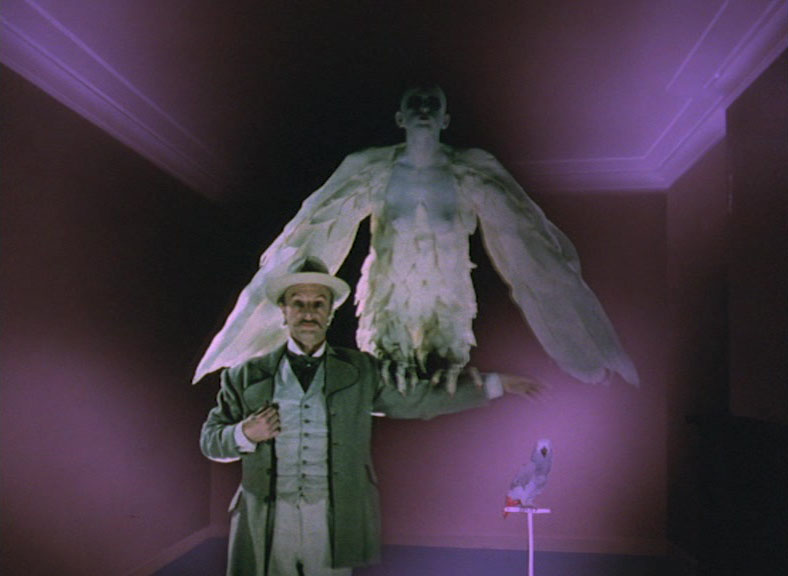
harpya.jpg

Harpya.

If there’s a common thread to this oeuvre it would be the Belgian brand of Surrealism, which might seem like a lazy comparison when so much animation can be described as superficially “surreal”. In the case of Servais, however, the connection is made explicit in Nocturnal Butterflies, a film dedicated to the Surrealist painter Paul Delvaux, whose paintings also inspired the director’s flawed feature film, Taxandria (1994). The Servais masterwork, Harpya, which won a Cannes Palme d’Or for best short film, is Surrealist to the tips of its feathers, a dark and absurd dream that’s a world away from his moralistic early works. One of the films I’d not seen before, November Diversion, resembles a Švankmajer live-action short, a wordless piece about a man trying to escape from an automobile cemetery. All the shorts have been restored by Cinematek, the Belgian film archive. I ordered my DVDs from Potemkine, Paris.

Contents
Disc 1: Harbour Lights (1960) / November Diversion (1962) / The False Note (1963) / Chromophobia (1965) / Sirene (1968) / Goldframe (1969) / To Speak or Not To Speak (1970) / Operation X-70 (1971) / Pegasus (1973) / Halewyn’s Song (1976) / Harpya (1979) / Nocturnal Butterflies (1998) / Atraksion (2001) / Tank (2015)
Disc 2: Servais (2018), a 60-minute documentary by Rudy Pinceel

Previously on { feuilleton }
Papillons de Nuit, a film by Raoul Servais
Sirene by Raoul Servais
Harpya by Raoul Servais
Taxandria, or Raoul Servais meets Paul Delvaux

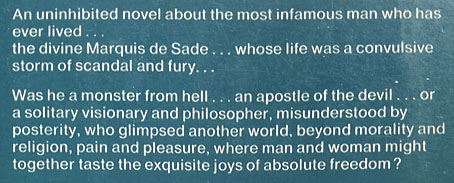
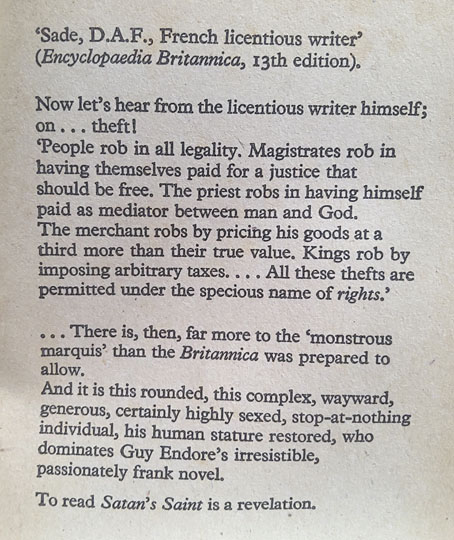
Satan’s Saint

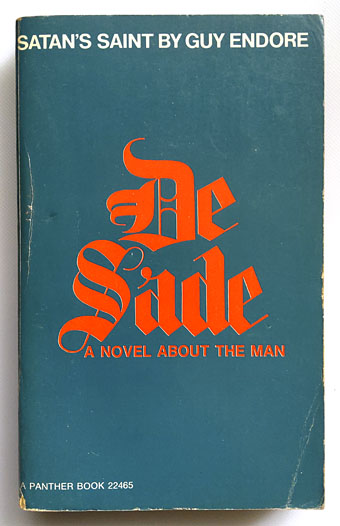
endore1.jpg

Digging in a box for an errant paperback turned up this volume which I’ve owned for years but never read. Having recently watched Jan Švankmajer’s Lunacy, which has a Sade-like character among its cast, I thought I should give it a proper look. Sade’s irreligious and libertine philosophies haunt the Surrealist world, hence Švankmajer’s interest, Jean Benoît’s performance art and so on. Surrealism didn’t have any saints but it did maintain a pantheon of precursors, with Sade accorded the status of “Genius of Wheels” (ie: revolution) in the Surrealist deck of playing cards.

endore2.jpg

Guy Endore (1900–1970) wasn’t a genius, a satanist or a saint but he was an interesting character, an American writer best known today for The Werewolf of Paris, another novel I own and have yet to read. He was a vegetarian and a socialist at a time when both these pursuits were regarded with suspicion or outright hostility (his Communist sympathies later caused him to be placed on the Hollywood blacklist). He wrote a great deal of historical fiction—in addition to Satan’s Saint there are novels based on the lives of Casanova, Voltaire and Shakespeare. And his Hollywood credits include work on scripts for Tod Browning (Mark of the Vampire, The Devil-Doll), writing the source novel (Methinks the Lady) that became Otto Preminger’s psychological film noir, Whirlpool, and, with John Balderstone, adapting Maurice Renard’s The Hands of Orlac into the screenplay that became Peter Lorre’s Hollywood debut, Mad Love. The latter is a great film that I’d love to see again. Satan’s Saint was first published in 1965. This Panther edition appeared in 1967. Now I just have to find the time to read it…

endore3.jpg

Continue reading “Satan’s Saint”