Art on film: Je t’aime, Je t’aime

resnais1.jpg

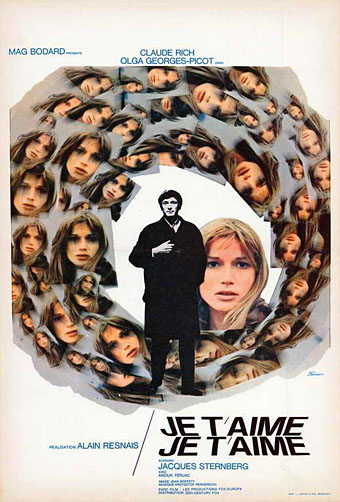
Design by René Ferracci.

Continuing an occasional series about artworks in feature films with a return to Alain Resnais. This one is less substantial than the Providence post, but 2022 happens to be the director’s centenary year, and this particular film, like Providence, is worthy of greater attention.

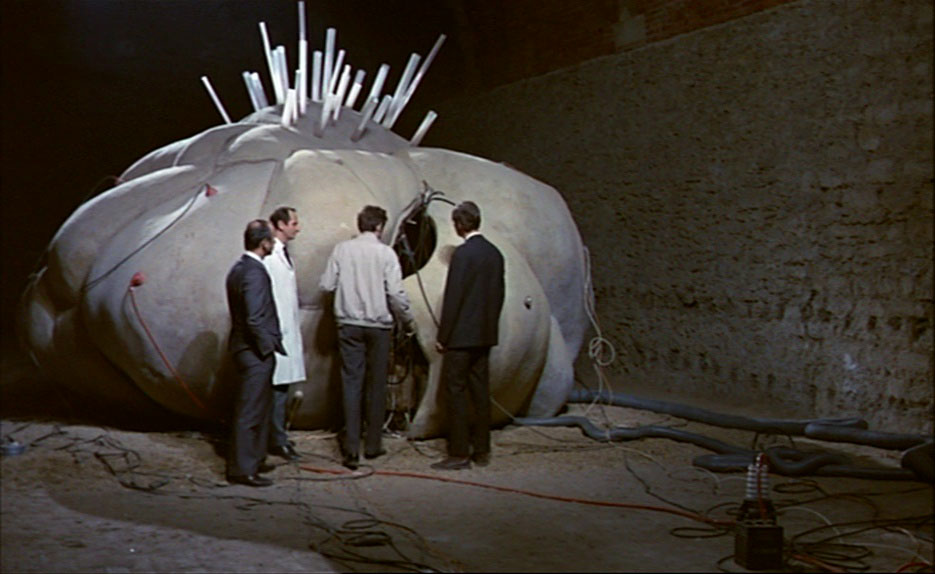
Last Year at Marienbad is occasionally proposed as science fiction of a very rarified sort (JG Ballard thought it was) but there’s no question about the SF credentials of Je t’aime, Je t’aime (1968), a drama that uses time travel to explore a troubled romantic relationship. Claude Ridder (Claude Rich), an unattached, suicidal man, is persuaded by scientists to assist with a potentially hazardous experiment. He agrees to a one-minute excursion into his past but the experiment doesn’t work as intended, causing him to be caught between the present—in which he can’t escape from a womb-like time machine—and his recent past, in which he relives brief moments without any awareness during the return period of their being a part of the experiment. The flashbacks that comprise most of the film’s running time show us a random sequence of the events leading to Claude’s suicide attempt, the end result of his relationship with his terminally ill partner, Catrine (Olga Georges-Picot).
resnais2.jpg

The time machine.

Despite the presence of a time machine and a script by Jacques Sternberg, a Belgian science-fiction writer, Resnais was adamant that Je t’aime, Je t’aime wasn’t a science-fiction film. This is the kind of comment guaranteed to annoy the more zealous SF reader but it’s true in the sense that the film isn’t about time travel or time machines per se; the temporal experiment is a device to allow the non-linear exploration of a human drama that’s the real concern of director and writer. Previous Resnais films had dealt with remembrance of one sort or another, often using flash cuts to juxtapose different moments or scenes remembered or imagined. Je t’aime, Je t’aime pushes these techniques to an extreme, showing us every facet of the Claude/Catrine relationship, from initial meeting to tragic end. The narrative fragmentation isn’t so surprising today but it was a radical step in 1968, one that proved commercially unsuccessful.

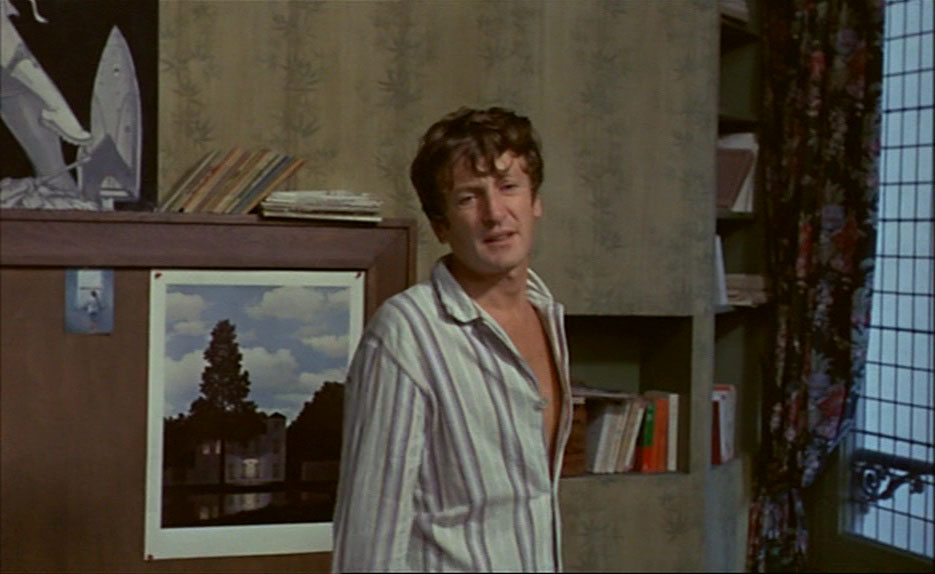
In addition to having a Belgian writer, Je t’aime, Je t’aime is mostly set in Brussels, so the art this time is a famous Belgian painting, one of the many versions of The Empire of Light by René Magritte, which appears in the scenes in Claude’s apartment.
resnais3.jpg

In other hands this might be an incidental decoration but, as Providence demonstrates, Resnais was a director who enjoyed significant details, even if the signification isn’t always obvious. The Magritte painting serves two functions: its slow migration from one side of Claude’s apartment to the other (and the appearance of other pictures around it) shows the passage of time from one flashback to the next.
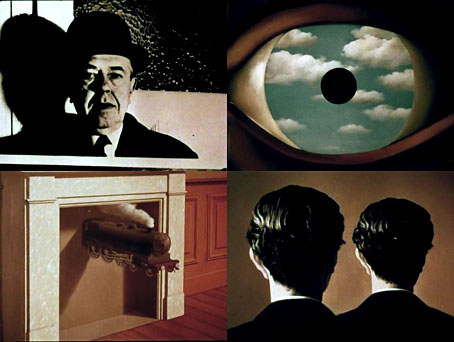
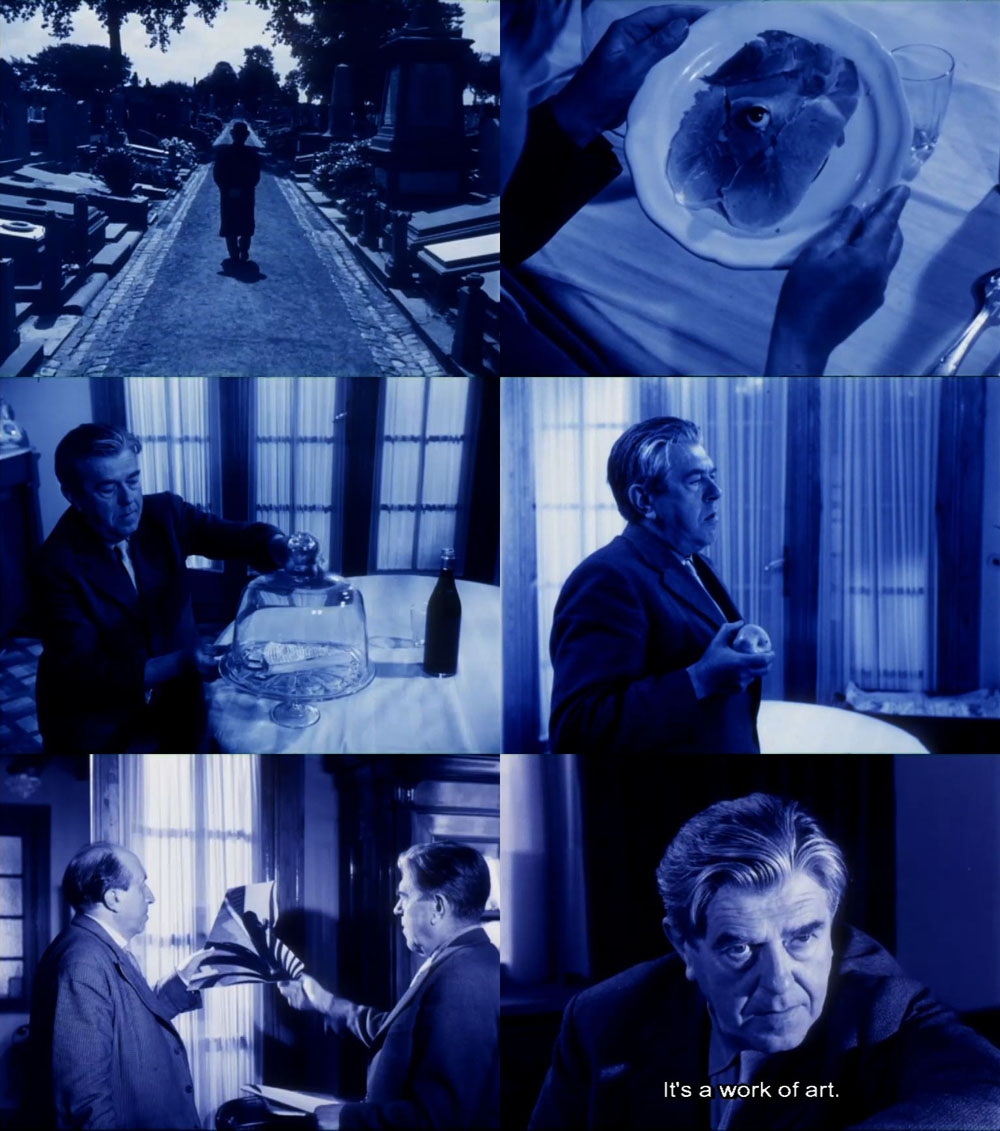
Continue reading “Art on film: Je t’aime, Je t’aime”

Magritte: The False Mirror

magritte2.jpg

Another short film about René Magritte’s paintings, The False Mirror was made three years after the artist’s death in 1970, a time when his work had started to receive widespread international attention. Prior to the 1960s Magritte wasn’t exactly unknown but it wasn’t until the arrival of Pop Art that his paintings began to be reappraised. The production credits for The False Mirror are surprising for such a short piece, the film being directed by art critic David Sylvester (whose book of interviews with Francis Bacon is essential), and photographed by Bruce Beresford, later to become a well-regarded film director. Among the voices reading from the artist’s statements is ELT Mesens, another Belgian artist and friend of Magritte’s whose presence in the later incarnation of the British Surrealist Group gave that small society some authentic gravitas. (George Melly talks about Mesens and the British Surrealists in this film.) The commentary runs over familiar ground: descriptions of the artist’s childhood encounter with a painter in a cemetery (also referred to in Magritte, ou la lecon de chose), and the details of his mother’s suicide (dramatised in David Wheatley’s film). I’d been wondering recently what Magritte might have made of the increasingly excessive prices being paid for his artworks. One of the comments here provides a possible answer when he says he’d be happy if people destroyed his paintings.

Previously on { feuilleton }
Magritte, ou la lecon de chose
René Magritte album covers
Monsieur René Magritte, a film by Adrian Maben
George Melly’s Memoirs of a Self-Confessed Surrealist
The Secret Life of Edward James
René Magritte by David Wheatley

Magritte, ou la lecon de chose

magritte.jpg

Good to find this one at last with English subtitles. Magritte, ou la lecon de chose is a short study of René Magritte’s paintings made in 1960 by Luc De Hersch. The title translates as “Magritte, or The Object Lesson”, and the film is of note for a few brief scenes in which the artist becomes a performer in order to communicate something of his aesthetic philosophy. We’re also shown a scene of Magritte and friends choosing a title for one of his paintings, while a voiceover provides further explication of the Magrittian view of reality. Given the access the director had to the artist, the film is frustratingly short but it serves as a reminder that there was a time when Magritte’s paintings seemed much more mysterious than they do today.

Previously on { feuilleton }
René Magritte album covers
Monsieur René Magritte, a film by Adrian Maben
George Melly’s Memoirs of a Self-Confessed Surrealist
The Secret Life of Edward James
René Magritte by David Wheatley

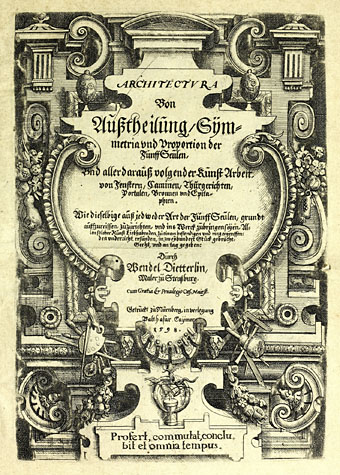
Wendel Dietterlin’s Architectura

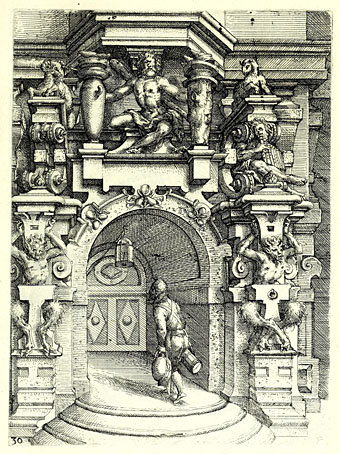
dietterlin01.jpg

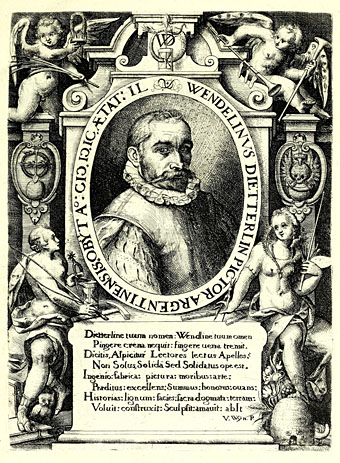
While looking through my bookshelves recently for examples of Baroque architecture I was reminded of the eccentric designs of Wendel Dietterlin (c. 1550–1599), a German painter and engraver whose Architectura (1598) is less a guide to architectural form than an excuse to indulge the artist’s fervid imagination. This wasn’t really the reference material I was after—Dietterlin is pre-Baroque—but I’d not seen so much of his work in one place before. Dover Publications have reprinted all of these plates for many years as The Fantastic Engravings Of Wendel Dietterlin but it’s one Dover book I’ve never owned.

dietterlin02.jpg

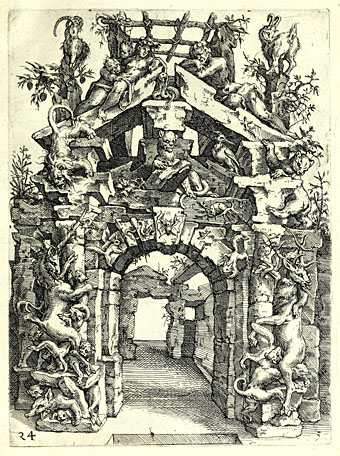
“Fantastic” is an apt description. Where a similar study might present the reader with careful elaborations of Vitruvian principles, Dietterlin offers plate after plate of suggestions for portals, fountains, fireplaces and facades, many of which are festooned with bizarre and grotesque details. Wild animals are a persistent theme. Other artists of the period tended to favour mythological scenes for fountain sculpture; Dietterlin shows a series of large animals being attacked by smaller ones: bear versus dogs, dragon versus men, and so on. Similar groupings may be found on his designs for rustic arches. Ostensibly these are traditional hunting scenes but there’s a fury in Dietterlin’s renderings that pushes the representations away from the decorative towards the pathological.

dietterlin03.jpg

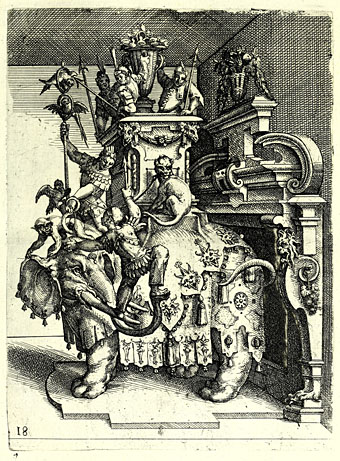
In other designs the wildness is transferred to the decoration itself. Examples of the traditionally sober orders of Classical architecture are shown encrusted with decorations added at the whim of the artist; Dietterlin wasn’t the only artist to do this but other artists are seldom this excessive. Strangest of all is the plate that shows a huge elephant standing before (or emerging from) a fireplace. René Passeron included a handful of engraving artists in the precursors section of his Concise Encyclopedia of Surrealism in 1975, but Dietterlin isn’t among them. I’d say that elephant alone is suitable qualification, a forerunner of Magritte’s Time Transfixed, as well as a literal (if inadvertent) representation of “the elephant in the room”.

dietterlin04.jpg

dietterlin05.jpg

Continue reading “Wendel Dietterlin’s Architectura”

Goodfellow and Borges

goodfellow1.jpg

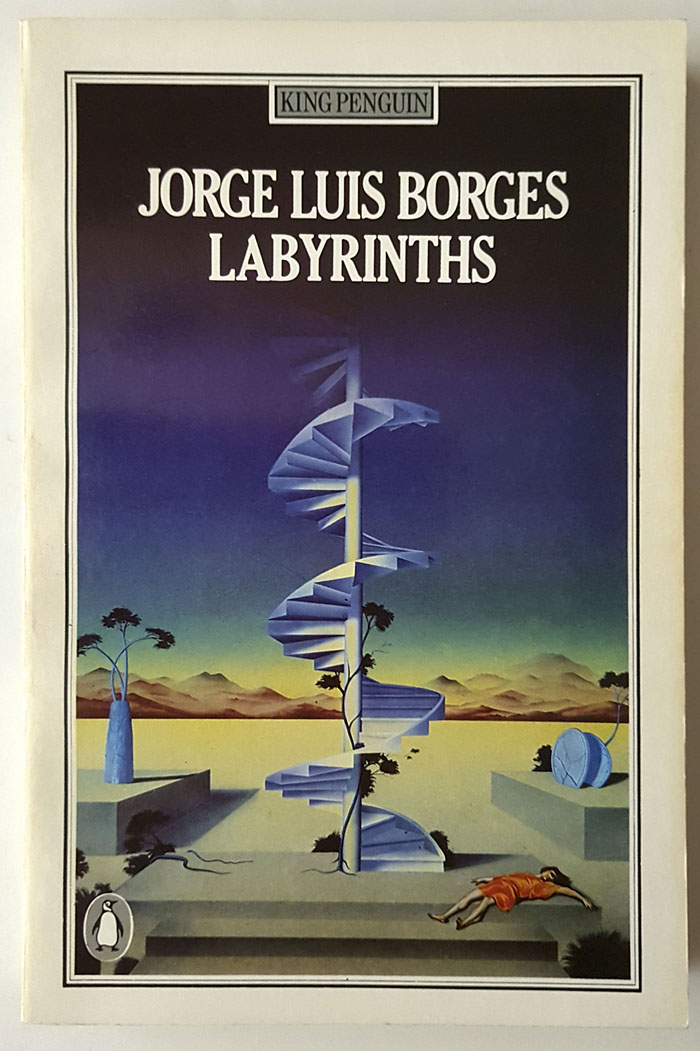
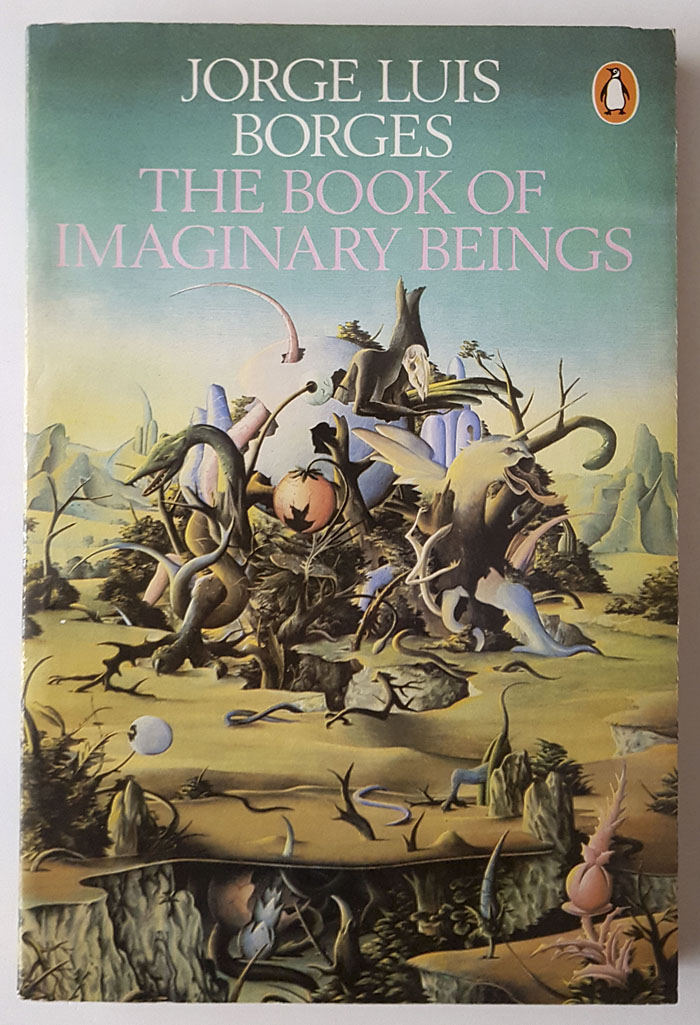
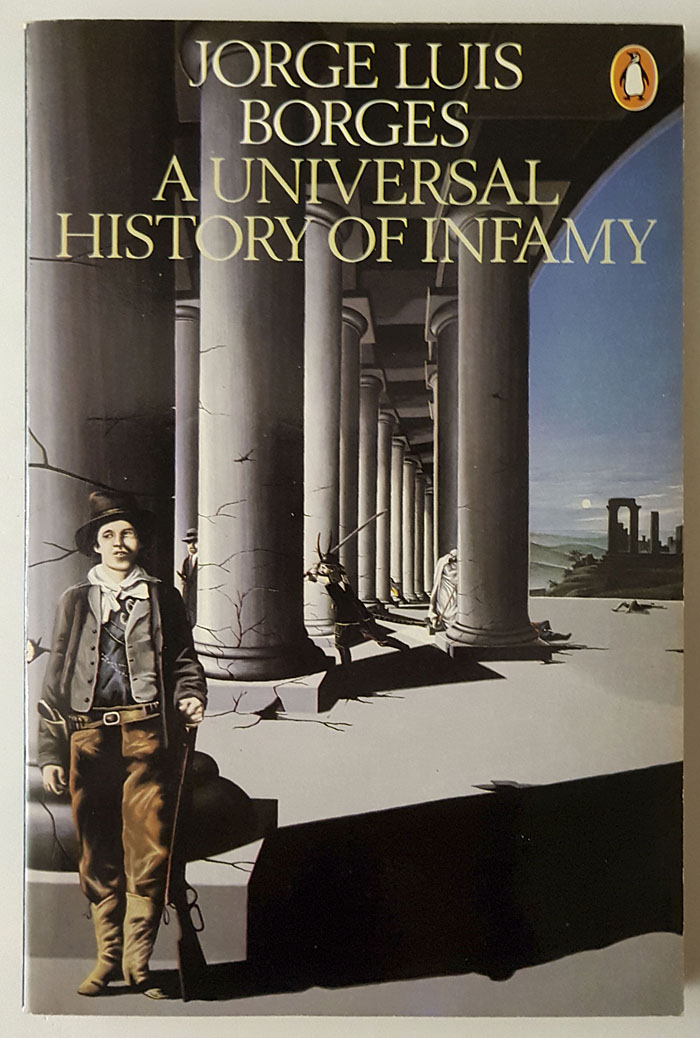
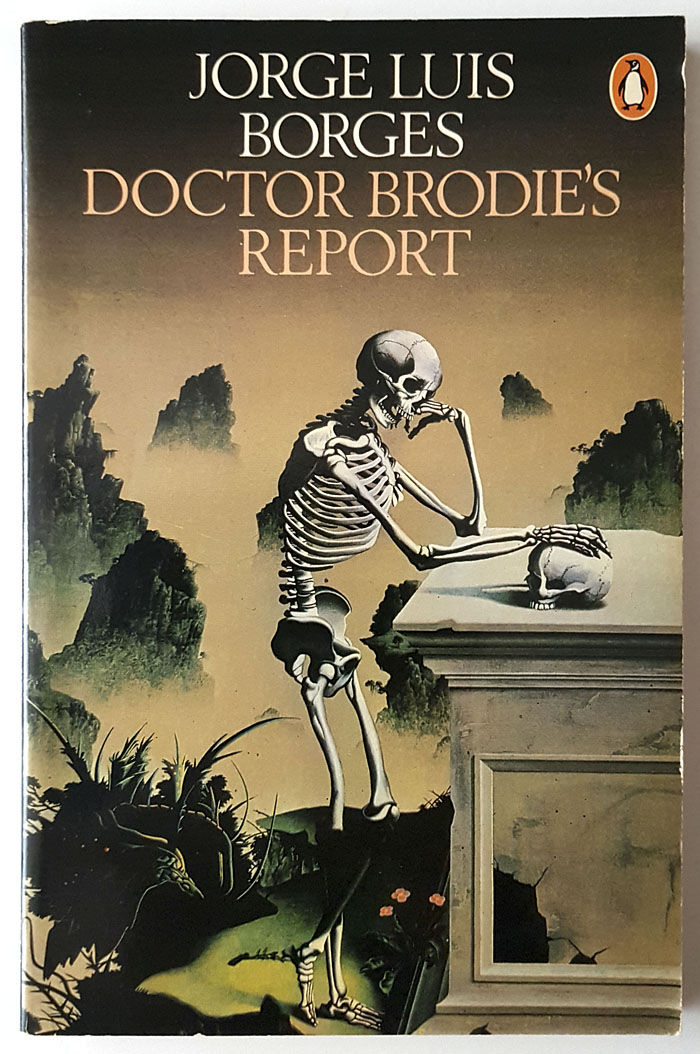
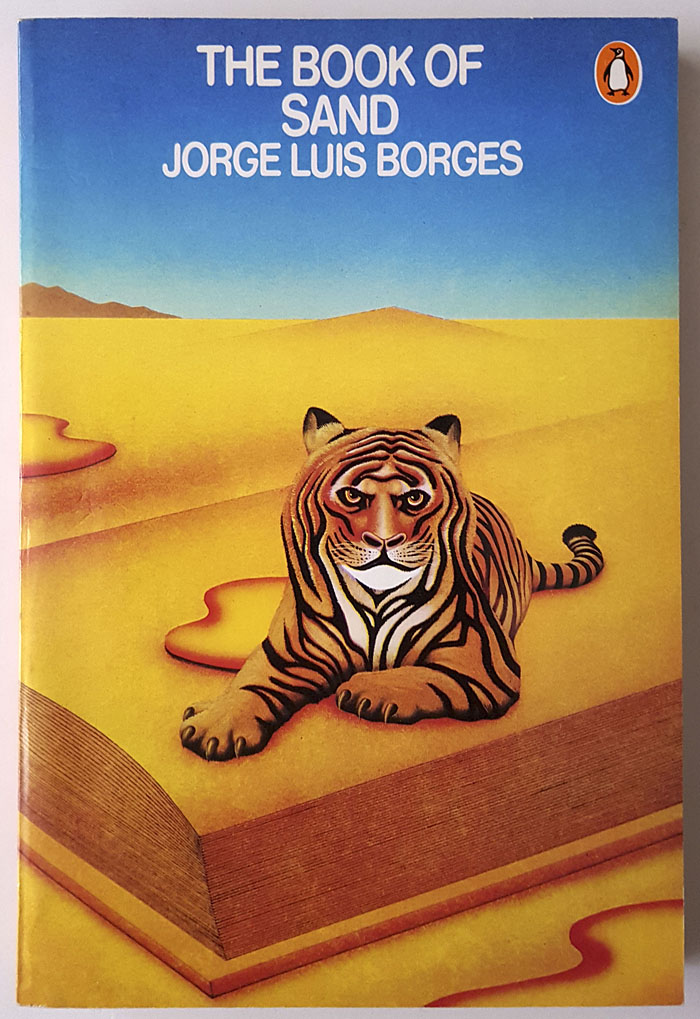
Last week’s story search had me looking through this handful of Penguin volumes again, all of which have cover illustrations by Peter Goodfellow. These were the first Borges books I bought, beginning with the Labyrinths collection in 1985. The Book of Sand is two volumes in one—The Book of Sand and a late poetry collection, The Gold of the Tigers—with cover art suitable for both. I used to think that the covers of the other books were pastiching or quoting well-known artists but now I’m not so sure. Two of them definitely are quotes or pastiches: The Book of Imaginary Beings is a play on the weird growths you find in Hieronymus Bosch, while Doctor Brodie‘s contemplative skeleton is from the famous anatomical engravings in De Humani Corporis Fabrica by Andreas Vesalius, with some Chinese or Japanese landscape details added to the background.

goodfellow2.jpg

Two positive artistic references suggested that the other covers might follow suit, so I used to take the Labyrinths cover as a vague reference to the anomalies that Salvador Dalí would situate in his desert vistas, while A Universal History of Infamy was de Chirico, perhaps, although this no longer seems certain at all. Those columns look like Bernini’s double colonnade from Saint Peter’s Square in Rome, not a Turin arcade, and the picture lacks the disjunctive perspectives you find in de Chirico’s “Metaphysical” paintings. The pastiche thesis is further diluted when you discover that Goodfellow had been quoting from Bosch as far back as his cover for Ursula Le Guin’s Rocannon’s World in 1972, while he borrowed another skeleton from Vesalius for Structures by JE Gordon. Sometimes you can reach too far for meaningful connections.

goodfellow3.jpg

The Bosch-like cover does seem to have had an enduring influence, however. When Penguin published the Collected Fictions in the UK in 1999 they used a detail from Bosch’s Garden of Earthly Delights for the artwork. Bosch details turned up on a later edition of A Universal History of Infamy, and have subsequently appeared on a series of Turkish Borges editions. Not a bad choice for a writer whose fictions offer universes of possibility.

goodfellow4.jpg

goodfellow5.jpg

Elsewhere on { feuilleton }
The book covers archive
The illustrators archive

Previously on { feuilleton }
The Rejected Sorcerer
The Immortal by Jorge Luis Borges
Borges on Ulysses
Borges in the firing line
La Bibliothèque de Babel
Borges and the cats
Invasion, a film by Hugo Santiago
Spiderweb, a film by Paul Miller
The Library of Babel by Érik Desmazières
Books Borges never wrote
Borges and I
Borges documentary
Borges in Performance