Weekend links 123

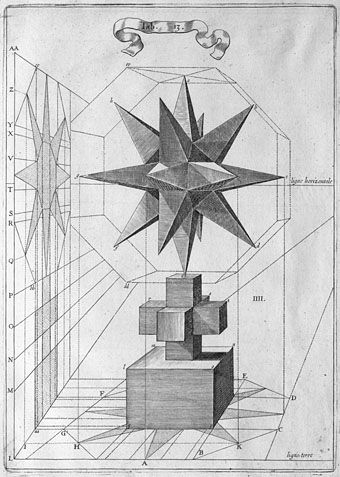
niceron.jpg

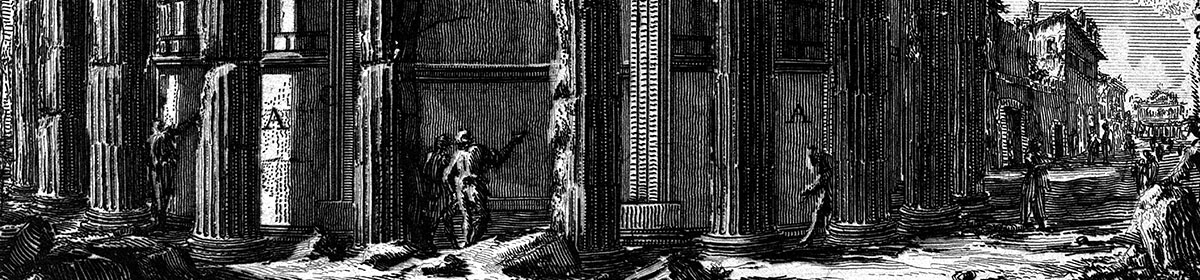
La Perspective Curieuse (1663) by Jean François Nicéron. From Curious Perspectives at BibliOdyssey.

1612 Underture is a forthcoming album by The Eccentronic Research Council and Maxine Peake which extends the electronics + occult concept to encompass Kraftwerk and the Pendle Witches. The Quietus has a review of their album, and an interview and report about a recent live performance (I missed the latter, unfortunately), while the Guardian’s interview with the splendid Ms Peake reveals that “musically, her tastes range from Japanese black metal, garage rock and folk, to techno and psychobilly.” The famous Lancashire witches also happen to be the subject of Jeanette Winterson’s latest novel, The Daylight Gate.

• Yet more Marker: The Owl’s Legacy: Chris Marker’s 13-Part Search for Western Culture’s Foundations in Ancient Greece, and J. Hoberman on The Lost Futures of Chris Marker.

Dr Oliver Sacks talks about how hallucinogenic drugs helped him empathize with his patients.

Paulo Coelho’s ill-judged Joyce-bashing has made him a butt of scorn this week, but he’s a safe target because, with books that multitask a little too openly as self-help manuals, he’s not so clubbable. Unlike, say, Ian McEwan, who not-that-differently declared against “the dead hand of modernism“, for all the world as if the dominant literary mode in post-war England was Steinian experimentation or some Albion Oulipo, against which young Turks hold out with limpidly observed interiority, decodable metaphors, strained middle-class relationships and eternal truths of the human condition(TM).

China Miéville on the always contentious future of the novel.

The Foliate Head: a new book by Marly Youmans with illustrations by Clive Hicks-Jenkins.

Hysterical Literature: Session Two: Alicia reads from Leaves of Grass by Walt Whitman.

Dreaming in Dirigibles: The Airship Postcard Albums of Lord Ventry.

The Art of the Literary Fake (with Violin) by Jeff VanderMeer.

RIP Neil Armstrong, first human on the Moon.

Macho Man: Morgan Meis on Robert Hughes.

• Book covers by Hannes Bok.

This Is Now!

Squid Moth

Lunar Rhapsody (1947) by Dr Samuel J. Hoffman | Lunar Musick Suite (1976) by Steve Hillage | Back Side Of The Moon (Steve Hillage’s Under Water Deep Space Remix) (1991) by The Orb.

Ted Shawn and His Men Dancers

shawn07.jpg

Poster on the left designed by Major Felten (1931).

In 1914, [Ruth] St Denis married a twenty-two-year-old gay man, the ambitious and sexually charismatic Ted Shawn (1891–1972), who became her dance partner. Shawn appeared at any opportunity in the scantiest of costumes. In 1915, they founded the Denishawn Dance School in Los Angeles, which became a significant artistic center from which many creative dancers emerged, most notably Martha Graham.

Burton Mumaw (b. 1912), a student of Shawn’s, first danced with the Denishawn company in 1931. Mumaw and Shawn soon became lovers and life companions. Shawn separated from St. Denis in 1933 and formed his Company of Male Dancers. Mumaw and Shawn were the leading soloists of the new company. (more)

I can’t vouch for the accuracy of GLBTQ’s claims about Ted Shawn’s sexuality before he married Ruth St Denis, but it’s impossible to see his all-male dance troupe as anything other than homoerotic, especially when they had a tendency to perform in the nude (see below). Shawn’s intention was to move the associations of male dance away from the perceived effeminacies of ballet towards something more assertive and muscular. Shawn and Ruth St Denis had gone to great lengths to import into American dance various exotic elements from Asia and the ancient world, a process they called “Oriental dance”. This was no doubt the kind of Orientalism which is repudiated today for its appropriations but in the 1910s and 20s these developments were significant moves away from the staid traditions of 19th-century ballet. Shawn continued this evolution with a robust choreography based on ethnic war dances and other masculine fare. This kind of all-male dance is now very common—and remains homoerotic, of course, often intentionally so—but in the 1930s the idea was a radical one.

YouTube has a short film of Shawn and company in action in 1935. At the Internet Archive there are the two volumes of Ted Shawn’s Ruth St. Denis, Pioneer & Prophet: Being a History of Her Cycle of Oriental Dances (1920).

shawn08.jpg

shawn09.jpg

Continue reading “Ted Shawn and His Men Dancers”

The recurrent pose 48

shawn01.jpg

Following some leads about American dancer Ted Shawn (1891–1972) turned up this series of photos from 1923 in which he adopts the Flandrin pose whilst enacting “The Death of Adonis”. The series is from a large collection of Shawn photos at the NYPL Digital Gallery. The dancer had dark hair which has here been covered by a light wig in order to convey a statue-like appearance. Poses plastiques, as they were known, were a common Victorian form of titillation which enabled variety audiences to admire near-naked women and men masquerading as living statuary or as figures from mythology and famous paintings. As with many Victorian fashions, they persisted into the early 20th century. Ted Shawn at this time was still married to dancer Ruth St Denis, and the pair had no qualms about displaying their bodies tastefully for the camera. Shawn is a fascinating figure so there’ll be a little more about him tomorrow.

shawn02.jpg

shawn03.jpg

Continue reading “The recurrent pose 48”

Weekend links 122

jackson.jpg

Transmitter Crowbar Discharge Unit, Bates Linear Accelerator. Photo by Daniel Jackson from his Dark Machines series.

The language we use for writing about art is oddly pornographic: We know it when we see it. No one would deny its distinctiveness. Yet efforts to define it inevitably produce squeamishness, as if describing the object too precisely might reveal one’s particular, perhaps peculiar, investments in it. Let us now break that unspoken rule and describe the linguistic features of IAE in some detail.

IAE has a distinctive lexicon: aporia, radically, space, proposition, biopolitical, tension, transversal, autonomy. An artist’s work inevitably interrogates, questions, encodes, transforms, subverts, imbricates, displaces—though often it doesn’t do these things so much as it serves to, functions to, or seems to (or might seem to) do these things. IAE rebukes English for its lack of nouns: Visual becomes visuality, global becomes globality, potential becomes potentiality, experience becomes…experiencability. […] Whatever the content, the aim is to sound to the art world like someone worth listening to, by adopting an approximation of its elite language.

International Art English by Alix Rule & David Levine

For years I’ve been calling it Artspeak: the frequently disingenuous, misleading or merely confused jargon that passes for descriptive writing in the art world. Alix Rule and David Levine apply the more neutral label of International Art English. In a lengthy essay at Triplecanopy they reveal the origins of IAE’s terminology and show why the stuff has spread like semantic kudzu.

• “What a bizarre focal point Anish Kapoor’s spiral callipers are: a Laocoönian observation platform strangled in red steel at a cost of many millions, while electricity pylons, with their austere elegance, once hymned by the poets of the 1930s, have been removed, at enormous cost, from the same site to be buried in the radioactive tilth of landfill dumps and industrial detritus.” Iain Sinclair reports on the Olympics.

Alfred Kubin in…Nottingham! The Other Side, an exhibition of “haunting drawings of death, trauma and fantastical creatures inhabiting imaginary worlds”, running to the end of September.

Francis Ford Coppola and Stewart Copeland discuss the making of Rumble Fish (1982). Over at The Rumpus there’s Coppola talking about his career and his latest film, TWIXT.

Eraserhead: The Making of a Cult Classic. In the 1980s Kenneth George Godwin interviewed everyone responsible for making David Lynch’s film. Fascinating reading.

Skin Job, the debut poetry collection by Evan J. Peterson, is twenty-one poems about monsters, horror, and science fiction. Evan made a trailer.

• Wood, brass and “the latest advances in nanotechnology”: Teka, an OLED lamp by Aldo Cibic and Tommaso Corà.

Tonite Let’s All Make Love in London (1967): Peter Whitehead’s film of the capital at its swinging height.

“Beam Us Up, Mr. Scott!”: Why Misquotations Catch On by Maria Konnikova.

Hari Kunzru‘s ten favourite books about underground London.

The Periodic Table of Heavy Metals.

Alan Garner: A life in books.

Fuck yeah, manuscripts!

• (HR) Giger Counter.

• This week was all about Vangelis in the 1970s: Creation du Monde (1973) | Spiral (1977) | Himalaya / Summit (1979).

Weekend links 121

lambshead.jpg

Title spread for The Thackery T. Lambshead Cabinet of Curiosities (2011) edited by Ann & Jeff VanderMeer.

I was surprised this week to find myself nominated as Best Artist in the World Fantasy Awards. The results will be announced at the World Fantasy Convention in November. Among the books nominated for Best Anthology is the Thackery T. Lambshead Cabinet of Curiosities for which I provided title page designs and some illustrations. Editors Ann & Jeff are well-represented (and ought to win for their landmark The Weird anthology), and I’m pleased to see Mark Valentine receive a nod for his excellent Wormwood magazine. Mark and Roger Dobson published my first Lovecraft adaptation, The Haunter of the Dark, in a large-format edition under their Caermaen imprint in 1988.

I remember having a conversation with my father about it. I told him what I’d really have liked to find, in my exhaustive search of the canon, was a gay superhero. You know: fucking dudes, saving the world. Never mind the fact that superheroes, with their notoriously contour-hugging apparel, are usually assumed gay by default. I wanted something that had existed, something from history. My father considered my criteria.

“I think what you want is Gore Vidal.”

Henry Giardina on Gore Vidal’s Bully Republic at the Paris Review.

• Appreciations and memorials for the late Gore Vidal continue to surface: “He was punk rock with a traditional, smooth exterior. But there was nothing traditional about him, not really. He defied singular category,” says Aaron Tilford at Lambda Literary. “Jokes course through Vidal’s entropy-heavy commentaries like a warm, reviving current. They, more than the barbs to which they form a counterpoint, are what make his essays a continuing pleasure to read,” says “J.C.” at the TLS.

• “Winterson’s opposition to strict realism is less an artistic critique than a cultural one. She uses the term ‘realism’ to describe an entrenched way of viewing the world, which it is the writer’s duty to challenge.” Hannah Tennant-Moore on Jeanette Winterson at n+1.

The Ghosts of Bush by Robin The Fog: “A final hauntological perambulation around the hidden corners of Bush House, Aldwych, London, June 2012”.

• “For everything that is not shown, the filmmaker counts on the power of imagination of his viewers.” Lebbeus Woods on Chris Marker and La Jetée.

Joseph Burnett on “Rainbow Ambiguity: Defying conservatism in mainstream LGBT culture”.

• Leigh Brackett book and magazine covers at Golden Age Comic Book Stories.

BLDGBLOG visited the Whitechapel Bell Foundry in London.

Stilled Life: A collection of photography by Thom Ayres.

• Underground subversion: Stickers on the Central Line.

Andrei Codrescu on five favourite Fantastical Tales.

Vangelis performs an analogue synth freakout for Spanish TV in 1982 | Oro Opus Alter, a track from the forthcoming album by Ufomammut | New World, a track from the forthcoming album by The Irrepressibles. Can’t wait.