More chimeras

chimera06.jpg

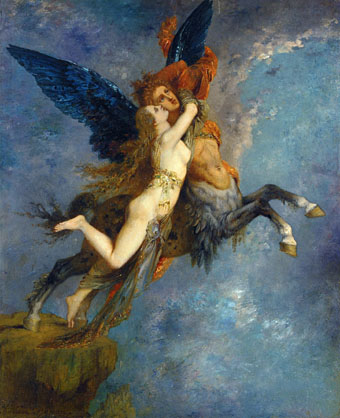
The Chimera (1867) by Gustave Moreau.

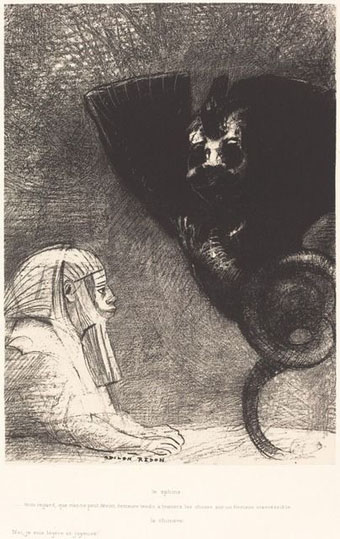
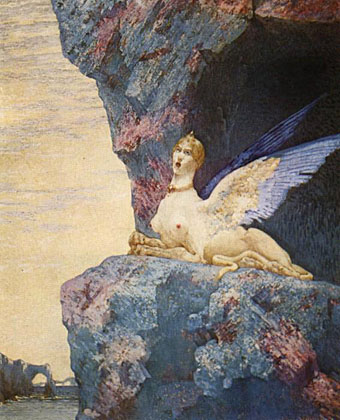
It’s no easy task to catalogue all the chimeras that proliferate between the numerous examples in the work of Gustave Moreau to those produced before the First World War. Consider this a sample, then, and a pointer to further research. Several of these artists—Malczewski, Ernst, Brauner—returned to theme many times.

chimera05.jpg

The Sphinx: “My gaze, which nothing can deflect, passes through the things and remains fixed on an inaccessible horizon.” The Chimera: “I am weightless and joyful.” (1889) by Odilon Redon.

chimera08.jpg

The Chimera’s Despair (1892) by Alexandre Séon.

Continue reading “More chimeras”

February

february2.jpg

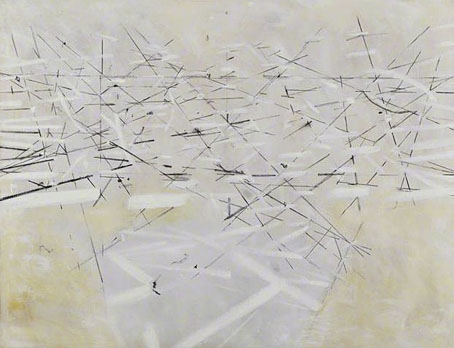
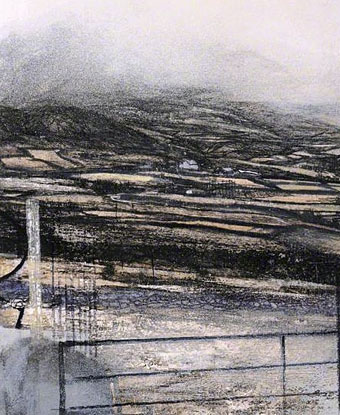
February Painting (Winter Series No.1) (1994) by Wilhelmina Barns-Graham.

The end of winter at the Google Art Project and the BBC’s Your Paintings site.

february3.jpg

Landscape: A Late February Afternoon (1979) by Steven Outram.

february1.jpg

February (above Tan y Foel) III (no date) by Darren Hughes.

Continue reading “February”

Derek Jarman album covers

sexgang.jpg

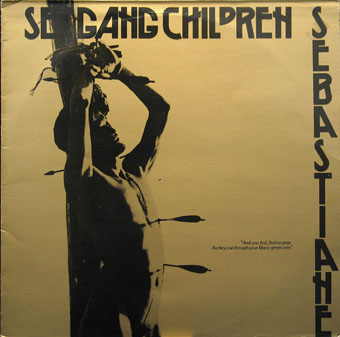
Sebastiane (1983) by Sex Gang Children. A 12″ single using a still from Jarman’s film.

A final post for this Jarman week. Derek Jarman sustained his film career with regular music promo commissions (see this earlier post) but he never produced any album covers as such. What you have here are music releases which happen to feature his artwork or stills from his films. One thing I like about these cover art posts is the disparate music lists they create; the process of investigation also turns up surprises such as a Jayne County album for which he supplied the lettering.

coil.jpg

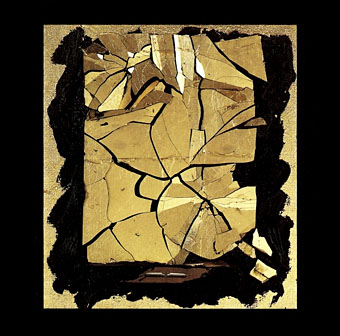
How To Destroy Angels (1992) by Coil. Painting: Fine Balance (1986).

Coil’s album of remixes and digital mangling of one of their earliest recordings. A great collection of rumbling ambience, some of which I used in my Night Music mixes.

county.jpg

Goddess Of Wet Dreams (1993) by Jayne County. Graphics by Derek Jarman, painting by Michael Spencer Jones, design by Warren Heighway.

towering.jpg

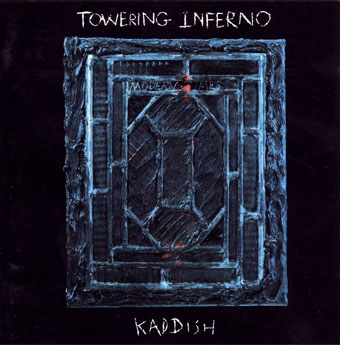
Kaddish (1993) by Towering Inferno. Painting: Modern Times.

An odd album. Towering Inferno were Richard Wolfson and Andy Saunders, who on this album are joined by a large cast of musicians including well-known names such as Márta Sebestyén, Jocelyn Pook, Elton Dean, Chris Cutler, and others. The album is described as “a dream history of Europe in the wake of the Holocaust”, and received great praise on its release although I wonder how often anyone listens to it today. Beautiful pieces of music spoiled throughout by surprisingly hamfisted use of vocal samples.

Continue reading “Derek Jarman album covers”

Weekend links 199

cordal.jpg

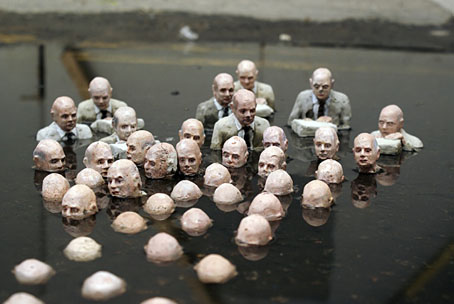
Follow the Leader (London, 2011) by Isaac Cordal.

• “Brutalism is the decor of dystopian films, literature and comics, just as gothic is for horror.” Jonathan Meades‘ A-Z of brutalism.

Vitaly Shevchenko on the urban explorers of the ex-USSR. Related: Photos by Vitaliy Raskalov from the top of the Shanghai Tower.

Joe Banks reviews the throbbing, hissing, minatory pulses of the Black Mill Tapes 1–4 by Pye Corner Audio.

Walter Benjamin is the only one among the commentators who attempts to pin down the anonymous, evanescent quality of Walser’s characters. They come, he says, “from insanity and nowhere else. They are figures who have left madness behind them, and this is why they are marked by such a consistently heartrending, inhuman superficiality. If we were to attempt to sum up in a single phrase the delightful yet also uncanny element in them, we would have to say: they have all been healed.” Nabokov surely had something similar in mind when he said of the fickle souls who roam Nikolai Gogol’s books that here we have to do with a tribe of harmless madmen, who will not be prevented by anything in the world from plowing their own eccentric furrow.

Le Promeneur Solitaire: WG Sebald on Robert Walser

Drink The New Wine, an album by Kris Force, Anni Hogan, Jarboe, Zoe Keating and Meredith Yayanos.

• At 50 Watts: Illustrations by Fortuné Méaulle for Alphabet des Insectes by Leon Becker.

Lawrence Gordon Clark, Master of Ghostly Horror. An interview by John D’Amico.

• Chapel Perilous: Notes From The New York Occult Revival by Don Jolly.

• Mix of the week: Secret Thirteen Mix 107 by Ernestas Sadau.

• An Occult History of the Television Set by Geoff Manaugh.

• Was Ist Das? The Krautrock Album Database.

• First dérive of the year by Christina Scholz.

John Waters’ Youth Manifesto.

Gardens of Earthly Delights

Psychedelic Folkloristic

Water Music I / Here Comes The Flood / Water Music II (1979) by Robert Fripp & Peter Gabriel | After The Flood (1991) by Talk Talk | Flood (1997) by Jocelyn Pook

Love gods

ganymede.jpg

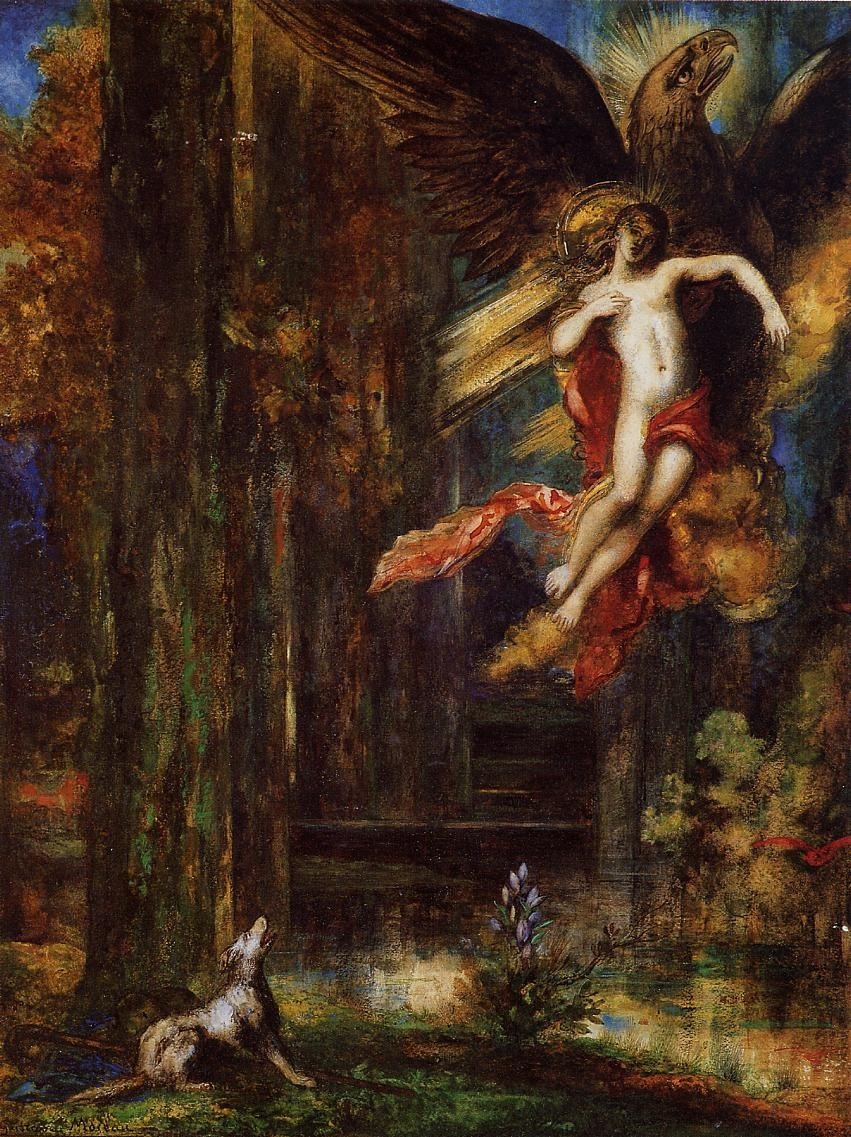
The Raising of Ganymede (1886) by Gustave Moreau.

The story of the love between Zeus, king of the gods, and Ganymede, the handsome son of the Trojan king, goes back at least three thousand years and its roots disappear into the prehistoric neolithic. (more)
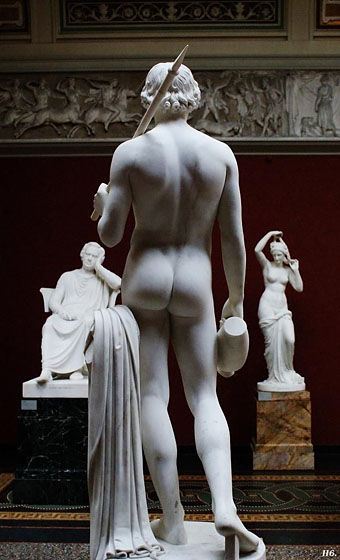
hylas.jpg

Hylas (1846) by HW Bissen.

Not for us only, Nicias, (vain the dream,)
Sprung from what god soe’er, was Eros born:
Not to us only grace doth graceful seem,
Frail things who wot not of the coming morn.
No—for Amphitryon’s iron-hearted son [Heracles],
Who braved the lion, was the slave of one:—

A fair curled creature, Hylas was his name.
He taught him, as a father might his child,
All songs whereby himself had risen to fame;
Nor ever from his side would be beguiled
When noon was high, nor when white steeds convey
Back to heaven’s gates the chariot of the day,

Nor when the hen’s shrill brood becomes aware
Of bed-time, as the mother’s flapping wings
Shadow the dust-browned beam. ‘Twas all his care
To shape unto his own imaginings
And to the harness train his favourite youth,
Till he became a man in very truth.

Theocritus, Idyll XIII: Hylas.
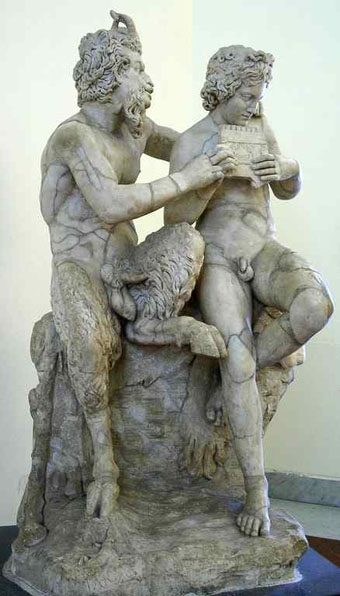
pan_daphnis.jpg

Pan teaching Daphnis to play the panpipes; Roman copy of a Greek original from the 3rd-2nd centuries BCE by Heliodoros.
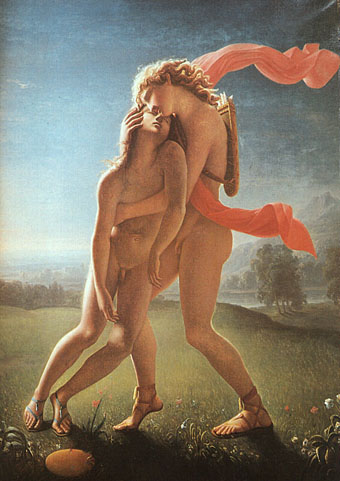
hyacinth.jpg

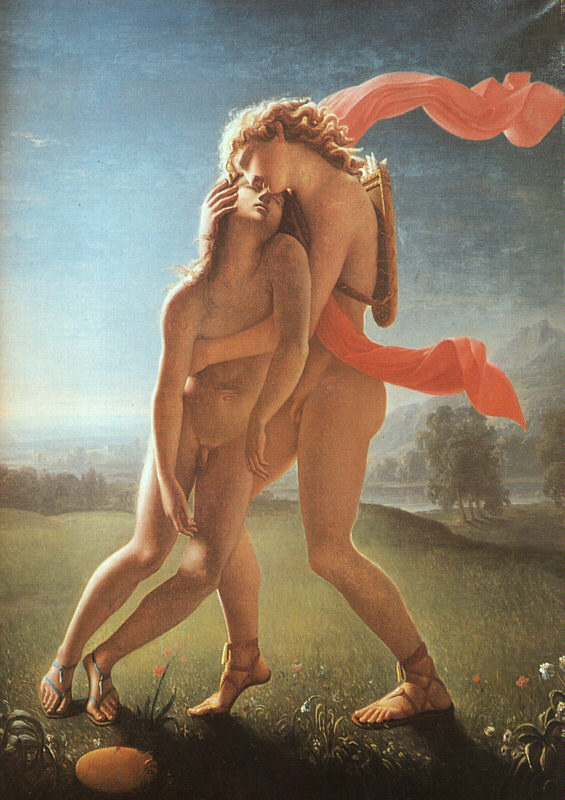
The Death of Hyacinthos (1801) by Jean Broc.

‘You too, Hyacinthus, of Amyclae, Phoebus would have placed in heaven, if sad fate had given him time to do so. Still, as it is, you are immortal, and whenever spring drives winter away, and Aries follows watery Pisces, you also rise, and flower in the green turf. My father, Phoebus, loved you above all others: and Delphi, at the centre of the world, lost its presiding deity, while the god frequented Eurotas, and Sparta without its walls, doing no honour to the zither or the bow. Forgetting his usual pursuits, he did not object to carrying the nets, handling the dogs, or travelling as a companion, over the rough mountain ridges, and by constant partnership feeding the flames.

‘Now, the sun was midway between the vanished and the future night, equally far from either extreme: they stripped off their clothes, and gleaming with the rich olive oil, they had rubbed themselves with, they began a contest with the broad discus. Phoebus went first, balancing it, and hurling it high into the air, scattering the clouds with its weight. Its mass took a long time to fall back to the hard ground, showing strength and skill combined. Immediately the Taenarian boy, without thinking, ran forward to pick up the disc, prompted by his eagerness to throw, but the solid earth threw it back, hitting you in the face, with the rebound, Hyacinthus.

‘The god is as white as the boy, and cradles the fallen body. Now he tries to revive you, now to staunch your dreadful wound, and now applies herbs to hold back your departing spirit. His arts are useless: the wound is incurable. Just as if, when someone, in a garden, breaks violets, stiff poppies, or the lilies, with their bristling yellow stamens, and, suddenly, they droop, bowing their weakened heads, unable to support themselves, and their tops gaze at the soil: so his dying head drops, and, with failing strength, the neck is overburdened, and sinks onto the shoulder.

Ovid’s Metamorphoses, Bk X:143-219 Orpheus sings: Ganymede; Hyacinthus

Previously on { feuilleton }
Three stages of Icarus
The end of Orpheus