Genet art

fini1.jpg

Portrait of Jean Genet II (1950) by Leonor Fini.

Artworks depicting Genet or based on his work are more plentiful than I thought. These are some of the better examples. It’s good to know that the great Leonor Fini was one of the earliest portraitists; in addition to painting two pictures of Genet she also produced a series of erotic engravings based on his writings.

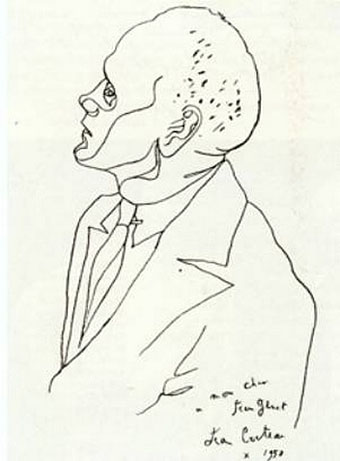
cocteau.jpg

Jean Genet (1952) by Jean Cocteau.

A portrait by Cocteau I hadn’t seen before.

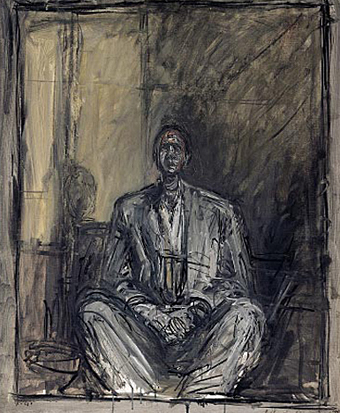
giacometti.jpg

Portrait of Jean Genet (1955) by Alberto Giacometti.

One of three portraits. Genet speaks favourably of Giacometti in Antoine Bourseiller’s film.

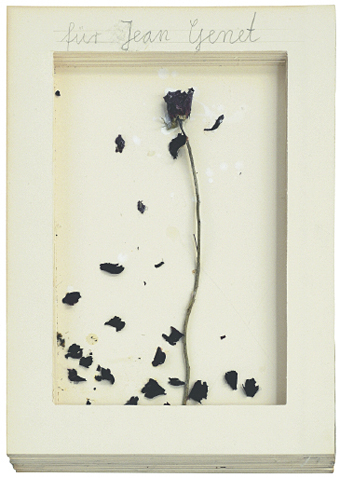
kiefer.jpg

For Jean Genet (1969) by Anselm Kiefer.

Continue reading “Genet art”

August

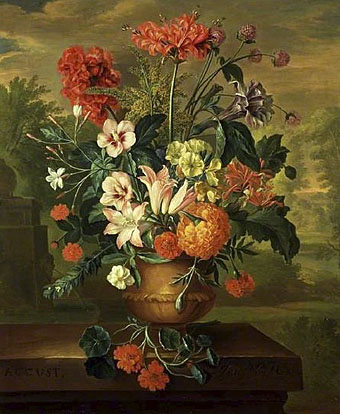
august1.jpg

Twelve Months of Flowers: August (no date) by Jacob van Huysum.

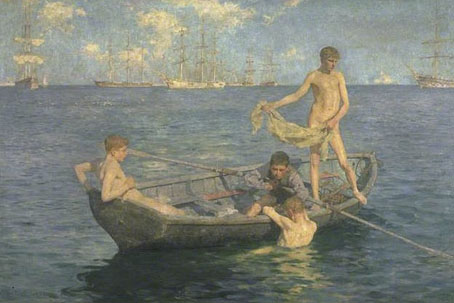
The eighth month in paintings. Alan Bennett is a British artist, not to be confused with the well-known British playwright of the same name. There is, however, a slight connection between playwright and Henry Scott Tuke: Bennett’s BBC film Portrait or Bust (1994) involves an exploration of Leeds Art Gallery during which there’s a glimpse of Tuke’s The Bathers, one of the artist’s many studies of unclothed boys.

august8.jpg

August Blue (1893–4) by Henry Scott Tuke.

august7.jpg

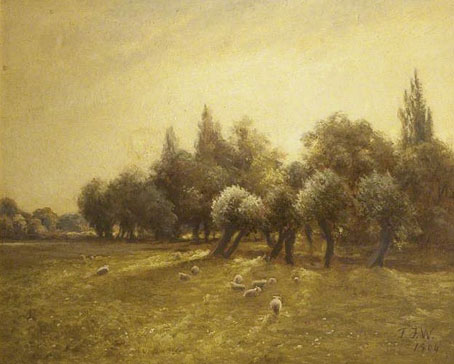
August Afternoon near Dorking (1904) by TF Wilkinson.

august2.jpg

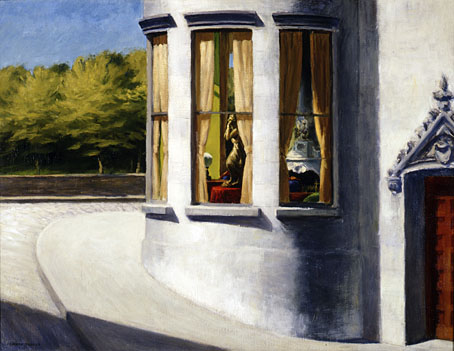
August in the City (1945) by Edward Hopper.

Continue reading “August”

Young Knight in a Landscape

carpaccio01.jpg

Young Knight in a Landscape (1510).

A painting by Venetian artist Vittore Carpaccio (c. 1460–1525/26) replete with natural detail. Many of these details, the animal ones in particular, are no doubt symbolic, although what they symbolise can change over time, and may also refer to the personal mythology of the family for whom the painting was created. Dogs often represent fidelity but the dog crouching on the path behind the knight wears an expression that may be taken for a snarl. The hawk knocking another bird from the sky is more obviously a symbol of belligerence which suits the action of drawing a sword.

The note for this painting says it was attributed to Albrecht Dürer until 1919, something I find surprising. The vegetation is certainly painted with a Dürer-like precision but Dürer was equally precise with his figures, and would have paid more attention to the modelling of the hands. One detail I don’t recall seeing before is the codpiece pocket. The Scottish sporran often has a pocket in the back, there being no pockets in kilts or, for that matter, in suits of armour.

carpaccio12.jpg

carpaccio02.jpg

Continue reading “Young Knight in a Landscape”

Weekend links 216

heathen.jpg

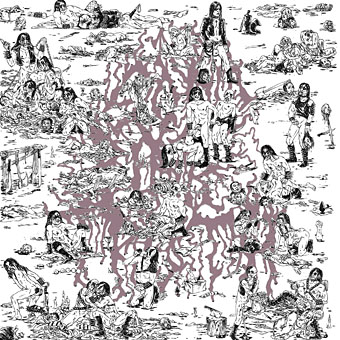
Why Do The Heathen Rage? (2014) by The Soft Pink Truth. Cover art by Mavado Charon.

Drew Daniel’s latest release as The Soft Pink Truth is Why Do The Heathen Rage?, a witty electronic riposte to the often reactionary attitudes of black metal music and the people who create it. (The album is dedicated to Magne Andreassen, a gay man stabbed to death by the drummer from Emperor.) Dorian Lynskey talked to Daniel about queering the metal world, as did Angus Finlayson at FACT. Daniel’s project has been receiving press everywhere but you wouldn’t know it to read US/UK gay news sites where the music coverage is relentlessly narrow and insular. To date, only BUTT magazine has mentioned Why Do The Heathen Rage? but then BUTT have always stood apart from their parochial contemporaries. Never mind, here’s another fucking article about “petite pop princess” Kylie Minogue.

• “By the letter of the law, Ulysses was obscene. Obviously, gratuitously, relentlessly obscene.” Josh Cook on censorship and dangerous books. One of my own dangerous publications, the fifth issue of the Lord Horror comics series, Hard Core Horror (declared obscene in a UK court in 1995), received a very belated review at The Comics Journal. More censorship: Judy Bloom on the perennial panics in US school libraries. Lest we feel superior to American prudery, Leena McCall’s painting of a semi-naked woman caused some consternation in a London gallery last week.

• “Over and over, we’re told that nobody buys [compact discs] anymore.” Steven Hyden on the latest obituaries being written for a music format. Ten years ago the death of vinyl was being confidently predicted: “The physical presence of the popular song is gone,” Paul Morley declared. Related: The death of mp3s.

There is nothing quite like Maryanne Amacher’s third ear music. It is alarming. Some of her fellow artists never quite believed that their ears were not being damaged. Third ear music invades you, wraps inside your body, your head, your eyes — just like she says. You can’t be sure, after a while, if the sounds you hear are those created by your ears or Maryanne Amacher.

Stefany Anne Golberg on the music of Maryanne Amacher

• At Dangerous Minds: Nothing Lasts Forever (1984), Bill Murray in a “lost sci-fi comedy set in a totalitarian New York City”.

• More Joyce (there’s always more Joyce): Humument Images to Accompany James Joyce’s Ulysses by Tom Phillips.

• Another celebration of Penda’s Fen by David Rudkin, and another reminder that it’s still not available on DVD.

• Stairway to Heaven: Atlas Obscura on the Gustave Moreau Museum, an essential stop if you visit Paris.

• Mix of the week: Secret Thirteen Mix 121 by Higher Intelligence Agency.

• MetaFilter has a wealth of links to pulp magazine archives.

Yan Nascimbene’s illustrations for Italo Calvino’s stories.

• Rebecca Litchfield’s Orphans of Time and Soviet Ghosts.

• RIP Charlie Haden

Going Home (1972) by Alice Coltrane (Charlie Haden, bass) | Earth (1974) by Joe Henderson Featuring Alice Coltrane (Charlie Haden, bass) | Malkauns (1975) by Don Cherry (Charlie Haden, bass)
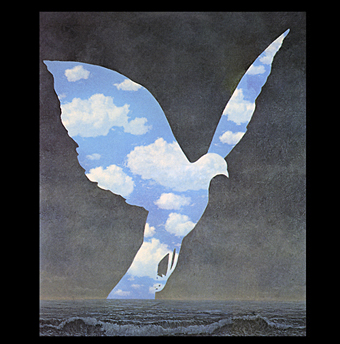
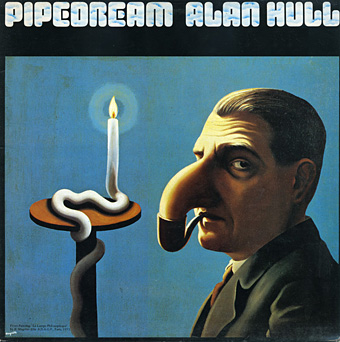
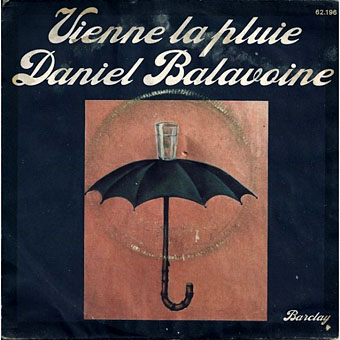
René Magritte album covers

beck.jpg

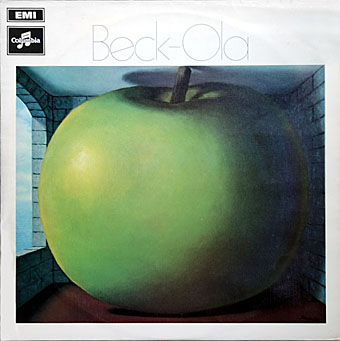
Beck-Ola (1969) by The Jeff Beck Group. Painting: The Listening Room (second version, 1958).

An inevitable post considering the shape of the week, and also a continuation of an occasional series about paintings used as album cover art. Given Magritte’s continuing popularity I’m sure these can’t be the only examples, especially when his work had such an effect on the cover designs of the 1970s. In addition to the Magritte-like covers created by Hipgnosis for Pink Floyd and others you can find the artist’s influence in the cover by Alton Kelley and Stanley Mouse for The Grand Illusion (1977) by Styx, a hugely successful album whose painting is derived from Magritte’s The Blank Cheque (1965). There are many more examples.

Magritte died in 1967 so he missed out on this explosion of interest which also spread into the advertising world. When it comes to influence, Magritte has probably had more of an effect on the general culture than any of the other Surrealists, Dalí included.

rascals.jpg

See (1969) by The Rascals. Painting: The Big Family (1963).

hull.jpg

Pipedream (1973) by Alan Hull. Painting: Philosopher’s Lamp (1936).

balavoine.jpg

Vienne La Pluie (1975) by Daniel Balavoine. Painting: Hegel’s Holiday (1958).

Continue reading “René Magritte album covers”