New things for November

pinch.jpg

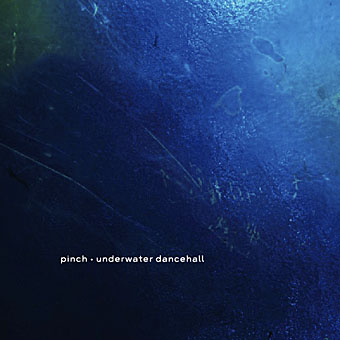
So then, where were we? There’s a few things to catch up with… First up, a recent design of mine for CD and vinyl has been released this month, Underwater Dancehall by Pinch, an acclaimed dubstep album from Bristol. I was very pleased at the way this came out, not least because of the excellent photos by Liz Eve I was given to use.
book_of_biblio.jpg

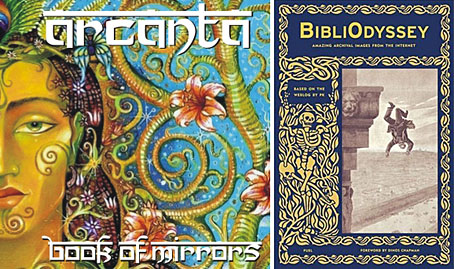
Then a couple of gratuitous plugs: Thom sent me a copy of his Arcanta CD, Book of Mirrors, this week. The luscious cover art is by Philip Shadbolt and you can learn more about Arcanta at their MySpace page. And Mr PK (who you should know now from BibliOdyssey) has a book out this month, a paper approximation of his excellent pictorial smorgasbord. PK denies his book is the perfect present for Christmas and discusses his book and blog at 3quarksdaily.

Another playlist for Halloween

bauhaus.jpg

A follow-up to last year’s list. Seeing as Joy Division are very much in the news at the moment with the release of Control and the re-issue of the albums, I thought a post-punk theme would be appropriate. The period which immediately followed punk in the late Seventies saw a lot of doom being imported into what was then still a proper alternative to the mainstream of popular music. This trend quickly ossified into the distinct and far less adventurous genres of goth and post Throbbing Gristle/Cabaret Voltaire industrial but between 1978 and 1982 everything was in a state of fascinating flux.

Hamburger Lady (1978) by Throbbing Gristle.
TG’s heart-warming ode to a burns victim.

6am (1979) by Thomas Leer & Robert Rental.
Leer and Rental’s The Bridge album was originally one of the few none-Throbbing Gristle releases on TG’s Industrial label, one half songs, the other moody electronic instrumentals. 6am perfectly conjures a picture of empty streets at dawn and sounds like a precursor of Ennio Morricone’s score for The Thing.

Bela Lugosi’s Dead (1979) by Bauhaus.
The first Bauhaus single and the only song of theirs I liked. Put to great use at the beginning of the otherwise pretty risible The Hunger.

Day Of The Lords (1979) by Joy Division.
If anything shows that Ian Curtis was a Romantic in the 19th century sense, it’s this grandiose wallow in the atrocities of history. “Where will it end?”

James Whale (1980) by Tuxedomoon.
Church bells toll and a lonely violin shrieks for the director of the Universal Frankenstein films.

Halloween (1981) by Siouxsie & the Banshees.
With a title like that, how could it not be included here?

Goo Goo Muck (1981) by The Cramps.
Always superior collagists of rockabilly weirdness and early garage riffs, The Cramps started out in the horror camp (“camp” being a big part of their act) with the Gravest Hits EP. Goo Goo Muck was a cover of a great single by (I kid not) Ronnie Cook & the Gaylads. “When the sun goes down and the moon comes up / I turn into a teenage goo goo muck.”

Raising The Count (1981) by Cabaret Voltaire.
An obscure moment of resurrection originally on the Rough Trade C81 cassette compilation from the NME.

Gregouka (1982) by 23 Skidoo.
Gregorian monks meet Moroccan pipes and drums with the result sounding like a voodoo ceremony taking place in cathedral catacombs.

The Litanies Of Satan (1982) by Diamanda Galás.
The formidable Ms Galás was part of last year’s list and her first album is just as hair-raising as her later works. The second part is the marvellously titled Wild Women With Steak-knives (The Homicidal Love Song For Solo Scream).

Happy Halloween!

Previously on { feuilleton }
White Noise: Electric Storms, Radiophonics and the Delian Mode
The Séance at Hobs Lane
A playlist for Halloween
Ghost Box

Boredoms in Manchester

boredoms2.jpg

Anyone who subscribes to the stereotype about Japanese people always being quiet and unassuming has never seen a Japanese rock band. Last time I returned from a gig with my ears ringing the way they are now was after seeing Acid Mothers Temple a few years ago. Tonight it was the turn of Boredoms who drummed up an absolute storm in a sweaty, airless dungeon under the Student’s Union. Boredoms have been active since the mid-Eighties in various shapes and sizes, more recently working under variations on their name. Early albums were always experimental but tended to be nastily noisy with it. They really caught my attention at the end of the Nineties with Super Ae (1998) and Vision Creation Newsun (2000), a pair of drum-powered albums that owe a great deal to the “kosmische” atmosphere of the best Krautrock, especially Amon Düül II circa Yeti.

boredoms1.jpg

Tonight we had a great deal of the thundering cross-patterns of drum rhythms amended by some of the piercing extended crescendos found on VCN. Very loud and very powerful. There was some unusual instrumentation involved as well, including what appeared to be hand-held lightbulbs triggering samples and harmonised feedback, and also a rack of guitar necks (above) with what I assume must be open tunings given the way these were used as percussion devices. It was difficult to tell who was doing what (or using what) for much of the time due to the density of the crowd. But such details are beside the point, this was a tremendous performance that was overwhelmingly intense at times. It’s rare indeed to find a band still working at this peak after 21 years. Along with the very different performance by Machinefabriek in May, best gig of the year so far.

Aerodynamik by Kraftwerk

kraftwerk.jpg

1 Aerodynamik (Intelligent Design Mix by Hot Chip) (8:34)
2 La Forme (King Of The Mountains Mix by Hot Chip) (11:31)

This is a curious moment to be releasing a remix single, four years after the last studio album, Tour De France Soundtracks, which is the origin of the music here. But the Düsseldorf boys have always been a law unto themselves and I’m a Kraftwerk obsessive so I won’t complain, especially when any release at all is a significant event.

kraftwerk2.jpg

Tour De France Soundtracks (2003); Aerodynamik single (2004).

An additional attraction for this fan is seeing how the design changes from one release to the next. Kraftwerk control their presentation as carefully as their music and this new design combines the original quartet of cyclists (which date back to the first Tour De France single from 1983) with the fluorescent green that became a feature with Expo 2000. The bikes and riders have now been updated so they look suitably aero-dynamic.

Kraftwerk are notoriously tight-lipped about their activities and since the Eighties have developed a Kubrick-like prevarication towards new projects. A multi-disc retrospective, The Catalogue, was supposed to have appeared in 2004 and came close enough to release for promo editions to go out, only to be cancelled at the last minute. (Those promos now sell for hundreds of dollars on eBay.) The new single may be intended to stimulate interest in something more substantial seeing as we’re entering the prime period for pre-Christmas releases. Fingers crossed.

Previously on { feuilleton }
Street Sounds Electro
White Noise: Electric Storms, Radiophonics and the Delian Mode
The genius of Kraftwerk