Jugend Magazine revisited

jugend1.jpg

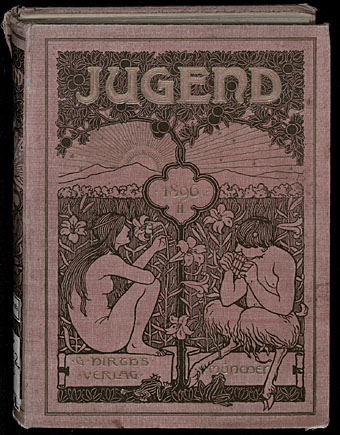
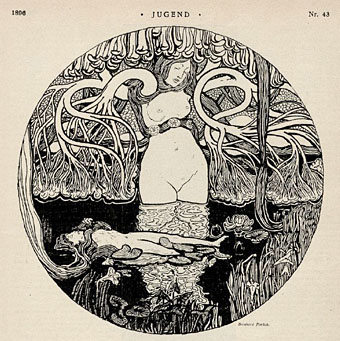
It was just over a year ago that I was wishing there was some way to see whole issues of Jugend magazine, the German periodical launched in 1896 whose Art Nouveau style gave its name to the movement in Germany, Jugendstil. Yesterday’s search for Heinrich Vogeler artwork turned up that very thing, scanned editions of Jugend at the University of Heidelberg’s digital archive. Whole numbers from 1896 to 1925! I am aghast. As well as the scanned pages being very high quality you can download the bound collections as PDFs, each one totalling over 400 pages. Leafing through pages of old magazines in a foreign language doesn’t sound very stimulating if you can’t read German but Jugend was a very visual publication. Each issue is crammed with a variety of drawings in styles which range from black-and-white Art Nouveau motifs and quasi-Symbolist illustration to humorous drawings and cartoons. Each issue also featured a large drawing or painting on a fold-out spread.
jugend2.jpg

Continue reading “Jugend Magazine revisited”

Weekend links 2

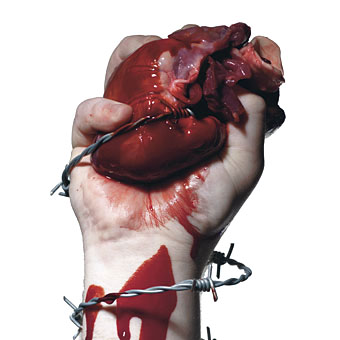
heart.jpg

A picture for embittered lovers.

Among other things this week I’ve been working on the design for another CD featuring photos by Liz Eve, a photographer whose pictures are always a pleasure to use. (Our earlier encounters can be seen here, here and here.) The latest set have this anti-Valentine for an eye-popping cover image. I’ll be posting the finished layouts once everything is approved by the label.

• Crash: JG Ballard’s artistic legacy. Iain Sinclair on Ballard and a new art exhibition inspired by the author’s fiction.

• More art: Clive Hicks-Jenkins’ Artlog is essential reading. Lots of insights into his beautiful work.

• Raw Power by Iggy and the Stooges will be released in an expanded edition on April 27th with outtakes, documentary, book and other extras.

• Sonic Youth dude and fellow Arthurian Thurston Moore has a blog.

• “That’s all it comes down to in the end, though, isn’t it? Put it in and jiggle it about a bit.” Alan Bennett & John Fortune discuss sex. A hoot.

• “I wanna walk through Sodom with a boy on my arm / Who’s so damn pretty I don’t know where I am…” A song from 1984 for Valentine’s Day: I, Bloodbrother Be (£4,000 Love Letter) by Shock Headed Peters.

Betty Blythe

blythe1.jpg

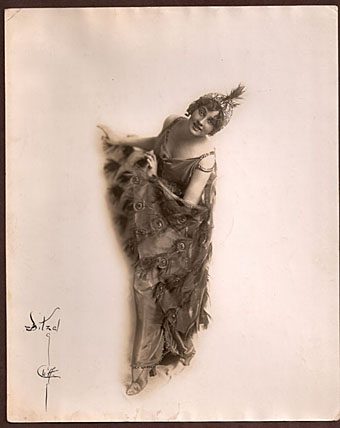
Yesterday’s search for Betty Blythe pictures turned up this pair which I couldn’t resist posting, with Ms. Blythe posed against a peacock in the first and wearing a peacock-styled outfit in the second. As I’ve noted before, silent films are very often like Symbolist paintings come to life, and The Queen of Sheba (1921) would appear to be another of these which makes its loss all the more disappointing. The photo below is from a Flickr set whose user has her own Tumblr blog of silent movie stars.

blythe2.jpg

Previously on { feuilleton }
• The Mask of Fu Manchu
• Salomé posters
• Ruth St Denis
• The Feminine Sphinx
• Lussuria, Invidia, Superbia
• Alla Nazimova’s Salomé

Styles of Ornament

speltz1.jpg

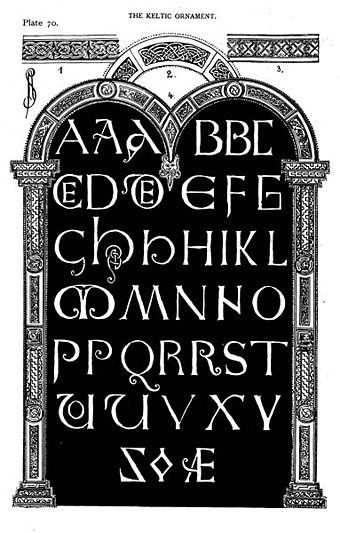
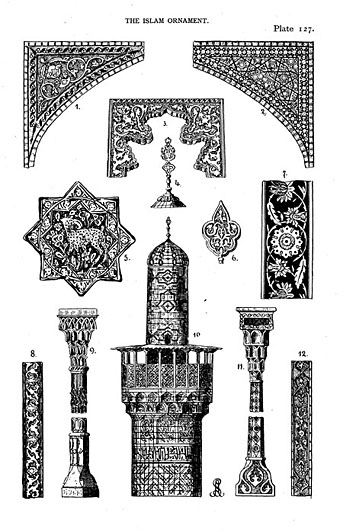
Pages from Styles of Ornament (1904), a collection of ornamental designs by Alexander Speltz. This is one of a great collection of books from the Digital Library for the Decorative Arts and Material Culture at the University of Wisconsin. I only found their collection today so I’ve yet to take a detailed look at the rest of the volumes.

speltz2.jpg

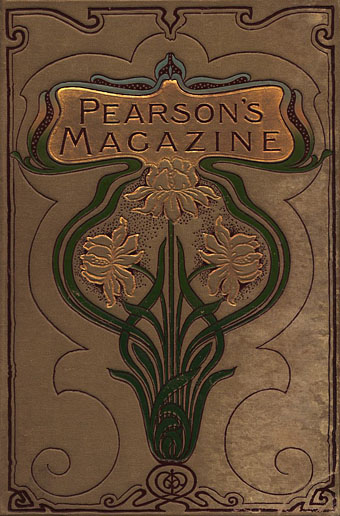
And speaking of ornament, Callum at Front Free Endpaper posted this elegant Art Nouveau-styled cover from a Pearson’s Magazine collection, just the kind of thing I enviously covet.

pearsons.jpg

Previously on { feuilleton }
• The Grammar of Ornament by Owen Jones

Tite Street then and now

tite1.jpg

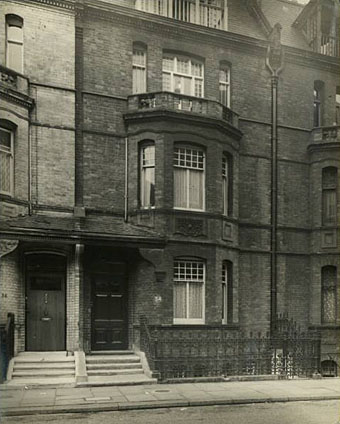
This LIFE magazine photo of Oscar Wilde’s home at 34 Tite Street, Chelsea, is fascinating for Wilde aficionados in being a far more detailed view of the “House Beautiful” exterior than one ever finds in books about the writer. No information as to when it was taken but from the look of the print it was probably some time just before or after 1900.

tite2.jpg

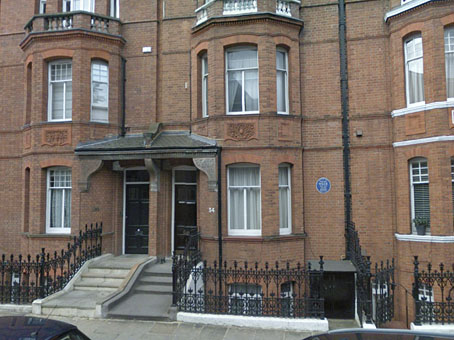
Google Earth lets us examine Tite Street as it is today, with Oscar’s house looking relatively unchanged aside from the blue plaque which informs people that he once lived there. What you can’t see in this picture is the opposite side of the street which now contains a particularly dreary housing development from the 1960s. Oscar and his contemporaries in the area—many of whom were artists—wouldn’t have been impressed at all.

Elsewhere on { feuilleton }
• The Oscar Wilde archive