Les Jeux des Anges by Walerian Borowczyk

jeux1.jpg

Les Jeux des Anges.

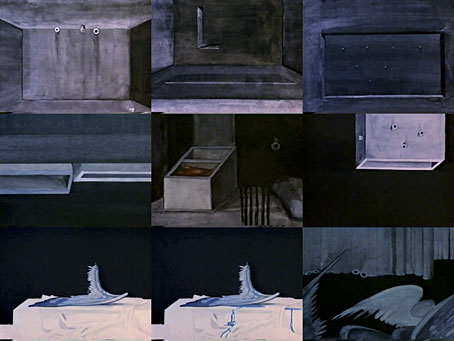
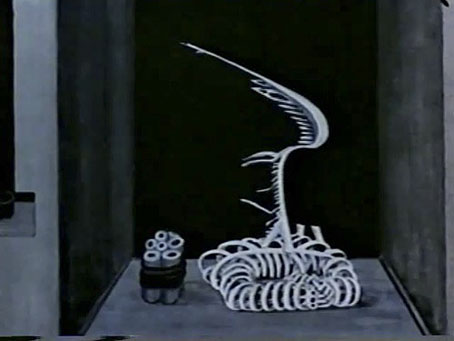
Following yesterday’s post, we can be certain that Terry Gilliam had seen Les Jeux des Anges (1964) because in 2001 he included it in a list of ten favourite animated films. Jan Lenica co-directed Dom (1959) with Walerian Borowczyk but doesn’t work on this film which is the darkest and strangest of all Borowczyk’s works I’ve seen to date. Once again there’s some unavoidable subtext, although whether that applies to the Holocaust or to Stalinist repression is for the viewer to decide. What we see is a series of painted tableaux in which various mechanical processes are butchering angels. The atmosphere isn’t far removed from the cruelties of Roland Topor while the painted scenes are very similar to those that David Lynch would be animating a couple of years later. The soundtrack is credited to electronic composer Bernard Parmegiani. Watch it for yourself here.

jeux2.jpg

Previously on { feuilleton }
Labirynt by Jan Lenica
Les Temps Morts by René Laloux
Short films by Walerian Borowczyk

Labirynt by Jan Lenica

labirynt1.jpg

Labirynt.

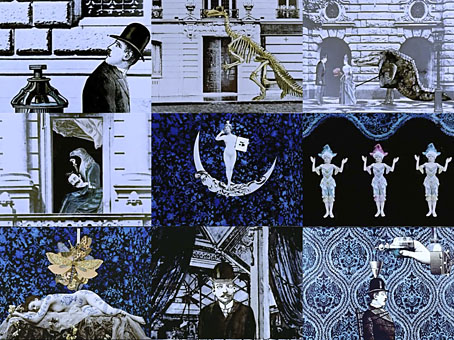
One of the links at the weekend was to this post about the favourite Polish posters of the Brothers Quay, a piece which included an example by designer and illustrator Jan Lenica (1928–2001). Lenica, like the Quays, was also a filmmaker who started out by producing short animations, Labirynt (1963) being one of these works. I’d not come across this before but now that I’ve watched it I’d be very surprised if Terry Gilliam hadn’t seen it at some point in the 1960s, the animation of collaged illustrations and hand-tinted photographs from 19th-century sources is precisely the kind of thing that Gilliam was doing a few years later. So is the generally Surrealist atmosphere with a bowler-hatted protagonist being menaced in the street by a host of hybrid creatures, encountering the women one sees in old erotic postcards, being seized by a giant hand, and so on.

labirynt2.jpg

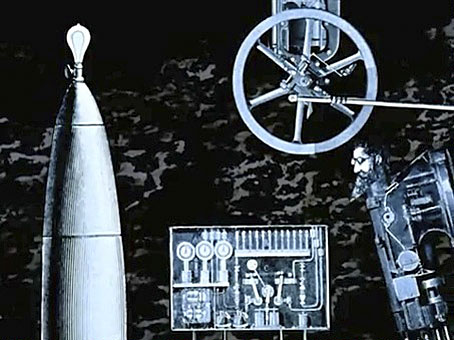
Many Eastern European animations from the Cold War period involve a degree of political allegory, and Labirynt is no exception. One of the menacing figures is a mechanical gentleman who captures Bowler Hat Man and subjects him to a series of forced operations, eventually building a cage inside the captive’s head. Given this, and some opening shots which show Bowler Hat flying over the city using self-powered wings, it’s not stretching a point to see this 13-minute film as Brazil in miniature. Watch it for yourself here.

Previously on { feuilleton }
Brothers Quay scarcities
Gilliam’s shaver and Bovril by electrocution
Short films by Walerian Borowczyk
The Brothers Quay on DVD

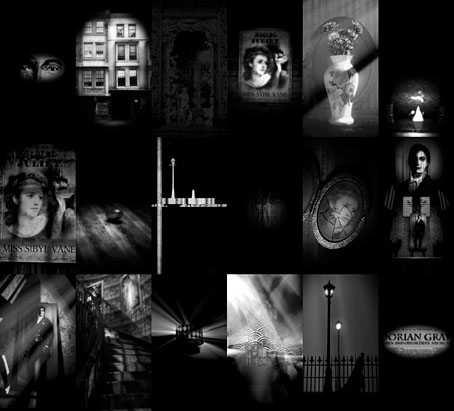
Thomas Beg’s Dorian Gray

dorian.jpg

Oscar Wilde’s story in this adaptation is shortened to a very brisk eight minutes which utilises 3D animation and makes some smart use of period photos. The film was an animation project by UCA Rochester student Thomas Beg who also has a brief rendering of Hieronymus Bosch’s Garden of Earthly Delights here.

The collage approach for Dorian Gray caught my attention since it’s not far removed from the collage style I used when adapting the story myself for the forthcoming second edition of The Graphic Canon. My version was in part a formal challenge which tried to use materials from Wilde’s time that also relate in some way to Wilde himself. More about that later. Thomas Beg’s version owes something to Albert Lewin’s 1945 film adaptation, especially in its views of the portrait, but it’s distinctive enough to stand alone. Watch it here.

Elsewhere on { feuilleton }
The Oscar Wilde archive

Weekend links 124

despont.jpg

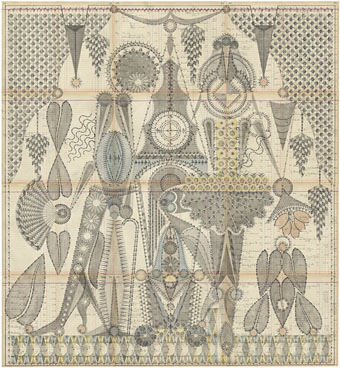
Couple with Clock Tower (2011) by Louise Despont.

Assuming such a thing doesn’t already exist, there’s a micro-thesis to be written about the associations between the musicians of Germany’s Krautrock/Kosmische music scene in the early 1970s and the directors of the New German Cinema. I’d not seen this clip before which shows the mighty Amon Düül II jamming briefly in Fassbinder’s The Niklashausen Journey, a bizarre agitprop TV movie made in 1970. More familiar is the low-budget short that Wim Wenders helped photograph a year earlier showing the Düül performing Phallus Dei. Wenders later commissioned Can to provide music for the final scene of Alice in the Cities. And this is before you get to Werner Herzog’s lengthy relationship with Popol Vuh which includes this memorable moment. Any others out there that I’ve missed?

Album sleeves in their original locations. And speaking of album sleeves, photo prints of some very famous cover designs by Storm Thorgerson will be on display at the Public Works Gallery, Chicago, throughout September and October.

Crazy for kittehs: the quest to find the purring heart of cat videos: Gideon Lewis-Kraus goes where few journalists dare to tread. Also at Wired, the same writer explores the Cat Cafés of Tokyo.

The City of Rotted Names, a “shamelessly Joycian cubist fantasy” by Hal Duncan, available to read in a variety of formats on a pay-as-thou-wilt basis until Monday only.

• Jailhouse rockers: How The Prisoner inspired artists from The Beatles to Richard Hawley.

How To Survive A Plague, a documentary about HIV/AIDS activism in the US.

• Deborah Harry: hippy girl in 1968, punk in 1976, and Giger-woman in 1981.

Alan Garner answers readers’ questions about his new novel, Boneland.

• For steampunk aficionados: ‘COG’nitive Dreams by Dana Mattocks.

• David Bowie, Iggy Pop, Madonna & Asparagus: Kraftwerk in 1976.

• New music videos: Goddess Eyes I by Julia Holter | Sulphurdew by Ufomammut | Warm Leatherette by Laibach.

Weekend links 123

niceron.jpg

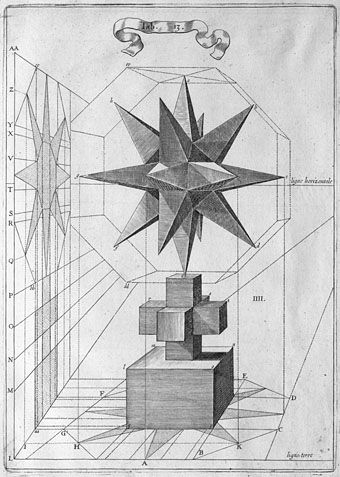
La Perspective Curieuse (1663) by Jean François Nicéron. From Curious Perspectives at BibliOdyssey.

1612 Underture is a forthcoming album by The Eccentronic Research Council and Maxine Peake which extends the electronics + occult concept to encompass Kraftwerk and the Pendle Witches. The Quietus has a review of their album, and an interview and report about a recent live performance (I missed the latter, unfortunately), while the Guardian’s interview with the splendid Ms Peake reveals that “musically, her tastes range from Japanese black metal, garage rock and folk, to techno and psychobilly.” The famous Lancashire witches also happen to be the subject of Jeanette Winterson’s latest novel, The Daylight Gate.

• Yet more Marker: The Owl’s Legacy: Chris Marker’s 13-Part Search for Western Culture’s Foundations in Ancient Greece, and J. Hoberman on The Lost Futures of Chris Marker.

Dr Oliver Sacks talks about how hallucinogenic drugs helped him empathize with his patients.

Paulo Coelho’s ill-judged Joyce-bashing has made him a butt of scorn this week, but he’s a safe target because, with books that multitask a little too openly as self-help manuals, he’s not so clubbable. Unlike, say, Ian McEwan, who not-that-differently declared against “the dead hand of modernism“, for all the world as if the dominant literary mode in post-war England was Steinian experimentation or some Albion Oulipo, against which young Turks hold out with limpidly observed interiority, decodable metaphors, strained middle-class relationships and eternal truths of the human condition(TM).

China Miéville on the always contentious future of the novel.

The Foliate Head: a new book by Marly Youmans with illustrations by Clive Hicks-Jenkins.

Hysterical Literature: Session Two: Alicia reads from Leaves of Grass by Walt Whitman.

Dreaming in Dirigibles: The Airship Postcard Albums of Lord Ventry.

The Art of the Literary Fake (with Violin) by Jeff VanderMeer.

RIP Neil Armstrong, first human on the Moon.

Macho Man: Morgan Meis on Robert Hughes.

• Book covers by Hannes Bok.

This Is Now!

Squid Moth

Lunar Rhapsody (1947) by Dr Samuel J. Hoffman | Lunar Musick Suite (1976) by Steve Hillage | Back Side Of The Moon (Steve Hillage’s Under Water Deep Space Remix) (1991) by The Orb.