Weekend links 252

brizzi.jpg

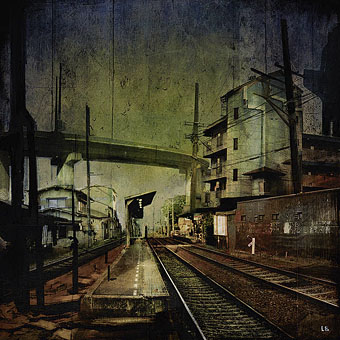
Waiting by Liz Brizzi.

• “Music, politics, sex, and art were also widely represented by Evergreen. Gerald Ford famously maligned the magazine on the floor of Congress for printing the likeness of Richard Nixon next to a nude photo.” Jonathon Sturgeon on the return of an avant-garde institution.

• “The hallucinogenic properties of language are widely recognized by all repressive societies…which treat words like other tightly controlled substances.” Askold Melnyczuk reviews Where the Bird Sings Best, a novel by Alejandro Jodorowsky.

• Mixes of the week: A Mix For Thomas Carnacki by Jon Brooks whose Music for Thomas Carnacki has been reissued on vinyl; Solid Steel Radio Show 27/3/2015 by DJ Food.

One of the few vice-friendly cities left in the US, New Orleans remains his spiritual home, or whatever the atheist equivalent is. Waters’ supposed favourite bar in the world is here in the historic French Quarter. The Corner Pocket is a gay dive bar with tattooed strippers—filthy in exactly the way Waters likes.

“Trash and camp just don’t cut it any more,” he told a rapt audience at his interview panel on Friday. “Filth still has a punch to it. The right kind of people understand it and it frightens away the timid.”

John Waters growing older disgracefully

Songs of a Dead Dreamer and Grimscribe by Thomas Ligotti are being republished in a single edition by Penguin. Jeff VanderMeer wrote the foreword.

• “The film is brimming with Bacchanalian revelry, arcane mystery and mortal dread.” Robert Bright on The Saragossa Manuscript by Wojciech Has.

Alistair Livingston has posted page scans from When Darkness Dawns, volume two of his zine from the early 80s, The Encyclopedia of Ecstasy.

• “Without first understanding the flâneur we cannot understand the development of arcades,” says Aaron Coté.

• At A Journey Round My Skull: Jo Daemen cover designs; at 50 Watts: the art of Manuel Bujados.

• Vast spacecraft and megastructures: Jeff Love on the science-fiction art of Chris Foss.

• At Dangerous Minds: RE/Search’s Vale on JG Ballard and William Burroughs.

• RIP John Renbourn

Pentangling (1968) by Pentangle | Lyke-Wake Dirge (1969) by Pentangle | Lord Franklin (1970) by Pentangle
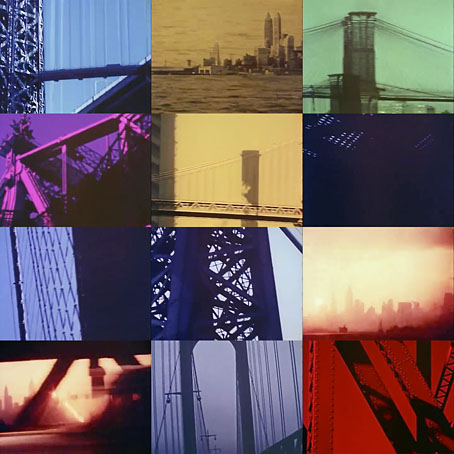
Bridges-Go-Round, a film by Shirley Clarke

clarke

Bridges-Go-Round (1958) is a short but beguiling film that makes New York’s bridges seem like huge pieces of kinetic sculpture. The version linked here is also unusual for being two films in one: the film repeats itself with identical visuals but a different soundtrack. The first version is scored by a jazz piece from composer and producer Teo Macero, the second has electronic music by Louis and Bebe Barron that sounds very similar to their all-electronic score for Forbidden Planet (1956). When the music changes the film seems to change with it.

Previously on { feuilleton }
NY, NY, a film by Francis Thompson

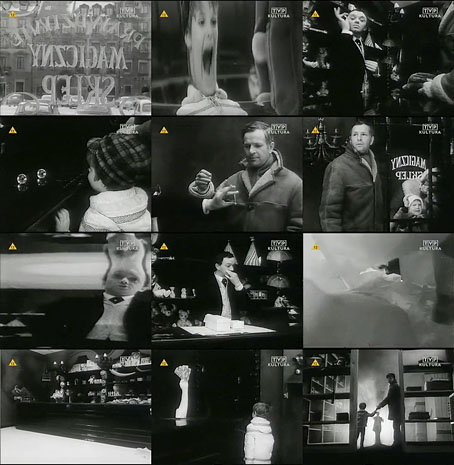
Prawdziwie magiczny sklep, a film by Mieczyslaw Waskowski

magic.jpg

Another short film by Mieczyslaw Waskowski, this is very different to the abstraction of Somnabulists being a remarkably faithful adaptation of HG Wells’ short story, The Magic Shop. Waskowski wrote and directed Prawdziwie magiczny sklep for Polish television in 1969. The title translates as “Truly Magical Shop” although “Genuine Magic Shop” would be more accurate, a description the vaguely sinister (and magical) proprietor in Wells’ story offers to the father and son who pay his establishment a visit.

The Magic Shop had been adapted by US television five years earlier for The Alfred Hitchcock Hour, a version that by coincidence was mentioned in the Guardian‘s print edition this weekend in a list of Reece Shearsmith’s favourite anthology dramas. I’m afraid I can’t share Shearsmith’s enthusiasm on this occasion (see an earlier post); the Wells story has been a favourite for years, and I was unimpressed by the skewing of the Hitchcock Hour version which turned the boy into a much older delinquent-in-the-making. The frisson of the original story comes from the disparity between the young son’s acceptance of the genuinely magical occurrences in the shop, and the growing alarm of the narrator-father when events graduate from the inexplicable to the sinister. Waskowski’s adaptation is more whimsical than Bradbury-dark but it still follows Wells very closely, at least until the end where things are padded out with an extra scene.

The version linked here is without subtitles but the visual storytelling is clear enough. Viewers familiar with The Saragossa Manuscript (1965) may recognise the actors playing the father and shopkeeper from Wojciech Has’s equally adept adaptation. The Wells story may be read here.

Previously on { feuilleton }
Uncharted islands and lost souls
Doctor Moreau book covers
The Island of Doctor Moreau
Harry Willock book covers
The Time Machine
The Magic Shop by HG Wells
HG Wells in Classics Illustrated
The night that panicked America
The Door in the Wall
War of the Worlds book covers

Weekend links 251

quintana.jpg

Beliel (2013) by Dan Quintana.

Guida essenziale all’Italian Occult Psychedelia. Out next month: Nostra Signora Delle Tenebre, a tribute to “movies that…retained a decidedly Italian flavour, a bizarre mix of nasty violence, lurid sexuality and feverish Catholic mysticism, all filtered through a manic obsession with death, blood and the sins of the flesh.” In the meantime, try the Italic Environments mix by Lay Llamas.

• “His work matters more than ever now because it stands in contrast to all the sequels, the comic-book adaptations, that Hollywood makes to sell lunchboxes.” Ryan Gilbey looks at a new documentary about the great Robert Altman.

• Psychedelic Culture at the Crossroads: Erik Davis on the ongoing reappraisal of the value of psychedelic drugs. Related: Dude, You Can Draw Magic Mushrooms With an Oscilloscope.

Like [Ellen Sofie] Lauritzen, what I appreciate about music, writing, and films that vary from dated to downright misogynist is the rawness I see expressed, a sheer energy that can’t toe the line of perfect political obeisance. I join her in hoping that we back down from using “problematic” as a censorious bludgeon against creative achievements, no matter how problematic they are.

Sarah Seltzer on whether feminists can enjoy misogynist art

• Mixes of the week: Roger Eagle’s jukebox selection for Eric’s club, Liverpool; Switched On! Vol. 4 by AnchSounds; T-P-F Mix 3: Bucolic Intrigue Romance by The Pattern Forms.

• At Dangerous Minds: Paul Gallagher on the whimsical anarchism of the White Bicycle revolution.

• Opening the Ghost Box: Dave Thompson on a record label that’s mentioned here more than most.

Abominations Of Yondo (2007), a free album inspired by the weird fiction of Clark Ashton Smith.

• Placards of earthly delight: Isabel Stevens on Vera Chytilová’s film posters.

• I’m an artist to watch according to Nakid Magazine.

Tomb of Insomnia

Death Surf (2012) by Heroin In Tahiti | Voices Call (2015) by Lay Llamas | Averno (2015) by OVO

Somnambulists, a film by Mieczyslaw Waskowski

waskowski.jpg

This 9-minute film by Polish actor and director Mieczyslaw Waskowski was made in 1958. At that time Waskowski’s swirling blobs of paint in oil or water would have seemed merely abstract; a decade on and they would have unavoidable psychedelic or even cosmic connotations. Stanley Kubrick used similar effects for some of the shots in the Star Gate sequence of 2001: A Space Odyssey only at much higher resolution and camera speed.

Elsewhere on { feuilleton }
The abstract cinema archive