Weekend links 671

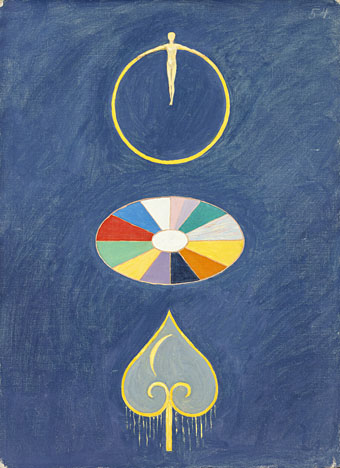
cassel.jpg

No. 54 (1915) by Anna Cassel.

• “I called it the treasure hunt: two years of tapes appearing from closets, letters dropping out of attics, persuading a film company to find the rushes of a TV show buried in a warehouse, paying a film director to digitise unused footage and a radio company to surface an old broadcast.” Nick Soulsby on pursuing the ghosts of Coil for his book about the group, Everything Keeps Dissolving.

• “It is likely that af Klint scholarship is on the brink of some radical changes regarding attribution and authorship.” Susan L. Aberth on the researches revealing collaborations between Hilma af Klint and other mystically-inclined women artists. It makes a change reading something about this group that isn’t completely dismissive about the beliefs that informed their work.

• New music: No Highs by Tim Hecker (“a beacon of unease against the deluge of false positive corporate ambient currently in vogue…”), and Seascape–polyptych by Jan Jelinek.

I think an unfortunate effect of Foucault’s work, as it was absorbed by academia, was that it made historians reluctant to call people or sexual acts in the past ‘homosexual’ or ‘gay’ since these terms ‘did not exist at the time’ or were recent creations. This gave some homophobes a spurious defence when suggestions were made as to the inclinations of their heroes, but it also—or so I thought—tended to downplay the reality of non-opportunistic homosexual desire as a constant in history, reducing it to recorded acts performed and then deeming these inadequate evidence anyhow, because they were assumed to have taken place in a fuzzy sexual universe.

If, as it seems to me, and as it seemed to Symonds and Carpenter, terms like ‘homosexual’ were invented in the effort to describe a type of person that has always existed, then they are in essence just a shorthand. Each term has its history, associations and effects, but—and perhaps this makes me an unsophisticated thinker—I think it’s the sexual feelings that fundamentally matter, and that these have existed across time. For that reason, I don’t find the Victorian sexual psyche, as far as it can be defined, alien or outlandish, or hard to speculate on. It is the product of sexual feeling filtered through observable social beliefs and conditions.

Tom Crewe talking to Amia Srinivasan about The New Life, Crewe’s debut novel which explores Victorian sex and sexuality

• “I’ve been tumbling down the rabbit-hole of toy theatre all my life, and I’m tumbling still.” Clive Hicks-Jenkins on the dark art of the toy theatre.

• At Public Domain Review: Jean Baptiste Vérany’s Chromolithographs of Cephalopods (1851).

• “Glass is perhaps the most frequently overlooked material in history,” says Katy Kelleher.

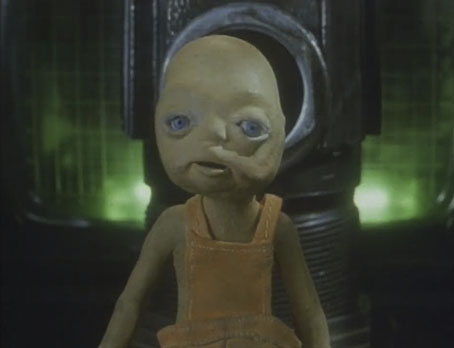
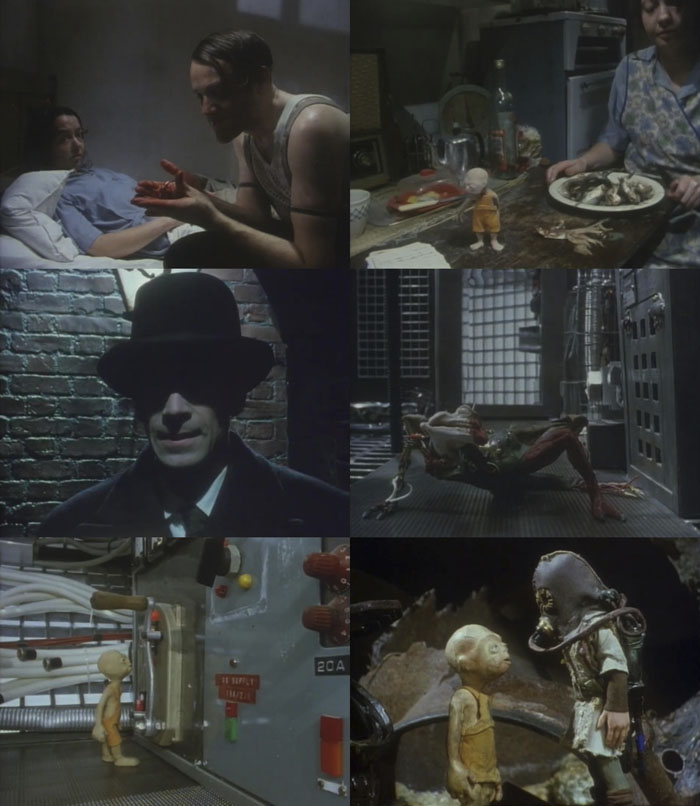
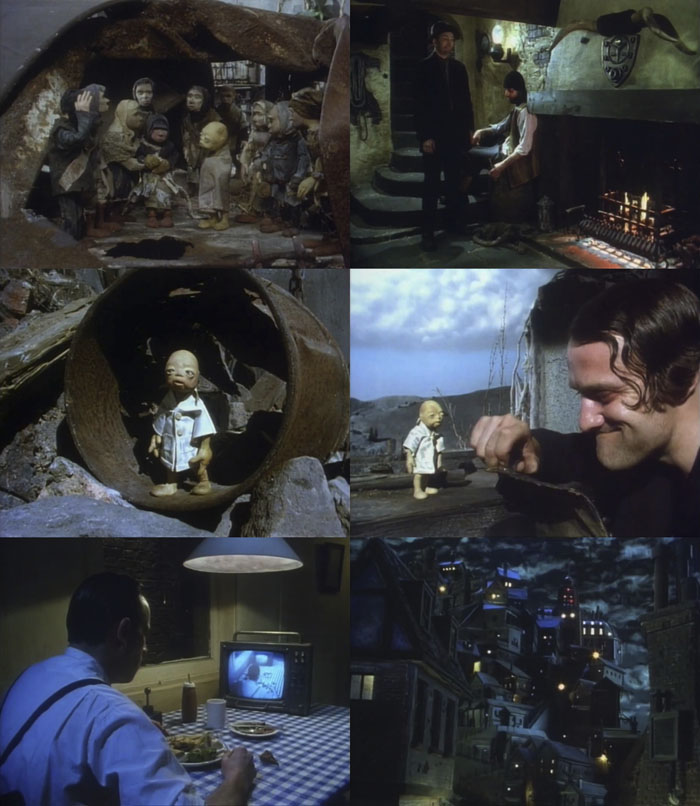
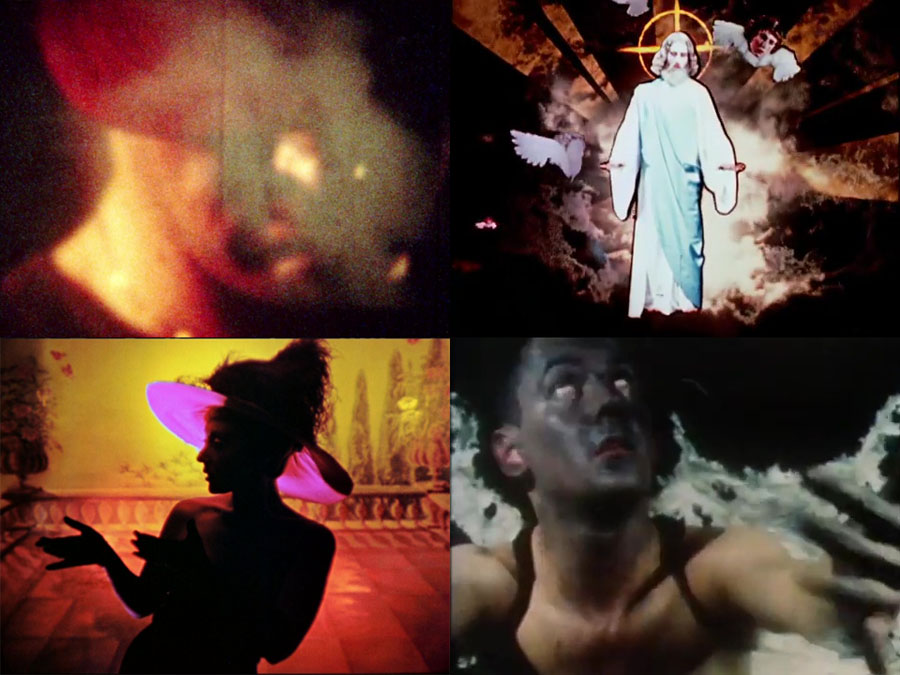
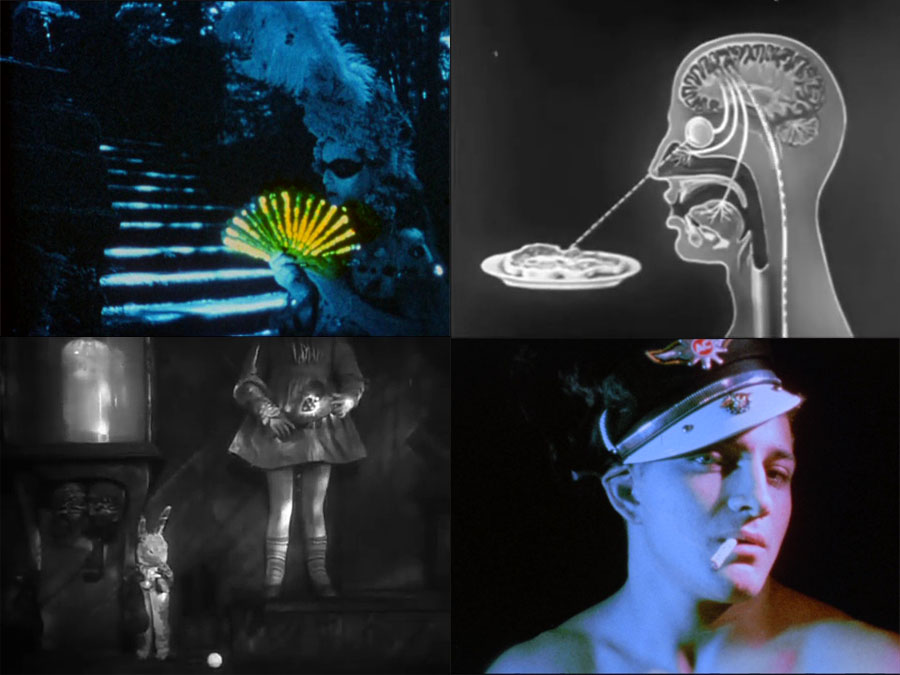
• At Cartoon Brew: Chris Robinson remembers the surreal animations of Run Wrake.

• At Unquiet Things: Of Dreams and Dark Pasts: Surrealist Painter Sofía Bassi.

• RIP Harry Belafonte.

House Of Glass (1969) by The Glass Family | Heart Of Glass (1978) by Blondie | Slow Glass (1997) by Paul Schütze

Weekend links 667

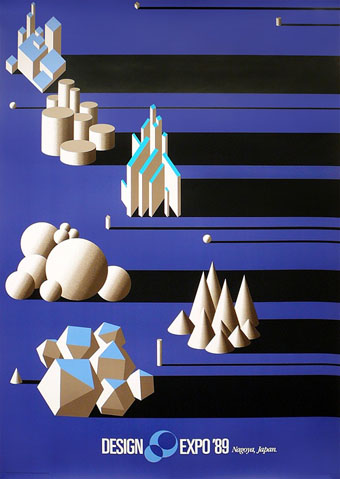
kamekura.jpg

Design by Yusaku Kamekura.

• “Music and intoxication have gone hand in hand since prehistory, but the relationship of music and cannabis is particularly strong and complex, says Jono Podmore, a former habitual smoker, as he investigates a groundbreaking new study which may get us closer to understanding these links.”

• “[There] have been many instances of persons, who thought themselves metamorphosed into lanterns, and who complained of having lost their thighs.” Public Domain Review offers words to the wise from An Essay on Diseases Incidental to Literary and Sedentary Persons (1768).

• “Mathematicians have finally discovered an elusive ‘einstein’ tile.” Emily Conover explains. I thought Roger Penrose had already discovered these but none of his aperiodic patterns are created by a single tile.

Wes Anderson does science fiction…maybe. After watching The French Dispatch last month I’d caught up with the Anderson oeuvre so it’s good to have something new to look forward to.

20th century Japanese poster art. Related: Jason Booher on creating a cover for a book by Carlo Rovelli.

The Winners of Smithsonian Magazine’s 20th Annual Photo Contest.

• New music: Ghost Town Burning by The Lonely Bell.

Anthony “Surgeon” Child’s favourite music.

• RIP Raoul Servais, animator.

East Of Asteroid (1976) by 801 | Asteroide (1978) by Joël Fajerman & Jan Yrssen | Asteroid Witch (2022) by Ghost Power

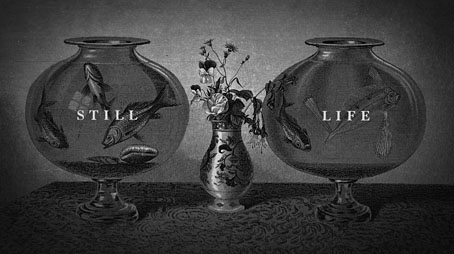
Still Life, a film by Connor Griffith

still-life1.jpg

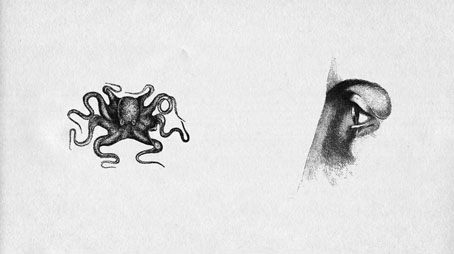
Still Life is a short film that takes a novel approach to the use of engraved illustrations in animation. Instead of the collage techniques deployed by other film-makers, Connor Griffith has used what’s known as replacement animation to make it seem as though a large quantity of objects are evolving in series; any apparent movement is caused by persistence of vision rather than the movement of the objects themselves. This parade of miscellaneous items brings to mind the 19th-century obsession with the compiling of catalogues and taxonomies, especially during the second half of the film in which a human eye observes a variety of animals and body parts.

still-life2.jpg

Some of these items are very familiar despite being visible for fractions of a second. Two of Griffith’s source books are copyright-free volumes I’ve been using myself for many years, and which may now be found in digital copies. One of these, the Dover collection of illustrations from the Deberny Type Foundry, was featured here a year ago in its original form, Clichés & Gravures (1912). The other book, Johann Heck’s Iconographic Encyclopedia of Science, Literature and Art (1852) is one you can still find as a hardback facsimile reprint, retitled The Complete Encyclopedia of Illustration. The Internet Archive has several copies of Heck’s originals (eg: Volume 1 and Volume 2). It’s good to have access to scans of this collection but many of the illustrations are very small, especially in the scientific section. Physical copies are still the best if you need a sharp, high-res reproduction.

Previously on { feuilleton }
Hamfat Asar, a film by Lawrence Jordan
Carabosse, a film by Lawrence Jordan

Weekend links 664

warburton.jpg

Caduceus: Tarot Card Study – Love by Holly Warburton.

• The week in stage magic: Ken Carbone, writing about playing cards and graphic design, points the way to an hour of Ricky Jay demonstrating his miraculous abilities with a pack of cards. Elsewhere, Erik Ofgang asks “Who was Mr. Electrico, the sideshow magician who inspired Ray Bradbury—then vanished?”

The 1980 Floor Show – Uncut / Unedited: 8 Hours of David Bowie in Ziggy Stardust guise performing for American TV cameras at The Marquee, London, in October 1973. That’s more Bowie than most people would want—there’s a lot of repetition—but it’s good to know things like this can still surface.

• “A supernova has gone out,” says David Grundy about the late Wayne Shorter. Also this: “Sci-fi fan Shorter suggested the title to [Weather Report’s] second album I Sing The Body Electric, taken from Walt Whitman via Ray Bradbury.”

• “We need to get away from thinking of ourselves as machines… That metaphor is getting in the way of understanding living, wild cognition.” A long read by Amanda Gefter about the secret life of plants, and “4E” cognitive science.

• “…why take a soft approach to safety when you can scare the sensible into the next generation with some of the most effective horror shorts of all time?” Ryan Finnegan on the notorious PIFs (public information films) of the 1970s.

• “I am increasingly of the Lynchian mindset of ‘never explain’…” Lynda E. Rucker talking to Steven Duffy about her latest story collection, Now It’s Dark.

• James Balmont presents a brief introduction to the mind-altering cinema of Sogo Ishii.

• At Spoon & Tamago: Hidari: An epic wooden puppet samurai stop-motion film.

• Old music: Musique De Notre Temps (1976) by Éliane Radigue.

• Steven Heller’s font of the month is Juma.

Body Electric (1982) by The Sisters Of Mercy | Super-Electric (1991) by Stereolab | Electric Garden (Deep Jazz In The Garden Mix) (2013) by Juan Atkins & Moritz von Oswald

Weekend links 662

mika.jpg

Pierrot le Fleur by Marina Mika.

• I’ve been saying for years that Andrzej Żuławski’s On the Silver Globe should be given a proper blu-ray release, and that’s what Region B viewers will receive soon courtesy of Eureka. Andrzej Żuławski: Three Films will be released in May, a set that comprises the director’s unfinished SF film, his debut feature, The Third Part of the Night (1971)—which I still haven’t seen—and also The Devil (1972), which I have seen but only as a poor copy that’s been circulating via illicit channels for many years.

• “The album’s 18-minute, multi-section standout Jenny Ondioline acquired a crucial role. It became the first track I’d play whenever I boarded a train, slipped on my headphones, and settled in beside an anonymous rail rider.” Hayden Merrick on travelling across the USA to the sounds of Transient Random-Noise Bursts With Announcements by Stereolab.

• At Aquarium Drunkard: E. Hehr explores musical exotica via Technicolor Paradise: Rhum Rhapsodies & Other Exotic Delights, “…a compilation that touches upon the noir side of exotica, far more gritty and raw compared to the lavish production on the esteemed exotica albums from Capitol and Liberty.” I own this collection. It’s a good one.

“My own experience,” Leda muses “tells me that more love goes into the thought of homosexuality than the practice.” Other gays are neither radical heroes nor the pathetic, self-hating fairies of, say, Mart Crowley’s Boys in the Band. This frankness makes Love, Leda a singular work; a contemporary portrait of working-class gay London in the years running up to decriminalisation that neither flatters nor sensationalises. In doing so, Hyatt transforms gay sex and love from an abject taboo to a deeply human intimacy.

Huw Lemmey on Love, Leda by Mark Hyatt, a candid tale of gay life in the Britain of the 1960s

• “It became something like a ritual, an exhumation of long-unheard music reanimated as glacial drones and ghostly symphonic movements—the sound of the cathedral transmuted into an enveloping shadow of pulsation, echo and glitch.” Orgelwerk by Ted Reichman.

Max Richter answers 50 questions. Sleep, Richter’s 8-hour ambient epic, is still my favourite among his compositions that I’ve heard to date: 8 CDs and a blu-ray disc from Deutsche Grammophon.

• RIP Alastair Brotchie, publisher of books at Atlas Press, and biographer of Alfred Jarry. Also a commenter here on one occasion when he corrected an erroneous photograph caption.

• A trailer for Suzume, a new feature film by Makoto Shinkai. Related: A Gathering of Cats.

• The story behind Jack Pierson’s homoerotic new photo book.

• The Strange World of…Phew.

Why Do I Still Sleep (1983) by Popol Vuh | Sleep I (1995) by Paul Schütze | The Dreamer Is Still Asleep (1999) by Coil