Fonthill Abbey

fonthill1.jpg

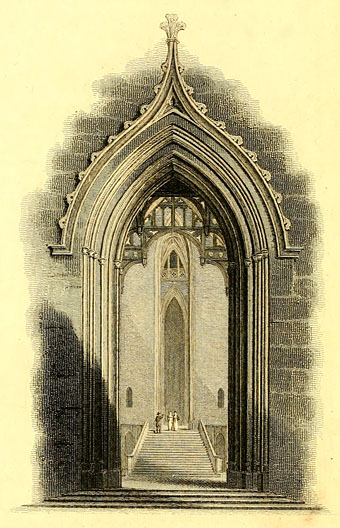
Views such as these are all we’ve ever have of Fonthill Abbey, a monstrous pile that would have been Britain’s most grandiose folly had it not collapsed in 1825. William Beckford (1760–1844) was the man responsible, among other things a very wealthy and bisexual writer whose Vathek (1786) is one of the better Gothic novels. The Gothic fad fuelled many such constructions, Horace Walpole having inaugurated the trend decades earlier at Strawberry Hill House. Fonthill always fascinates for that outrageously excessive octagonal tower which must have been visible for miles across Wiltshire. Plans and other views show that excess was also a factor elsewhere, especially in the vast hall. The pictures here are from Wikimedia Commons. There’s a book at the Internet Archive A Description of Fonthill Abbey, Wiltshire (1812) by James Storer, a contemporary account describing the building in detail, and also Delineations of Fonthill Abbey (1823) by John Rutter.

fonthill2.jpg

fonthill3.jpg

fonthill4.jpg

fonthill5.jpg

Elsewhere on { feuilleton }
The etching and engraving archive

Previously on { feuilleton }
Gothic details
Schloss Falkenstein
Pite’s West End folly
Viollet-le-Duc

Weekend links 93

favre.jpg

One of a series of tremendous designs by Malika Favre for a new Penguin edition of the Kama Sutra.

• New interviews: “…Americans — mired in individualism — prefer to think in terms of identity than in terms of roles and masks. An American would never have called a novel Confessions of a Mask.” Nicholas Currie, better known via his Momus mask. | “The horror in music comes from the silence,” says John Carpenter. | “It’s dangerous to be an artist. That’s what we talk about in Naked Lunch — and it’s dangerous on many different levels. Politically it can be dangerous, but psychologically it can be quite dangerous too. You make yourself very vulnerable. You put yourself out there and of course you open yourself up to criticism and attack.” David Cronenberg at the Los Angeles Review of Books.

• New books: Dotter of Her Father’s Eyes, a Joycean memoir by Mary M Talbot and Bryan Talbot. | A stack of new works from Strange Attractor including a collection of Savage Pencil‘s Trip or Squeek comic strips. | Robert Irwin’s Visions of the Jinn: Illustrators of the Arabian Nights. A shame about the high price on the latter but I’m sure it looks wonderful.

• The Blu-ray release of Wings (1927), William A. Wellman’s silent drama about air aces during the First World War, has prompted renewed attention for the passionate relationship between its two male leads, especially this deathbed scene which is tagged as the first same-sex kiss in cinema. That’s arguable, of course, but it’s certainly a touching moment.

• From 2009: Searching the Library of Babel, a list of all the stories in all 33 volumes of The Library of Babel, a 1979 Spanish language anthology of fantastic literature edited by Jorge Luis Borges.

• Lots of newpaper attention in the past week for the not-so-fresh news that magic mushrooms could help fight depression. Nature went into the detail of the latest studies.

French group Air have written the score for a rare colour print of Le voyage dans la lune (1902) by Georges Méliès. Air’s YouTube channel has extracts.

• From 1989: The Merchant of Shadows by Angela Carter.

Will Hunt on the Ghost River of Manhattan.

Selected Letters of William S. Burroughs

Sexy Boy (1998) by Air | Surfing On A Rocket (2003) by Air | Mer Du Japon (2007) by Air.

In the Village

portmeirion-map.jpg

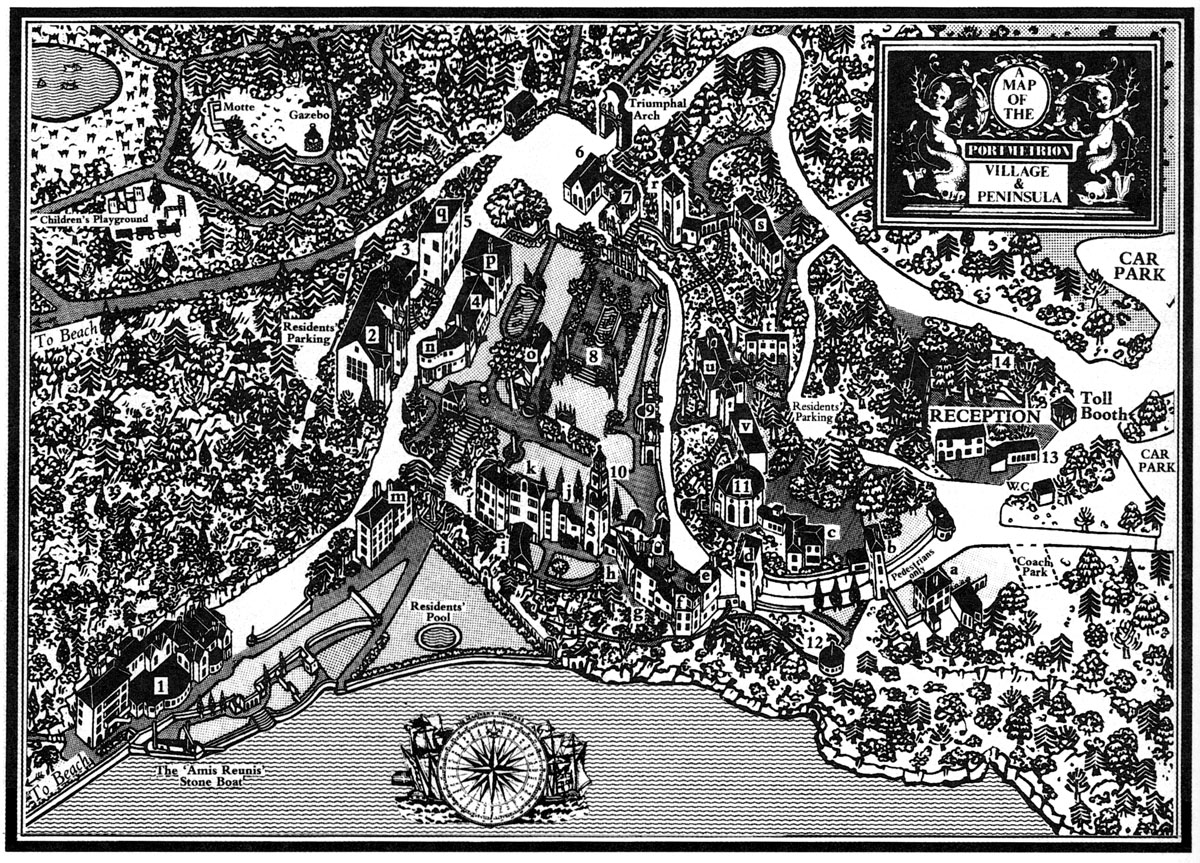
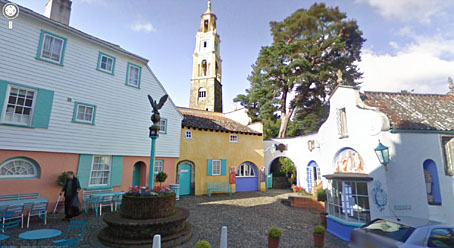
Ever fancied a wander around Portmeirion, aka The Village from The Prisoner? In the past you’d have to travel to Gwynedd in North Wales in order to do so but since August 2010 it’s been possible to roam the place using Google’s street view. This is somewhat surprising on two counts: firstly, while Portmeirion masquerades as a shrunken Mediterranean town it’s actually an open-plan hotel which visitors have to pay to explore. More surprising is finding the street view camera leaving the roads to follow many of the paths around Clough Williams-Ellis’s trompe l’oeil architecture. I imagine Google has done this elsewhere but this is the first instance I’ve come across. In addition to exploring a woodland walk it’s possible to follow the paths down to the beach, past the stone boat and along the coast for views of the Dwyryd estuary. There aren’t any white balloons or Mini Mokes in evidence, of course. If you want those you can always watch the TV series where the place appears larger thanks to camera lenses and some canny editing.

village.jpg

And speaking of lenses, ironies abound when you notice the surveillance cameras in the hotel car park, never mind the way the Google Panopticon has laid the place open to global eyes. In the Chimes of Big Ben episode of The Prisoner Number 6 asks whether Number 2 wants to see the whole world as the Village. “Yes,” says Number 2. Are we there yet?

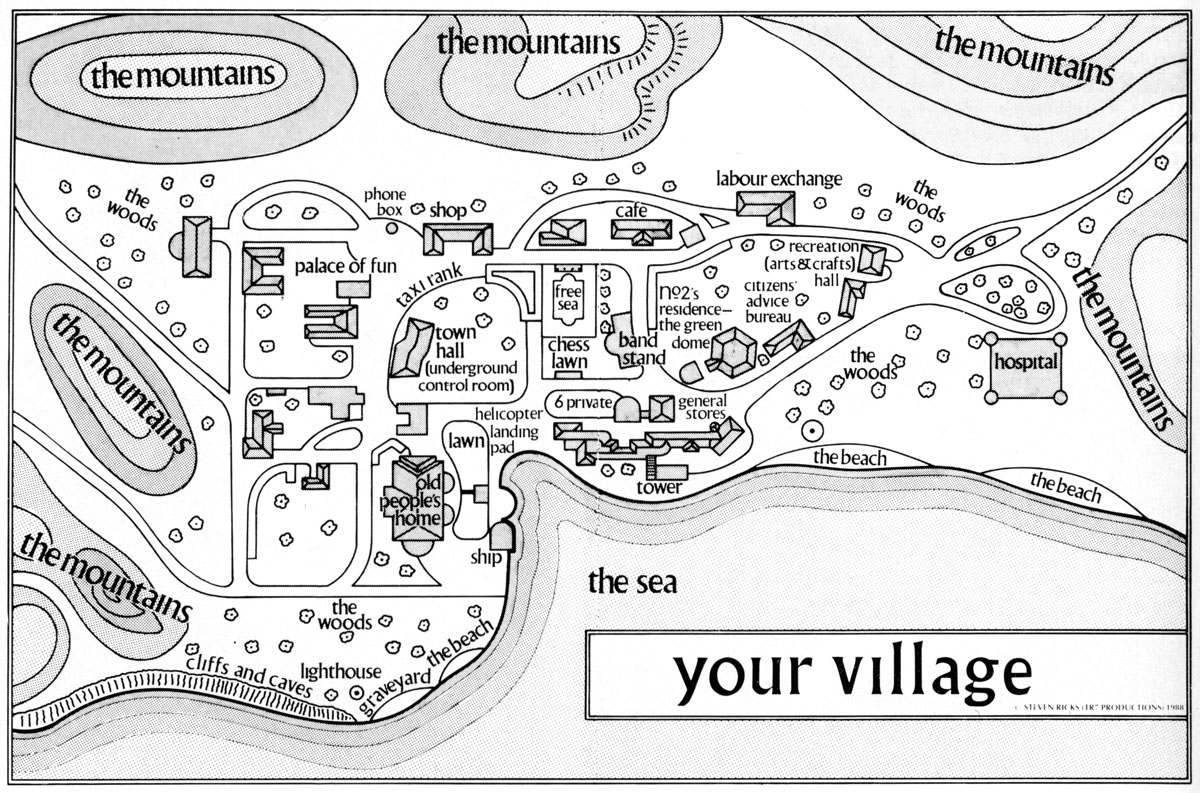
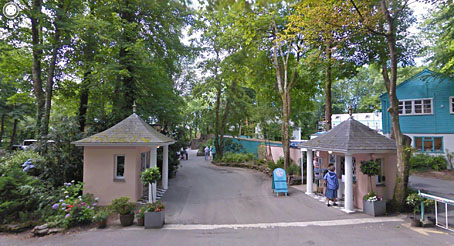
The two maps here are from The Prisoner (1990), a book by Alain Carrazé & Hélène Oswald. Unfortunately the key to the map of Portmeirion wasn’t included. The following shots are my selection from the Google views starting at the toll booth and working down to the beach. Be seeing you.

gates.jpg

The Toll Booth.

tower.jpg

Battery Square.

Continue reading “In the Village”

René Magritte by David Wheatley

magritte1.jpg

René Magritte as portrayed by Patrick McDonnell.

René Magritte died in 1967, the year Eric Duvivier’s La femme 100 têtes appeared in French cinemas. Magritte is even less visible cinematically than Max Ernst, IMDB lists a couple of documentaries and nothing else. There are trace elements elsewhere, notably the Magritte and de Chirico influence in Bertolucci’s Borges’ adaptation The Spider’s Stratagem (1970), but the artist’s arresting visual imagination has always found more of a welcome on book covers than cinema screens.

magritte2.jpg

One exception is David Wheatley’s drama documentary René Magritte (1976), yet another work you won’t find listed at IMDB. This was Wheatley’s graduation film which the BBC screened in a 30-minute version (shorn of some apparently clunky dialogue scenes) in 1979, and which secured for Wheatley a place as a regular director for the BBC’s Omnibus and Arena arts programmes. I saw the 1979 broadcast, and caught it again a decade later when one of the channels was having a season of Magritte-related programming, something that’s impossible to imagine in today’s debased television landscape.

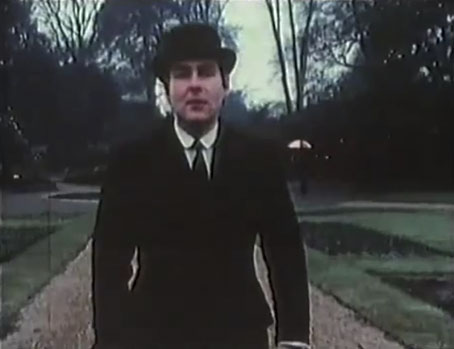
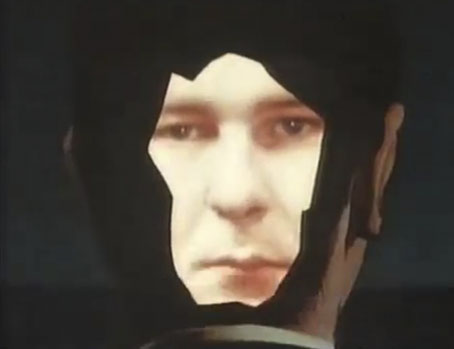
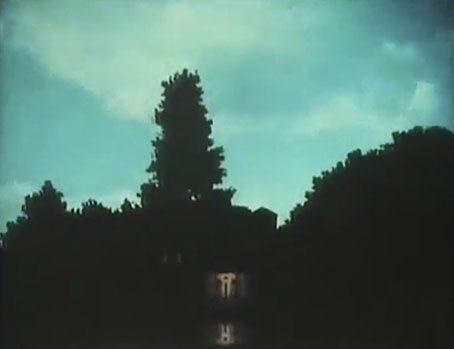
For a student film it’s a stunning piece of work, taking a similar approach to Eric Duvivier in bringing to life many of the artist’s more famous pictures: a window shatters to reveal the scene behind it painted on its panes, a mountain hovers ponderously over the sea, a dove made of clouds flies across a stormy sky. Between the artworks there are short biographical scenes. There’s a sole version of the film on YouTube that remains watchable despite being a low-quality recording from video tape that’s also hacked into three parts and subtitled in Danish.

magritte3.jpg

Looking for more information about David Wheatley it was dismaying to find he’d died in 2009, aged 59. Leslie Megahey—a cult TV director of mine—wrote an obituary for the Guardian where he describes some of Wheatley’s other productions including the Arena film Borges and I (1983)—as far as I’m aware the only British TV documentary about Jorge Luis Borges—and Wheatley’s first feature film, an adaptation of Angela Carter’s The Magic Toyshop (1987). I recall enjoying the latter, produced at a time when the success of The Company of Wolves (1984) made it seem there might also be a place in the cinema for Angela Carter’s imagination; we know how that worked out. The Magic Toyshop doesn’t seem to have had a DVD release so good luck to anyone searching for it. As for René Magritte, if anyone runs across a better online copy be sure to leave a comment.

Previously on { feuilleton }
The Public Voice by Lejf Marcussen

Weekend links 91

santosh.jpg

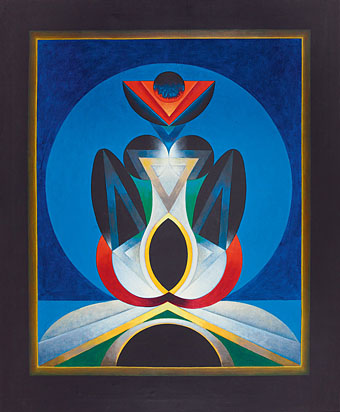
Untitled (1978) by GR Santosh at 50 Watts.

Evertype Publishing produces a range of Lewis Carroll special editions including Ailice’s Àventurs in Wunnerland (a translation in Scots), Alicia in Terra Mirabili (a Latin version), and an edition printed in the Nyctographic Square Alphabet devised by Carroll.

• This week’s bookshop animations: Type Books, Toronto presents The Joy of Books while at Shakespeare and Company, Paris, Spike Jonze and Simon Cahn explore the erotic life of book covers in Mourir Auprès de Toi.

• Invisible Girls and Phantom Ladies, a 1982 article on sexism in (US superhero) comics by Alan Moore. Thirty years on, things haven’t improved much at all.

I reread it now, 35 years later, and I am struck by its capacity to change like a magic mirror. Where I had originally seen it as a book about writing, about becoming a writer, I now see it as a book about reading, about taking one’s place in the chain. Where I once assumed it was a book about eternal youth, I now see it as a book about growing up, about learning to live.

Tilda Swinton on Virginia Woolf’s Orlando

Dark Water, Lovecraftian carpet designs (yes, carpets) by Kirill Rozhkov. Danish carpet manufacturer Ege has a catalogue showing the finished products.

Neil Gaiman ventures into the treacherous labyrinth of M. John Harrison’s Viriconium.

Nicholas Lezard reviews The White People and Other Weird Stories by Arthur Machen.

rousseau.jpg

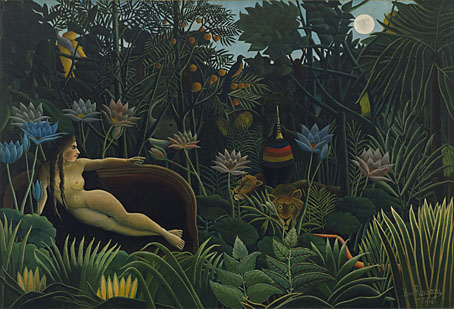
The Dream (1910) by Henri Rousseau at the Google Art Project.

• Reassessing the Saul Bass and Alfred Hitchcock Collaboration by Pat Kirkham.

• Getting There Too Quickly: Peter Bebergal on Aldous Huxley and Mescaline.

Hidden in the Open: A Photographic Essay of Afro-American Male Couples.

Filles En Aiguilles, a new musical work by Schütze+Hopkins.

RubiCANE’s Erotic Illustrations.

Laurie Anderson has a Godplex.

Alan Bennett on Smut.

The Jungle Line (1975) by Joni Mitchell | The Jungle Line (1981) by Low Noise (Kevin Armstrong, Thomas Dolby, JJ Johnson & Matthew Seligman) | The Jungle Line (2007) by Herbie Hancock with Leonard Cohen.