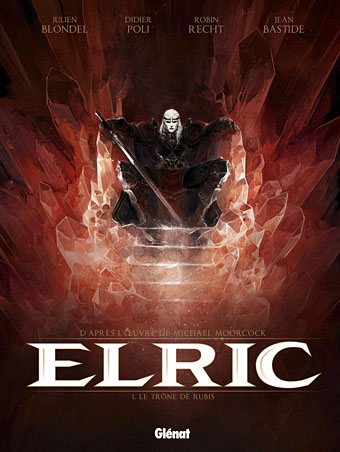
Elric 1: Le trône de rubis

elric1.jpg

The closest I ever got to illustrating Michael Moorcock’s Elric character was the sleeve for The Chronicle of the Black Sword in 1985, a Hawkwind concept album based on the first couple of Elric books. That design favoured a decorative approach over anything illustrative, however. At the time I felt too intimidated by the renderings of Elric’s first illustrator, James Cawthorn, and subsequent depictions by book cover artists such as Michael Whelan, to attempt my own version of the character. These days I pay little attention to heroic fantasy of any kind but I do look out for new depictions of Moorcock’s anti-hero. Earlier this year the French bande dessinée publisher, Glénat, released the first album in a planned series of five comic-strip adaptations of the Elric books. Many creditable Elric comics have appeared since the 1970s, not least the Cawthorn version of Stormbringer, one of the earliest and best, and Philippe Druillet’s own somewhat eccentric production. Mike Moorcock very generously sent me a copy of the Glénat volume this week, and I’d say this is now the one to beat.
elric2.jpg

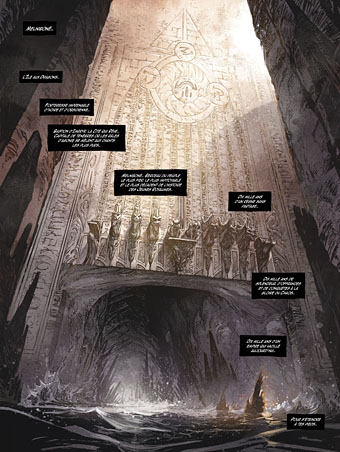
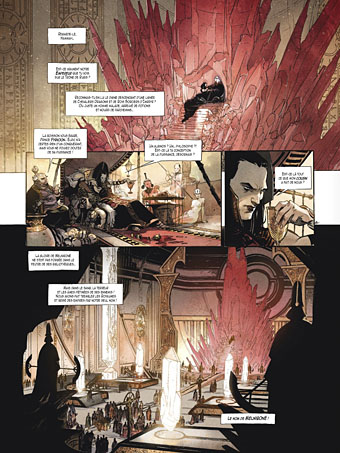
Writer Julien Blondel has adapted the books with the art duties being taken by Didier Poli and Robin Recht. Jean Bastide is the colourist. I’ve always preferred the French and Belgian approach to comic art over the American style so I’m naturally biased towards a book such as this. That said, the art is marvellous, and so many of the details feel just right. Moorcock portrays the Melnibonéans as decadent and cruel, something that Poli and Recht portray with scenes of naked slaves being bled, butchered, and even used as human torches for the blithe amusement of their masters. The general atmosphere in the opening pages is like something from Flaubert’s Salammbô with its combination of antique depravity and the massing of great armies prior to battle. They don’t slouch with the monstrosities, either, there’s a spot of Lovecraftian weirdness when Elric is rescued by Straasha, the Sea King. I look forward to seeing how they deal with Arioch (who puts in an appearance at the end) and the other Chaos Lords. The dialogue is all in French, of course, but if you know the books it’s easy to follow even with French as limited as mine.
elric3.jpg

The Glénat site has a few more page samples. Moorcock has been watching these books being adapated and re-adapted for decades, and he says this is among the very best. For anyone with more than a passing interest in the brooding albino prince it’s well worth seeking out.

Previously on { feuilleton }
Salammbô illustrated
Jim Cawthorn, 1929–2008

Valerie and Her Week of Wonders

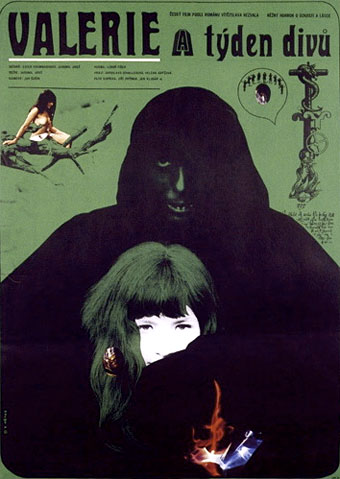
valerie1.jpg

First English translation, 1970. Faux-Penguin edition by gregoreverb.

1: A Surrealist novel (1932) by Vítezslav Nezval.

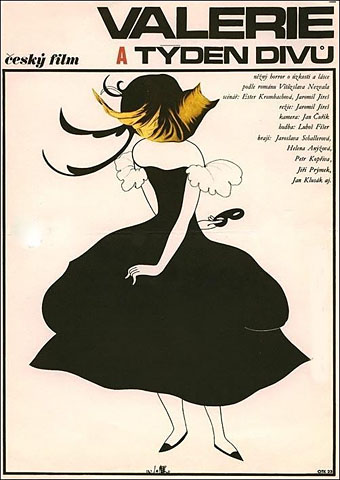
valerie2.jpg

Design by Rudolf Nemec.

2: A feature film (1970) by Jaromil Jires (director), Ester Krumbachová (screenplay) and Jirí Musil (dialogue). (Region 2 DVD from Second Run.)

valerie3.jpg

Design by Josef Vylet’al. Figure originally by Aubrey Beardsley from The Comedy Ballet of Marionettes III (1894).

valerie4.jpg

3: Valerie: A song (2003) by Broadcast.

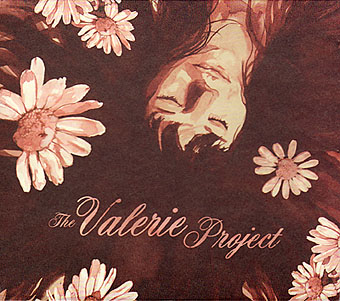
valerie5.jpg

4: The Valerie Project: A musical group and album (2007).

Previously on { feuilleton }
The Robing of The Birds

Mati Klarwein book covers

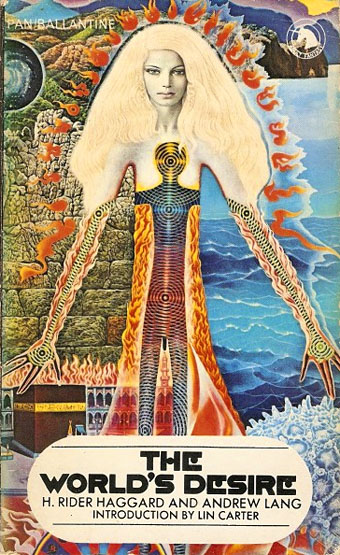
mati1.jpg

The World’s Desire (1972) by H. Rider Haggard & Andrew Lang. Painting: Astral Body Asleep (1968).

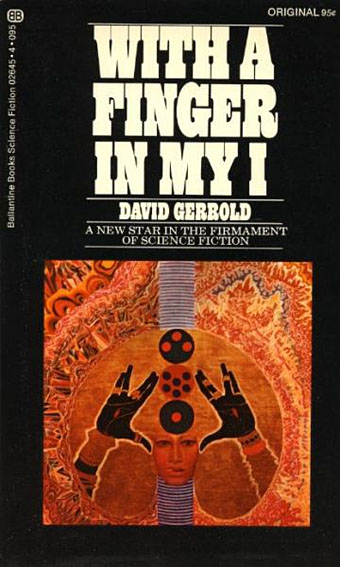
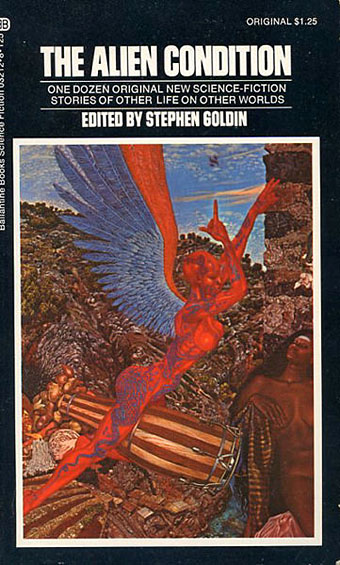
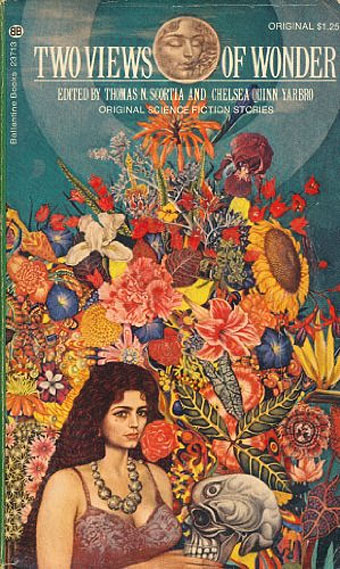
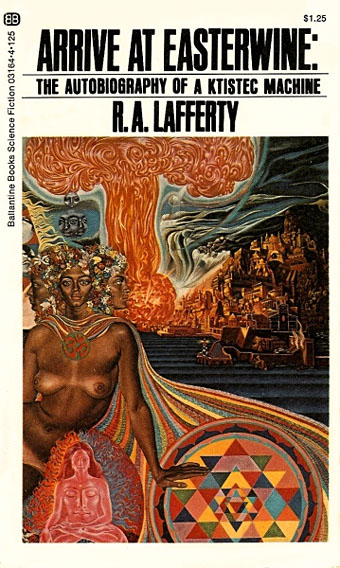
The use of Mati Klarwein’s paintings on album covers is well documented, the official Klarwein site has a small section devoted to some of the covers. Less well-known are these book covers which were evidently the product of a brief enthusiasm for Klarwein’s work in the Ballantine Books’ art department. As with many of the album covers, these are all pre-existing paintings which have been cropped for use as cover art.

The most surprising example is the cover for The Alien Condition with its detail from Annunciation, a painting better known for its appearance on Abraxas (1970), a very successful Santana album. Given how visible that cover art would have been in 1973 you have to suspect that the painting’s use as a book cover was a deliberate bid to attract a youthful readership. All these titles are works of science fiction or fantasy; I don’t recall having seen a Klarwein cover for any non-genre titles. If anyone knows of an example then please leave a comment. (Thanks to Jay for the tip!)

mati2.jpg

With a Finger in My I (1972) by David Gerrold. Painting: Blessing (1965).

mati3.jpg

The Alien Condition (1973) edited by Stephen Goldin. Painting: Annunciation (1961).

mati4.jpg

Two Views of Wonder (1973) edited by Thomas N. Scortia & Chelsea Quinn Yarbro. Painting: Unknown.

mati5.jpg

Arrive at Easterwine: The Autobiography of a Ktistec Machine (1973) by RA Lafferty. Painting: Nativity (1961).

Elsewhere on { feuilleton }
The book covers archive

Previously on { feuilleton }
The art of Mati Klarwein, 1932–2002

Weekend links 168

bell.jpg

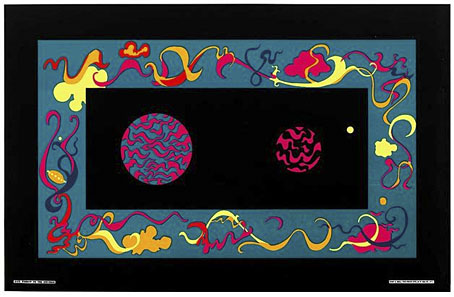
Window to the Universe (1967) by Roberta Bell. From Summer of Love: Psychedelic Posters from SCMA currently showing at the Smith College Museum of Art, Northampton, MA.

Sympathy for the Shoggoth: China Miéville’s Revolution of the Weird Tale, an essay by Christina Scholz which features one of my Cthulhu pictures among its embellishments. Related: “‘New Strange’ stories hold a chilling mirror to life” says Rick Kleffel discussing Robert Aickman and others. And speaking of Aickman (so to speak), Reese Shearsmith has recently recorded Aickman’s Cold Hand in Mine for Audible.

• An erotic alphabet book from the Soviet Union circa 1931, created to promote adult literacy. Who says porn can’t be educational?

Angelystor is a new 39-minute composition by Phil Legard which he describes as “often heavy, Saturnine and melancholic”.

• James Ward’s postcards of the Post Office Tower. Related: film of the revolving restaurant at the top of the Tower in 1967.

•You Might Never Find Your Way Back: Shirley Jackson’s Hangsaman by Nicholas Rombes.

satty.jpg

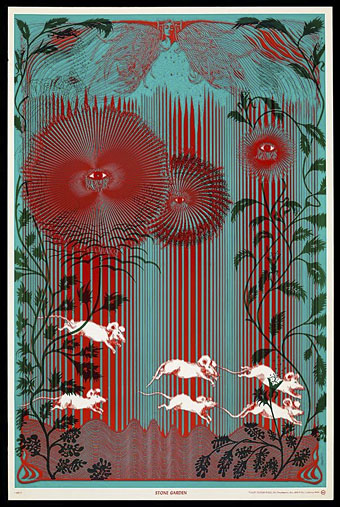
Stone Garden (1967) by Wilfried Sätty.

High Over Blue is “a mind-warping 20-minute freakout” by Moon Duo.

• Queer Visual Splendour: Jon Macy discusses his erotic comics.

The Origin of the Pilcrow, aka the Strange Paragraph Symbol.

• Mix of the week: the Kranky 20th Anniversary Mixtape.

Ten Amazing Cheeses and their Literary Counterparts.

PingMag looks at the past and present of Ginza.

Mind Gardens (1967) by The Byrds | The Garden (1981) by John Foxx | The Toy Garden (2006) by Helios

Red Shift by Alan Garner

redshift1.jpg

“I know things, and feel things, but the wrong way round. That’s me: all the right answers at none of the right times. I see and can’t understand. I need to adjust my spectrum, pull myself away from the blue end. I could do with a red shift. Galaxies and Rectors have them. Why not me?”

Red Shift by Alan Garner

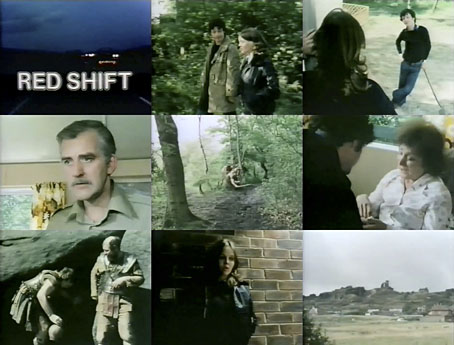
More fields in England. It’s good to find this TV film on YouTube since I’ve been telling people about it for years. Red Shift (1973) is classed as the last in Alan Garner’s initial run of fantasy novels, although it’s arguable whether it’s a work of fantasy at all. The themes are typical Garner: the Cheshire landscape, and the long hand of the historic past reaching into the present. Instead of a single story there are three interwoven narratives taking place in different eras: Roman Britain, with an invading legion (based on the lost Ninth Legion) being hunted down by the natives; the English Civil War, and the true story of a massacre that took place at a village church; the present (1973) with teenager Tom struggling to maintain a relationship with his girlfriend, Jan, who’s leaving to study as a nurse. Tom’s narrative is the principal one but each thread contains echoes of the others. Connecting them all is a stone axe head buried by one of the Roman soldiers which is found by a villager hundreds of years later then rediscovered in turn by Tom. It’s a fascinating novel which prefigures Alan Moore’s Voice of the Fire (1996) for the way a single location is examined at different periods of history.

redshift2.jpg

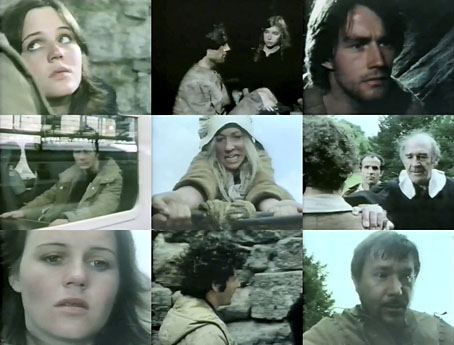
The 75-minute film of Red Shift (1978) was made for the BBC’s Play For Today strand, as was that cult item of mine, Penda’s Fen (1974), and the two have much in common. Writer David Rudkin talked about the “layer upon layer of inheritance” in the Malvern Hills where Penda’s Fen is set, a description that could equally apply to Red Shift. Both plays have intelligent teenage boys as their central characters, and both are demanding rites-of-passage dramas. The great Alan Clarke directed Penda’s Fen while Red Shift was directed by John Mackenzie, better known for (among other things) The Long Good Friday (1980). Garner and Mackenzie collaborated on the screenplay for Red Shift which necessarily condenses the novel. I’d say it does this successfully but then I’ve read the book so may be too familiar with the story as a whole. Success or not, this is another remarkable piece of television drama which you can’t imagine being made today. But it is on YouTube, and for that we may be grateful. Watch it here.

Previously on { feuilleton }
Children of the Stones
Penda’s Fen by David Rudkin