William Strang’s Sindbad the Sailor

strang24.jpg

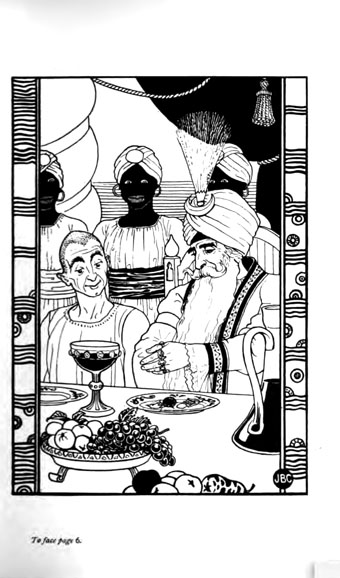
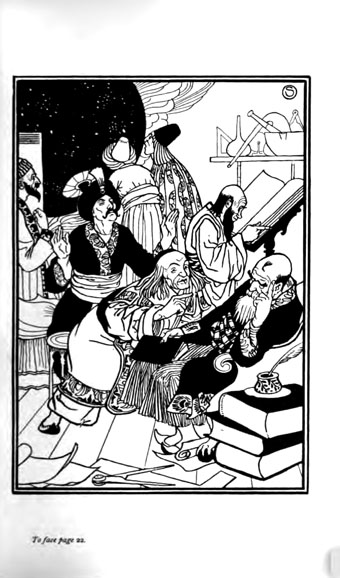
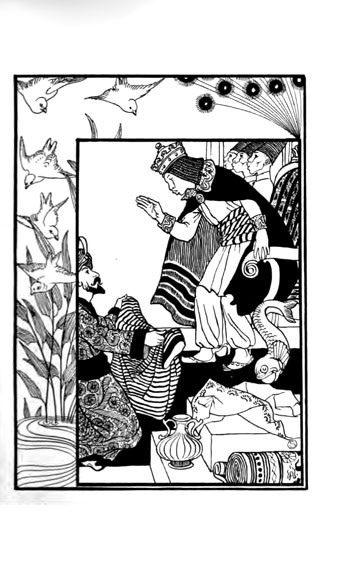
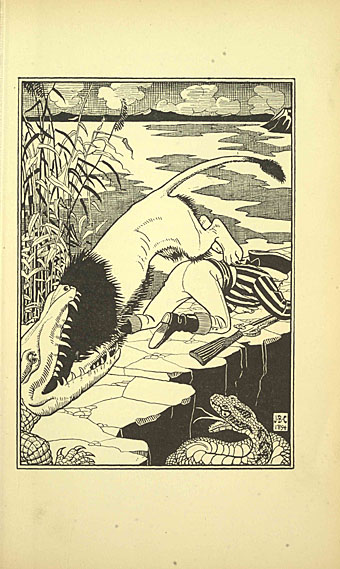
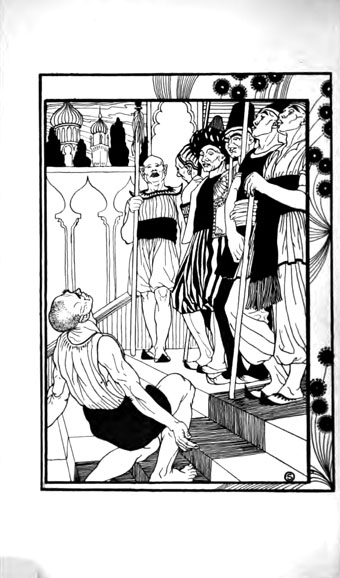
Another collaboration between William Strang and JB Clark, Sindbad the Sailor, and Ali Baba and the Forty Thieves was published in 1895. The Sindbad text is from Edward William Lane’s popular (and bowdlerised) translation of the Thousand and One Nights; Ali Baba is from the translation by Rev. Jonathan Scott. The illustrations follow the same bold style as the Baron Munchausen book but with more detail and decoration. The compositions are also more careful which makes me wonder if the Munchausen book was a product of haste. As before, the book as a whole contains many more illustrations. The copies here have been slightly cropped and lightened to compensate for another poor scanning job by Google.

strang25.jpg

strang26.jpg

strang27.jpg

Continue reading “William Strang’s Sindbad the Sailor”

William Strang’s Baron Munchausen

strang01.jpg

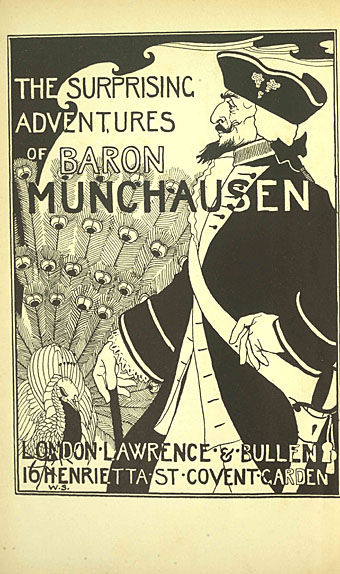
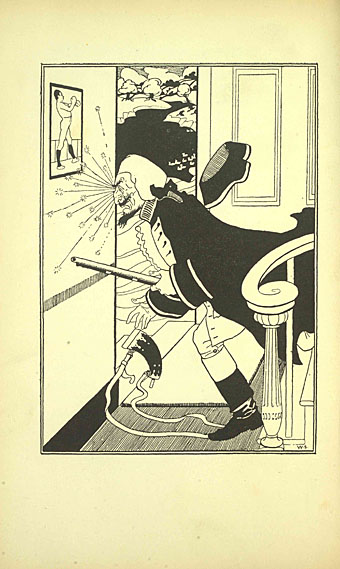
The paintings and illustrations of Scottish artist William Strang (1859–1921) were much more typical of their time than the bold drawings in this 1895 edition of Rudolf Erich Raspe’s tall tales. Not all the illustrations are Strang’s work, some are by JB Clark, and there are many more in the book as a whole. Years later, the Gollancz publishing company was based next door to Lawrence & Bullen’s former home at 14 Henrietta Street.

strang02.jpg

strang03.jpg

strang04.jpg

Continue reading “William Strang’s Baron Munchausen”

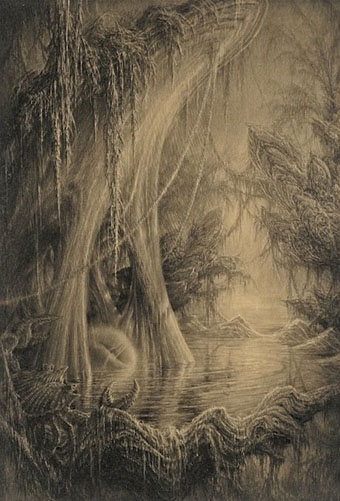
The art of Jean-Michel Mathieux-Marie

mathieux-marie1.jpg

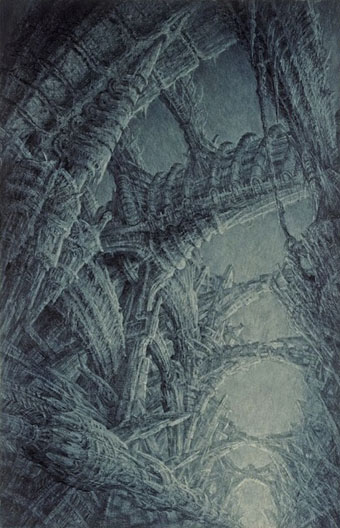
Limbroglio (URBS V).

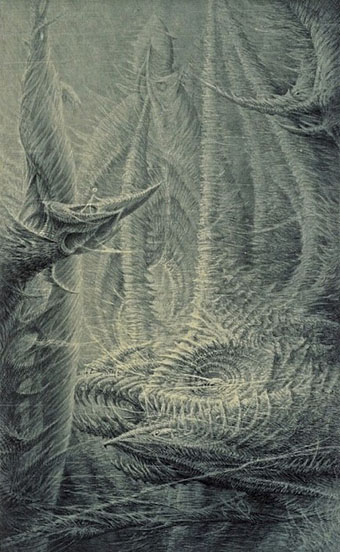
Drypoint prints by a French artist who also has a nice line in moody renderings of European cities—Paris, Venice, Rome—which occasionally stray into architectural speculation. Outright fantasia is more evident in these mysterious views more of which may be seen at the Velly gallery.

mathieux-marie2.jpg

Les grandes Manoeuvres.

mathieux-marie3.jpg

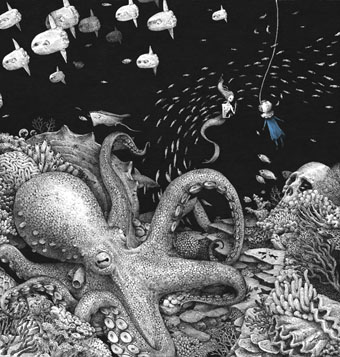
Paysage aux mollusques.

Elsewhere on { feuilleton }
The fantastic art archive

Weekend links 208

sungwon.jpg

The Blue Girl (2013) by Sungwon.

• “Meanwhile, in her parents’ room [Max] Ernst painted aardvarks eating ants and big human hands around the windows. ‘Sexual connotations, I think,’ she says shyly.” Agnès Poirier talks to Cécile Eluard about her childhood among the Surrealists.

• “Thrilling and prophetic”: why film-maker Chris Marker‘s radical images influenced so many artists. Sukhdev Sandhu, William Gibson, Mark Romanek and Joanna Hogg on the elusive director.

• At Dangerous Minds: Throbbing Gristle live in Manchester in 1980, and Brian Butler talks about the rediscovered early print of Kenneth Anger’s Lucifer Rising. There’s a trailer!

• From 1981: The Art of Fiction No. 69 at The Paris Review, an interview with Gabriel García Márquez. Related: Thomas Pynchon reviewed Love in the Time of Cholera in 1988.

• “Seven years ago, a stolen first edition of Borges’s early poems was returned to Argentina’s National Library. But was it the right copy?” Graciela Mochkofsky investigates.

• “What was Walter Benjamin doing with his shirt off in Ibiza?” Peter E. Gordon reviews Walter Benjamin: A Critical Life by Howard Eiland & Michael W. Jennings.

• A video by Marcel Weber for Måtinden, a track from Eric Holm’s Andøya album. Another album on the Subtext label that I helped design.

• More Ian Miller: Boing Boing has pages from his new book, The Art of Ian Miller, and there’s an interview at Sci-Fi-O-Rama.

Outrun Europa, a free compilation of 80s-style electronic music. There’s a lot more along those lines here.

• Praise Be! Favourite religious and spiritual records chose by writers at The Quietus.

Ralph Steadman illustrated Alice’s Adventures in Wonderland in 1973.

British Pathé is uploading 85,000 of its newsreel films to YouTube.

• Drawings by Lebbeus Woods at The Drawing Center, New York.

• At Pinterest: Ian Miller and Kenneth Anger.

Lucifer Sam (1967) by Pink Floyd | The Surrealist Waltz (1967) by Pearls Before Swine | Which Dreamed It (1968) by Boeing Duveen And The Beautiful Soup
Two covers

patel1.jpg

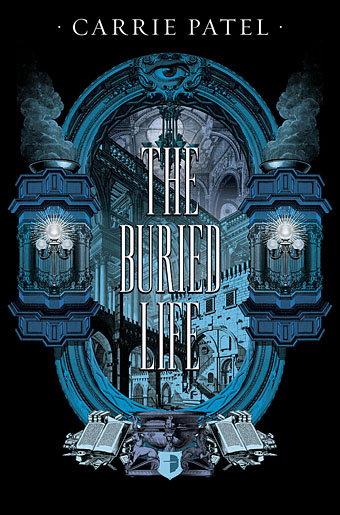
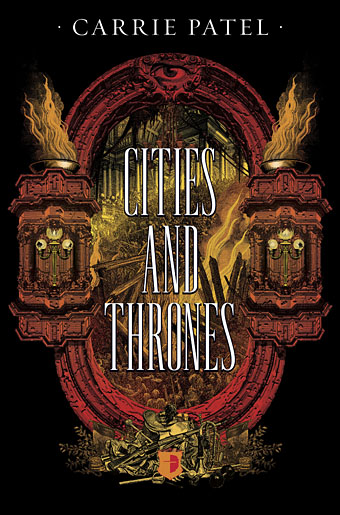
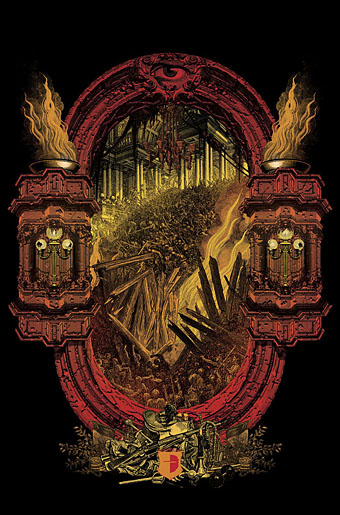
More new work of mine has been unveiled in the past few days so I can show these here. The Buried Life and Cities and Thrones are a pair of fantasy novels by new author Carrie Patel being published by Angry Robot. I was asked to provide something in an engraved style set against a black background, with imagery that reflected themes of vast, underground architecture and armed conflict.

patel2.jpg

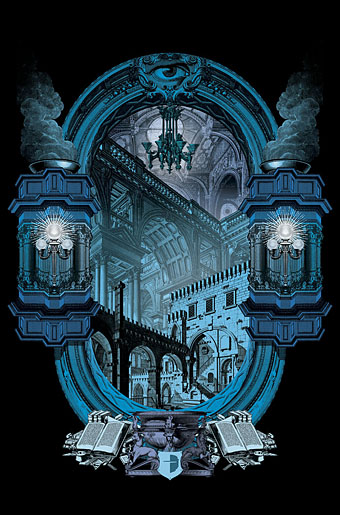
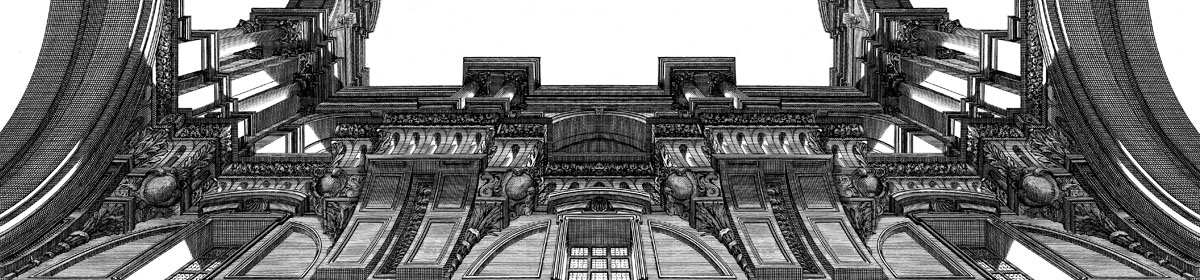
Vast architecture of any description is something I’ve always enjoyed, the main challenge with each book came in trying to imply the architecture and events without the pictorial content becoming incoherent. Marc at Angry Robot asked for something Piranesian where the architecture was concerned. Looking over Piranesi’s non-Carceri designs didn’t turn up anything with a suitably dramatic perspective, however, so most of what you see in the first cover comes from Giuseppe Galli Bibiena’s Architetture e Prospettive (1740). The Bibienas were a family of architects and theatrical engineers who specialised in dizzying perspective views for their stage designs; Bibiena’s book was produced to preserve some of his more celebrated designs, the originals of which are now lost. I’ve had a book of these drawings for years but this is the first opportunity I’ve had to make use of them in any kind of collage.

patel3.jpg

This style of Baroque architecture doesn’t suit steampunk imagery which tends towards 19th-century urban/industrial; the plates are also rather staid scenes without the graphic flare that Piranesi gave to everything he rendered, real or imagined. But I do like those plunging perspectives, and pieces from two of the plates turned out to share both the same perspective and the same lighting direction. It’s easy to collage things into a flat view but creating a realistic sense of depth from bits and pieces can be tricky.

patel4.jpg

The frame for the second cover has more of a Piranesian quality being chipped and eroded. The typography for the titles went through several changes, the versions here show a late suggestion of mine with lettering that’s probably too thin to read well at a distance (or a small size on a web page). SF Signal has a post showing the Angry Robot versions which will probably be the final ones, together with a preview of the first book.

Previously on { feuilleton }
Aldous Huxley on Piranesi’s Prisons