Weekend links 482

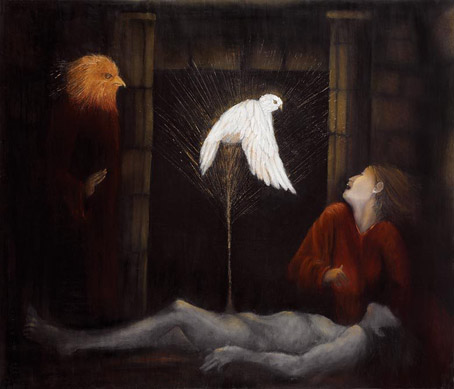
pacheco.jpg

Hades II (2004) by Ana Maria Pacheco.

• I’ve been reading a lot of Angela Carter over the past few weeks so the news of her house in Clapham being awarded a blue plaque was coincidental but also timely. Related: Angela Carter Online, and The Holy Family Album (1991), “a sacrilegious take on the history of Christian painting and iconography” written and narrated by Carter. Also, we’re still some distance from Halloween but take this as a precursor: Vampirella (1976), Angela Carter’s first radio play for the BBC, starring Anna Massey as a vampire countess.

• In May this year the Dark Entries record label announced the discovery of more tapes from Patrick Cowley’s pre-disco years in the 1970s. A selection from the archive, Mechanical Fantasy Box, will be released next month, together with a book of the same name reprinting Cowley’s homoerotic journal from the period.

• More Magma (there’s always more Magma): Warren Hatter on 7 essential albums from their sprawling discography. Related: Magma on film in 1972, appearing in Moi y’en a vouloir des sous, a short but typically intense performance.

• Out in November: Paul Wegener’s adaptation of Gustav Meyrink, Der Golem, wie er in die Welt kam (1920), receives a substantial blu-ray release from Eureka.

• Joe Banks’ forthcoming space-rock exegesis, Hawkwind: Days of the Underground, now has its own website.

• Mix of the week: The Stations Of Summer by Cafe Kaput.

Photos of London’s abandoned Underground stations.

• At Dennis Cooper’s: Alan Boyce grows invisible.

Gudrun Gut‘s favourite albums.

Tanz Der Vampire (1969) by The Vampires Of Dartmoore | Ketch Vampire (1976) by Devon Irons | Vampires (1999) by Pet Shop Boys
François Schuiten record covers

schuiten01.jpg

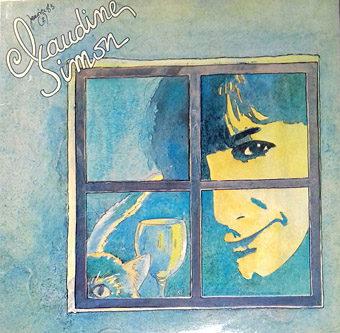
Claudine Simon (1980) by Claudine Simon.

Continuing an occasional series about artists or designers whose work has appeared on record sleeves. Belgian artist François Schuiten is a familiar name here, being the co-creator with Benoît Peeters of the Obscure World, one of my favourite zones of fantastic invention. The Obscure World has grown to become a multimedia endeavour so Schuiten’s involvement with some of the later entries in this post goes beyond providing the cover art to being connected to the music itself.

schuiten02.jpg

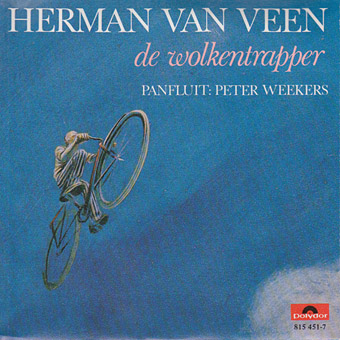
De Wolkentrapper (1983) by Herman van Veen.

Herman van Veen is a Dutch writer and singer who produced a number of albums and singles in the 1980s featuring Schuiten cover art. The gravity-defying people are from an early comic strip unattached to the Obscure World mythos, Going to Pieces.

schuiten03.jpg

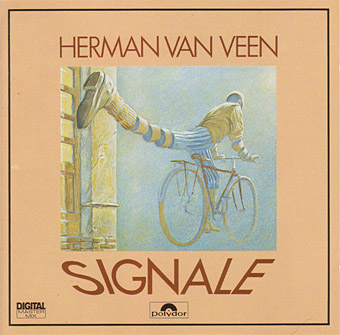
Signale (1984) by Herman van Veen.

schuiten04.jpg

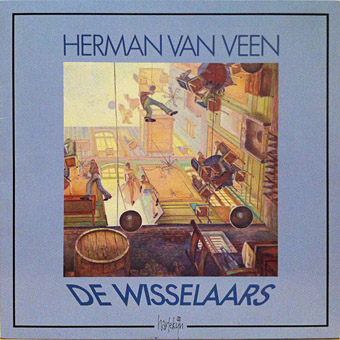
De Wisselaars (1985) by Herman van Veen.

schuiten05.jpg

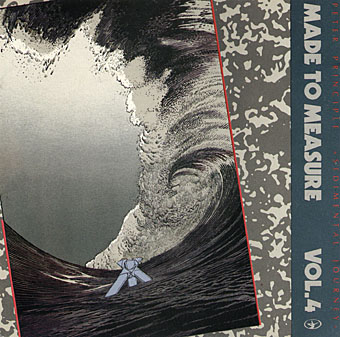
Sedimental Journey (1985) by Peter Principle.

The Obscure World makes its cover debut on this solo release by the late Peter Principle, bass player in Tuxedomoon. Principle was American but Tuxedomoon were based at the time in Europe, and their record label, Crammed are Belgian. Obscure World aficionados will recognise the structure about to be submerged by a vast wave as the Network, an inexplicable object first seen in Fever in Urbicand (1985).

Continue reading “François Schuiten record covers”

Weekend links 481

gaussot.jpg

L’Hamestoque (1977) by Christine Gaussot.

• Another announcement from Strange Attractor Press: Of Mud & Flame: A Penda’s Fen Sourcebook edited by Matthew Harle and James Machin will be published at the end of October. Among the contents will be the screenplay of David Rudkin’s cult television play, an item that’s always been impossible to find in print.

• A trailer for Journey to the Beginning of Time (1955), another semi-animated fantasy film by Karel Zeman which will released on disc next month by Second Run.

• “There was craziness in getting lost and dizzy.” Stereolab choose favourite songs from their back catalogue.

E=MC² (1976), an album of spacey jazz-electronica by Teddy Lasry which has never been reissued.

• “Why do so many book covers look the same? Blame Getty Images,” says Cory Matteson.

• Mix of the week: The Ephemeral Man’s Teapot by The Ephemeral Man.

Masataka Nakano has been photographing a deserted Tokyo for almost 30 years.

• Beyond the bounds of depravity: an oral history of David Cronenberg’s Crash.

Woodblocks in Wonderland: The Japanese Fairy Tale Series.

• A new novel by M. John Harrison is always a good thing.

Hamid Drake‘s favourite music.

Warm Leatherette (1980) by Grace Jones | Crash (1980) by Tuxedomoon | A Crash At Every Speed (1994) by Disco Inferno

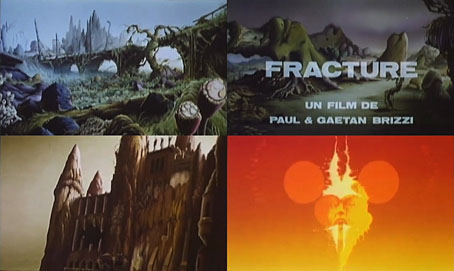
Fracture by Paul and Gaëtan Brizzi

fracture1.jpg

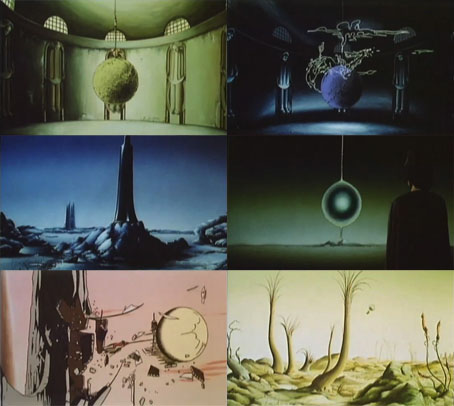
Fracture (1977) is a short animated film from France by the Brizzi Brothers (Paul and Gaëtan), a duo better known for their work on feature-length animated films such as Asterix versus Caesar (1985), and a number of films for Disney. Fracture is their earliest work, and isn’t remotely Disney-like, delivering an SF/fantasy scenario of alien inexplicabilities that makes it an animated counterpart of the comic strips that were running in Métal Hurlant (and its US counterpart, Heavy Metal) in the late 1970s. (The Brizzi Brothers’ most recent works have been comic books so I’d be surprised if Fracture didn’t have comics influence.)

fracture2.jpg

Comics and animation have a considerable advantage over film and TV in being able to avoid the commercial imperatives that explain away mysteries and make the alien too familiar. Animation doesn’t exploit this advantage as often as it might so examples such as Fracture are all the more rare and valuable. The Brizzi Brothers’ film may not be as thoroughly strange and inexplicable as Piotr Kamler’s masterpiece, Chronopolis (1983), but it has its moments. As a bonus, the soundtrack is lifted from albums by Tangerine Dream and Edgar Froese which have been monopolising my waking hours for the past two weeks.

Previously on { feuilleton }
The Captive, a film by René Laloux
Continu-discontinu 2010, a film by Piotr Kamler
L’Araignéléphant
Le labyrinthe and Coeur de secours
Chronopolis by Piotr Kamler

Weekend links 468

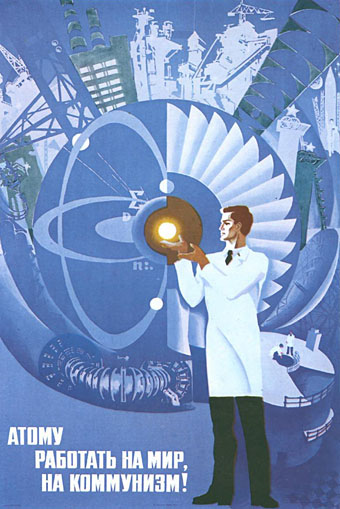
atoms.jpg

“The atom shall work for peace…” Soviet poster promoting the benefits of nuclear power.

• RIP Mac Rebennack aka Dr. John Creaux, The Night Tripper. Dan Auerbach remembers the man whose return to funky form, Locked Down, he produced in 2012. Elsewhere, Michael Hurtt details Mac Rebennack’s pre-Dr. John exploits; some of his music from that period is linked at the end of this post. Entries at YouTube are inevitably skewed to the present but among the older clips you’ll find these: The Doctor and his band in full voodoo regalia miming to Zu Zu Mamou on the Something Else TV show; audio extracts from a Dutch festival performance in 1970, here and here; more quality audio from a 1972 concert in Syracuse, NY; and an hour-long Chicago TV show from 1974 featuring Dr. John, Professor Longhair, The Meters, and Earl King.

• More Tangerine Dream: all the soundtrack music for Vampira (1971), a drama-documentary directed by George Moorse for German TV. Recommended to those who like the group’s Ohr period.

• More Chernobyl: a photo-essay by Tom Skipp featuring survivors of the disaster, and from 2013, Hari Kunzru‘s report from the Exclusion Zone.

• At The Quietus: Lottie Brazier on The Strange World of Stereolab, and Ned Raggett talking to Liz Harris about her Nivhek project.

• The sixth edition of Wyrd Daze—”The multimedia zine of speculative fiction + extra-ordinary music, art & writing”—is out now.

Clark Ashton Smith: The Emperor of Dreams, a DVD of the feature-length documentary by Darin Coelho Spring.

• Moon Wiring Club is back this month with fresh releases at Bandcamp, a YouTube post, and the EVP MVP Mix.

• Once the “Swingingest Street in the World”: Rob Baker on pictures of Carnaby Street 1924–1975.

• New video footage of Coil playing live at All Tomorrow’s Parties, 6th April, 2003.

Dean Hurley explores life after death on Philosophy of Beyond.

Tom Walker on Harry Clarke’s uncanny visions of Ireland.

Alex Barrett on where to begin with Alain Resnais.

• Martin Parr’s Soviet space dog collection.

Dennis Cooper winds you up.

Storm Warning (1959) by Mac Rebennack | Morgus The Magnificent (1959) by Morgus & The 3 Ghouls | Sahara (1961) by Mac Rebennack & His Orch.