Être Dieu: Dalí versus Wakhévitch

etredieu1.jpg

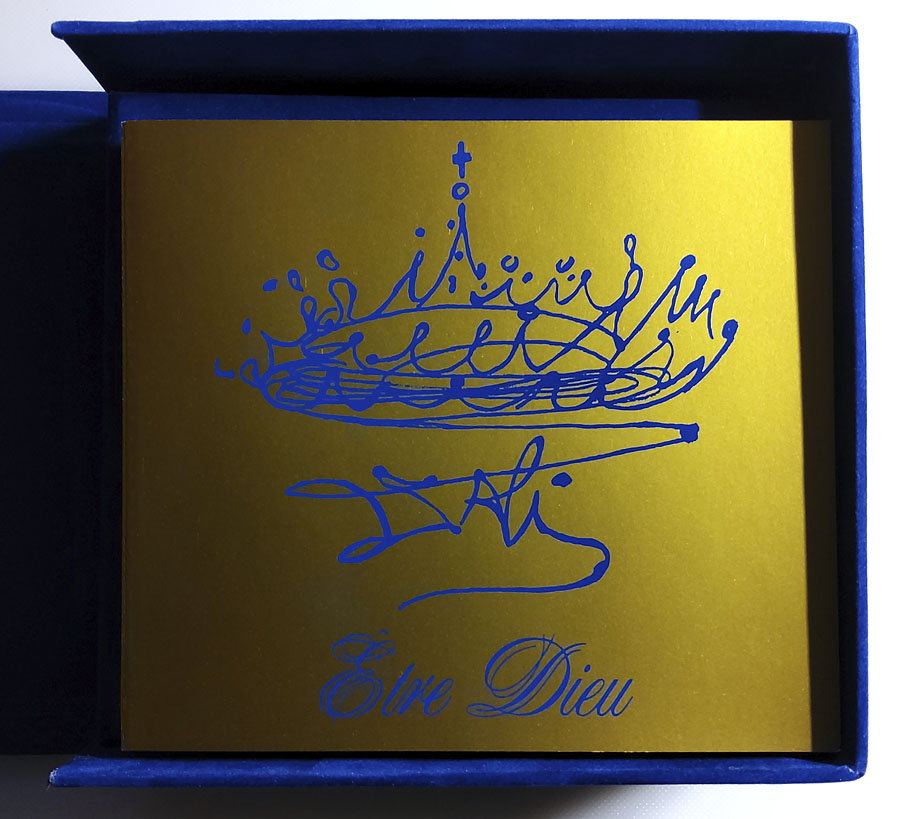
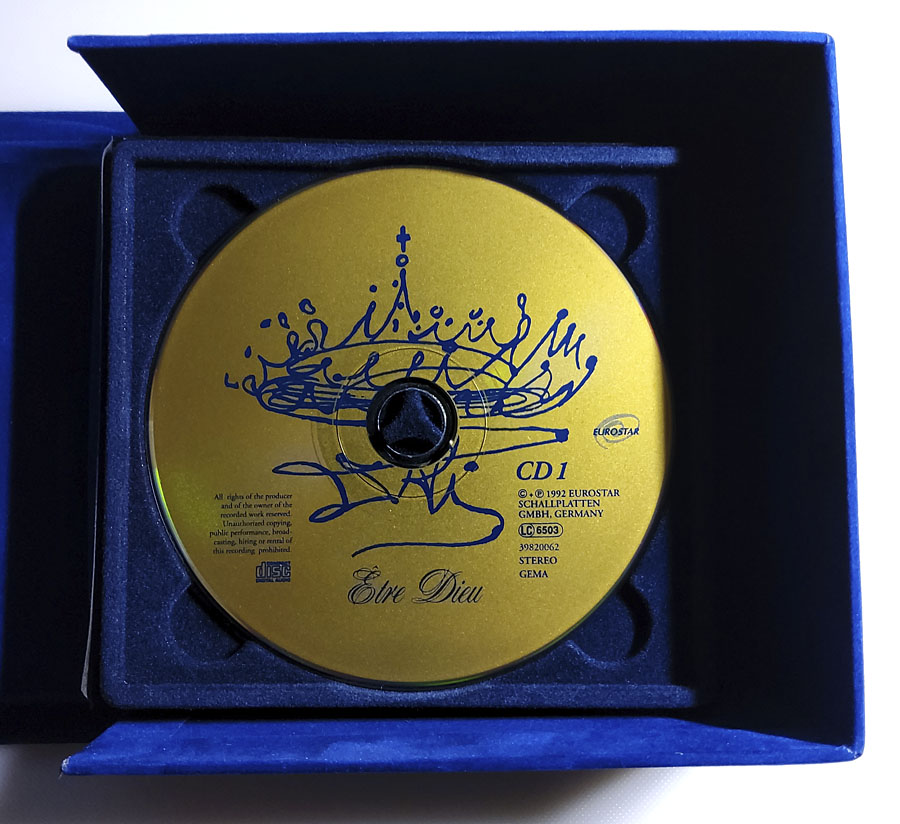
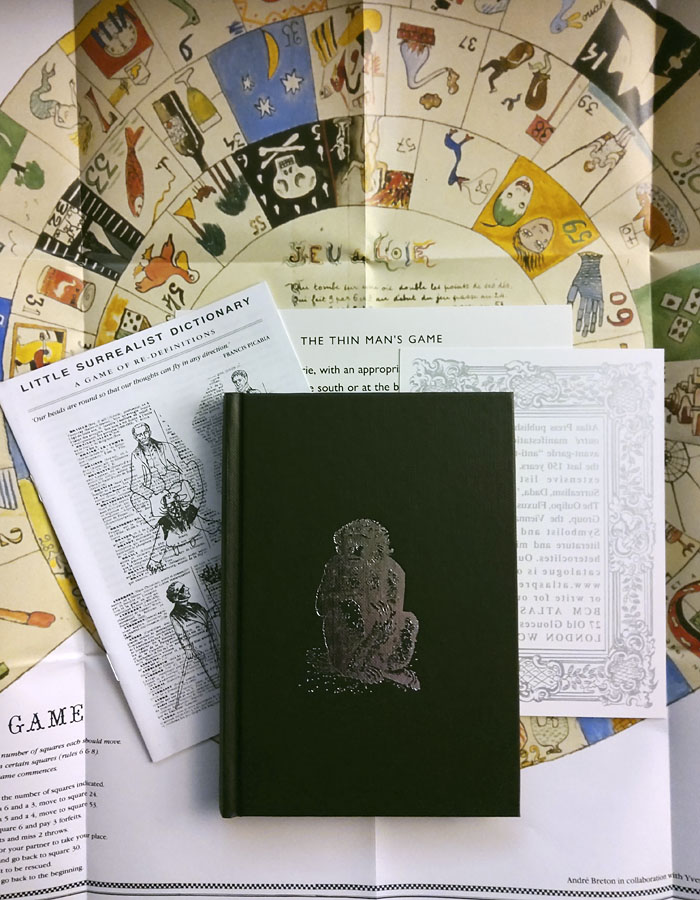
Or should that be Wakhévitch versus Dalí? The so-called “Dalí opera”, recorded in 1974, is more an opera by Igor Wakhévitch (music) and Manuel Vázquez Montalbán (libretto) which is interrupted from time to time by Salvador Dalí’s shouts, squeaks, impromptu lectures and even occasional snatches of song. (Dalí couldn’t sing.)

etredieu2.jpg

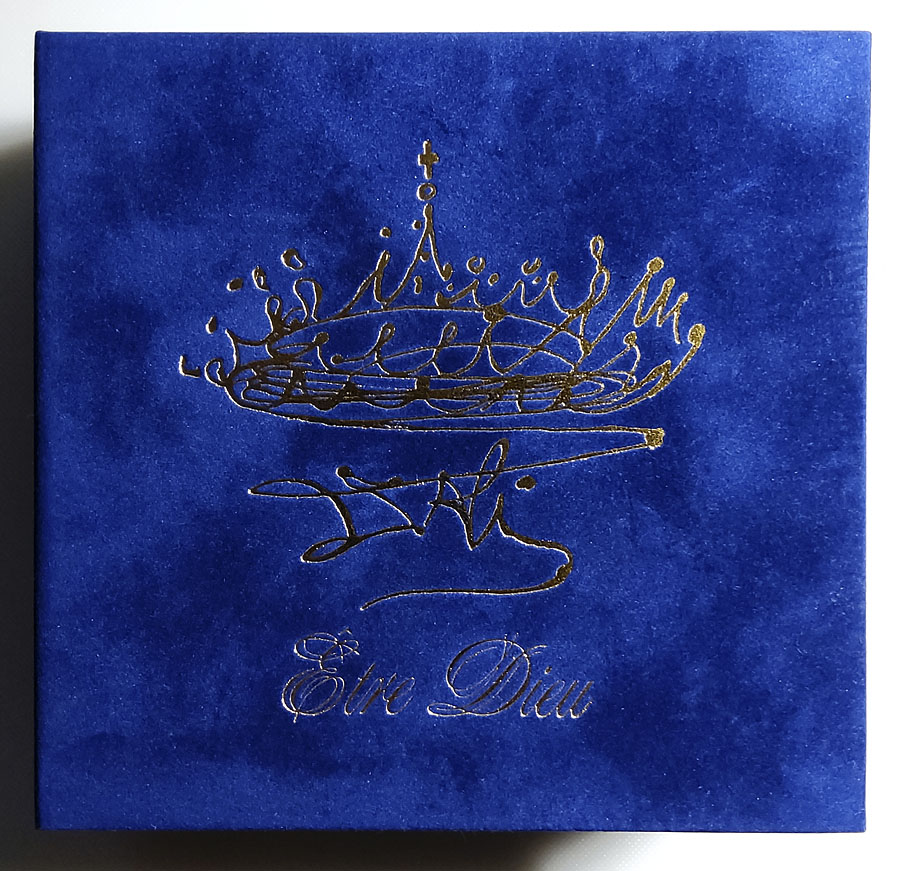
Être Dieu has always been the least accessible of the Wakhévitch compositions, difficult to find and an uneven listening experience that sprawls over three discs. But the (deleted) Eurostar reissue looks very nice: three gold CDs and a thick booklet with a translation of the rambling cosmic scenario, all packaged in a blue felt box. I’ve been rewatching the best of the Dalí documentaries over the past couple of weeks so I’ve felt more accommodating towards Être Dieu than usual; I’m a Wakhévitch cultist, so any Wakhévitch is good Wakhévitch, but I still need to be in the mood for this one. The immediate pleasures are mostly peripheral: Igor’s synthesizers, Delphine Seyrig as one of the celestial components of Dalí’s “divine” character, plus Didier Batard and François Auger from Richard Pinhas’s rock outfit, Heldon, on bass and drums. The Heldon duo get to rock-out properly on the third disc. Buried somewhere in the intersection between this recording, Jean-Christophe Averty’s Soft Self-Portrait of Salvador Dalí (1970) and José Montes-Baquer’s Impressions de la Haute Mongolie (1976) is an intimation of how Dalí might have appeared (or misbehaved) as the Emperor in Alejandro Jodorowsky’s unmade film of Dune.

etredieu3.jpg

Previously on { feuilleton }
Dalí’s discography
The music of Igor Wakhévitch

Lockdown elevation

tmb.jpg

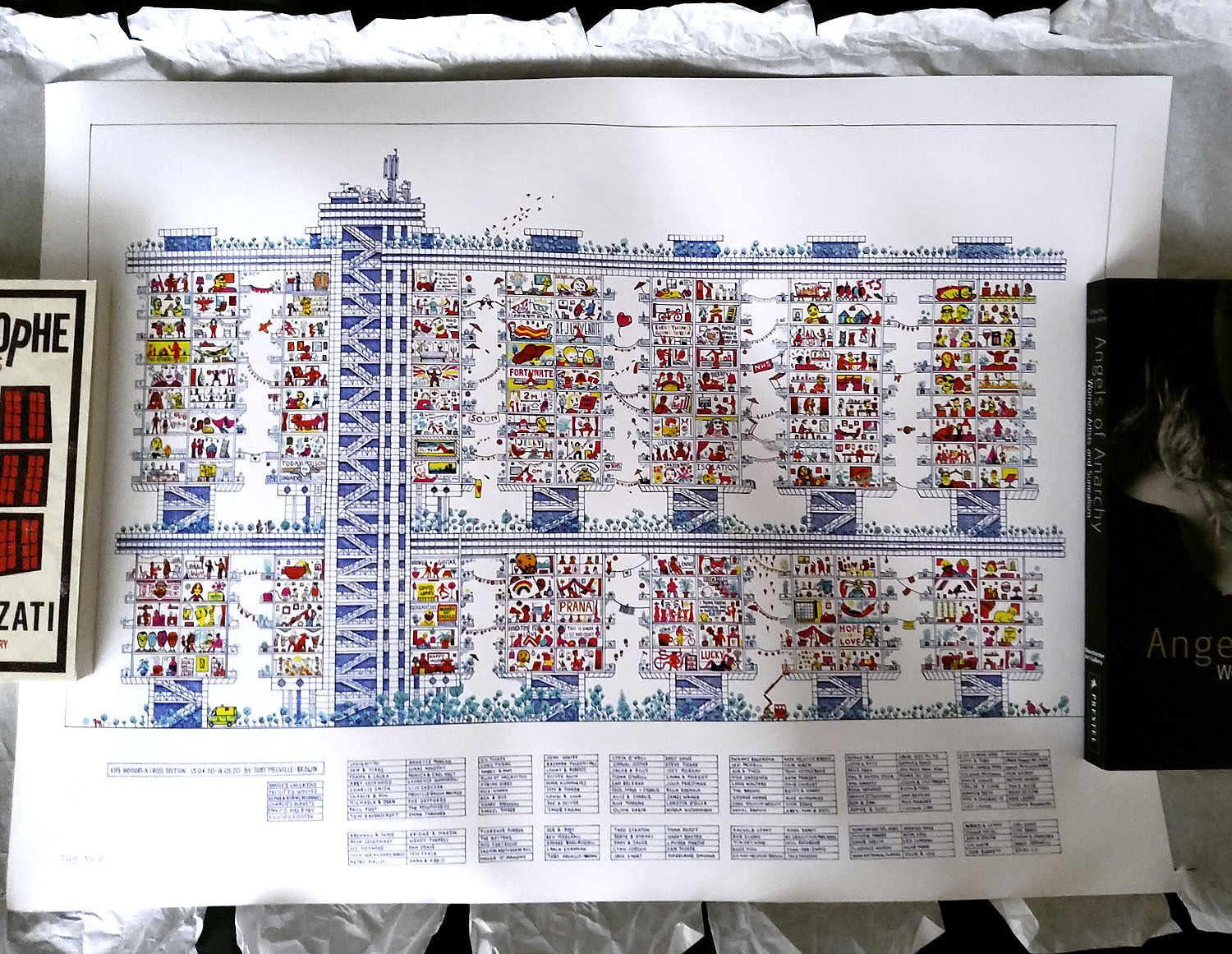
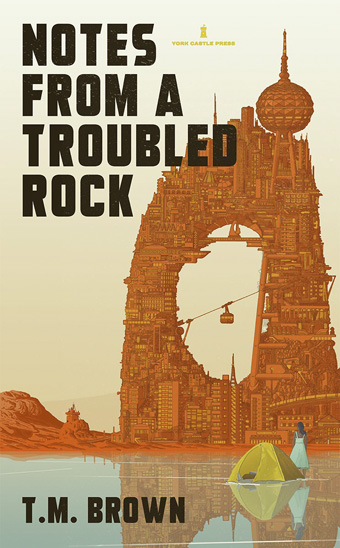
The post this week included a poster print by Toby Melville-Brown, an artistic response to the lockdown of April and May. Toby has a colourful graphic style that favours architectural views in the mode of Archigram and other futurists, past and present; at the end of February I featured one of his invented book covers (below) in a weekend post. The title of the cover—Notes from a Troubled Rock—seemed darkly humorous at a time of political turmoil and a growing pandemic. Four months on it reads like a summary of 2020.

brown.jpg

The lockdown poster, Life Indoors: A Cross-Section, is more positive, a cutaway elevation of a high-rise block, with each apartment showing the response of a real person or group of people to the viral situation. To fill out the rooms Toby sent an email to 175 households asking for a photographic reflection of lockdown life. I’m in one of the rooms but if you want to know where you’ll have to buy a copy of the poster which is available here. All profits go to Refuge, a charity supporting those at risk from domestic violence. When I first moved to Manchester I spent four years in a Brutalist flatblock that would have had JG Ballard’s wealthy high-rise denizens fleeing for the suburbs. Toby’s elevation looks like a better place to be.

(And I’ve just been informed that the poster sale will end at midnight [UK time] on Friday 12th June.)

Weekend links 520

teleplasmiste.jpg

Cover art by Ethel le Rossignol for To Kiss Earth Goodbye by Teleplasmiste.

• I’ve been listening to London Zoo by The Bug this week so two new releases by The Bug’s beatmaster, Kevin Martin, seem well-timed. Martin’s music isn’t all pummelling rhythms and abrasive noise, he also favours doomy ambience, as demonstrated on his landmark compilation album, Isolationism (1994). The new releases, Frequencies For Leaving Earth, Vols 1 & 2, are isolationist in multiple senses of the word, being further products of lockdown life, with the second volume described as reflecting Martin’s “ongoing obsession with scarce sci-fi scores”.

• “It was designed to run counter to formalist & Hollywood Structuralist definitions & expectations.” M. John Harrison in a discussion about his cycle of Viriconium novels and stories. Harrison’s new novel, The Sunken Land Begins To Rise Again, will be published at the end of this month.

• Mix of the week: 31st May 2020 (Lovecraft 2) by French Rock Sampler, a recording of Warren Hatter’s radio show devoted to French underground, synth and progressive music of the 1970s. The current season may be heard each Sunday at 3pm (London time) on Resonance FM.

This is a very important book. It may even be a historic book, one with which gay history can arm itself with more sufficient factual veracity as to start vanquishing at last the devil known as queer studies. Queer studies is that stuff that is taught in place of gay history and which elevates theory over facts because its practitioners, having been unsuccessful in uncovering enough of the hard stuff, are haughtily trying to make do. […] It is not only breathtaking to read this all in a work the likes of which so many Americans long to have written about our own gay history, but when one finishes reading it, one utters an audible huge sigh of relief. Of course this is how it was! Why did we all not know and accept this instinctively without having to create and/or buy into the Foucaultian and Butlerian (to name but two) nightmares with the obtuse vocabularies they invented and demanded be utilized to pierce their dark inchoate spectacles of a world of their own imaginings. Homosexuality did not exist because there was no word for it, say they. What bushwa.

The late Larry Kramer in 2009 reviewing Before Wilde: Sex between Men in Britain’s Age of Reform by Charles Upchurch

• I mentioned in April that I’d designed the CD and vinyl packaging for Roly Porter’s latest album, Kistvaen. It’s another monumental release, and it’s out now. Hear it for yourself at The Quietus.

To Kiss Earth Goodbye, the new album from Teleplasmiste, features cover artwork by Ethel le Rossignol, and a previously unheard trance recording of occultist Alex Sanders.

• “It’s impossible to completely quantify the effect of I Feel Love on dance music.” John Doran on Donna Summer and Giorgio Moroder’s finest moment.

• More film lists: 10 great Japanese film noirs selected by Matthew Thrift, and the 15 best Czech horror films selected by Jason Pirodsky.

Mark Blacklock selects a top ten of four-dimensional novels (one of which isn’t a novel at all but a short story by Ian McEwan).

• At Dennis Cooper’s: BDSM.

Angry (2008) by The Bug feat. Tippa Irie | Insane (2008) by The Bug feat. Warrior Queen | Fuckaz (2008) by The Bug feat. Spaceape
Abeceda

nezval26.jpg

This week I’ve started working my way through the filmography of Jan Švankmajer, having finally acquired a blu-ray set of his feature films. I’ve also been reading interviews and rewatching some of the documentaries about the man and his work, which in turn prompted me to look up some of his associates and precursors among the Czech Surrealists. Prague was unusual in being a centre for the early development of Surrealism at a time when the movement (for want of a better term) was centred on Paris. André Breton encouraged this, and cultural exchanges took place, with Breton and Paul Éluard visiting Prague, while Vítězslav Nezval and his colleagues journeyed to Paris. The outbreak of war severed the connection but this also had the inadvertent effect of perpetuating the Czech brand of Surrealism by cutting off Prague from the rest of the European avant garde. While Breton and co were forced to flee to the United States and Mexico, the Czech Surrealists went underground, hiding their illicit explorations first from the occupying Nazis, then from the disapproving Communist authorities. It’s always important to bear this in mind when considering Švankmajer’s films and artwork; his Surrealism is a serious motivation with a long history in Czech and Slovak art.

nezval00.jpg

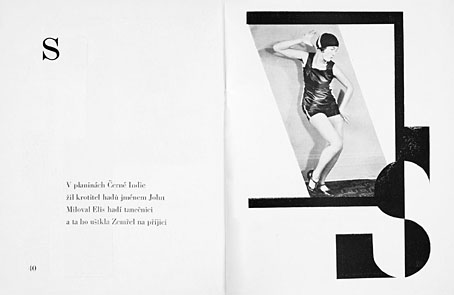
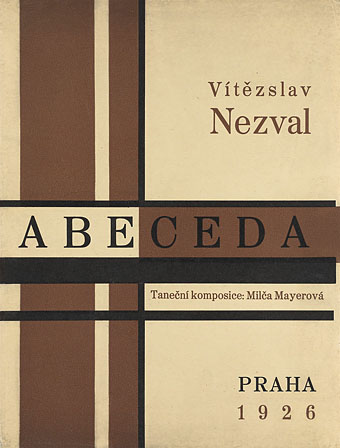
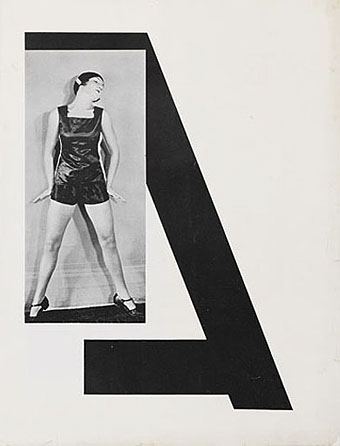
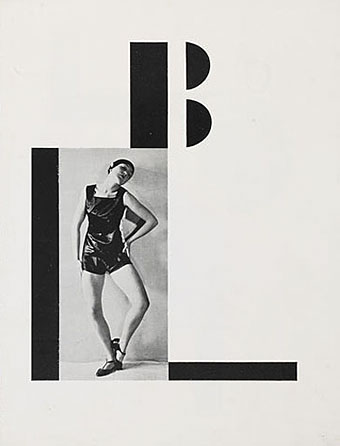
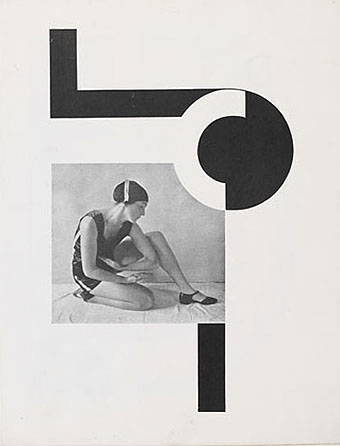
Vítězslav Nezval is best known today for being the author of Valerie and Her Week of Wonders (1935), the source novel for the cult film by Jaromil Jires. Abeceda (1926) is a much shorter work, a Modernist abecedary created by Netzval (who wrote a short verse describing each letter) with Milča Mayerová (who choreographed a series of letterform poses) and Karel Teige (who designed the book and took the photographs). I’ve not seen a complete translation of the verses but I love the page design which is like something the Bauhaus might have produced for the Modernist Children of the Future. The form being used here had a name—Poetism—a Czech variation on similar movements elsewhere such as Constructivism and Futurism but with an intention to create works accessible to all, hence the abecedary. I can imagine Milča Mayerová’s poses being animated by Švankmajer’s staccato edits although his design preferences have always been more florid and baroque. A Surrealist he may be but he also favours Jean Midolle’s Alphabet Lapidaire Monstre.

nezval01.jpg

nezval02.jpg

nezval03.jpg

Continue reading “Abeceda”