Antony Little’s echoes of Aubrey

little1.jpg

The Dancer (1967) by Antony Little.

My thanks to Sweet Jane this time for alerting me to her post about a series of Beardsley-inspired illustrations from 1967 by Biba designer Antony Little. The Wandering Jew and Other Stories was the first translation in English of Apollinaire’s 1910 collection L’Hérèsiarque et Cie. I’ve known about this book for a while but few of the illustrations have been on view anywhere until this post. There are eight in all, each of them very adeptly capturing different phases of Beardsley’s drawing style, from the spare black-and-whites to the more detailed renderings seen in his later work. The drawing below is another in the series from a post of Callum’s which also includes a favourite of mine by Beresford Egan.

Little’s designs, and the prominence of the Biba stores, did much to make Art Nouveau in general, and Beardsley in particular, a crucial component of London fashion in the late 1960s. For more on that subject see this Sweet Jane post featuring yet more Beardsley borrowings and monochrome design, plus Osborne & Little’s fantastic Chinese Dragon wallpaper which made a memorable appearance last year in Only God Forgives.

little2.jpg

Elsewhere on { feuilleton }
The Aubrey Beardsley archive
The illustrators archive

Weekend links 204

somnium.jpg

RIP Steve Moore. We never met, unfortunately, but I was very pleased he asked me to create a cover for his unique occult novel, Somnium, in 2011. Prior to this we’d been connected by shared acquaintances, colleagues, and membership in the informal cabal that was (and maybe still is) The Moon & Serpent Grand Egyptian Theatre of Marvels. Steve’s long friendship with Alan Moore (no relation) is well-documented, not least by Alan himself who made Steve the subject of his Unearthing project. One surprising connection for me was that Steve also had a link to Savoy Books. In the late 1960s he was working for comics publisher Odhams where he was able to copy for David Britton some Ken Reid comic art which Odhams had refused to print. Dave published the forbidden pages in his first magazine, Weird Fantasy, in 1969. In 2011 Steve talked to Pádraig Ó Méalóid about Somnium, and also to Aug Stone at The Quietus. Aug Stone penned a few memorial words here.

• “People love using the word ‘porn’ as long as there’s a partner for it. Pair ‘porn’ with something else and it’s usually a good thing. A celebration of style and culture. But that word on its own? Well.” Porn star Conner Habib asks why people have such a problem with porn actors.

Dave Maier‘s Russian cinema recommendations. Several favourites there including the magical and remarkable Shadows of Our Forgotten Ancestors (1964) which, as Maier notes, isn’t really Russian but should be seen in any case.

Shakespeare uses verbal magic, cantrips and ditties, nonsense songs and verses throughout the plays, but in Othello he gives a glimpse of how powerful a spell becomes when it’s no longer oral, but fixed in material form. The fatal handkerchief is no ordinary hanky; it’s a love spell, and it was made with gruesome and potent ingredients (mummified “maiden’s hearts”) by a two-hundred-year-old sibyl in Egypt—Egypt being the birthplace and pinnacle of magic knowledge.

Marina Warner on magic.

• Mixes of the week: an hour of electro-acoustics and contemporary classical recordings sequenced by Laurel Halo, and (from 2010) 36-minutes of “umbral electronic hypnagogia” by The Wyrding Module.

• “This is the book that, 10 years later, inspired Richard Hollis’s landmark design for John Berger’s Ways of Seeing.” Rick Poynor on Chris Marker’s Commentaires.

• Is the Linweave Tarot the grooviest deck ever made? Dangerous Minds thinks so.

• Bobby Barry talks to Holger Czukay about his 1969 audio collage, Canaxis 5.

• “What Happened to Experimental Writing?” asks Susan Steinberg.

Aldous Huxley‘s lectures on visionary experience at MIT, 1962.

Laura Palmer will see Agent Cooper again in just a few hours.

Callum found a copy of The Gay Coloring Book (1964).

Metal Cats

Moonshake (1973) by Can | Lunar Musick Suite (1976) by Steve Hillage | Dark Moon (1993) by Holger Czukay | Boy In The Moon (2012) by Julia Holter

The Triangular Lodge again

temples.jpg

Artwork & photography by Abbie Stephens, Zoë Maxwell. Design by Thomas Caslin.

Passing through a record shop the day after looking at photos of the Winchester Mystery House I couldn’t help but notice this sleeve for the debut album by British band Temples. Yesterday I described Sarah Winchester’s house as a folly, which it is, but it was also her home. The ideal folly is an ostensibly purposeless structure, although many of the ones scattered around the UK do serve some kind of decorative function, often as fake ruins intended to be seen from a distance.

Thomas Tresham’s mysterious Triangular Lodge near Rushton, Northants, has always been a favourite, a small triangular building constructed in the 16th century, and encoded all over with references to the number 3. Tresham was a Catholic at a time when the faith was persecuted in England so the lodge is an expression of his devotion to the Holy Trinity. Given the unusual appearance of the building you’d think it might have appeared on an album cover before now. Temples are from Kettering in Northants so they can claim some local attachment to the place. The cover picture has something of a Hipgnosis look to it, which is no bad thing, and there’s also some Hipgnosis-style collaging at work; those trees in the background have been copied then flipped over. One benefit of the current vinyl resurgence is that sleeve designs like this aren’t spoiled by being only seen at CD size. Some of Temples’ songs can be heard on their SoundCloud page, while Pinterest has more views of the Triangular Lodge.

Elsewhere on { feuilleton }
The album covers archive

Previously on { feuilleton }
The Triangular Lodge

Title pages

title1.jpg

Ghost Stories and Phantom Fancies (1858) by James Hain Friswell.

The vast repository of copyright-free images from the British Library is still being sifted into Flickr sets. These are a few examples from a set of 786 title pages which range from elegant book plates to Dime Westerns and Penny Dreadfuls. A Plunge into Space is a science-fiction novel about a journey to the planet Mars in a spaceship called The Steel Globe. Robert Cromie was also the author of A New Messiah (1901), and The Crack of Doom (1895). The latter—which has some great chapter titles: The Universe A Mistake!, The Murder Club, A Telepathic Telegram—may be read here.

title5.jpg

Vom Amazonas und Madeira (1874) by Franz Keller-Leuzinger.

title2.jpg

Yorkshire Rivers. Reproduced from The Yorkshire Weekly Post (1890) by Tom Bradley.

title3.jpg

A Plunge into Space (1890) by Robert Cromie.

title4.jpg

Idylls of the King (1898) by Alfred Tennyson. Illustrated by George and Louis Rhead.

Previously on { feuilleton }
A Trip to Mars

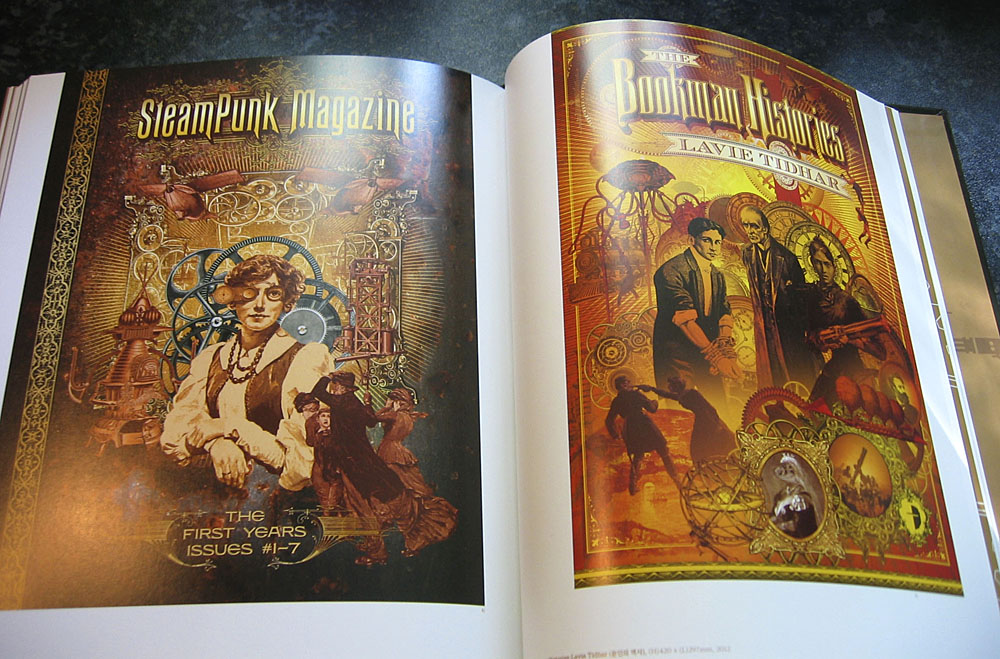
Steampunk: The Art of Victorian Futurism

steampunk.jpg

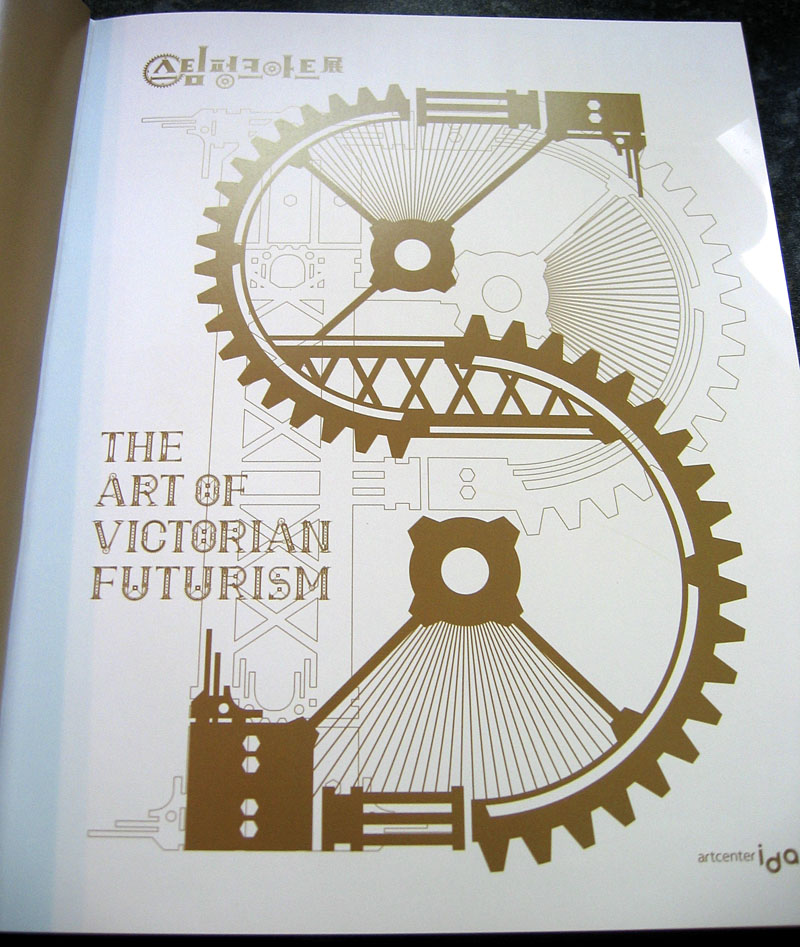
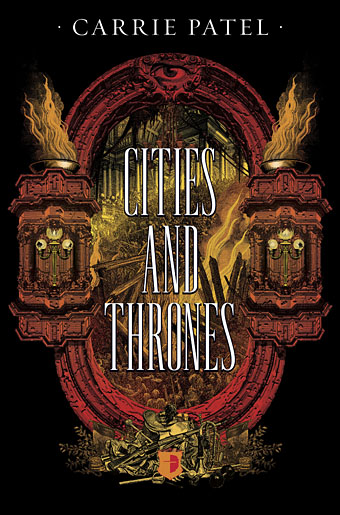
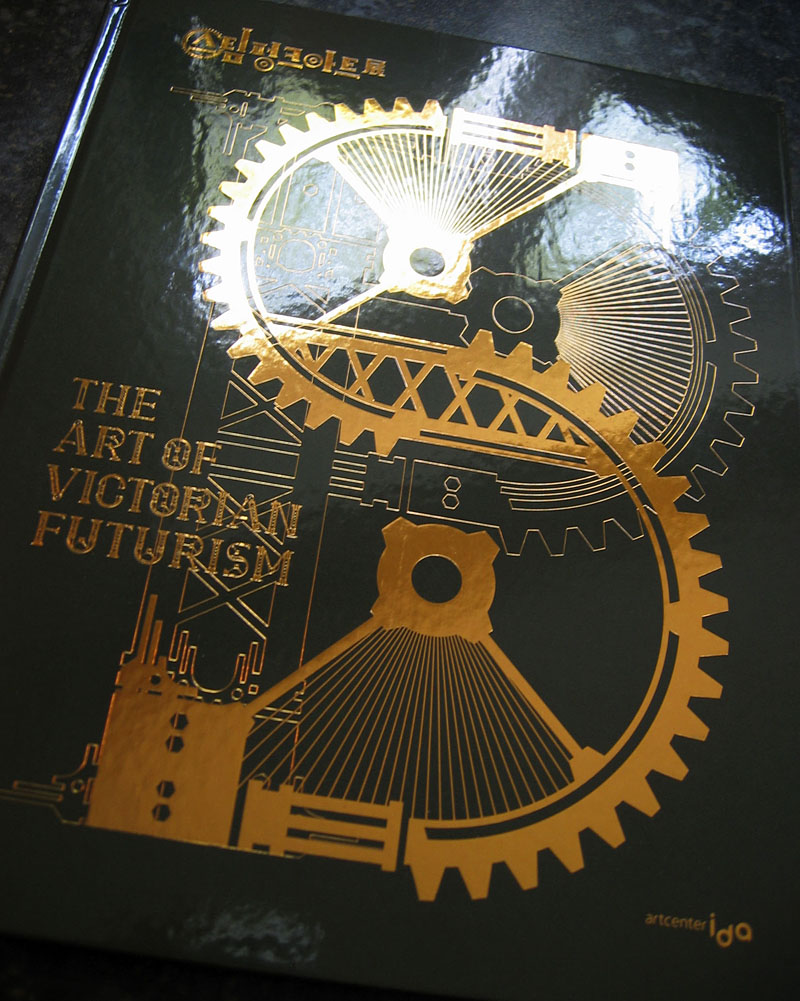
Those who were wishing a few years ago that steampunk would crawl into a hole and quietly die must be gnashing their teeth at the way the sub-genre continues to flourish. (See Pinterest for examples from the increasingly wild world of steampunk fashion.) If anyone reading this is visiting Seoul in the next couple of months—or even living there—then they’ll find some of my book covers on display at Artcenter IDA. Steampunk: The Art of Victorian Futurism is a look at the wide range of steampunk aesthetics, from graphic works to three-dimensional constructions, clothing, and so on. I’d like to credit the promotional design above but I’m not sure who’s responsible. Good type design whoever it was.

jeter.jpg

Five of my covers are on display, including the three I’ve done for KW Jeter’s novels. Mr Jeter, as mentioned before, is the man who first coined the term “steampunk” in the 1980s. This isn’t the first time my artwork has appeared in South Korea—when I was painting cards for Magic: The Gathering in the 1990s there were Korean editions printed—but it is the first time anything of mine has been exhibited there. The exhibition runs to mid-May.

Previously on { feuilleton }
Steampunk Calendar
Words and pictures
Nathanial Krill at the Time Node
Fiendish Schemes
Ghosts in Gaslight, Monsters in Steam
Steampunk Revolution
The Bookman Histories
Aether Cola
Crafting steampunk illustrations
SteamPunk Magazine
Morlocks, airships and curious cabinets
The Steampunk Bible
Steampunk Reloaded
Steampunk overloaded!
More Steampunk and the Crawling Chaos
Steampunk Redux
Steampunk framed
Steampunk Horror Shortcuts